Source Braided Fiberglass Non Asbestos Gasket for Flanges, Pumps, Valves
Compare 30 listings for Braided Fiberglass Non Asbestos Gasket options including O-rings, mechanical seals, and stationary seals. Buyers can review materials like NBR and aramid fibers, thickness ranges, and customization availability from Chinese manufacturers.
Key considerations
Products List


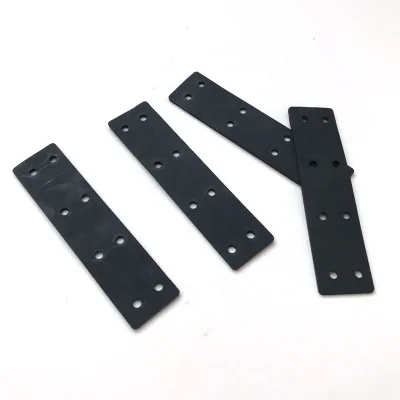


Comprehensive Sourcing Guide
Strategic Sourcing Guide for Braided Fiberglass Non-Asbestos Gaskets
Understanding Product Classification and Material Composition
When sourcing braided fiberglass non-asbestos gaskets, buyers must first distinguish between the specific material composition and the manufacturing method. The core keyword implies a product that combines the thermal stability of fiberglass with a non-asbestos formulation, yet the market data reveals a complex landscape of variations. The supplied facts indicate that materials can range from "Non Asbestos" and "Nature Rubber" to "NBR" (Nitrile Butadiene Rubber) and "Aramid Fibres." While the search term specifies fiberglass, the observed product attributes also list "Fiber" as a general material category and "C-Glass" as a specific fiber characteristic. This suggests that a single supplier may offer a spectrum of braided products, some of which are purely fiberglass, while others are composite blends.
The physical form of these gaskets is equally critical. The data confirms the existence of "Braided Rope" as a distinct product type, characterized by a "Woven Way" described as "Braided." The fiber appearance is noted as "Continous Fiber," which is a technical observation indicating that the strands are not chopped but run the length of the braid, potentially offering superior tensile strength compared to chopped fiber alternatives. The diameter of these filaments is specified as "Intermediate Fibers," a detail that buyers should verify against their specific sealing requirements. Furthermore, the product attributes list "Asbestos" under "Shape (for Gasket)" and "Material: Asbestos" in separate entries, highlighting the necessity for rigorous verification. A buyer searching for "non-asbestos" must explicitly confirm that the specific order does not include the "Asbestos" material variant, as the market data shows both types are often listed under similar product families. The color is observed as "Black," which is a common visual indicator for carbon or rubber-based binders in non-asbestos formulations, but this should not be relied upon as a sole verification method.
Technical Specifications and Performance Parameters
Technical due diligence requires a granular understanding of the dimensional and performance specifications provided in the market data. The thickness of these gaskets is observed to range from "0.5mm~5mm" and "0.8-5mm." This variation is significant for procurement, as the required compression and sealing force depend heavily on the gasket thickness. Buyers must verify the exact thickness tolerance for their specific flange application, as a 0.5mm gasket will behave differently under bolt load than a 5mm gasket. The diameter of the braided rope itself is observed at "15mm" in specific listings, but this is likely a standard stock size rather than a universal constraint. Customization is explicitly listed as "Available," and packing is described as "According to The Customer's Requirements," indicating that non-standard diameters and thicknesses are feasible through supplier negotiation.
Performance capabilities are another critical area of observation. The "Temperature Resistance" is cited as "550," which likely refers to degrees Celsius, a high threshold suitable for demanding industrial environments. This aligns with the "Performance" attribute of "Temperature," suggesting these gaskets are engineered for thermal stability. The "Shape" is noted as "O-Ring" in some contexts and "Flat Gasket" in others, while the "Type" is categorized as "Stationary Seal" or "Mechanical Seal." This indicates that the same material technology is applied to different sealing geometries. The "Function" is listed as "Rotary Sealing" and "Application" as "Flange Seal" or "Junction Surface Seal." Buyers must ensure that the specific product they select matches the dynamic or static nature of their application. For instance, a "Stationary Seal" is distinct from a "Rotary Sealing" application, and selecting the wrong type could lead to premature failure. The "Balance" attribute is noted as "Balanced," which is a specific term often associated with mechanical seals, suggesting that some of the listed products may be complex mechanical assemblies rather than simple flat gaskets.
Compliance, Certification, and Standard Verification
Navigating the compliance landscape for non-asbestos gaskets requires careful scrutiny of the standards and certifications listed in the product data. The "Standard" field shows a wide array of entries, including "custom," "As per customers' request," "Standard, ASME. DIN etc," and "CE." The presence of "ASME" and "DIN" suggests that the market offers products compliant with major international engineering standards, but the data also frequently lists "Standard, Nonstandard" or "according to your requests." This variability means that a buyer cannot assume a product is automatically compliant with a specific standard unless explicitly stated in the purchase order. The "prod_standard" is often "Standard, according to your requests," which places the burden of specification on the buyer to define the required standard clearly.
Certification is a vital component of supplier evaluation. The data explicitly mentions "ISO9001: 2000" as a certification held by some suppliers. While this is a specific observation, buyers should be aware that certification standards evolve, and the current version may be ISO 9001:2015. Therefore, the presence of "ISO9001: 2000" in the data should be treated as a historical or specific instance rather than a universal guarantee of current compliance. Buyers must verify the validity and scope of any ISO certification provided by the supplier. Additionally, the "Standard" attribute includes "CE," which indicates compliance with European conformity requirements for certain product categories. However, the data also lists "Standard" as a generic attribute without a specific number, reinforcing the need for buyers to request specific test reports or certification documents for their target application. The "Location" of origin varies between "Taizhou China," "Zhegjiang, China," "Ningbo," and generally "China." While these are manufacturing hubs, the specific origin can impact logistics and supply chain resilience, though it does not inherently dictate quality.
Cost Drivers and Pricing Dynamics
The economic landscape for sourcing these gaskets is defined by a wide observed price range of "0.01-50" USD. This broad spectrum indicates that the final cost is highly dependent on the specific product configuration, material grade, and order volume. The "MOQ" (Minimum Order Quantity) range is observed from "5" to "10000," suggesting that the market accommodates both small-batch prototyping and large-scale industrial procurement. The low end of the MOQ range (5 units) implies that suppliers are willing to accommodate small orders, likely at a higher unit cost, while the high end (10000 units) suggests economies of scale are available for bulk buyers.
Several factors drive the cost within this range. First, the material composition is a primary driver. A gasket made of "Non Asbestos" and "Nature Rubber" may have a different cost structure than one utilizing "Aramid Fibres" or "C-Glass." The "Customization" attribute being "Available" suggests that non-standard sizes or shapes will incur additional tooling or setup costs, pushing the price toward the higher end of the observed range. The "prod_packing" varies from "Wooden Case" to "Carton or Pallet," and the choice of packaging can influence the total landed cost, especially for international shipping. Furthermore, the "Standard" requirement plays a role; if a buyer requires a specific "ASME" or "DIN" certification, the supplier may charge a premium for the associated testing and documentation. The "Temperature Resistance" of "550" degrees may also command a higher price due to the specialized materials required to achieve such thermal stability. Buyers should expect that the "0.01" USD figure likely represents a base unit cost for a very small, simple component, while the "50" USD figure may reflect a complex mechanical seal or a custom-engineered gasket assembly.
Supplier Evaluation and Geographic Considerations
Evaluating suppliers for braided fiberglass non-asbestos gaskets requires a focus on their manufacturing capabilities and geographic location. The data indicates that products originate from "Taizhou China," "Zhegjiang, China," and "Ningbo." These are all established industrial regions in China known for manufacturing sealing products. The presence of multiple locations suggests a competitive market with various specialized manufacturers. Buyers should verify the specific factory location to assess logistics costs and lead times, although specific "lead times" are not provided in the data.
When evaluating a supplier, the "Customization" capability is a key differentiator. The data confirms that "Customization: Available" and "prod_packing: According to The Customer's Requirements" are standard offerings. This indicates that suppliers are flexible and can adapt to specific buyer needs. However, the "Standard" field often defaults to "custom" or "As per customers' request," which means the buyer must provide clear specifications. A reliable supplier will demonstrate the ability to translate these requests into a compliant product. The "prod_model" varies significantly, with entries like "2502," "TL-G472/473," "RS7," "RS12-N," "SUNWELL 1400," "Sunwell 1500," and "LT238." These model numbers suggest that suppliers have a catalog of standard products, but the buyer must ensure the selected model matches the technical requirements. The "Balance" attribute being "Balanced" and the "Speed" attribute being "High-Speed Mechanical Seal" in some entries suggest that some suppliers offer advanced mechanical sealing solutions, while others focus on simpler gasket types. Buyers should match the supplier's product portfolio to their specific application needs, distinguishing between a simple "Flat Gasket" and a complex "Mechanical Seal."
Quality Control and Long-Term Procurement Strategy
Ensuring quality in the procurement of braided fiberglass non-asbestos gaskets involves a multi-layered approach to verification and long-term planning. The "Fiber Characteristics" are listed as "C-Glass," and the "Fiber Appearance" is "Continous Fiber." These are specific technical attributes that buyers should request in the product data sheet to ensure the material meets the required performance standards. The "Thickness" range of "0.5mm~5mm" and "0.8-5mm" highlights the need for precise quality control to maintain dimensional consistency. Buyers should implement incoming quality inspections to verify that the received gaskets fall within the specified thickness tolerances.
Long-term procurement considerations include the stability of the supply chain and the consistency of the "Standard" compliance. The data shows that "Standard" can be "Standard, Nonstandard" or "Standard, ASME. DIN etc." This variability requires a robust supplier relationship where the buyer and supplier agree on a fixed set of standards for all future orders. The "ISO9001: 2000" certification is a positive indicator, but buyers should verify that the supplier maintains current certification standards. The "prod_packing" options, such as "Wooden Case" or "Carton or Pallet," should be standardized to prevent damage during transit and ensure consistent handling.
Comparative Analysis of Product Attributes
To facilitate decision-making, the following table summarizes the key attributes observed in the market data for braided fiberglass non-asbestos gaskets. This comparison helps buyers identify the specific characteristics that align with their requirements.
| Attribute Category | Observed Values | Procurement Implication |
|---|---|---|
| Material Composition | Non Asbestos, Nature Rubber, NBR, Aramid Fibres, Fiber, C-Glass | Must verify specific material to ensure non-asbestos compliance and chemical resistance. |
| Product Type | Flat Gasket, Braided Rope, O-Ring, Mechanical Seal, Stationary Seal | Select based on application (static vs. rotary) and geometry. |
| Thickness Range | 0.5mm~5mm, 0.8-5mm | Critical for compression and sealing force; verify exact tolerance. |
| Temperature Resistance | 550 (likely °C) | High thermal stability; suitable for demanding industrial environments. |
| Fiber Structure | Continous Fiber, Intermediate Fibers, Braided | Indicates tensile strength and durability; verify fiber type (C-Glass). |
| Certification | ISO9001: 2000, CE, Standard, ASME, DIN | Verify current validity and specific scope of certification. |
| Origin Locations | Taizhou, Zhegjiang, Ningbo, China | Assess logistics and supply chain proximity. |
| Customization | Available | Enables tailored solutions for non-standard applications. |
| Packing | Wooden Case, Carton, Pallet, Customer Requirements | Impact on shipping costs and product protection. |
| MOQ Range | 5 - 10000 | Flexibility for small or large volume orders. |
| Price Range | 0.01 - 50 USD | Highly variable; depends on material, size, and customization. |
Final Procurement Recommendations
Sourcing braided fiberglass non-asbestos gaskets requires a disciplined approach to verifying technical specifications, compliance, and supplier capabilities. The market data reveals a diverse range of products, from simple flat gaskets to complex mechanical seals, with varying material compositions and performance characteristics. Buyers must explicitly confirm the "Non Asbestos" status, as the data shows "Asbestos" is also a listed material. The "Customization" availability allows for tailored solutions, but this necessitates clear communication of requirements regarding thickness, diameter, and standard compliance. The observed price and MOQ ranges offer flexibility, but the final cost will depend on the specific configuration and certification needs. By focusing on the technical attributes such as "Continous Fiber," "C-Glass," and "Temperature Resistance," and by rigorously checking certifications like "ISO9001" and "ASME," buyers can secure high-quality gaskets that meet their operational demands. The geographic concentration in Chinese manufacturing hubs like Taizhou and Ningbo suggests a robust supply chain, but buyers should maintain a proactive stance on quality control and standard verification to ensure long-term reliability.
FAQs
What materials are used for braided fiberglass non asbestos gaskets?
These gaskets typically use non-asbestos, nature rubber, NBR, and aramid fibres. Some listings also specify C-Glass fiber characteristics with continuous fiber appearance for enhanced strength and thermal stability in industrial sealing applications.
Can I request custom dimensions for these gaskets?
Yes, customization is available for these products. Buyers can specify unique thicknesses ranging from 0.5mm to 5mm and request packing according to their specific requirements rather than standard wooden cases or cartons.
What is the maximum temperature resistance for these gaskets?
The observed temperature resistance reaches up to 550 degrees Celsius. This high thermal stability makes them suitable for demanding environments, provided the specific product model meets the required stationary or rotary sealing function.
Which certifications do these gasket manufacturers hold?
Some suppliers hold ISO9001:2000 certification and comply with CE standards. Other products may follow ASME, DIN, or custom standards as per customer requests, so verification of specific compliance documents is necessary before ordering.
How does the minimum order quantity vary for these gaskets?
The minimum order quantity ranges from 5 units to 10,000 units depending on the supplier and product configuration. Small orders may incur higher unit costs, while bulk purchases often benefit from economies of scale.
Where are these gaskets manufactured?
Products originate from manufacturing hubs in Taizhou, Zhejiang, and Ningbo, China. The specific location impacts logistics and supply chain resilience, though all listed items are produced within these established Chinese industrial regions.