Find Bun Toaster for Hotels, Food Shops, and Restaurants
Source 27 electric bun toasters with varying capacities from 300 to 500 slices per hour. Buyers can compare models like ECT-450 and BT-212S, noting differences in power, weight, and packing options for commercial kitchens.
Key considerations
Products List


High-Speed Bread Toaster with Multiple Toasting Settings for Perfect Results
$186.00 - $206.00
MOQ: 10 Pieces


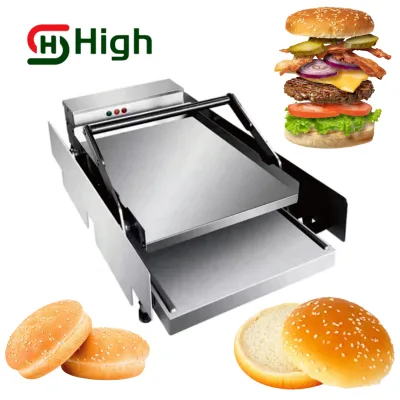
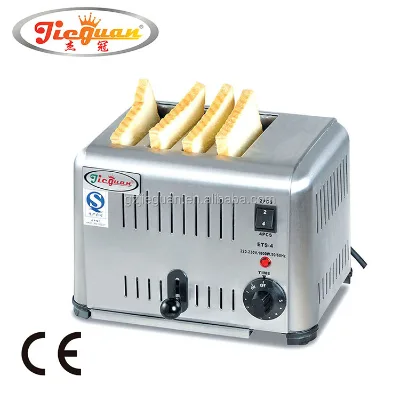

Comprehensive Sourcing Guide
Strategic Sourcing Guide for Commercial Bun Toasters
Understanding Technical Specifications and Performance Metrics
When sourcing a Bun Toaster for commercial operations, the primary focus must be on aligning technical specifications with the specific throughput requirements of the facility. The market presents a variety of models, each defined by distinct output capacities and power consumption profiles. Buyers must carefully distinguish between semi-automatic and fully automatic grades, as this distinction directly impacts labor requirements and operational consistency.
The observed product landscape includes models with varying output rates. For instance, certain units are rated for an output of 300 to 350 slices per hour, while others in the same category or adjacent models achieve 450 to 500 slices per hour. This variance suggests that a facility processing high volumes of bread or pizza products will require a unit with the higher capacity rating to prevent bottlenecks during peak service times. The power source for these units is consistently electric, with specific power ratings observed in the range of 1.94kW to 2.64kW. Selecting a unit with insufficient power may result in uneven toasting or extended cycle times, whereas a unit with excessive power may lead to unnecessary energy costs if the capacity exceeds actual demand.
Physical dimensions are equally critical for kitchen layout planning. The standard dimensions for these units vary significantly based on the model. Some observed specifications indicate a footprint of approximately 410mm in width, 650mm in depth, and 350mm in height, while others measure around 468mm by 418mm by 387mm. Larger commercial units may extend to 1000mm in width and 800mm in height. Buyers must verify that the chosen unit fits within the allocated counter space and allows for adequate ventilation clearance. The material composition is predominantly stainless steel, which is essential for durability and hygiene in food service environments. The color finish is typically silver, contributing to a professional aesthetic that resists visible fingerprints and minor scratches.
Compliance and Certification Verification
In the commercial food equipment sector, compliance with safety and quality standards is non-negotiable. When evaluating potential suppliers, the first step is to verify the presence of recognized certifications. The most prominent certification observed in the current market data is the CE mark. This certification indicates that the product meets the health, safety, and environmental protection standards for products sold within the European Economic Area. While the presence of CE certification is a strong indicator of compliance, buyers should not assume that all listed products automatically possess this status without explicit verification on the specific item's datasheet.
Beyond certification, the manufacturing origin plays a role in regulatory compliance. A significant portion of the available bun toasters originates from Guangdong, China, a major hub for manufacturing food processing machinery. While this region is known for producing competitive equipment, buyers must ensure that the specific batch or model they purchase adheres to the safety regulations of their own country. For example, electrical equipment sold in North America may require UL or ETL certification, while European markets prioritize CE. The provided data confirms the origin as China, specifically Guangdong, but does not list other regional certifications. Therefore, procurement teams must request current certification documents from the supplier to ensure the equipment is legal for operation in their jurisdiction.
The standard dimensions and packaging also serve as indirect indicators of quality control. Units are typically packed in cartons reinforced with plywood cases or wooden packages to prevent damage during transit. The specific packing sizes, such as 740mm by 510mm by 370mm or 450mm by 500mm by 420mm, suggest that the manufacturer accounts for the fragility of electrical components and the need for secure stacking. Buyers should verify that the packaging standards align with the shipping method to avoid receiving damaged goods, which could compromise the unit's safety features.
Cost Drivers and Pricing Structures
The pricing for commercial bun toasters is influenced by a complex interplay of factors, including capacity, automation level, and material quality. The observed price range in the market spans from 5 USD to 640 USD. This wide disparity indicates that the market includes both basic, entry-level units and high-end, fully automated systems with advanced features. The lower end of the price spectrum likely corresponds to smaller, semi-automatic units with lower output capacities, such as those rated at 300-350 slices per hour. Conversely, the higher price points are associated with models capable of 450-500 slices per hour, featuring automatic grades and robust stainless steel construction.
Net weight is another significant cost driver. Units with a net weight of 16kg to 19kg are common in the observed data. Heavier units often imply the use of thicker gauge stainless steel and more substantial internal components, which contribute to longevity and heat retention. However, weight alone does not dictate price; the inclusion of features such as thermal processing capabilities or specific voltage ratings (e.g., 220V) also affects the final cost. Buyers should be wary of prices that seem abnormally low, as they may indicate compromises in material quality or the absence of essential safety certifications.
Minimum Order Quantity (MOQ) is a critical factor in the total cost of ownership. The observed MOQ ranges from 1 to 1000 units. For small businesses or single-location operations, an MOQ of 1 is ideal, allowing for a single purchase without inventory risk. However, larger chains or distributors may benefit from higher volume orders to secure better unit pricing. The customization options available, such as specific branding or modified dimensions, can also influence the final cost. While customization is available, buyers must understand that non-customized units are often more readily available and may carry a lower price point due to economies of scale in production.
Typical Applications and Operational Versatility
Commercial bun toasters are designed to serve a variety of food service environments, with the primary application being the preparation of bread and pizza products. The versatility of these units allows them to be deployed in hotels, food shops, and restaurants. The specific usage cases often dictate the required output capacity. For example, a high-volume hotel breakfast service or a busy pizza chain may require a unit with an output of 450 to 500 slices per hour to keep up with demand. In contrast, a smaller café or a boutique bakery might find a 300 to 350 slices per hour unit sufficient.
The process type for these units is thermal processing, which involves the application of heat to achieve the desired texture and flavor. This process is essential for creating the crisp exterior and warm interior characteristic of toasted buns. The ease of cleaning is a notable feature observed in the product data, which is a critical consideration for food safety and operational efficiency. Units that are easy to clean reduce the time required for maintenance and help prevent the buildup of crumbs and grease, which can be a fire hazard.
The application extends beyond simple toasting; some models are explicitly designed for dual use, handling both bread and pizza products. This flexibility allows businesses to maximize the utility of their kitchen equipment, reducing the need for multiple specialized machines. The automatic grade of the unit, whether semi-automatic or fully automatic, also influences its suitability for different applications. Fully automatic units are ideal for high-throughput environments where consistency and speed are paramount, while semi-automatic units may be preferred in settings where operators want more control over the toasting process.
Supplier Evaluation and Selection Criteria
Selecting the right supplier is as important as selecting the right product. Buyers should prioritize suppliers who provide transparent and detailed product specifications. The availability of customization options is a positive indicator of a supplier's flexibility and willingness to meet specific client needs. However, buyers must verify that the customization does not compromise the unit's safety or performance. The origin of the product, specifically Guangdong, China, is a common source for these units, but buyers should evaluate the supplier's track record in exporting to their specific region.
Certification status is a key differentiator among suppliers. While CE certification is observed in the market, buyers must ensure that the supplier can provide valid, up-to-date certificates for the specific model they are purchasing. A supplier who is hesitant to provide documentation or who offers vague answers regarding compliance should be avoided. Additionally, the packaging standards used by the supplier can indicate their attention to detail. Units packed in export cartons with wooden pallets or plywood cases demonstrate a commitment to protecting the product during shipping.
The supplier's ability to support the product after the sale is another critical factor. This includes access to spare parts, technical support, and warranty services. Buyers should inquire about the lead time for replacement parts and the availability of service technicians in their region. The net weight and dimensions of the unit can also serve as a proxy for the supplier's quality control; consistent dimensions and weights across batches suggest a standardized manufacturing process.
Quality Control and Long-Term Procurement Considerations
Implementing a robust quality control process is essential for ensuring the longevity and safety of commercial bun toasters. Buyers should conduct a thorough inspection of the unit upon receipt, checking for any signs of damage, loose components, or inconsistencies in the stainless steel finish. The net weight of the unit should match the specifications provided in the datasheet; significant deviations may indicate missing components or the use of inferior materials. The electrical components, including the power cord and internal wiring, should be inspected for proper insulation and secure connections.
Long-term procurement considerations involve analyzing the total cost of ownership, which includes energy consumption, maintenance costs, and the expected lifespan of the unit. Units with higher power ratings, such as 2.64kW, may consume more electricity than those rated at 1.94kW, but they may also offer faster processing times that offset the energy cost through increased throughput. The material quality, specifically the use of stainless steel, is a key factor in the unit's durability. Stainless steel resists corrosion and is easy to sanitize, making it ideal for food service environments.
Buyers should also consider the scalability of their operations. If a business plans to expand, purchasing a unit with a higher capacity or one that can be easily upgraded may be more cost-effective in the long run. The availability of customization options allows businesses to tailor the equipment to their specific needs, which can enhance operational efficiency. Finally, buyers should maintain a relationship with the supplier to ensure a steady supply of spare parts and to stay informed about new models or technological advancements in the Bun Toaster market. By focusing on these factors, buyers can make informed decisions that support the long-term success of their food service operations.
FAQs
What is the output capacity of the ECT-450 Bun Toaster?
The ECT-450 model produces between 450 and 500 slices per hour. This capacity supports high-volume operations in hotels and restaurants requiring consistent bread or pizza toasting throughput.
Can I find bun toasters with CE certification in this catalog?
Yes, the available bun toasters include CE certification as a standard feature. This ensures the equipment meets health, safety, and environmental protection standards for products sold within the European Economic Area.
Which power source do these commercial bun toasters use?
All listed commercial bun toasters operate using an electric power source. Specific power ratings range from 1.94kW to 2.64kW depending on the model and required processing speed.
How is the Bun Toaster typically packaged for shipping?
Units are shipped in cartons reinforced with plywood cases or wooden packages. This packaging method protects the stainless steel construction and electrical components during transit to ensure they arrive undamaged.
What is the net weight of the ECT-300 model?
The ECT-300 model has a net weight of 18 kilograms. This weight reflects the use of durable stainless steel materials and internal components suitable for commercial food service environments.
Are customization options available for these bun toasters?
Customization options are available for buyers with specific branding or dimensional requirements. However, non-customized units are also available and may offer faster delivery due to standard production processes.