Source Buried Irrigation Drip Tape for Greenhouses, Gardens, and Farms
Compare 30 Buried Irrigation Drip Tape options from Chinese manufacturers. Evaluate PE film thickness, flow rates, hole spacing, and customization for greenhouse and garden applications to find the best fit for your agricultural needs; compare the available evidence and request quotations based on your requirements.
Key considerations
Products List


Flat Irrigation Drip Tape for Efficient Irrigation System and Drip Tape Use
$0.02 - $0.05
MOQ: 1000 Meters


High Quality Drip Irrigation System Garden Hose Farm Irrigation Drip Tape
$0.01 - $0.03
MOQ: 10000 Meters


High Quality Water Drip Irrigation Belt Drip Irrigation Tape for Farm Garden
$0.01 - $0.02
MOQ: 10000 Meters


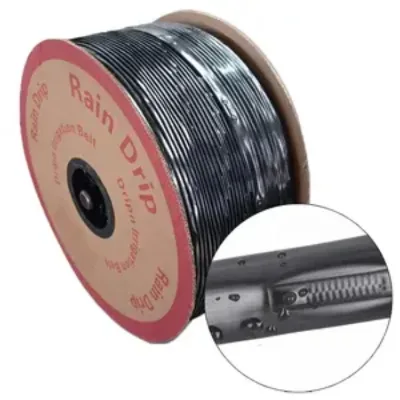


Comprehensive Sourcing Guide
Buried Irrigation Drip Tape Sourcing Guide
Buyers must first distinguish between standard surface drip tape and specialized buried variants designed for sub-surface installation. The observed product listings indicate a primary focus on PE material with thicknesses ranging from 0.15mm to 1.2mm, which directly influences durability when covered by soil. Understanding that some listings specify a double-layer construction while others offer single-layer options is critical for selecting the right product for long-term underground performance.
Procurement decisions should also account for the specific flow rates and hole configurations observed in the market, such as 1.38L/H to 3.0L/H flux options. Since the data shows variations in hole spacing from 10cm to 40cm, buyers need to align these specifications with their crop row widths and water requirements. Verifying that the selected tape matches the intended application, whether for flower, vegetable, or general greenhouse production, prevents costly mismatches between the irrigation system and the crop's actual needs.
Product Scope and Observed Listing Signals
The market for Buried Irrigation Drip Tape presents a wide spectrum of product models, including specific identifiers like Drip tape, connector, and BJ011 series. Listings frequently highlight customization availability for roll lengths, with observed standard lengths extending up to 3000m or 2500mm depending on the manufacturer. Buyers should note that while some products are packaged in woven plastic cloth, others utilize simple plastic bags, which affects how the material is protected during transit and storage.
Observations reveal that the product origin is primarily Hebei and Jiangsu in China, indicating a concentrated supply chain in these regions. The observed price range spans from 0.01 to 2500 USD, reflecting significant variance based on material quality, thickness, and order volume. It is essential for buyers to recognize that a lower price point may correlate with thinner wall gauges, such as 0.15mm, which might be less suitable for deep burial compared to the 0.6mm to 1.2mm options also available in the catalog.
Technical Specifications to Verify
Thickness is the most critical technical parameter for buried applications, as the tape must resist soil pressure and root intrusion. Verified data shows thickness options ranging from 0.15mm to 0.5mm for standard models, with some heavy-duty variants reaching 1.2mm. Buyers must explicitly confirm the wall thickness for their specific order, as thinner tapes like 0.3mm or 0.4mm may be intended for surface use or temporary installations rather than permanent buried systems.
Flow rate and emitter spacing are equally vital for ensuring uniform water distribution across the field. The observed flux rates vary from 1.38L/H to 3.0L/H, with hole distances customizable at intervals of 10cm, 20cm, 30cm, or 40cm. Procurement teams should verify that the selected working pressure, typically between 0.10MPa and 0.25MPa, is compatible with their pump systems to prevent emitter clogging or excessive water loss due to pressure fluctuations.
Compliance and Safety Documentation
While specific certification documents are not explicitly listed in the provided product facts, buyers must request proof of material safety for agricultural use. The observed material is consistently identified as PE or Plastic, which generally implies compliance with food-grade standards, but this must be confirmed through supplier documentation. Ensuring the tape does not leach harmful substances into the soil is a prerequisite for organic farming operations and general food safety compliance.
Documentation regarding the product standard is also necessary, as listings reference standards like 12-20mm or 1000m/2000m lengths which may serve as internal benchmarks. Buyers should ask for test reports verifying the water absorption rate, which is observed to be less than 0.01%, ensuring the material remains stable and does not degrade rapidly when buried. Without these documents, the risk of purchasing non-compliant materials that could fail under field conditions increases significantly.
Cost Drivers and Commercial Terms
The minimum order quantity (MOQ) is a primary cost driver, with observed ranges spanning from 1 roll to 20,000 units. Some suppliers list a specific MOQ of 10 rolls for stock items, while others may negotiate based on custom specifications. Buyers should calculate the total landed cost by factoring in these volume thresholds, as ordering below the MOQ often incurs higher per-unit prices or requires paying for a full production run.
Delivery time and packaging methods also influence the overall commercial terms and logistics budget. Observed lead times vary from 5 to 10 days, depending on stock availability and customization requirements. Packaging options include woven plastic cloth, paper car covers, or simple plastic bags, and the choice here affects shipping weight and protection. Buyers must clarify who bears the cost of specialized packaging if the standard plastic bag is insufficient for their long-distance shipping needs.
Supplier Qualification and Quality Control
Supplier qualification should begin with verifying the production origin, as the data points to specific manufacturing hubs in Hebei and Jiangsu. Buyers should confirm that the supplier has a track record of producing the specific models observed, such as FCA017 or BJ016, to ensure they have the necessary tooling and expertise. Requesting samples of the double-layer or single-layer tape is essential to physically inspect the material quality before committing to a large order.
Quality control protocols must address the consistency of the drip holes and the uniformity of the flow rate. Since the product features include saving water, fertilizer, and labor, the physical integrity of the tape is paramount to realizing these benefits. Buyers should implement a pre-shipment inspection to verify that the roll lengths match the ordered specifications, such as 2000m or 2300m, and that the hole spacing is accurate to the requested 10cm or 20cm intervals.
Long-Term Procurement Checks
Long-term success depends on the supplier's ability to maintain consistent quality across multiple production batches. Buyers should establish a protocol for periodic re-testing of the water absorption rate and flow rate to ensure the PE material has not degraded over time. Given that the product is designed for greenhouse and garden agriculture, the tape must withstand varying environmental conditions without losing its structural integrity or clogging.
Finally, buyers should monitor the supplier's responsiveness to customization requests, as the observed data indicates high flexibility in thickness, length, and hole spacing. A reliable partner will be able to adjust the production line to meet specific needs, such as changing the roll length to 2500mm or altering the working pressure requirements. Building a relationship with a supplier who can adapt to these changing needs ensures a stable supply chain for future agricultural seasons.
FAQs
What thickness options are available for Buried Irrigation Drip Tape?
Buried Irrigation Drip Tape is available in thicknesses ranging from 0.15mm to 0.5mm, with specific options like 0.3mm, 0.4mm, and 0.6-1.2mm. Customized thicknesses are also available to meet specific project requirements. These variations allow for tailored durability and flow control depending on the installation environment and pressure needs.
Can Buried Irrigation Drip Tape be customized for specific hole distances?
Yes, customization is available for hole distances, including standard options of 10cm, 20cm, 30cm, and 40cm. Buyers can also request custom spacing to suit particular crop layouts. This flexibility ensures precise water distribution, optimizing irrigation efficiency for diverse agricultural applications such as flower and vegetable production in greenhouses.
What is the typical lead time for ordering Buried Irrigation Drip Tape?
The typical delivery time for Buried Irrigation Drip Tape ranges from 5 to 10 days, depending on the order specifics and stock availability. Some suppliers offer faster turnaround times for stock items, while customized orders may require additional processing time. This efficient lead time supports timely project execution for agricultural and garden irrigation needs.
Which materials are used to manufacture Buried Irrigation Drip Tape?
Buried Irrigation Drip Tape is primarily manufactured using PE (Polyethylene) and plastic materials. These materials are chosen for their durability, flexibility, and resistance to environmental factors. The use of high-quality PE ensures long-term performance in buried applications, providing reliable water delivery for various crops while maintaining structural integrity under soil pressure.
What are the standard roll lengths for Buried Irrigation Drip Tape?
Standard roll lengths for Buried Irrigation Drip Tape include 800m, 500m, 1000m, 2000m, 2300m, 2500m, and 3000m. Customized lengths are also available to accommodate specific field dimensions. These options allow for efficient coverage of large agricultural areas, reducing the need for frequent tape changes and minimizing installation labor costs.
How does the flow rate of Buried Irrigation Drip Tape affect performance?
The flow rate, typically ranging from 1.38 to 3.0 L/H, directly impacts water distribution uniformity. Lower flow rates like 1.38 L/H offer precise control, while higher rates up to 3.0 L/H suit larger water demands. Selecting the appropriate flow rate ensures optimal irrigation efficiency, preventing water waste and promoting healthy crop growth in greenhouse and field settings.