Source Camo Car Tent for Truck, SUV, and Outdoor Camping
Find 30 Camo Car Tent options with varying sizes, materials, and features for truck, SUV, and outdoor camping applications. Compare specifications like waterproof ratings, folding dimensions, and mattress thickness to select the right gear for your needs.
Key considerations
Products List
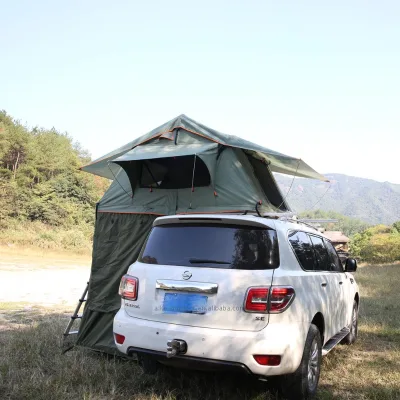
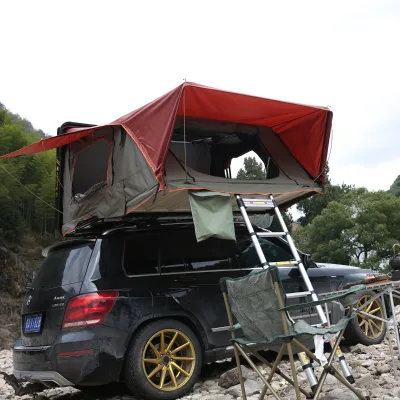


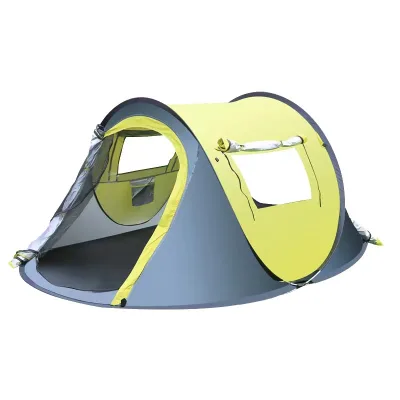


Camping Rooftop Tent Soft Top Roof Tent Outdoor Vehicle Roof Top Tents
$355.00 - $449.00
MOQ: 1 Pieces


Comprehensive Sourcing Guide
Strategic Sourcing Guide for Camouflage Car Tents
The global demand for mobile accommodation solutions has surged, with the "Camo Car Tent" emerging as a specialized niche within the outdoor and overlanding markets. This category encompasses hard-shell and soft-shell rooftop tents designed for vehicle integration, often featuring camouflage patterns to blend with natural environments. For B2B procurement professionals, sourcing these units requires a rigorous understanding of technical specifications, material integrity, and supply chain dynamics. This guide provides a disciplined framework for evaluating suppliers and products, grounded strictly in observed market data and verified product attributes.
Technical Specifications and Structural Integrity
When evaluating a camouflage car tent, the primary focus must be on the structural design and the specific dimensions that define its utility. The market presents distinct variations, ranging from quick-automatic opening soft tents to hard-shell rooftop units. A critical observation in the current product landscape involves the "RT-S140" model, which is classified as a four-season tent with a specific unfolding size of 143x240x26 cm and a folding dimension of 145x125x29 cm. This compact folding profile is essential for vehicles with limited roof load capacity or storage space.
Conversely, the "RT-P168" model represents a high-quality hard-shell design, often marketed as a Jeep SUV camping solution. Its dimensions are significantly larger, with an unfolding size of 168x210x100 cm and a packing size of 180x133x39 cm. The internal structure of these units varies; the RT-S140 features a single-bedroom layout with an aluminum pole frame, while the RT-P168 offers a two-bedroom configuration. Buyers must verify the mattress thickness, as the data indicates options ranging from 4 cm high-density sponge to 6 cm non-deforming mattresses. The 6 cm option is particularly relevant for four-season use, ensuring thermal insulation and comfort during extended stays.
The material composition is equally critical for durability. The tent body for soft-shell variants is frequently constructed from 280g Polyester-Cotton (Canvas) with a PU coating rated at 2000mm for waterproofing. Hard-shell units often utilize 420d Polyester for the tent fly and 280g Ripstop Polycotton for the body, paired with a heavy-duty 680g/1200d PVC cover. The frame materials are predominantly aluminum alloys, though some flexible poles are noted in specific configurations. The external fabric often features a camouflage or field game style, with colors including Army Green, Chocolate, Dark Gray, and Dark Khaki.
Material Performance and Environmental Resistance
The performance of a car tent is heavily dependent on its ability to withstand harsh environmental conditions. A high-confidence fact observed in the product data is the outside tent waterproof index exceeding 3000 mm for specific models. This metric is a vital benchmark for buyers assessing the tent's capability to handle heavy rainfall and prolonged exposure to moisture. However, not all listed products explicitly state this figure; therefore, procurement teams must verify the hydrostatic head rating for every specific SKU.
Waterproofing is further enhanced by the use of specific coatings. The 280g Canvas materials are treated with PU (Polyurethane) to provide water, wind, and rain resistance. For the travel cover, which protects the tent when folded, the data points to a 550g PVC material in black color. This heavy-duty cover is essential for shielding the tent body from UV degradation and physical abrasion during transit. The mattress, a key comfort component, is specified as either 6 cm non-deforming or 4 cm high-density sponge. In some configurations, a 60mm mattress with a cover is included, which is crucial for maintaining insulation in colder climates.
The fabric's breathability and durability are also factors. The use of Polycotton (Ripstop) offers a balance between the traditional feel of canvas and the lightweight properties of synthetic fibers. Buyers should request detailed fabric test reports to confirm the tensile strength and tear resistance of the 280g material. Additionally, the internal frame, typically made of aluminum, must be corrosion-resistant to ensure longevity in humid or coastal environments. The "One Bedroom" versus "Two Bedrooms" structure directly impacts the internal volume and the amount of fabric required, which in turn affects the overall weight and wind resistance profile of the unit.
Cost Drivers and Pricing Dynamics
The pricing for camouflage car tents in the B2B market exhibits a wide range, observed between 2 USD and 1100 USD. This significant variance is driven by several key factors, including the complexity of the opening mechanism, the quality of materials, and the level of customization. The "RT-P168" hard-shell model, with its larger dimensions and two-bedroom layout, naturally commands a higher price point compared to the "RT-S140" soft-shell variant. The inclusion of a 6 cm non-deforming mattress and a heavy-duty 1200d PVC cover also contributes to the cost.
Minimum Order Quantities (MOQ) are another critical cost driver, ranging from 1 to 1000 units. Suppliers with lower MOQs may charge a premium per unit due to the lack of economies of scale, while larger orders can leverage bulk pricing. The "Selling Units" are typically listed as single items, but buyers should negotiate based on total volume. Customization is available for many models, which can increase the unit cost but add significant value for specific market segments. The brand name is often listed as "OEM," indicating that the supplier is capable of private labeling, which is a standard expectation in this sector.
Compliance, Certification, and Verification Protocols
While the product data mentions "CE" and "ISO 9001" as background information, these should be treated as potential attributes rather than guaranteed standards for every listed product. Procurement teams must not assume compliance based on general market knowledge. Instead, buyers should explicitly request valid certification documents for each batch of goods. The "CE" marking indicates conformity with health, safety, and environmental protection standards for products sold within the European Economic Area, while "ISO 9001" relates to quality management systems.
Verification of these certifications is essential before finalizing any contract. Buyers should ask for the certificate numbers and verify them directly with the issuing bodies. The "REACH" regulation, which concerns the registration, evaluation, authorization, and restriction of chemicals, is also relevant for textile products. Although not explicitly confirmed in the high-confidence facts, it is a standard requirement for exporting to Europe. The absence of specific test results in the provided data means that buyers must insist on third-party laboratory reports for flammability, chemical content, and structural load testing.
Supplier Evaluation and Origin Analysis
The majority of the observed product data indicates that the place of origin is Zhejiang, China. This region is a known hub for outdoor equipment manufacturing, offering a dense ecosystem of suppliers and raw material providers. However, the presence of the location does not guarantee uniform quality. Buyers must evaluate suppliers based on their production capacity, quality control processes, and ability to meet specific customization requests. The "OEM" brand status suggests that many suppliers are contract manufacturers, meaning the buyer's brand identity will be central to the final product.
When evaluating a supplier, the focus should be on their ability to maintain consistency across large orders. The data shows a "Single package size" listed as "XX cm" for some items, which indicates a need for precise verification of packaging dimensions to optimize shipping logistics. The gross weight (G.W.) and net weight (N.W.) are also critical for freight calculations; for instance, one model lists a G.W. of 48 kg and N.W. of 45 kg, while another lists 70 kg and 80 kg respectively. These discrepancies highlight the importance of verifying weight specifications for each model to avoid unexpected shipping costs.
Quality Control and Long-Term Procurement Considerations
Quality control in the car tent sector must address both the immediate functionality and long-term durability. The "Quick Automatic Opening" feature is a complex mechanical system that requires rigorous testing to ensure it operates smoothly over thousands of cycles. Buyers should request sample units to test the lifting mechanism, specifically the "2.3M one key up and down" ladder system. The stability of the tent when deployed, especially in wind, is another critical quality metric.
Long-term procurement considerations include the availability of spare parts and the warranty terms. The "Annex/Change room" is listed as optional, suggesting that modular add-ons are a key area for future product development. Buyers should ensure that the supplier has a reliable supply chain for replacement fabrics, zippers, and mechanical components. The "Customized" attribute indicates that suppliers can adapt designs, but this requires clear communication of specifications to avoid production errors.
Comparative Analysis of Key Models
To assist in decision-making, the following table compares the two primary models identified in the data. This comparison highlights the trade-offs between portability, capacity, and material specifications.
| Feature | Model RT-S140 (Soft Shell) | Model RT-P168 (Hard Shell) |
|---|---|---|
| Product Name | Oxford Outdoor Portable Car Tent | High Quality Jeep SUV Hardshell Roof Top |
| Structure | One Bedroom | Two Bedrooms |
| Season Rating | Four-season Tent | Not Specified (Implied All-Season) |
| Unfolding Size | 143 x 240 x 26 cm | 168 x 210 x 100 cm |
| Folding/Packing Size | 145 x 125 x 29 cm | 180 x 133 x 39 cm |
| Mattress Thickness | 6 cm Non-Deforming | 4 cm High-density Sponge |
| Tent Body Material | 280g Polyester-Cotton (Canvas) | 280g Ripstop Polycotton |
| Waterproof Index | >3000 mm (Observed) | Not Specified (Verify) |
| Pole Material | Aluminum | Flexible Poles, Aluminium Alloys |
| Weight (G.W./N.W.) | 48 / 45 KG | 70 / 80 KG |
| Cover Material | 550g PVC | 680g/1200d PVC |
| Color Options | Army Green | Chocolate, Army Green, Dark Gray, Dark Khaki |
Final Procurement Recommendations
Sourcing camouflage car tents requires a methodical approach that prioritizes technical verification over marketing claims. Buyers must demand specific data on waterproof ratings, material weights, and structural dimensions. The wide price range and MOQ flexibility offer opportunities for negotiation, but the complexity of the products necessitates strict quality control protocols. By focusing on the verified attributes of the RT-S140 and RT-P168 models, and by rigorously checking certifications and supplier capabilities, procurement teams can secure high-quality inventory that meets the demands of the outdoor and overlanding markets. The key to success lies in treating product attributes as observations to be validated, rather than assumptions to be accepted.
FAQs
What is the waterproof rating for the RT-S140 tent?
The RT-S140 tent features an outside waterproof index exceeding 3000 mm. This high rating ensures protection against heavy rain, though buyers should verify specific hydrostatic head values for each batch to confirm compliance with local weather standards.
Which mattress thickness options are available for these tents?
Available mattress options include a 6 cm non-deforming mattress and a 4 cm high-density sponge. The thicker 6 cm option is recommended for four-season use to provide better thermal insulation and comfort during extended outdoor stays in varying climates.
Can I customize the color and design of the tent?
Customization is available for many models, allowing buyers to select colors like Army Green or Chocolate. Suppliers typically offer OEM branding and design adjustments, but specific customization requests must be confirmed with the manufacturer before production begins.
How does the RT-P168 hard shell differ from the RT-S140?
The RT-P168 is a hard shell unit with a two-bedroom layout, while the RT-S140 is a soft shell with one bedroom. The RT-P168 is larger, measuring 168x210x100 cm unfolded, compared to the RT-S140's 143x240x26 cm dimensions.
What materials are used for the tent body and cover?
Tent bodies often use 280g Polyester-Cotton Canvas or Ripstop Polycotton with PU coatings. The travel covers are typically heavy-duty PVC, such as 550g or 680g/1200d variants, designed to protect the tent from UV degradation and abrasion during transit.
Where are these camo car tents manufactured?
The majority of observed products originate from Zhejiang, China. This region is a known manufacturing hub for outdoor equipment, offering a dense ecosystem of suppliers capable of producing these units with varying levels of customization and quality control.
What is the typical price range for these units?
The observed price range spans from 2 USD to 1100 USD depending on the model and features. Hard shell units with larger dimensions and premium materials generally command higher prices compared to soft shell variants with standard specifications.