Source Camouflage Long Sleeve Sweatshirt for Hunting, Fishing, Outdoor
Compare 30 listings for the Camouflage Long Sleeve Sweatshirt featuring woven cotton and polyester options. Buyers can evaluate sizes, patterns, and customization details for tactical or casual use.
Key considerations
Products List


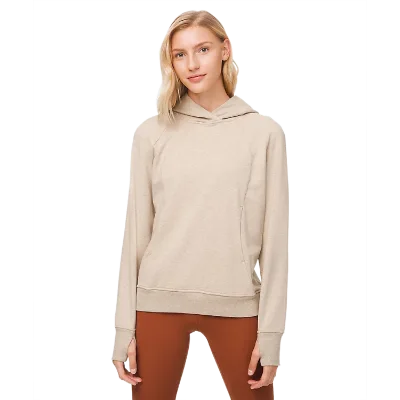


Wholesale Custom Embossed Crewneck Oversized Heavyweight Long Sleeve Sweatshirt
$8.00 - $15.00
MOQ: 100 Pieces

Custom 100% Cotton High Quality Pullover Solid Comfortable Long Sleeve Sweatshirt
$5.00 - $12.00
MOQ: 100 Pieces

Oversized 100% Cotton Men's Womens Crewneck Sweatshirts Pullover Long Sleeve
$5.00 - $12.00
MOQ: 100 Pieces

Hot Selling High Quality Long Sleeve Custom Logo Embroidery Sweatshirts
$5.00 - $12.00
MOQ: 100 Pieces


Comprehensive Sourcing Guide
Strategic Sourcing Guide for Camouflage Long Sleeve Sweatshirts
Understanding Product Specifications and Material Variability
When sourcing camouflage long sleeve sweatshirts, buyers must first navigate the inherent variability in product attributes found within the current market. The term "camouflage" in this context often encompasses a spectrum of patterns, ranging from traditional printed military-style designs to solid colors that may be styled for tactical or outdoor use. Market observations indicate that while some listings explicitly feature "Printed" patterns, others are categorized under "Solid" or "Outdoor" themes, suggesting that the visual camouflage effect may be achieved through color blocking or specific fabric treatments rather than a single uniform print.
The material composition is a critical differentiator. Data shows a split between "Cotton" and "Polyester" as primary fabric choices. Cotton-based options typically offer superior breathability and a softer hand feel, aligning with the "Fashion" and "Casual" style attributes observed in the supply base. Conversely, Polyester variants are frequently associated with "Tactical" applications, emphasizing features such as being "Compressed," "Breathable," "Lightweight," and "Durable." This distinction is vital for procurement strategy; a buyer seeking comfort for casual wear should prioritize cotton blends, while those targeting hunting, fishing, or outdoor tactical operations should focus on high-performance polyester constructions.
Sleeve and collar specifications further define the product's utility. The market consistently lists "Long Sleeve" as the standard configuration, with sleeve lengths often specified as "Long Sleeve" in technical descriptions. Collar styles are predominantly "Round Neck," which supports the "Unisex" and "Fashion" positioning of the majority of available inventory. However, specific tactical models may deviate from this norm to accommodate layering or specific gear requirements. The "Style" attribute ranges from "Fashion" to "Casual" and "Tactical," indicating that the same core product can be marketed to vastly different consumer segments depending on the finishing details and branding.
Compliance, Standards, and Certification Verification
In the B2B procurement of apparel, particularly items designated for "Outdoor," "Hunting," or "Fishing" usage, compliance and standard verification are paramount. The supplied data references specific standards, such as "1kg" for weight and packaging dimensions like "604050cm/15 pcs." These figures represent specific product configurations rather than universal industry standards. Buyers must not assume that all suppliers adhere to these exact metrics without direct confirmation.
Certification status is a frequent area of uncertainty in the current market data. While some products list "Customized" logo capabilities and "Available" customization options, explicit mentions of international safety or quality certifications (such as OEKO-TEX, ISO 9001, or specific fire-retardant standards for tactical gear) are absent from the provided facts. Consequently, buyers must treat the absence of a certification mention as a requirement for verification rather than proof of non-compliance.
When evaluating suppliers, the "prod_standard" field often contains packaging or weight specifications rather than material safety standards. For instance, a listing might specify a standard of "S/M/L/XL /XXL," which refers to sizing consistency rather than a regulatory benchmark. Buyers should explicitly request documentation regarding chemical restrictions (e.g., AZO dyes, formaldehyde) and flammability standards, especially for products intended for outdoor use where fire safety may be a concern. The "Location" data points to "China" and specifically "Zhejiang China," a major manufacturing hub. While this region has a robust supply chain, it does not inherently guarantee compliance with Western safety standards. Procurement teams must mandate third-party laboratory testing reports to validate that the "Polyester" or "Cotton" materials used meet the specific regulatory requirements of the target export market.
Cost Drivers and Pricing Structure Analysis
The pricing landscape for camouflage long sleeve sweatshirts exhibits significant variance, with observed listed prices ranging from 1.2 to 25 USD. This wide range is driven by several key factors, including material quality, production complexity, and customization levels. The lower end of the spectrum (1.2 USD) likely corresponds to basic cotton or polyester blends with minimal customization and standard packaging. In contrast, the higher end (25 USD) suggests premium materials, advanced functional features like compression technology, or specialized tactical designs.
Material costs are a primary driver. Polyester, often cited with features like "Lightweight" and "Durable," may command a different price point than standard cotton, depending on the thread count and finishing processes. The "Customization" attribute is another significant cost variable. Suppliers offering "Customerized" logos and "Available" customization options will typically charge a premium over stock items. The "MOQ" (Minimum Order Quantity) also influences unit pricing; observed MOQs range from 2 to 1000 units. Buyers ordering at the lower end of this spectrum (e.g., 10-100 units) may face higher per-unit costs compared to those placing bulk orders near the 1000-unit threshold.
Packaging and logistics costs further impact the final landed price. The data indicates varied packaging methods, from "Carton" to "Original Packaging" and "1 Piece Per Polybag." More complex packaging requirements, such as custom polybag printing or specific carton dimensions (e.g., "604050cm"), will add to the overall cost. Additionally, the "Delivery Time" of 7-10 days suggests a relatively quick turnaround for standard orders, but expedited shipping or rush production fees may apply for urgent needs. Buyers should request detailed breakdowns of material, labor, and packaging costs to understand the true cost drivers behind the quoted price.
Typical Applications and Usage Scenarios
The versatility of camouflage long sleeve sweatshirts allows them to serve multiple distinct market segments. The "Usage" attribute in the supply data highlights "Body" as a general category, but more specific applications include "Hunting," "Fishing," and "Outdoor" activities. These tactical-oriented applications demand specific performance characteristics, such as the "Compressed" and "Breathable" features noted in the product descriptions. For hunters and anglers, the camouflage pattern is not merely aesthetic but functional, designed to blend into natural environments.
In the fashion and casual wear sector, the "Style" is described as "Fashion" and "Casual," with a "Gender" classification of "Unisex." These products are often marketed as everyday wear, leveraging the "Printed" or "Solid" patterns for aesthetic appeal rather than concealment. The "Season" is listed as "Spring," indicating that these garments are optimized for moderate temperatures. However, the "Long Sleeve" specification suggests they can also serve as layering pieces in cooler weather.
The "Applicable User" is consistently listed as "Adults," with size ranges extending from "Xs" to "3XL" or even "Free Size." This broad sizing capability ensures that the product can cater to a wide demographic. The "Product Name" variations, such as "Tactical Sweatshirt" or "Tactical Sweatshirts," further reinforce the dual nature of the market: one segment focused on performance and utility, and the other on style and comfort. Buyers must align their sourcing strategy with their target application; a tactical gear distributor will prioritize durability and specific pattern accuracy, while a fashion retailer will focus on color consistency and fabric softness.
Supplier Evaluation and Production Capabilities
Evaluating suppliers requires a deep dive into their production capabilities and operational transparency. The "prod_model" field reveals a diverse array of SKUs, including "SKY1401," "737," "SC525#," "SN23092501," and "YMTS3-6." This variety suggests that suppliers often manage multiple product lines or offer extensive customization options. Buyers should verify if a specific model number corresponds to a stable, long-term production line or a limited-run prototype.
The "Sample" availability is a critical indicator of supplier reliability. The data confirms that "Sample: Yes" is a common offering, allowing buyers to physically inspect the "Feature" set, such as "Lightweight" and "Durable" claims, before committing to a bulk order. A supplier that readily provides samples and allows for "Customized" logo placement demonstrates a commitment to partnership and quality assurance.
Lead times are another essential metric. The observed "Delivery Time" of "7-10 days" is a positive indicator for rapid fulfillment, but buyers must clarify if this applies to sample production or bulk orders. In many cases, bulk production lead times are significantly longer. The "MOQ" of "10PCS" for certain items indicates flexibility for smaller buyers, while the upper range of 1000 suggests capacity for large-scale manufacturing.
When assessing suppliers, buyers should also consider the "prod_origin" and "prod_packing" details. Most products originate from "China," with specific mentions of "Zhejiang China." This region is known for its textile industry, but buyers should verify the specific factory's capacity and history. Packaging standards, such as "1 PC/Polybag" or "Carton," should be aligned with the buyer's logistics requirements to minimize damage and maximize shipping efficiency.
Quality Control and Long-Term Procurement Strategy
Implementing a robust quality control (QC) protocol is essential for maintaining brand integrity in the camouflage sweatshirt market. Given the variability in "Pattern" (Printed, Solid, Outdoor) and "Material" (Cotton, Polyester), buyers must establish clear acceptance criteria for color fastness, seam strength, and fabric weight. The "Weight" attribute varies significantly, with listings showing 0.5kg and 1.1kg for different products. This discrepancy highlights the need for precise weight specifications in purchase orders to ensure consistency.
For long-term procurement, building a relationship with suppliers who offer "Customization" and "Customerized" logos is advantageous. This flexibility allows buyers to differentiate their products in a crowded market. However, buyers must ensure that the customization process does not compromise the structural integrity of the garment. Regular quality audits should focus on the "Style" and "Feature" claims, verifying that "Compressed" or "Breathable" technologies are effectively integrated into the final product.
Sustainability and ethical sourcing are increasingly important considerations. While not explicitly detailed in the current data, buyers should inquire about the environmental impact of the "Polyester" or "Cotton" sourcing and the dyeing processes used. Establishing a long-term partnership with a supplier who can provide consistent quality, adhere to agreed-upon standards, and offer reliable lead times will mitigate the risks associated with the volatile nature of the apparel supply chain. By focusing on these strategic elements, buyers can secure a reliable supply of high-quality camouflage long sleeve sweatshirts that meet both functional and aesthetic requirements.
FAQs
What materials are used for camouflage long sleeve sweatshirts?
These sweatshirts are primarily made from Cotton or Polyester. Cotton options offer a softer feel suitable for fashion styles, while Polyester variants provide durability and breathability for tactical and outdoor applications.
Can buyers request custom logos on these sweatshirts?
Yes, customization is available including customerized logos. Buyers can specify design requirements, though this may affect the minimum order quantity and lead time compared to standard stock items.
What is the typical lead time for delivery?
The standard delivery time is 7-10 days for most orders. This timeline applies to standard production runs, but expedited shipping or complex customization requests may require additional processing time.
Which sizes are available for these sweatshirts?
Available sizes range from XS to 3XL or Free Size depending on the model. Specific models offer detailed US sizing like XS through XL, while others use standard S, M, L, and XL codes.
How much does a Camouflage Long Sleeve Sweatshirt cost?
Listed prices range from 1.2 to 25 USD per unit. The final cost depends on material choice, customization level, order quantity, and specific packaging requirements selected by the buyer.
Where are these sweatshirts manufactured?
Products originate from China, with specific manufacturing hubs in Zhejiang. Buyers should verify factory details as the region hosts numerous textile suppliers capable of producing these garments.
What are the minimum order quantities for purchase?
Minimum order quantities vary from 2 to 1000 units depending on the supplier. Some vendors offer low MOQs like 10 pieces, while bulk orders may require higher quantities to secure better pricing.