Source Carbon Fiber Muffler Tips for Sedans, SUVs, and Trucks
Find 30 listings for Carbon Fiber Muffler Tips with universal fitment and various installation types. Buyers can compare specifications, prices, and customization options from verified Chinese manufacturers.
Key considerations
Products List


Ak Type Glossy Carbon Fiber Car Exhaust Pipe Tips Exhaust Muffler End Tips
$14.00 - $17.00
MOQ: 4 Pieces
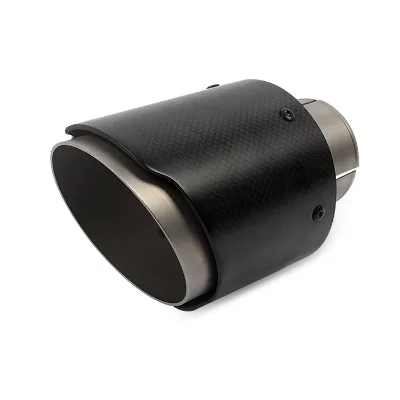


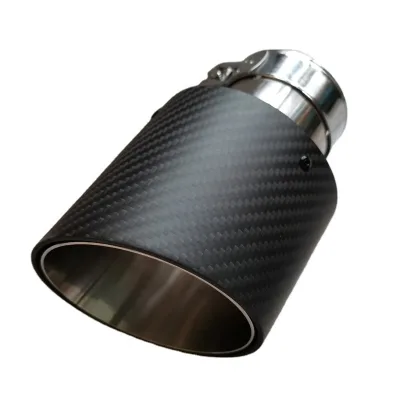


![[Qisong] Carbon Fiber Stainless Steel Exhaust Muffler Tip for Wholesale and Retail](https://image.made-in-china.com/221f0j00tmREFNUgbczJ/-Qisong-Carbon-Fiber-Stainless-Steel-Exhaust-Muffler-Tip-for-Wholesale-and-Retail.webp)


Gll Various Size Carbon Fiber Stainless Steel Automobile Exhaust Tips Dual Muffler
$27.90 - $50.90
MOQ: 20 Pieces

Matte Carbon Fiber M Performance Exhaust Tail Pipe Muffler Tip for Cars
$29.90 - $50.90
MOQ: 50 Pieces

Performance Muffler Exhaust Tip Carbon Fiber Exhaust Tips for Universal Car
$6.99 - $69.99
MOQ: 1000 Pieces

Performance Carbon Fiber Stainless Steel Muffler Tip Exhaust Tip for Exhaust System
$30.99 - $50.90
MOQ: 20 Pieces


Comprehensive Sourcing Guide
Strategic Sourcing Guide for Carbon Fiber Muffler Tips
Procuring automotive exhaust components, specifically Carbon Fiber Muffler Tips, requires a disciplined approach that balances aesthetic customization with rigorous engineering compliance. The global market for these parts is characterized by a diverse supply base, primarily concentrated in manufacturing hubs in China, offering a wide spectrum of options ranging from universal fitment to specialized OEM solutions. Buyers must navigate a complex landscape where material claims, installation methods, and regulatory standards vary significantly between listings. This guide provides a structured framework for evaluating suppliers and products, ensuring that procurement decisions are grounded in verified data rather than marketing assertions.
Technical Specifications and Material Verification
The core of any sourcing decision for Carbon Fiber Muffler Tips lies in the precise definition of technical specifications. While the product category suggests a composite material, the actual supply chain often presents a mix of materials. Buyers must verify whether the "carbon fiber" designation refers to a genuine woven composite or a carbon-fiber-patterned finish applied to steel or stainless steel substrates. In the observed market data, specific listings indicate "Stainless Steel" as the primary material for certain exhaust components, while others explicitly mention "Carbon Fiber Exhaust Tip" as a surface process. This distinction is critical for durability and weight reduction expectations.
When reviewing product attributes, buyers should look for specific thickness measurements and dimensional data. Available data points include a thickness specification of 1.0mm for certain steel-based exhaust parts, which serves as a benchmark for structural integrity in similar components. Furthermore, the single package size for heavy-duty items can vary drastically, with some listings indicating dimensions as large as 75x45x55 cm, suggesting that packaging logistics must be accounted for in the total landed cost. The model numbers, such as "AKET-1" or "HJ-CBM003," serve as unique identifiers that help in cross-referencing specific design iterations and compatibility.
Buyers should also scrutinize the "Body Material" versus "Surface" attributes. A product described as having a "Carbon Fiber Exhaust Tip" surface may have a "Steel" or "Stainless Steel" body. This hybrid construction is common in the industry to balance cost with the desired aesthetic. The "Style" is frequently listed as "Universal Exhaust," implying a design intended to fit a broad range of vehicle models, yet the "Car Fitment" attribute often clarifies this as "Universal" or specific to "All Brands." Understanding these nuances prevents the procurement of parts that may require extensive modification during installation.
Compliance Standards and Certification Requirements
Navigating the regulatory landscape for automotive exhaust systems is essential for ensuring that sourced components meet legal and safety requirements. The discharge standards for exhaust systems are a primary compliance metric. Market observations indicate that some products adhere to "Euro V" standards, a benchmark for emission control that is relevant for vehicles in European and other international markets. However, buyers must not assume that all carbon fiber tips or exhaust pipes listed meet this standard without explicit verification.
Certification status is another critical area of scrutiny. While some listings mention "ISOComponent:Exhaust Pipe" as a certification attribute, this phrasing is ambiguous and requires clarification. It is vital to verify if the supplier holds a valid ISO 9001 certification for their quality management system, as this is a standard industry benchmark for manufacturing consistency. Relying on unverified claims regarding certifications can lead to compliance failures in the destination market. Buyers should request official documentation from the supplier to confirm that the manufacturing facility and the specific product batch have undergone the necessary third-party testing.
Furthermore, the "OE No." (Original Equipment Number) is often listed as "Performance" in generic listings. This indicates that the part is designed to match performance specifications rather than a specific OEM part number. For buyers targeting specific vehicle manufacturers, the absence of a concrete OE number suggests a universal aftermarket approach. In such cases, the buyer must ensure that the product does not violate local noise ordinances or emission regulations, which often rely on the "Discharge Standard" being met. The "Main Market" attribute, which appears as both "North America" and "Europe" in different listings, serves as a proxy for the regulatory environment the product was designed to satisfy.
Cost Drivers and Pricing Dynamics
The pricing structure for Carbon Fiber Muffler Tips is influenced by a complex interplay of material costs, manufacturing processes, and logistical factors. The observed price range in the market spans from $1.49 to $212 USD, a variance that reflects differences in material authenticity, finish quality, and brand positioning. Lower-priced items often utilize stamped steel with a carbon-fiber vinyl wrap, while higher-priced units may involve genuine carbon fiber composites or high-grade stainless steel with precision machining.
Minimum Order Quantity (MOQ) is a significant cost driver. The observed MOQ range spans from 2 to 1000 units. Buyers purchasing small quantities may face higher per-unit costs but benefit from lower inventory risk. Conversely, bulk orders allow for negotiation on unit pricing but require a significant capital outlay and storage capacity. The "Selling Units" attribute, typically listed as "Single item," suggests that many suppliers are willing to sell individual pieces, which is advantageous for prototyping or small fleet replacements.
Logistics and packaging also impact the final cost. The "Single gross weight" of 10.000 kg for certain packages indicates that shipping costs can be substantial, particularly for air freight. Buyers must calculate the landed cost, which includes the product price, shipping, insurance, and potential import duties. The "Delivery Term" of 30 days or a "Delivery Time" of 10-15 days after receiving a deposit represents the lead time variance. Longer lead times may be associated with customizations, such as "Accept Customized Logo" or "Customized OEM" services, which add value but extend the procurement timeline.
Typical Applications and Fitment Compatibility
Understanding the application scope of Carbon Fiber Muffler Tips is crucial for matching supply with demand. The "Application" is broadly defined as the "Car Exhaust System," but the specific use cases vary. The "Style" is often categorized as "Universal Exhaust," making these parts suitable for a wide array of vehicles, from passenger cars to light trucks. The "Car Model" attribute frequently lists "Universal," reinforcing the versatility of these components.
However, the "Installation Type" varies between "Weld On" and "Bolt-on." This distinction dictates the complexity of the installation process and the tools required. "Weld On" tips require professional fabrication equipment and skilled labor, whereas "Bolt-on" options offer a more accessible solution for DIY enthusiasts or quick fleet maintenance. The "Connection" method, listed as "Welding" in some contexts, further emphasizes the need for specialized installation procedures.
Buyers should also consider the "Noise Source" and "Automobile Chassis Noise" attributes. These components are often marketed to address "The Noise of Engine," specifically "Mechanical Noise." While the primary function is aesthetic, the design of the tip can influence the acoustic profile of the exhaust system. For buyers targeting performance-oriented markets, the "Product Keywords" such as "Exhaust Flexible Pipe Hks Muffler" suggest a focus on high-performance applications where sound tuning is as important as visual appeal.
Supplier Evaluation and Operational Capabilities
Evaluating the operational capabilities of potential suppliers is a fundamental step in mitigating procurement risk. The "Factory or Trading Company" attribute helps distinguish between direct manufacturers and intermediaries. Listings indicating "Factory" status suggest a direct relationship with the production line, which can offer better pricing and more control over quality. In contrast, trading companies may offer a broader range of products but with less direct oversight of the manufacturing process.
The scale of the supplier is another key indicator of reliability. Data points such as "Employee: More Than 200" provide insight into the capacity of the manufacturing facility. A larger workforce often correlates with higher production volumes and the ability to handle large orders efficiently. Additionally, the "Service" attribute, which includes "Customized OEM," indicates that the supplier is capable of tailoring products to specific buyer requirements, such as custom logos or unique dimensions.
The "Place of Origin" is predominantly listed as "Guangdong, China" or "Zhejiang, China (Mainland)." These regions are known for their robust manufacturing ecosystems, particularly in the automotive parts sector. Buyers should verify the specific location to ensure it aligns with their logistics strategy and to assess the local regulatory environment. The "prod_origin" and "Place of Origin" consistency in the data suggests a strong concentration of supply in these areas, which can be leveraged for efficient sourcing.
Quality Control and Long-Term Procurement Strategy
Implementing a robust quality control (QC) strategy is essential for maintaining product standards over the long term. The "Quality" attribute is frequently described as "High-Quality," but this is a subjective claim that requires objective verification. Buyers should establish clear acceptance criteria based on the "Thickness" (e.g., 1.0mm), "Surface" finish, and "Material" composition. Regular inspections, including visual checks for defects and dimensional measurements, should be conducted during the production phase and prior to shipment.
The "Warranty" period, often listed as "1 Year," provides a baseline for post-sales support. However, buyers should negotiate warranty terms that cover specific failure modes, such as delamination of the carbon fiber layer or corrosion of the metal substrate. The "Package" type, whether "Individual Package Box," "Neutral Package," or "Normal Export Packing," also plays a role in protecting the product during transit. Ensuring that the packaging is robust enough to prevent damage is a critical QC step.
For long-term procurement, building a strategic partnership with the supplier is advisable. The "Customization" availability and "Logo" acceptance suggest that suppliers are open to collaborative development. Buyers should leverage these capabilities to create exclusive product lines that differentiate their offerings in the market. Additionally, maintaining open communication regarding "Delivery Time" and "Lead Time" helps in managing inventory levels and meeting customer demand. By focusing on verified attributes and maintaining a rigorous QC process, buyers can secure a reliable supply of high-performance Carbon Fiber Muffler Tips that meet both aesthetic and functional requirements.
FAQs
What materials are used for Carbon Fiber Muffler Tips?
Products often use stainless steel bodies with carbon fiber exhaust tip surfaces. Some listings specify steel bodies while others mention carbon fiber as a surface process, so verify the actual material composition before purchasing.
How long is the delivery time for these exhaust parts?
Delivery terms typically range from 10 to 30 days depending on the supplier. Some vendors require 10-15 days after receiving a deposit, while others list a standard 30-day delivery term for universal exhaust components.
Can I customize the logo on these muffler tips?
Yes, customization is available for many products including customized logos. Buyers can request specific branding through OEM services, provided the supplier accepts customized logo requests as part of their service offering.
Which installation types are available for these exhaust tips?
Installation options include both weld-on and bolt-on methods. Some products specify welding connections while others offer bolt-on installation types, so check the specific product attributes for the required installation procedure.
What is the minimum order quantity for these parts?
The minimum order quantity ranges from 2 to 1000 units depending on the supplier. Buyers can often find options for single items or bulk orders, with specific MOQs varying by manufacturer and product model.
Where are these exhaust components manufactured?
Most products originate from China, specifically Guangdong or Zhejiang provinces. The place of origin is consistently listed as these regions, indicating a concentrated supply base for automotive exhaust system components.
What certifications do these exhaust pipes hold?
Some listings mention ISOComponent certification for exhaust pipes, though specific ISO 9001 status requires verification. Buyers should request official documentation to confirm quality management system certifications before finalizing procurement.