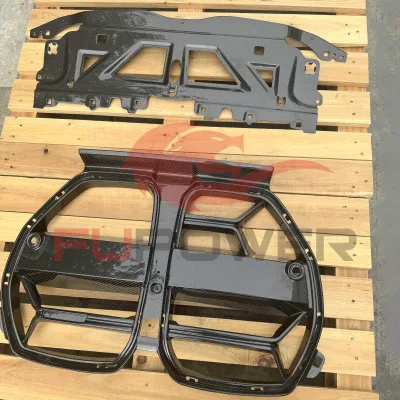
Source Carbon Fiber Front Grill with Park Assist Sensor for Cars, SUVs, Trucks
Compare listings for the Carbon Fiber Front Grill with Park Assist Sensor across 30 verified products. Buyers can evaluate materials, fitment, and safety features to find the right component for their vehicle needs.
Key considerations
Products List



Portable Charcoal Grill BBQ Grill Outdoor with Side Tables Carbon Grill
$40.00 - $50.00
MOQ: 1000 pieces


Versatile Backyard Charcoal Smoker Grill with Multi-Functional Side Shelves
$37.70 - $49.90
MOQ: 10 Pieces

Outdoor Kitchen Charcoal Barbeque Car Smokeless Charcoal Barbecue Grill Car
$500.00 - $999.00
MOQ: 1 Sets


Comprehensive Sourcing Guide
Strategic Sourcing Guide for Carbon Fiber Front Grills with Park Assist Sensors
The automotive aftermarket and original equipment manufacturing (OEM) sectors are increasingly demanding high-performance, lightweight, and aesthetically refined components. Among these, the Carbon Fiber Front Grill with Park Assist Sensor integration represents a critical intersection of material science, vehicle safety, and aerodynamic efficiency. For procurement professionals, navigating this specialized category requires a disciplined approach to verifying material integrity, sensor compatibility, and regulatory compliance. This guide outlines the essential factors for sourcing these components, drawing upon verified industry attributes and technical standards to ensure a robust supply chain strategy.
Material Composition and Structural Integrity
The primary differentiator for this product category is the use of carbon fiber as the base material. Unlike traditional metal grills, carbon fiber offers a superior strength-to-weight ratio, which directly contributes to vehicle fuel efficiency and handling dynamics. When evaluating potential suppliers, buyers must verify that the material specification explicitly lists "Carbon Fiber" as the primary component. The manufacturing process typically involves complex layup techniques to ensure structural rigidity while maintaining the lightweight characteristics essential for performance vehicles.
In addition to the primary material, the surface treatment plays a vital role in durability and aesthetics. Industry observations indicate that finished products often undergo specific surface treatments such as plating, coating, painting, or other protective layers. These processes are not merely cosmetic; they protect the carbon fiber matrix from environmental degradation, UV exposure, and road debris. A high-quality finish should result in a consistent texture and color, often specified as black or custom-matched to vehicle body colors. Buyers should request technical data sheets that detail the specific coating chemistry and the adhesion properties of the finish to the carbon substrate.
The dimensional tolerance of the grill is another critical technical specification. Precision is paramount when integrating sensors into the grill structure. The acceptable tolerance range for such components is typically tight, often cited around +/-0.01mm in high-precision manufacturing contexts. Deviations beyond this range can lead to misalignment of the park assist sensors, resulting in false readings or complete system failure. Procurement teams must ensure that the supplier's quality control protocols strictly adhere to these dimensional constraints before shipment.
Sensor Integration and Functional Specifications
The integration of park assist sensors into the front grill is a complex engineering challenge. The grill must house the sensors without compromising the aerodynamic profile or the structural integrity of the carbon fiber. The "Car Fitment" attribute is a crucial data point; while some components are designed for specific models, others are marketed as "Universal." Buyers must exercise caution with universal claims, as the physical mounting points and sensor spacing often vary significantly between vehicle manufacturers.
The functionality of the park assist system relies on the precise placement of the sensors within the grill matrix. The sensor housing must be designed to allow for the transmission of ultrasonic or radar signals without interference from the carbon fiber weave or the protective coating. In some advanced configurations, the grill may include specific cutouts or recessed areas to accommodate the sensor array. The "OE NO." (Original Equipment Number) field is often used to identify specific compatibility. If a supplier lists "custom" for the OE number, it implies a bespoke manufacturing process where the grill is tailored to the buyer's specific vehicle requirements or a specific aftermarket application.
Furthermore, the electrical connectivity and wiring harness integration must be considered. The grill assembly should facilitate a seamless connection to the vehicle's existing electronic control unit (ECU). Buyers should verify that the supplier provides detailed wiring diagrams and connector specifications. The "Product Name" often includes descriptors like "Cooling Shroud" or "Acc" (Accessories), which may indicate additional functional roles such as airflow management or aesthetic enhancement alongside the sensor housing.
Compliance, Certification, and Regulatory Standards
Navigating the regulatory landscape is essential for any automotive component procurement. While the core keyword focuses on carbon fiber grills, the broader context of automotive safety and environmental standards cannot be overlooked. Different regions have distinct certification requirements. For instance, the European market often requires CE certification, indicating conformity with health, safety, and environmental protection standards. Other regions may demand ISO certifications or specific national standards like GS (Geprüfte Sicherheit) in Germany.
It is important to distinguish between certifications applicable to the grill itself and those applicable to the vehicle as a whole. Some suppliers may list certifications such as "ISOCE" or reference discharge standards like "Euro V," which typically apply to engine emissions rather than body panels. Buyers must critically analyze these claims to ensure they are relevant to the specific component being purchased. A grill manufacturer should provide valid, up-to-date certification documents that specifically cover the carbon fiber material and the sensor integration process.
Safety devices are another area requiring verification. While safety devices like "Oxygen Depletion Safety Devices" or "Flame Safety Devices" are common in heating or combustion equipment, they are generally not applicable to a passive carbon fiber grill. However, if the grill is part of a larger system involving active cooling or heating elements, these safety features become relevant. Buyers should request evidence of testing for fire resistance and material stability under high-temperature conditions, especially if the grill is positioned near the engine bay.
Cost Drivers and Pricing Variables
The cost of carbon fiber front grills with park assist sensors is influenced by several distinct factors. The primary driver is the raw material cost of carbon fiber, which is significantly higher than traditional plastics or metals. The complexity of the manufacturing process, including the molding, curing, and finishing stages, also contributes to the final price. High-precision machining required to accommodate the sensors adds to the labor and equipment costs.
Pricing in this sector can vary widely, with observed ranges extending from low-cost entry-level options to premium, custom-engineered solutions. The "Selling Units" and "Packing" specifications can also impact the effective unit cost. For example, "Neutral Packing" or "Carton Packing" may be standard, but specialized packaging to prevent damage during transit can add to the logistics cost. The "Single gross weight" of the product, often around 10.000 kg for larger assemblies, influences shipping costs, particularly for international procurement.
Buyers should be aware that "Customization" is a significant cost variable. While standard models may be available at a lower price point, customizing the grill for a specific vehicle model or adding unique sensor configurations will increase the unit price. The "MOQ" (Minimum Order Quantity) also plays a role; suppliers may offer tiered pricing structures where larger orders result in a lower cost per unit. Understanding these variables is essential for accurate budgeting and total cost of ownership analysis.
Supplier Evaluation and Quality Assurance
Selecting the right supplier is critical for ensuring the reliability and performance of the carbon fiber grill. Buyers should prioritize suppliers who demonstrate a clear understanding of the material properties and the technical requirements of sensor integration. The "Quality" attribute, often stated as "100% Tested," should be a baseline requirement. However, buyers must verify the scope of these tests. Does the testing cover dimensional accuracy, material strength, sensor functionality, and surface finish?
The "Production Origin" is another key factor. Many high-quality automotive components are manufactured in regions with established automotive supply chains, such as Guangdong, China. Suppliers in these regions often have access to advanced manufacturing equipment and a skilled workforce. However, geographic location should not be the sole determinant; the supplier's track record, financial stability, and ability to meet delivery schedules are equally important.
Quality control processes should be transparent and documented. Buyers should request a copy of the supplier's quality management system (QMS) certification and their specific inspection protocols for carbon fiber components. The ability to provide samples for pre-production testing is a strong indicator of a supplier's confidence in their product. Additionally, the "Feature" of being "Easily Assembled" or "Easily Cleaned" can reduce installation time and maintenance costs for the end-user, adding value to the procurement decision.
Long-Term Procurement and Market Considerations
Sourcing carbon fiber grills with park assist sensors is not just a one-time transaction but a long-term strategic partnership. The automotive industry is rapidly evolving, with increasing demands for lightweight materials and advanced driver-assistance systems (ADAS). Buyers should look for suppliers who are committed to continuous improvement and innovation. This includes staying updated with the latest carbon fiber technologies and sensor advancements.
The "Main Market" for these products is often Europe, indicating a high demand for quality and compliance in that region. However, global supply chains mean that buyers from other regions must also ensure that the products meet their local regulatory requirements. The "Application Place" is typically "Outdoor," suggesting that the grills must withstand various weather conditions. Buyers should verify the product's resistance to corrosion, UV radiation, and temperature fluctuations.
Finally, the "Product Standard" regarding dimensions and fitment must be rigorously maintained. As vehicle models evolve, the specifications for grills and sensors may change. Suppliers who offer flexible production capabilities and can adapt to new standards will be more valuable partners in the long run. By focusing on technical specifications, compliance, and supplier reliability, buyers can secure a supply chain that delivers high-performance, safe, and durable carbon fiber front grills with integrated park assist sensors.
FAQs
What certifications are available for carbon fiber grills?
Certifications like CE, GS, and ISOCE are available for specific models. Buyers should verify that the certification documents explicitly cover the carbon fiber material and sensor integration process rather than general vehicle emissions standards.
How is the surface of the grill treated for durability?
The surface undergoes treatments such as plating, coating, painting, or powder coating to ensure protection. These processes shield the carbon fiber matrix from environmental degradation and UV exposure while maintaining a consistent black matte finish.
Can the grill be customized for specific vehicle models?
Customization is available for unique fitment requirements and sensor configurations. While some products are universal, many are tailored to specific models like BMW G80 or G82 with custom OE numbers to ensure precise alignment.
What is the typical dimensional tolerance for sensor integration?
The dimensional tolerance is typically tight, often cited around +/-0.01mm for high-precision manufacturing. This precision is critical to ensure park assist sensors align correctly without causing false readings or system failures.
Which materials are used for the grill body construction?
Carbon fiber is the primary material used for the body to ensure a superior strength-to-weight ratio. Some variations may also utilize cold rolled steel or stainless steel depending on the specific product model and application.
How is the product packed for international shipping?
Products are typically packed in cartons, with some options offering neutral packing to reduce branding. The single gross weight is often around 10.000 kg, which influences shipping costs and requires careful logistics planning.
What safety devices are integrated into the grill assembly?
Safety devices like flame safety devices or oxygen depletion safety devices may be included for specific applications. However, these are generally relevant if the grill is part of a system involving active cooling or heating elements.
Where are these carbon fiber grills typically manufactured?
Manufacturing often takes place in regions like Guangdong, China, which have established automotive supply chains. Buyers should verify the production origin to ensure access to advanced equipment and skilled labor for quality control.