Source Casting Wax Molds Rings for Hardware Machinery Appliances
Compare 30 verified listings for Casting Wax Molds Rings tailored for hardware, machinery parts, and household appliances. Review specifications including material grades, surface treatments, and customization options from suppliers in China.
Key considerations
Products List


Stainless Steel Casting Unique Lost Wax Rings - Custom Designs Available
$0.80 - $1.30
MOQ: 1000 Pieces


Custom Casting Service High Precision Brass Sand Casting Sand Casting Mold
$10.00 - $30.00
MOQ: 100 Pieces


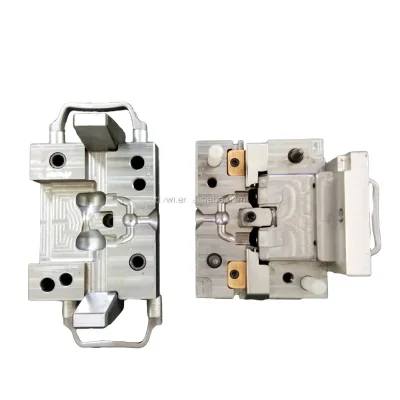


Aluminum Die Casting Extrusion Pouring Mould Parts Mould Service Custom Metal
$1.00 - $2.00
MOQ: 100 Pieces

Manufacturer Custom Metal Die Casting Mould Parts High Temperature Alloy Casting
$5.81 - $6.91
MOQ: 100 Pieces


Comprehensive Sourcing Guide
Strategic Sourcing Guide for Casting Wax Mold Rings and Precision Die Casting Components
The procurement of casting wax mold rings and associated precision components requires a nuanced understanding of the intersection between investment casting patterns and high-volume die casting capabilities. While the core keyword suggests a focus on wax patterns used in the lost-wax process, the broader industrial context often involves the transition from these wax prototypes to final metal components via die casting, gravity casting, or low-pressure casting. Buyers must navigate a complex supply chain where the initial wax mold serves as the blueprint for the final aluminum, stainless steel, or alloy housing parts. This guide provides a disciplined framework for evaluating suppliers, verifying technical specifications, and ensuring compliance with international standards without relying on unverified market assertions.
Technical Specifications and Material Compatibility
When sourcing casting wax mold rings, the primary technical consideration is the compatibility between the wax pattern and the final casting material. The supply data indicates a diverse range of materials available for the final casting stage, including Aluminum Alloy Zl101, A356, ADC12, and AlSi7Mg, as well as Stainless Steel. The wax mold ring must be engineered to withstand the thermal shock and pressure of the die casting process if it is being used for prototype validation or as a direct pattern for investment casting.
The manufacturing process for the final component often involves CNC machining, die casting, or gravity casting. For instance, the observed data highlights the use of Cold Chamber Die Casting Machines and Soluble Die Casting methods. The tolerance grade for these processes is critical; specific listings note a Casting Tolerance of CT4-6 for A380 Aluminum Die Casting Housing Parts, while other precision grades range from CT5 to CT7. Buyers must verify that the wax mold ring dimensions align with these tolerance grades to ensure the final machined part meets the required +/-0.01mm machining tolerance.
Furthermore, the surface finish of the final component is a direct result of the mold quality. Surface preparation techniques such as polishing, anodizing, painting, and powder coating are standard. The surface roughness is often specified at Ra3.2, which implies that the wax mold must produce a cavity with a corresponding smoothness to minimize post-processing requirements. The minimum wall thickness for the final casting is observed to be 1.5mm, a constraint that the wax mold design must accommodate to prevent casting defects.
Compliance, Certification, and Quality Assurance
In the global B2B market, compliance is not merely a formality but a prerequisite for market access. The supplied facts confirm that suppliers often hold ISO 9001 certification, alongside RoHS and CE compliance. These certifications are particularly relevant for components intended for hardware, machinery parts, and automotive applications. Buyers should explicitly request evidence of these certifications, as they validate the supplier's quality management systems and adherence to environmental standards.
Quality assurance is another critical pillar. The data indicates a "Full-Process Quality Inspection" is available, suggesting that suppliers can monitor the component from raw material intake to final packaging. This includes metallographic analysis, which is essential for verifying the microstructure of the aluminum or steel alloy. For high-temperature resistance applications, the material's ability to withstand thermal stress must be verified through specific testing protocols.
The following table outlines the key compliance and quality attributes observed in the supply data, which buyers should use as a checklist during supplier evaluation:
| Attribute Category | Observed Standard/Value | Verification Requirement |
|---|---|---|
| Quality Management | ISO 9001 | Request valid certificate copy |
| Environmental | RoHS, CE | Confirm material composition reports |
| Dimensional Tolerance | CT4-6 (Casting), +/-0.01mm (Machining) | Review CMM inspection reports |
| Surface Finish | Ra3.2, Anodize, Powder Coating | Request surface roughness test data |
| Material Analysis | Metallographic Analysis (Yes) | Verify lab test results for alloy composition |
| Inspection | Full-Process Quality Inspection | Audit supplier's QC workflow |
Cost Drivers and Pricing Dynamics
The pricing for casting wax mold rings and the subsequent die-cast components is influenced by several variables, including material type, complexity, and order volume. The observed price range in the market spans from $0.10 to $3,000, reflecting the vast difference between simple wax patterns and complex, precision-machined aluminum housing parts. The minimum order quantity (MOQ) varies significantly, ranging from 1 unit to 4,000 units, allowing flexibility for both prototyping and mass production.
Material costs are a primary driver. Aluminum alloys like A380 and ADC12 are common, but the specific grade (e.g., Zl101 vs. A356) will impact the unit price. The lead time is another significant cost factor; a standard lead time for A380 Aluminum Die Casting Housing Parts is noted as 45 days. However, this can fluctuate based on the complexity of the mold and the current production load. Buyers should be aware that "Customization" is available, which often incurs additional tooling costs and extended lead times compared to standard off-the-shelf items.
Packaging also contributes to the total cost. The observed packaging standards include multilayer wooden boxes, pallets, and big plastic bags, or standard cartons with wooden pallets. For international shipping, the choice of packaging must balance protection against damage with cost efficiency. The weight of the components, ranging from 0.005kg to 20kg, further influences logistics costs, particularly for heavy-duty machinery parts.
Typical Applications and Industry Use Cases
The versatility of casting wax mold rings and their resulting metal components is evident in the wide array of applications listed. These parts are utilized in hardware manufacturing, machinery parts, automotive sectors, and household appliances. The specific mention of "Car" and "Household Appliances" suggests that these components often serve structural or functional roles in consumer goods and transportation.
The "Special Casting" type and "High Temperature Resistance" attributes indicate that these components are suitable for environments with thermal stress, such as engine housings or heating elements. The "Hardware" application category is broad, covering everything from fasteners to structural brackets. The ability to produce "Complex-Shaped Parts" is a key advantage, allowing manufacturers to integrate multiple functions into a single die-cast component, thereby reducing assembly time and part count.
The "New" condition and "24 Months" warranty suggest that these are finished goods ready for immediate integration into production lines. The "OEM/ODM" service availability further supports the needs of brands that require custom branding or specific design modifications. Whether for commodity goods or specialized machinery, the ability to customize the standard (e.g., DIN standards) ensures that the components meet the specific regulatory and functional requirements of the target market.
Supplier Evaluation and Manufacturing Capabilities
Evaluating a supplier requires a deep dive into their manufacturing capabilities and operational transparency. The data confirms that suppliers utilize a mix of processes, including Die Casting, Gravity Casting, and Low Pressure Casting. The presence of CNC Machining capabilities is essential for achieving the tight tolerances required for precision parts. Buyers should verify that the supplier has the necessary equipment, such as Cold Chamber Die Casting Machines, to handle the specific alloy and volume requirements.
The origin of the products is predominantly China, with specific mentions of Zhejiang as a manufacturing hub. This region is known for its robust manufacturing ecosystem, but buyers must conduct due diligence to ensure the specific factory meets their quality expectations. The "Customized" nature of the standard and the ability to provide "Could customize" standards indicate a flexible production environment. However, this flexibility must be balanced with the supplier's ability to maintain consistency.
Key evaluation criteria for suppliers include:
- Mold Material: The use of Metal Molds suggests durability and suitability for high-volume production.
- Process Control: The availability of Metallographic Analysis and Full-Process Quality Inspection is a strong indicator of a mature quality system.
- Technical Expertise: The ability to handle various alloys (Aluminum, Stainless Steel) and surface treatments (Anodizing, Painting) demonstrates technical breadth.
- Logistics: The standard packaging (Carton Box + Wooden Pallet) should be assessed for suitability in the buyer's supply chain.
Quality Control and Long-Term Procurement Strategy
Ensuring long-term success in sourcing casting components requires a robust quality control strategy. The "Full-Process Quality Inspection" mentioned in the data should be a baseline requirement. Buyers should demand detailed inspection reports that cover dimensional accuracy, surface roughness, and material composition. The "Casting Tolerance CT4-6" and "Machining Dimension Tol +/-0.01mm" are specific metrics that must be validated on every batch, especially for critical applications.
For long-term procurement, the warranty period of 24 months is a significant factor. This implies that the supplier stands behind the durability and performance of their products. Buyers should clarify the terms of this warranty, including coverage for defects in material, workmanship, and design. Additionally, the "Lead Time" of 45 days should be factored into inventory planning. For high-volume orders, buyers may need to negotiate shorter lead times or establish a just-in-time delivery schedule.
The "Customization" attribute is a double-edged sword. While it allows for tailored solutions, it introduces variability. Buyers should establish clear design control protocols to ensure that customizations do not compromise the structural integrity or functional performance of the part. The "Complex-Shaped Parts" capability is valuable, but it requires rigorous testing to ensure that the intricate geometries do not introduce stress points or casting defects.
Conclusion and Procurement Best Practices
Sourcing casting wax mold rings and associated die-cast components is a strategic endeavor that demands careful attention to technical specifications, compliance, and supplier capabilities. The observed data reveals a market capable of delivering high-precision, customized parts across a wide range of materials and applications. However, the variability in lead times, MOQs, and pricing necessitates a disciplined approach to supplier selection.
Buyers should prioritize suppliers who can demonstrate a full spectrum of quality controls, from metallographic analysis to final packaging. The availability of ISO 9001, RoHS, and CE certifications provides a baseline for trust, but on-site audits and sample testing are essential for verifying these claims. By focusing on the specific technical requirements such as tolerance grades, surface roughness, and material composition, buyers can mitigate risks and ensure that the final components meet their operational needs.
Ultimately, the success of the procurement process relies on clear communication of requirements, rigorous verification of supplier capabilities, and a commitment to long-term quality assurance. Whether for automotive, hardware, or appliance applications, the ability to source high-quality casting components is a competitive advantage that can drive innovation and efficiency in the buyer's own production processes.
FAQs
Can suppliers provide ISO 9001 certified casting wax mold rings?
Yes, suppliers offer ISO 9001 certification alongside RoHS and CE compliance for these components. This ensures adherence to quality management systems and environmental standards required for hardware and machinery applications.
What materials are used for the final die casting housing parts?
Common materials include Aluminum Alloy Zl101, A356, ADC12, and AlSi7Mg, as well as Stainless Steel. These alloys support various applications ranging from automotive parts to household appliances with high temperature resistance.
Which surface treatments are available for the finished metal components?
Available surface treatments include anodizing, painting, and powder coating to achieve desired finishes. Polishing is also used for surface preparation, often resulting in a surface roughness of Ra3.2 for precision parts.
How long is the standard lead time for A380 aluminum die casting parts?
The standard lead time for A380 Aluminum Die Casting Housing Parts is typically 45 days. This duration may vary based on customization requirements, order volume, and current production capacity at the manufacturing facility.
What is the minimum wall thickness for the die casting process?
The minimum wall thickness for the final casting is 1.5mm. This specification ensures structural integrity while allowing for the production of complex-shaped parts using gravity or low-pressure casting methods.
Can buyers customize the standard and dimensions of the casting parts?
Yes, customization is available for standards such as DIN and specific product dimensions. Suppliers offer OEM and ODM services to tailor parts for hardware, machinery, and automotive applications according to client specifications.
What is the range of weights for the cast metal components?
The weight of the components ranges from 0.005kg to 20kg depending on the design and material density. This range accommodates both lightweight hardware items and heavier machinery parts requiring robust construction.