Source Ceramic Non-Stick Wok Pan for Stir-Fry, Frying, and Simmering
Explore 30 listings for the Ceramic Non-Stick Wok Pan, featuring cast iron construction with wooden handles and multi-layer coatings. Buyers can compare specifications like diameter, capacity, and stove compatibility from suppliers in Guangdong, China.
Key considerations
Products List


Carbon Pans Pre-Seasoned Nonstick Cooking Wok Fry Pan Breakfast Frying Pan
$20.00 - $21.00
MOQ: 100 Sets


China High Quality Round Bottom Design Non-Stick Cast Iron Frying Wok Pan
$20.00 - $21.00
MOQ: 100 Sets


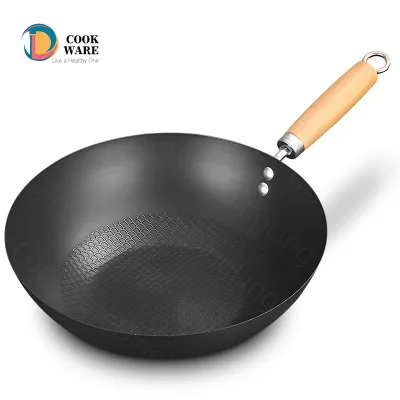


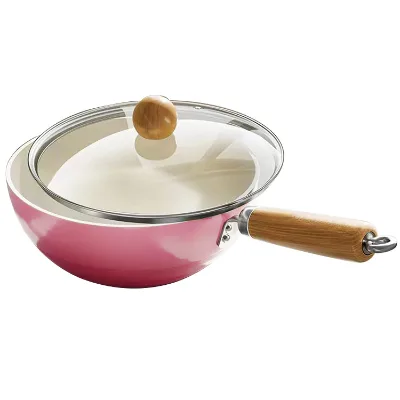
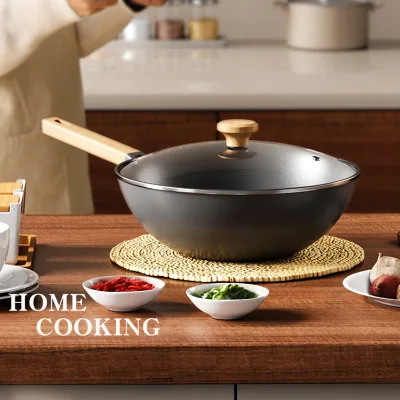
Cast Iron Cooking Wok Acero Inoxidable Cooker Pan Non-stick Chinese Wok Pan
$8.96 - $9.80
MOQ: 100 Minimum


Deep Cooking Wok Pan with Comfortable Handle Design Frying, Sauteing and Cooking
$6.30 - $10.90
MOQ: 100 Pieces
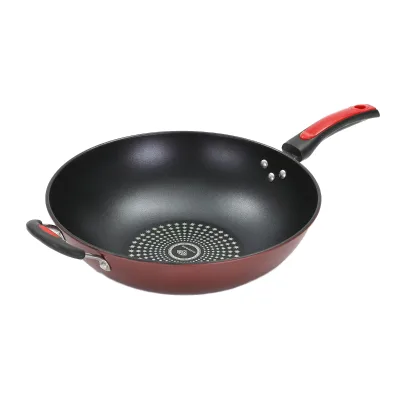


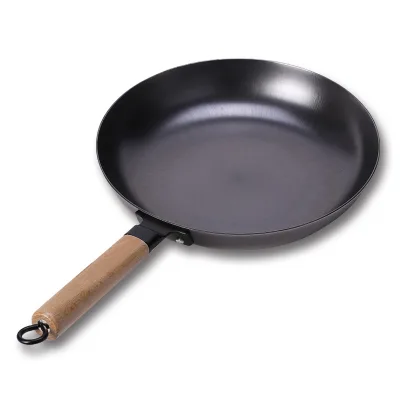
Nonstick Wok and Stir Fry Pans Cast Iron Flat Bottom Wok Nonstick Nitriding Wok
$12.58 - $17.18
MOQ: 5 pieces
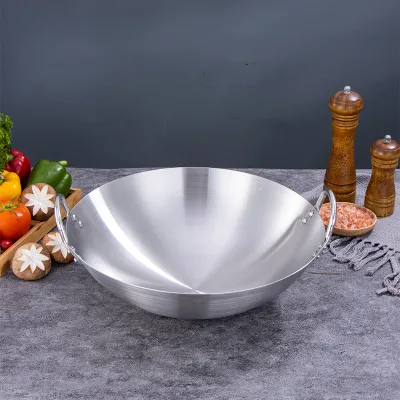
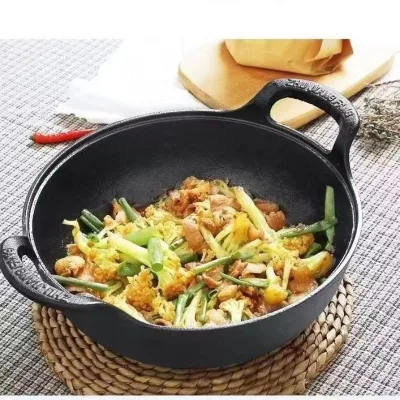
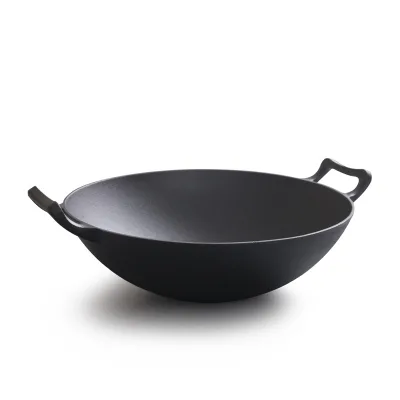

Comprehensive Sourcing Guide
Strategic Sourcing Guide for Ceramic Non-Stick Wok Pans
Understanding the Product Landscape and Material Reality
When initiating a procurement strategy for a "ceramic non-stick wok pan," buyers must first reconcile the marketing terminology with the actual material composition observed in the current supply market. While the core keyword suggests a ceramic coating, the available product data indicates a significant presence of cast iron and carbon steel cookware. In many B2B listings, the term "non-stick" is applied broadly to products featuring multi-layer coatings on iron or cast iron substrates, rather than purely ceramic-based cookware. The observed product attributes highlight a primary material of "Cast Iron" and "Iron," with specific mentions of "Multi-layer coating" and "Polished" exteriors.
This distinction is critical for procurement planning. A true ceramic non-stick pan typically relies on a silica-based coating, whereas the observed market heavily features traditional metal bases (Cast Iron, Carbon Steel) enhanced with non-stick finishes. Buyers must verify if the specific "ceramic" claim refers to the coating technology or if the product is a coated cast iron wok. The observed specifications list "prod_model" entries such as "non-stick Cast Iron Wok With Wooden Handle" and "carbon pans pre-seasoned nonstick cooking wok fry." These entries confirm that the supply chain offers a hybrid of traditional heavy-duty metal cookware with modern non-stick surface treatments. Procurement teams should not assume that all "non-stick" listings in this category are ceramic; rather, they must scrutinize the "interior coating" and "material" fields to distinguish between PTFE-based coatings, ceramic coatings, and pre-seasoned bare metal.
The "Applicable Range" is noted as "General," suggesting versatility across various kitchen environments, but the "Care Instructions" often specify "Hand Wash Only," which is a common constraint for maintaining the integrity of non-stick layers on cast iron or carbon steel. Understanding this material reality prevents the acquisition of products that do not meet the specific performance expectations of a ceramic-coated vessel, such as extreme heat resistance or specific chemical inertness.
Technical Specifications and Functional Attributes
The technical specifications for the wok pans available in this category reveal a diverse range of sizes, shapes, and functional capabilities. The observed "diameter" specifications are extensive, ranging from 22cm to 30cm, with options for both "With Lid" and "Without Lid" configurations. This variability allows buyers to target specific market segments, from single-serving units to family-sized cookware. The "Size" attribute also notes a broader range of 42-54cm and 30-33cm, indicating the availability of larger commercial or industrial-grade units alongside standard consumer sizes.
A critical technical feature observed is the "Handle" material, which is frequently specified as "Wood." This is a standard design choice for cast iron and carbon steel woks to prevent heat transfer to the user's hand, ensuring safety during high-heat cooking. The "Exterior Coating" is described as "Polished," which not only enhances aesthetic appeal but may also facilitate easier cleaning of the outer surface. The "Interior coating" is identified as "Multi-layer coating," a specification that suggests a complex manufacturing process designed to enhance durability and release properties.
The "Applicable Stove" compatibility is listed as "General Use for Gas and Induction Cooker" and "All Purpose," including "Gas-Oven" usage. This multi-stove compatibility is a significant value driver, as it expands the potential customer base for the product. However, buyers must verify the specific induction compatibility, as cast iron generally works well, but the thickness and magnetic properties of the specific model (e.g., "F110" or "BS" model numbers) must be confirmed. The "Capacity" ranges from 4-8L and 5.5L, providing options for different cooking volumes. The "Cover Style" varies, with some models featuring a "Glass Cover" that is "Transparent," allowing for visual monitoring of the cooking process, while others are supplied "Without Pot Cover."
Compliance, Certification, and Regulatory Standards
In the B2B procurement of cookware, compliance is non-negotiable. The observed product data lists several high-confidence certifications, including "FDA," "LFGB," "CIQ," "CE/EU," and "EEC." These certifications are essential for verifying that the materials and coatings used in the woks are safe for food contact and meet international safety standards.
- FDA (Food and Drug Administration): Indicates compliance with US regulations regarding food contact substances.
- LFGB (Lebensmittel- und Futtermittelgesetzbuch): The German food code, often considered stricter than FDA, ensuring the product is safe for use in the European market.
- CE/EU and EEC: These marks confirm that the product meets European health, safety, and environmental protection requirements.
- CIQ (China Inspection and Quarantine): A domestic Chinese export certification that validates the product has passed quality and safety inspections before leaving the country.
Buyers must treat these certifications as observations of specific supplier capabilities rather than universal guarantees for every listed product. The "prod_standard" is noted as "Custom Size," which implies that while the physical dimensions can be tailored, the safety standards (FDA, LFGB) should remain consistent regardless of the custom size. When evaluating a supplier, procurement teams should request current, valid certificates for the specific model numbers being ordered. The "prod_origin" is consistently listed as "China," specifically "Guangdong, China," a major manufacturing hub. Buyers should verify that the "place of origin" matches the certification documents to ensure the product was manufactured in a facility that adheres to the claimed standards.
Cost Drivers and Pricing Dynamics
The pricing structure for these wok pans is influenced by several key factors, including material composition, coating technology, and customization levels. The observed "listed price range" in USD is between $1.95 and $21.25. This wide range reflects the diversity of the product line, from basic, uncoated or minimally processed cast iron units to premium, multi-layer coated, and custom-branded sets.
- Material Costs: The use of "Cast Iron" and "Iron" as primary materials provides a baseline cost. However, the addition of "Multi-layer coating" and "Polished" exteriors increases the manufacturing complexity and cost.
- Customization: The "Customization" attribute is marked as "Available," and "OEM" (Original Equipment Manufacturer) is "Accept." Custom branding, packaging ("Carton or as Your Request"), and specific dimensions ("Custom Size") will inevitably drive the unit price higher than standard off-the-shelf items.
- MOQ (Minimum Order Quantity): The observed "MOQ range" is 2 to 1000 units. Lower MOQs (e.g., 2 units) are typically associated with sample orders or dropshipping models, which carry a higher per-unit cost. Higher volumes (up to 1000) allow for economies of scale, potentially bringing the price closer to the lower end of the observed range ($1.95).
- Packaging: The "prod_packing" options, ranging from "Standard Seaworthy Packing" to custom requests, also impact the final landed cost. Seaworthy packing is essential for international shipping to prevent damage, but custom packaging adds to the overall expense.
Buyers should note that the "Selling Units" are often "Single item," which simplifies inventory management but may affect bulk pricing negotiations. The "Sample" attribute is noted as "Fast," suggesting that suppliers are responsive to sampling requests, which is a positive indicator for the procurement timeline.
Supplier Evaluation and Operational Capabilities
Selecting the right supplier requires a deep dive into their operational capabilities and responsiveness. The data indicates that suppliers in this category are located in "Guangdong, China," a region known for its robust manufacturing infrastructure. The "prod_origin" and "place of origin" fields confirm this geographic concentration.
Key evaluation criteria for suppliers include:
- OEM and Customization Capacity: The explicit mention of "OEM: Accept" and "Customization: Available" suggests that suppliers are willing to adapt products to buyer specifications. This is crucial for private label buyers.
- Lead Time and Sampling: The "Sample: Fast" attribute indicates a willingness to provide quick turnaround on samples, which is vital for quality verification before large-scale orders.
- Packing Standards: The availability of "Standard Seaworthy Packing" ensures that products can be shipped internationally without damage. However, buyers should verify the specific packing dimensions (e.g., "474713.5cm") to optimize container loading and reduce freight costs.
- Model Diversity: The presence of multiple model numbers (e.g., "F110," "BS," "Chinese Traditional Cooking Hand Hammered Pan") demonstrates a supplier's ability to produce varied designs, from traditional hammered pans to modern non-stick woks.
Buyers should prioritize suppliers who can demonstrate a clear link between their "prod_model" and the specific certifications they hold. A supplier claiming "FDA" certification must be able to trace that certification to the specific production line or batch of the "non-stick Cast Iron Wok."
Quality Control and Performance Verification
Quality control in the cookware sector focuses on the integrity of the non-stick coating, the durability of the cast iron base, and the safety of the materials. The "Care Instructions" of "Hand Wash Only" are a critical performance indicator; they suggest that the non-stick layer may degrade under harsh dishwasher conditions or abrasive cleaning. Buyers must communicate this requirement clearly to their end customers to ensure product longevity.
The "feature: Health" attribute implies that the products are marketed as safe and non-toxic, likely due to the absence of harmful chemicals in the coating or the use of natural materials like wood for handles. However, buyers should verify this claim against the actual "interior coating" specifications. The "Multi-layer coating" description warrants further investigation into the specific materials used in each layer to ensure they meet the "Health" and "Eco-Friendly" claims.
The "With Cover" and "Without Cover" options also affect quality perception. A "Glass Cover" that is "Transparent" adds value but introduces a potential point of failure (e.g., thermal shock). Buyers should request thermal shock test results for glass lids if they are included in the order. Additionally, the "Handle" material, specified as "Wood," should be checked for stability and heat resistance. The "Accessories" are listed as "With None," meaning the wok is typically sold as a standalone unit or with the lid as the only accessory, which simplifies the quality control process by reducing the number of components to inspect.
Long-Term Procurement Considerations
Sourcing ceramic non-stick wok pans is not just a transactional activity but a strategic partnership that requires long-term planning. The "Custom Size" and "OEM" capabilities allow buyers to differentiate their product lines, but this requires a stable supply chain. Buyers should consider the "Lead Time" implications of custom orders, even though specific lead time data is not provided in the current observations. The "Fast" sample availability suggests that the initial phase of the partnership can be quick, but mass production may require longer lead times.
The "Capacity" range of 4-8L and 5.5L suggests that the product line is versatile enough to serve both residential and commercial markets. However, the "General" applicable range and "Hand Wash Only" care instructions may limit the product's appeal in high-volume commercial kitchens where durability and ease of cleaning are paramount. Buyers should align their procurement strategy with their target market's expectations.
Furthermore, the "Standard" of "Custom Size" implies that the production process is flexible. This flexibility is a double-edged sword; while it allows for customization, it also requires rigorous quality control to ensure that every custom batch meets the same safety and performance standards. Buyers should establish clear quality agreements that specify acceptable tolerances for dimensions, coating thickness, and certification validity.
Finally, the "Selling Units" being "Single item" indicates a focus on individual sales rather than bulk sets. This affects inventory management and logistics. Buyers should plan for efficient packaging and shipping strategies to minimize costs while maintaining the "Standard Seaworthy Packing" required for international transport. By understanding these long-term considerations, buyers can build a resilient supply chain that delivers high-quality, compliant cookware to their customers consistently.
FAQs
What certifications do ceramic non stick wok pans have?
These products hold FDA, LFGB, CIQ, CE/EU, and EEC certifications. Buyers must verify that specific model numbers match the provided certificates to ensure compliance with international food safety standards before placing orders.
Can these woks be used on induction cookers?
Yes, the observed products support general use for gas and induction cookers. Buyers should confirm the specific magnetic properties of the cast iron or iron base to ensure full compatibility with their induction equipment.
What is the minimum order quantity for these woks?
The minimum order quantity ranges from 2 to 1000 units depending on the supplier. Lower quantities often apply to sample orders or dropshipping, while higher volumes may secure better pricing tiers.
How are these non-stick woks packaged for shipping?
Packaging options include standard seaworthy packing or custom cartons as requested. Buyers should specify their requirements early to ensure the 47x47x13.5cm dimensions or other custom sizes fit their logistics needs.
What materials are used for the handles on these woks?
The handles are typically made of wood to prevent heat transfer during cooking. This design ensures user safety while maintaining the traditional aesthetic of cast iron and carbon steel cookware.
Which sizes are available for these ceramic non stick wok pans?
Available diameters range from 22cm to 30cm with or without lids. Larger commercial sizes up to 54cm are also listed, offering flexibility for different household or industrial cooking volumes.