Source Christmas Themed Scratch Off Cards for Gifts, Games, and Promotions
Compare 30 listings for Christmas Themed Scratch Off Cards made from paper or PVC with customizable sizes and finishes. Buyers can evaluate options for promotional gifts, game cards, and trading cards from suppliers in China.
Key considerations
Products List

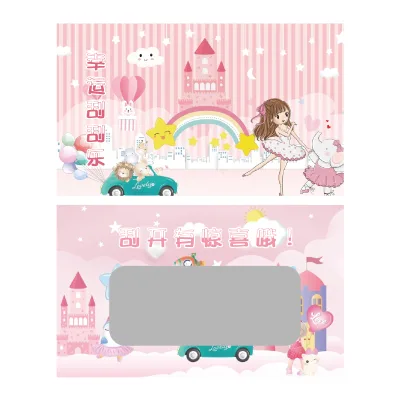
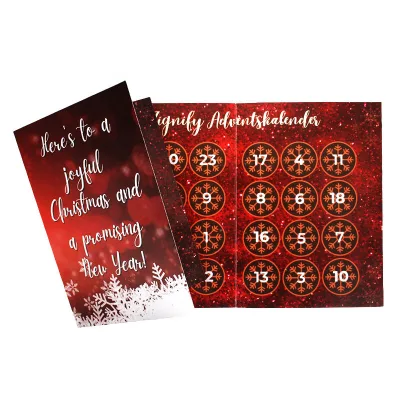


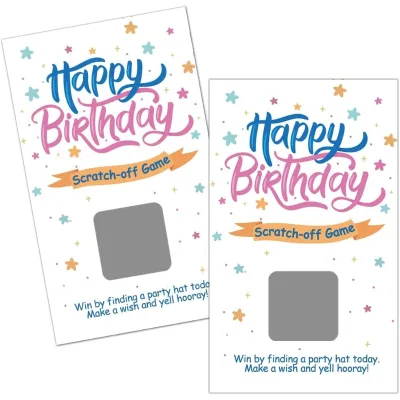
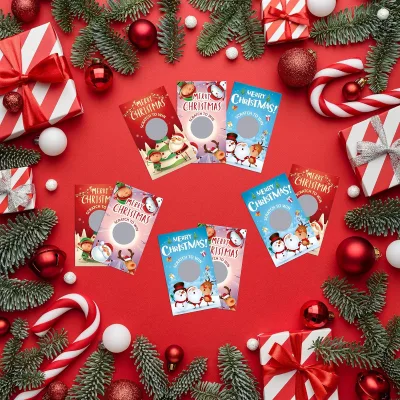
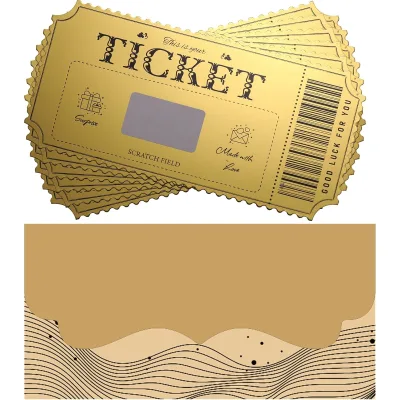
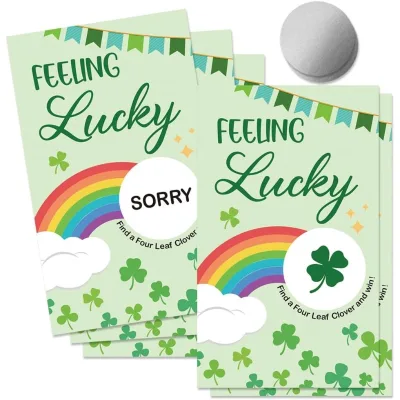


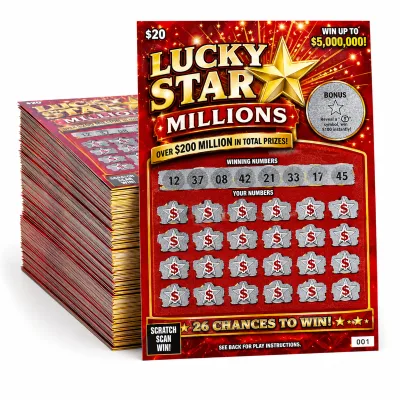


Comprehensive Sourcing Guide
Strategic Sourcing Guide for Christmas Themed Scratch Off Cards
Procuring Christmas-themed scratch off cards requires a nuanced understanding of the intersection between festive marketing needs and the technical specifications of promotional card manufacturing. The market for these items is characterized by high customization potential, diverse material options, and varying production scales. Buyers must navigate a landscape where "Christmas themed" is often a design variable rather than a fixed product specification, requiring careful verification of supplier capabilities to ensure the final output meets seasonal branding requirements without compromising structural integrity or security features.
Technical Specifications and Material Composition
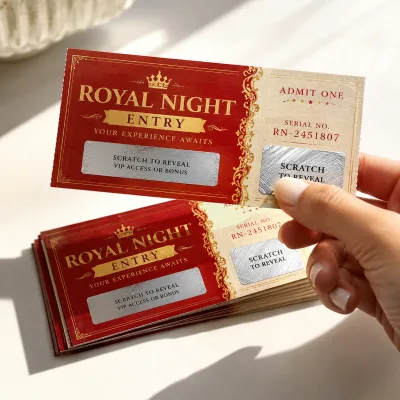
The foundation of any successful scratch card procurement lies in the precise definition of material and physical dimensions. Based on available market data, manufacturers typically offer a range of substrates, including art paper (ranging from 260gsm to 350gsm) and various plastic composites such as PVC or PE. The choice between paper and plastic is critical; paper options often provide a traditional feel suitable for gift cards, while PVC offers superior durability and water resistance, which is advantageous for outdoor holiday events or long-term promotional campaigns.
Physical dimensions are equally variable. Standard sizes observed in the market include 5787mm and 6388mm, which align with common credit card formats, alongside specific metric measurements like 95.4cm. For Christmas applications, buyers may also encounter non-standard shapes or sizes, such as 34 inches or custom die-cuts, to accommodate festive branding. The corner style is another technical specification that impacts both aesthetics and safety; options include rounded, square, beveled, wavy, and other custom shapes. When sourcing for children's holiday activities, rounded corners are often preferred to prevent injury, whereas business gift applications might favor sharp, beveled edges for a premium look.
The finishing process significantly influences the tactile experience and visual appeal of the card. Common finishing techniques include glossy lamination, matte varnishing, and specialized UV coating. These finishes not only protect the printed design but also enhance the scratch-off coating's performance. The scratch-off layer itself must be durable yet easily removable to reveal the underlying code or message. Suppliers often list features such as "Eco-Friendly," "Durable," and "Portable," but buyers should verify that these claims align with the specific material chosen for the holiday campaign.
Compliance, Certification, and Safety Verification
While the provided data does not explicitly list specific certification numbers, the procurement of Christmas-themed items for distribution, particularly those intended for children or general public use, necessitates rigorous compliance checks. The "Eco-Friendly" attribute mentioned in supplier profiles suggests a potential alignment with environmental standards, but this requires independent verification. Buyers should request documentation confirming that the inks used for the Christmas designs and the scratch-off coating are non-toxic and compliant with relevant safety regulations for toys and promotional gifts.
In the context of Christmas gifts, safety is paramount. If the cards are intended for use by minors, the materials must meet strict chemical safety standards regarding heavy metals and phthalates, especially if PVC is the chosen substrate. The "Waterproof/Oil proof/Writable" features listed by some suppliers indicate a level of durability that may be necessary for holiday environments, but these claims should be validated through sample testing. Furthermore, if the cards are used for payment or identification purposes during holiday promotions, the encryption and data security features must be verified. The "Non-Contact Type" read-write method suggests the use of RFID or NFC technology in some variants, which requires adherence to specific communication protocols and data protection standards.
Buyers must also consider the environmental impact of the packaging. The "Accept Customized" packing options, ranging from 200 pieces per box to 5000 pieces per carton, offer flexibility but also present a challenge in waste reduction. Sourcing guides should prioritize suppliers who can provide recyclable or biodegradable packaging materials to align with the growing consumer demand for sustainable holiday practices.
Cost Drivers and Pricing Dynamics
The pricing of Christmas-themed scratch off cards is influenced by a complex matrix of factors, including material selection, customization complexity, and order volume. The observed price range in the market spans from $0.01 to $0.72 per unit, a significant variance that reflects the diversity of product configurations. The lower end of this spectrum typically corresponds to basic paper cards with standard sizes and minimal customization, while the higher end reflects premium materials like PVC, complex die-cutting, and advanced security features.
Minimum Order Quantity (MOQ) is a primary cost driver. Data indicates an MOQ range from as low as 1 unit to as high as 12,000 units. For small businesses or individual holiday campaigns, suppliers with lower MOQs (e.g., 500 or 1000 units) are essential to manage cash flow and reduce inventory risk. However, larger orders often benefit from economies of scale, reducing the per-unit cost significantly. Buyers must balance the desire for a lower unit price against the financial commitment required to meet higher MOQ thresholds.
Additional cost factors include the printing method. Options such as offset, UV, digital, and laser printing each carry different cost implications. Offset printing is generally more cost-effective for large runs, while digital printing offers flexibility for short runs and rapid prototyping. The "Customized" nature of the collection means that design complexity, color variations, and the inclusion of unique codes or encryption features will directly impact the final price. Buyers should request detailed cost breakdowns to understand how much of the price is attributed to materials versus design and production labor.
Typical Applications and Use Cases
Christmas-themed scratch off cards serve a wide array of applications, ranging from corporate gifting to consumer engagement and gaming. The "Usage" category explicitly lists "Promotional Gifts," "Game Cards," and "Custom" applications, highlighting their versatility. In a corporate setting, these cards are often used as holiday bonuses or incentives, where the scratch-off element adds an element of surprise and excitement to the gift. The "Application" field further specifies uses in "Art & Collectible," "Business Gift," "Christmas," and "Thanksgiving" contexts, confirming their suitability for seasonal marketing.
For retailers and event organizers, these cards function as interactive marketing tools. They can be used in holiday sales promotions, where scratching off a card reveals a discount code, a free gift, or a chance to win a prize. The "Feature" of being "Personalized" allows businesses to tailor the experience to specific customer segments, enhancing brand loyalty during the holiday season. Additionally, the "Identification, Payment, Encrypt/Decrypt, Information" functions suggest that these cards can be integrated into loyalty programs or digital payment systems, providing a secure and engaging way to manage customer data during high-traffic holiday periods.
The "Shape" and "Color" customization options allow for creative designs that align with Christmas aesthetics. Buyers can request specific color palettes, such as red, green, gold, and silver, or shapes like trees, stars, and snowflakes. The "Customized" collection status ensures that the cards can be tailored to fit specific brand guidelines or thematic requirements, making them a powerful tool for seasonal branding.
Supplier Evaluation and Selection Criteria
Selecting the right supplier for Christmas-themed scratch off cards requires a thorough evaluation of their capabilities, reliability, and track record. The "Place of Origin" data indicates that many suppliers are located in Guangdong, China, a major manufacturing hub known for its expertise in printing and card production. However, other origins like Chengdu are also noted, suggesting a broader geographic distribution of manufacturers. Buyers should verify the specific location of the production facility to assess logistics, lead times, and potential shipping costs.
Key evaluation criteria include the supplier's ability to handle customization. The "Customization: Available" and "Customization: Accepted" attributes indicate that most suppliers are flexible, but buyers must confirm the extent of this flexibility. Can the supplier handle complex die-cuts, specific color matching, and unique security features? The "Printing" options, including offset, UV, digital, and laser, should be matched to the buyer's specific needs for quality and volume.
Lead time is another critical factor. The observed "Delivery time" of 7-20 days suggests a relatively quick turnaround, but this can vary based on order complexity and volume. Buyers should confirm the lead time for their specific order to ensure timely delivery before the Christmas season. Additionally, the "Single gross weight" and "Single volume" data, while often listed as zero or negligible in generic profiles, should be verified for actual shipping calculations, especially for large orders.
Quality Control and Long-Term Procurement Considerations
Ensuring consistent quality is essential for maintaining brand reputation during the holiday season. Buyers should implement a robust quality control process that includes pre-production sample approval, in-process inspections, and final random sampling. The "Feature" of being "Durable" and "Portable" should be tested to ensure the cards can withstand handling during distribution and use. For cards with scratch-off coatings, a scratch test should be performed to verify that the coating reveals the underlying content cleanly without damaging the card.
Long-term procurement considerations involve building a sustainable relationship with suppliers. The "Collection: Customized" nature of the product suggests that buyers may need to iterate on designs over multiple seasons. A supplier who can maintain consistency in quality while accommodating design changes is invaluable. Buyers should also consider the scalability of the supplier's production capacity to handle potential spikes in demand during the holiday rush.
Finally, buyers should plan for post-season inventory management. The "Selling Units: Single item" and "Packing" options allow for flexible storage and distribution, but buyers must ensure that the packaging protects the cards from damage during storage. By focusing on these quality control and logistical aspects, buyers can ensure a successful procurement experience that meets the high expectations of the Christmas market.
FAQs
What materials are available for Christmas scratch cards?
Manufacturers typically offer art paper ranging from 260gsm to 350gsm or plastic options like PVC. The choice depends on durability needs, with paper suitable for traditional gifts and plastic offering water resistance for outdoor events.
Can I customize the size and shape of these cards?
Yes, customization is available for sizes such as 57*87mm, 63*88mm, or 9*5.4cm, along with custom die-cuts. Shapes can include rounded, square, beveled, or wavy corners to match specific festive branding requirements.
What is the minimum order quantity for these cards?
The minimum order quantity varies by supplier, with observed ranges starting from 500 pieces up to 12,000 units. Buyers should verify specific MOQs as they directly impact the per-unit cost and inventory management.
How long does production take for customized orders?
Delivery times typically range from 7 to 20 days depending on order complexity and volume. Buyers must confirm the specific lead time with the manufacturer to ensure timely arrival before the holiday season.
Which finishing options are offered for the cards?
Common finishing techniques include glossy lamination, matte varnishing, and UV coating to protect the design. These finishes enhance the tactile experience and ensure the scratch-off layer performs reliably during use.
Where are these cards typically manufactured?
Most suppliers are located in Guangdong, China, a major hub for printing and card production. Some manufacturers may also be based in Chengdu, affecting logistics and shipping costs for international buyers.