Source Chrome Ceiling Canopy for Lighting, Decor, and Display
Compare 30 listings for Chrome Ceiling Canopy options from Guangdong suppliers. Buyers can evaluate aluminum alloy frames, waterproof finishes, and customization availability for outdoor decoration and structural applications.
Key considerations
Products List
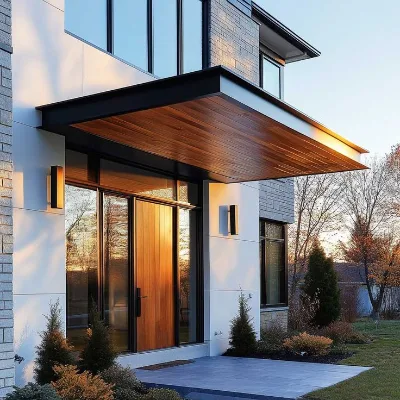
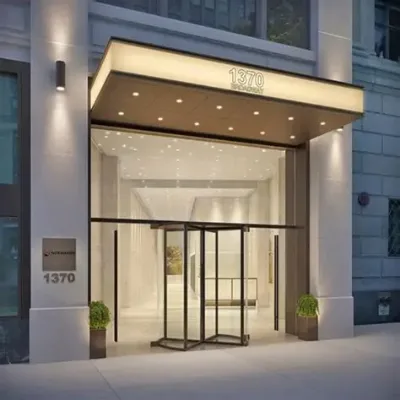


Aluminum Canopy Aluminum Canopy Patio Garden Aluminum Roof Awning Canopy
$450.00 - $3000.00
MOQ: 100 set


Canopies Awnings Free Standing Aluminum Canopy Cantilever Canopy
$98.00 - $198.00
MOQ: 9 Square Meters

$1.00 - $8.00
MOQ: 10 Pieces
Comprehensive Sourcing Guide
Strategic Sourcing Guide for Chrome Ceiling Canopy Procurement
Understanding Product Attributes and Material Composition
When initiating a procurement strategy for Chrome Ceiling Canopy components, the buyer must first establish a precise understanding of the material specifications and finishing processes that define the product's integrity. The core of this category relies heavily on the structural frame, which is frequently manufactured from aluminum alloy. This material choice is critical because aluminum offers a favorable strength-to-weight ratio, ensuring that the canopy structure remains robust while minimizing the load on the ceiling infrastructure. The specific alloy composition often cited in high-quality listings includes "Aluminum Alloy" as the primary frame material, sometimes reinforced with "Aluminum Frame" designations to indicate structural rigidity.
The aesthetic and protective qualities of the canopy are largely determined by the finishing process. In the context of chrome-finished products, the "Frame Finishing" is typically described as "Finished," implying a high-grade surface treatment that enhances corrosion resistance and visual appeal. While the term "chrome" suggests a specific metallic luster, the underlying material often remains aluminum alloy, which is then treated to achieve the desired reflective surface. It is essential for buyers to verify whether the "Metal Type" is strictly aluminum or if other metals are involved in the assembly. The "Sail Material" or fabric component, if applicable to the canopy structure, may vary; some specifications list "Poly" or "PVC" materials, while others indicate a "Metal" construction for the entire assembly.
The color palette for these units is diverse, ranging from standard "Grey" and "Brown" to specific "Brown Black" or "Transparent" finishes. The "Design" philosophy often leans towards "Young and Elegant" styles, suitable for modern commercial or residential interiors. However, the "Application" scope is broad, extending to "outdoor decoration" in some contexts, which necessitates a rigorous check on weather resistance. For instance, if the canopy is intended for semi-outdoor use, the "Waterproof" attribute becomes a mandatory verification point. Buyers should look for explicit "Waterproof" designations and, where relevant, specific indices such as an "Outer Tent Waterproof Index" exceeding 3000mm, although this specific metric is more common in tent applications and may not apply to all rigid canopy structures.
Technical Specifications and Dimensional Standards
Defining the technical parameters of a Chrome Ceiling Canopy requires a granular approach to model numbers, dimensions, and structural configurations. The product landscape is fragmented with various model identifiers, such as "AD012," "EA1400A-L," "T1400A-L," "CPS-5," and "B1400." These alphanumeric codes often correspond to specific dimensional standards or design series, such as the "D Series." A critical observation in the current market data is the presence of specific dimensional references like "1400X1000" or "1.5m Long" paired with "1.0m Wide." These figures suggest that the canopy units are often sold as single items with fixed dimensions, though customization is frequently "Available."
The structural "Type" of the canopy can vary significantly. Some units are categorized under "Trimmer Line" or "Sail" types, which implies a fabric-based tension system, while others are rigid metal structures. The "Top Style" for fabric canopies might be identified as "Ridge Tent," indicating a peaked design for water runoff, whereas rigid canopies may feature a "Double Skin" structure for enhanced insulation or durability. The "Pole Material" is another vital specification; while the frame is often aluminum, support poles may be made of "Galvanized" steel to provide additional tensile strength and rust resistance.
Installation methods are a key differentiator in the technical specification sheet. Many units are designed for "DIY" (Do It Yourself) installation, which reduces labor costs but requires precise instructions and user competence. The "Control" mechanism for motorized variants, if present, is typically "Manual Control," though "Electricity" is listed as a "Power Source" for automated systems. The "Operation Method" is predominantly "Manual," suggesting that the canopy deployment or adjustment relies on human intervention rather than fully automated sensors. Buyers must carefully cross-reference the "Model Number" with the "Standard" dimensions provided, such as "1400*900" or "2.8x2.8x2.2m," to ensure the unit fits the intended architectural space.
Compliance, Certification, and Regulatory Adherence
In the B2B procurement of ceiling canopies, compliance with international standards is non-negotiable for ensuring safety and market access. The supply chain for these products, particularly those originating from "Guangdong, China" or the "Prc" (People's Republic of China), is subject to rigorous quality assurance protocols. High-confidence data indicates that reputable suppliers often adhere to a triad of major certifications: "CE," "TUV," and "ISO." Specifically, the "ISO9001: 2008" standard is frequently cited, representing a commitment to quality management systems. While some background information mentions "ISO 27001:2022," this standard pertains to information security and is less relevant to the physical manufacturing of canopies unless digital integration is a primary feature.
The "Certification" list for these products typically includes "ISO," "CE," and "RoHS." The "RoHS" (Restriction of Hazardous Substances) directive is particularly important for products containing electronic components or specific coatings, ensuring that the materials used do not exceed limits on hazardous substances like lead or mercury. The "CE" marking indicates conformity with health, safety, and environmental protection standards for products sold within the European Economic Area. "TUV" certification, often associated with German technical inspection associations, provides an additional layer of verification regarding product safety and performance.
Buyers must verify that the "Standard" listed on the product page matches the regulatory requirements of their target market. For instance, a product claiming "ISO" certification should be able to provide a valid certificate number. It is crucial to note that while "ISO" is a broad category, the specific version (e.g., ISO9001:2008) matters for audit purposes. The "Place of Origin" being "China" does not preclude high compliance, but it necessitates a thorough review of the documentation provided by the supplier. The "After Sale Service" availability is also a proxy for compliance confidence; suppliers offering "Yes" for after-sales support are generally more likely to stand behind their certification claims and product warranties.
Cost Drivers and Pricing Dynamics
The pricing structure for chrome ceiling canopies is influenced by a complex interplay of material costs, manufacturing complexity, and order volume. The observed price range in the market spans from a low of $0.20 to a high of $3,000.00 USD. This vast disparity indicates that the category encompasses both small, accessory-level components and large, fully engineered canopy systems. The lower end of the spectrum likely corresponds to simple replacement parts, such as trimmer lines or small fabric panels, while the upper end reflects complete structural units with advanced features like waterproofing, custom dimensions, and integrated lighting or power systems.
The "Selling Units" metric reveals that many items are sold as a "Single item," which simplifies the cost calculation for small projects but may increase the per-unit cost compared to bulk orders. Conversely, the "MOQ" (Minimum Order Quantity) ranges from 1 to 10,000 units. This flexibility allows buyers to scale their procurement based on project needs. For large-scale commercial installations, negotiating a lower price per unit by increasing the order volume to the higher end of the MOQ range is a standard strategy. The "prod_packing" method also impacts cost; units packed in "1 Set/Carton" or "1set/Carton" are optimized for shipping efficiency, whereas those requiring "Pallet" or "Wooden Box" packing may incur higher logistics costs due to increased weight and volume.
Material costs are a primary driver of the final price. The use of "Aluminum Alloy" versus standard "Metal" or "Galvanized" poles creates a significant price differential. Furthermore, the "Finishing" process, such as "PU Coated" sails or specific "Frame Finishing" treatments, adds value and cost. The "Waterproof" attribute, particularly if it involves a high index like ">3000mm," also commands a premium. Buyers should analyze the "Application" requirements; "outdoor decoration" units requiring superior weather resistance will naturally be priced higher than indoor-only variants. The "Customization" availability is another cost factor; while "Available," custom orders often carry a surcharge due to the non-standard nature of the production run.
Typical Applications and Installation Considerations
The versatility of chrome ceiling canopies makes them suitable for a wide array of applications, ranging from residential aesthetics to heavy-duty industrial uses. The "Application" field explicitly lists "outdoor decoration," but the "Usage" data expands this to include "Traditional," "Military," "Relief," "Camping Tent," and "Advertising Tent" scenarios. This suggests that the underlying technology of these canopies is adaptable to both permanent architectural installations and temporary, mobile structures. For "outdoor decoration," the "Waterproof" and "Design" attributes are paramount, ensuring the canopy withstands environmental exposure while maintaining an "Elegant" appearance.
Installation is a critical phase that determines the long-term success of the canopy. The "Installation" method is frequently listed as "DIY," which implies that the product is designed for self-assembly. This is beneficial for reducing labor costs but requires the buyer to ensure that the "Manual Control" and "Operation Method" are intuitive for the end-user. The "Structure" of the canopy, such as "Double Skin" or "1 Door" configurations, dictates the complexity of the installation. A "Double Skin" structure may require more precise alignment and sealing to ensure thermal and waterproof integrity.
The "Design" aspect plays a significant role in the application's success. A "Young and Elegant" design is likely targeted at modern retail spaces, hotels, or residential patios. In contrast, "Traditional" or "Military" applications may prioritize function over form, focusing on durability and rapid deployment. The "Top Style," such as "Ridge Tent," is specifically engineered for water shedding, making it ideal for regions with heavy rainfall. Buyers must match the "Usage" profile with the specific "Model Number" and "Standard" dimensions to ensure the canopy performs as intended in its specific environment. The "After Sale Service" availability is also crucial for applications that require ongoing maintenance or adjustments.
Supplier Evaluation and Quality Control Protocols
Evaluating suppliers for Chrome Ceiling Canopy procurement requires a systematic approach to verifying their capabilities and reliability. The "Place of Origin" is predominantly "Guangdong, China," a region known for its manufacturing prowess but also for varying levels of quality control. Buyers should prioritize suppliers who can demonstrate adherence to the "Standard" certifications mentioned earlier, such as "CE," "TUV," and "ISO9001: 2008." The presence of these certifications should be verified through official documentation, not just marketing claims.
Quality control should be integrated into the procurement process from the outset. The "Material" specifications, such as "Aluminum Alloy" and "Galvanized" poles, must be verified against the supplier's material test reports. The "Process" attributes, including "Frame Finishing" and "Sail Finishing" (e.g., "PU Coated" vs. "Not Coated"), are critical indicators of product longevity. A "PU Coated" sail, for instance, offers superior protection against UV degradation and water ingress compared to an uncoated alternative. Buyers should request samples to test the "Waterproof" index and the durability of the "Chrome" finish.
The "prod_packing" method is also a reflection of the supplier's attention to detail. Units packed in "Wooden Box" or "Pallet" formats suggest a higher value product that requires careful handling during transit. Conversely, "1 Set/Carton" packing is standard for smaller items. The "Customization" capability of the supplier is a key differentiator; a supplier that offers "Available" customization is better equipped to meet specific project requirements than one that only offers standard models. Finally, the "After Sale Service" rating is a strong indicator of supplier reliability. A "Yes" response suggests a commitment to resolving issues post-delivery, which is essential for large-scale B2B projects.
Long-Term Procurement and Lifecycle Management
Sourcing chrome ceiling canopies is not merely a transactional activity but a strategic decision that impacts the long-term operational efficiency and aesthetic value of a facility. The "Customization" availability allows for future-proofing, enabling buyers to adapt the canopy to changing design trends or functional needs without replacing the entire structure. The "Standard" dimensions, such as "1400*900" or "2.8x2.8x2.2m," should be considered in the context of future scalability. If a project expands, the ability to source matching units with the same "Model Number" and "Material" composition is vital for maintaining consistency.
Maintenance and lifecycle costs are influenced by the "Material" and "Finishing" choices. Aluminum alloy frames with "Finished" surfaces generally require less maintenance than untreated metals, but the "Waterproof" integrity must be monitored over time. The "Outer Tent Waterproof Index" of ">3000mm" is a benchmark for high-performance units, but buyers should establish a schedule for re-testing or re-coating to ensure continued performance. The "Power Source" and "Control" mechanisms, if applicable, introduce electronic components that may require periodic inspection or replacement.
The "After Sale Service" component is a critical element of long-term procurement. A supplier offering robust after-sales support can provide technical assistance, spare parts, and troubleshooting, which extends the useful life of the canopy. The "Design" longevity is also a factor; "Young and Elegant" styles may become dated, whereas "Traditional" designs often have a longer aesthetic lifespan. Buyers should consider the "Usage" context; units used in "Military" or "Relief" scenarios may face harsher conditions and require more frequent replacement cycles than those used in "outdoor decoration." By aligning the procurement strategy with these long-term considerations, buyers can optimize their investment and ensure the canopy remains a functional and attractive asset for years to come.
FAQs
What materials are used for the frame?
The frame is primarily constructed from Aluminum Alloy, sometimes reinforced with Aluminum Frame designations. This material ensures structural rigidity while maintaining a favorable strength-to-weight ratio for ceiling infrastructure.
Which certifications do these products typically hold?
High-confidence products often carry ISO, CE, and RoHS certifications. Specific standards like ISO9001:2008 and TUV are frequently cited to verify quality management and safety compliance for international markets.
Can the product be customized for specific needs?
Yes, customization is available for these canopy units. Buyers can request specific dimensions or finishes, though custom orders may involve different production runs compared to standard single-item sales.
How is the waterproof rating defined?
Some units are explicitly marked as Waterproof with an Outer Tent Waterproof Index exceeding 3000mm. This metric ensures resistance against heavy rain, making them suitable for outdoor decoration or semi-outdoor applications.
What is the typical installation method?
Many units are designed for DIY installation to reduce labor costs. The operation method is predominantly manual, requiring user competence to assemble the structure according to the provided instructions.
Where are these products manufactured?
The place of origin is consistently listed as Guangdong, China or the PRC. This location is a major hub for manufacturing aluminum alloy structures and metal finishing processes.
What are the standard dimensions available?
Standard dimensions include references like 1400x1000, 1.5m long by 1.0m wide, or 1400*900. Specific model numbers like AD012 or EA1400A-L correspond to these fixed or customizable sizes.