Source Class II Multi-Functional Hospital Bed for Clinic Home Care
Find and compare 30 class ii multi-functional hospital bed options from verified manufacturers. These units feature manual and electric adjustments with varying functions for hospital, home care, and clinic applications.
Key considerations
Products List


Medical Multifunctional Manual Patient Orthopedic Bed 5 Functions Hospital Bed
$299.00 - $399.00
MOQ: 1 Pieces


Multi-Functional Electric Medical Bed For Comfortable Hospital Patient Support
$950.00 - $1100.00
MOQ: 1 Pieces




Comprehensive Sourcing Guide
Strategic Sourcing Guide for Class II Multi-Functional Hospital Beds
The procurement of Class II multi-functional hospital beds represents a critical investment in healthcare infrastructure, requiring a balance between clinical efficacy, regulatory compliance, and operational cost management. These devices are classified as Class II medical equipment due to the moderate risk they pose if they malfunction, necessitating special controls to ensure safety and effectiveness. For procurement officers and facility managers, navigating the global supply chain for these units demands a rigorous approach to verifying technical specifications, understanding cost drivers, and evaluating supplier capabilities without relying on unverified marketing claims. The following guide outlines the essential factors for sourcing these complex medical assets, grounded in observable product attributes and established industry standards.
Technical Specifications and Functional Configuration
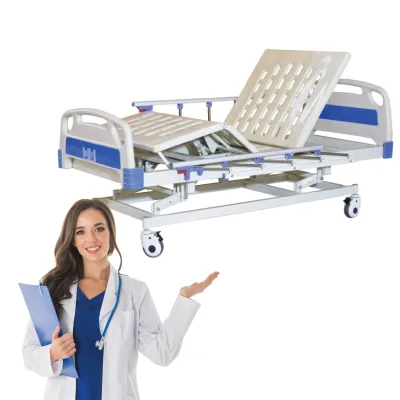
When evaluating multi-functional hospital beds, the primary differentiator lies in the configuration of the mechanical and electrical systems that allow for patient positioning. The observed market data indicates a clear segmentation between manual and electric operation modes, each serving distinct clinical environments. Manual beds typically rely on crank mechanisms and are often categorized by their specific functional count, such as two-function or three-function models. These units generally feature adjustable head and foot sections, allowing caregivers to elevate the patient's upper body or lower extremities to improve circulation and respiratory function. In contrast, electric beds offer five-function capabilities, utilizing motors to adjust the head, foot, height, and often a Trendelenburg position.
The structural integrity of these beds is paramount. Specifications frequently cite dimensions ranging from 1880mm to 2200mm in length, with widths typically between 680mm and 970mm. Height adjustability is another critical specification, with some models offering a range from 450mm to 800mm to facilitate patient transfer and nursing care. The materials used in construction are predominantly metal, ensuring durability and the ability to support heavy loads in commercial and hospital settings. Key components include ABS and detachable bed head and foot boards, which provide a smooth, easy-to-clean surface, and aluminum alloy bedside rails that are often offered as an option to enhance patient safety.
The mobility of the bed is equally important. Standard configurations include four central castors with a diameter of 150mm, equipped with a brake system to ensure stability during treatment. The folding mechanism is another variable; while some units are designed to be folded for storage or transport, others are intended to remain in an unfolded state for continuous use. Buyers must verify the specific "Numbers of Function" for each model, as the distinction between a two-function manual bed and a five-function electric bed significantly impacts the unit's versatility and price point.
Compliance and Certification Verification
Navigating the regulatory landscape is a non-negotiable aspect of sourcing Class II medical equipment. The supply chain for hospital beds often involves products originating from major manufacturing hubs, with China being a primary source of production. However, the origin of manufacture does not guarantee compliance; buyers must independently verify the certification status of each unit. Observed product attributes indicate that reputable suppliers provide certifications such as FDA and CE, alongside ISO standards.
Specifically, the presence of ISOCE certification is a high-confidence fact observed in the product data, suggesting adherence to international quality management systems. Additionally, some listings explicitly mention FDA and CE certifications, which are essential for market access in North America and the European Union, respectively. While background knowledge suggests standards like ISO9001:2015 and ISO13485:2016 are relevant to medical device manufacturing, buyers should treat these as verification targets rather than automatic assurances. The procurement process must include a request for valid, current certificates from the specific manufacturer of the model being purchased.
Buyers should also scrutinize the "Business Type" attribute. A designation of "Manufacturer" suggests a direct supply chain, potentially offering better support and traceability compared to trading companies. However, regardless of the business type, the supplier must demonstrate that the specific model, identified by its unique product model number (e.g., RJ-M208, SLV-EA5028B, THR-MB558), has undergone the necessary testing to meet the Class II classification requirements. The absence of explicit certification data in a product listing should be treated as a red flag requiring immediate clarification before proceeding with an order.
Cost Drivers and Pricing Dynamics
The pricing of multi-functional hospital beds is influenced by a complex interplay of factors, including the level of automation, material quality, and the extent of customization. The observed price range in the market spans from $1 to $2,400, a variance that reflects the difference between basic manual frames and advanced electric systems with integrated monitoring or specialized features. This wide range underscores the importance of defining the exact functional requirements before soliciting quotes. A manual bed with two functions will naturally be priced lower than a five-function electric bed with adjustable height and specialized rail systems.
Beyond the unit price, the Minimum Order Quantity (MOQ) is a significant cost driver. Data indicates an MOQ range of 1 to 50 units. For smaller facilities or pilot programs, suppliers offering an MOQ of 1 set provide flexibility, whereas larger procurement contracts may leverage volume discounts by ordering 50 units or more. The packaging method also impacts logistics costs; options range from standard export cartons to wooden cases, with the latter offering superior protection for international shipping but at a higher cost.
Customization is another variable that affects the final price. Attributes such as "Customized Logo" and "Customized" packing indicate that suppliers are willing to tailor products to the buyer's branding and logistical needs. While these features add value, they often incur additional setup fees or higher unit costs. Buyers must weigh the benefits of branding and specific packaging against the budget constraints. Furthermore, the "Condition" of the product is consistently listed as "New," ensuring that buyers are not inadvertently purchasing refurbished units at new prices, which would be a critical compliance issue in many healthcare jurisdictions.
Typical Applications and Clinical Suitability
The versatility of multi-functional hospital beds allows them to serve a broad spectrum of applications, from acute care hospitals to home care settings. The "Using Ambient" attribute explicitly identifies hospitals as a primary use case, but the "Application" field often expands this to include home care and clinics. This adaptability is driven by the bed's ability to adjust to various patient needs, such as post-operative recovery, chronic disease management, and palliative care.
In a hospital setting, the "General Use" classification as commercial furniture aligns with the high-traffic, high-utilization environment of medical facilities. The "Feature" of strong elasticity and moderate softness is crucial for patient comfort and pressure ulcer prevention, particularly for patients who must remain in bed for extended periods. The specific use cases also extend to massage therapy, as indicated by the "Specific Use" attribute for massage tables, suggesting that some models are designed with dual-purpose capabilities.
The design style, often contemporary, plays a role in the psychological comfort of patients and the aesthetic integration of the equipment into modern healthcare facilities. The inclusion of features like detachable boards and aluminum alloy rails supports infection control protocols, which are paramount in hospital environments. Buyers should match the bed's specific functions to the clinical workflow; for instance, a five-function electric bed is ideal for intensive care units where frequent repositioning is required, while a three-function manual bed may suffice for general ward care or home environments where power sources may be limited.
Supplier Evaluation and Quality Assurance
Evaluating suppliers for medical bed procurement requires a multi-faceted approach that goes beyond price comparison. The "Business Type" attribute serves as an initial filter, with manufacturers generally offering more direct control over quality and lead times. However, the presence of a manufacturer label does not preclude the need for due diligence. Buyers should verify the supplier's capacity to meet the "Standard Export Packing" or "Standard or Customized" packaging requirements, ensuring that the product arrives in optimal condition.
Quality control should be embedded in the procurement contract. Given the "Condition" is listed as "New," buyers must ensure that the manufacturing process includes rigorous testing for structural integrity and electrical safety. The "Castor" specifications, such as the 150mm central diameter with a brake system, should be verified against the supplier's quality assurance protocols to ensure they meet the required load-bearing and safety standards. Additionally, the "Folded" and "Unfolded" states should be tested for smooth operation and durability over repeated cycles.
Buyers should also assess the supplier's ability to provide after-sales support, including maintenance and repair services. The complexity of electric beds with five functions necessitates a robust support network to address potential motor failures or control panel issues. The "Logo" customization option can also serve as a proxy for the supplier's willingness to engage in a long-term partnership, as it indicates a level of flexibility and customer-centric service.
Long-Term Procurement Considerations
Sourcing hospital beds is not merely a transactional event but a strategic decision with long-term implications for facility operations. The "Product Name" and "Product" attributes, which include terms like "Hospital Bed," "Medical Bed," and "Nursing Bed," highlight the critical role these units play in patient care continuity. Buyers should consider the lifecycle cost of the equipment, including energy consumption for electric models and the cost of replacement parts.
The "Standard" dimensions, such as 2000960500mm or 2200920400/800mm, must be compatible with existing hospital infrastructure, including door widths, elevator capacities, and room layouts. Incompatible dimensions can lead to significant logistical challenges and additional renovation costs. Furthermore, the "Model" numbers (e.g., R006, medical bed, hospital bed) serve as unique identifiers that should be tracked throughout the procurement lifecycle to ensure consistent maintenance and parts availability.
Finally, the "Using Ambient" and "Application" attributes suggest that the beds must be adaptable to changing healthcare needs. As patient demographics shift and care protocols evolve, the ability to reconfigure or upgrade the bed's functionality becomes increasingly valuable. Buyers should prioritize suppliers who offer modular designs or upgrade paths that allow for the addition of new features without the need for complete replacement. This forward-thinking approach ensures that the procurement investment remains relevant and effective for years to come, maximizing the return on investment for the healthcare facility.
Comparative Analysis of Bed Configurations
To assist buyers in making informed decisions, the following table summarizes the key differences between observed bed configurations based on the provided product attributes. This comparison highlights the trade-offs between functionality, operation type, and standard dimensions.
| Feature | Manual Bed (2-3 Function) | Electric Bed (5 Function) | Specialized/Other |
|---|---|---|---|
| Operation Type | Manual Crank | Electric Motor | Variable |
| Typical Functions | Head, Foot, Height | Head, Foot, Height, Trendelenburg, Side Rails | Varies by Model |
| Standard Dimensions | 1880x680x450-800mm | 2200x920x400/800mm | 2000x960x500mm |
| Material | Metal | Metal | Metal |
| Certifications | FDA, CE, ISOCE | FDA, CE, ISOCE | Varies |
| Primary Use | General Ward, Home Care | ICU, High-Dependency | Massage, Specific Use |
| MOQ Range | 1-50 Sets | 1-50 Sets | 1-50 Sets |
This table illustrates that while the core material and certification requirements remain consistent across the board, the functional complexity and dimensions vary significantly. Buyers must align these specifications with their specific clinical needs and budget constraints to select the most appropriate unit. The presence of "Five-function" capabilities in electric beds offers superior patient management but comes with a higher price point and potentially higher maintenance requirements compared to the simpler "Two-function" or "Three-function" manual models.
In conclusion, sourcing Class II multi-functional hospital beds requires a meticulous approach that balances technical specifications, regulatory compliance, and cost considerations. By focusing on verified attributes such as certifications, dimensions, and functional counts, buyers can navigate the market effectively and secure high-quality equipment that meets the rigorous demands of modern healthcare environments. The decision-making process should be guided by a clear understanding of the specific clinical applications and the long-term operational needs of the facility, ensuring that the selected beds provide optimal patient care and operational efficiency.
FAQs
What certifications do class ii multi-functional hospital beds typically have?
Reputable models often carry FDA and CE certifications alongside ISOCE. Buyers must verify these documents for each specific model number before purchasing to ensure regulatory compliance for Class II medical equipment.
How many functions are available for these hospital beds?
Available configurations include two-function, three-function, and five-function options. Manual beds usually offer fewer functions, while electric models frequently provide five-function capabilities for enhanced patient positioning.
Can I customize the logo and packaging for these beds?
Yes, customization for logos and packaging is available from many manufacturers. Buyers can request standard export cartons or wooden cases tailored to their specific branding and logistical requirements.
What is the minimum order quantity for purchasing these beds?
The minimum order quantity ranges from one set to fifty units depending on the supplier. Smaller facilities can often order single sets, while larger contracts may leverage volume discounts for fifty units.
Where are these class ii multi-functional hospital beds manufactured?
Most units originate from China, with specific production hubs in Guangdong. Buyers should confirm the exact origin and business type, such as manufacturer versus trading company, to ensure supply chain transparency.
What are the standard dimensions for these hospital beds?
Standard dimensions vary by model, with lengths ranging from 1880mm to 2200mm and widths between 680mm and 970mm. Specific models may also offer adjustable height ranges to suit different clinical environments.