Source Classic Disposable Ceramic Fish Plate for Catering, Events, and Restaurants
Compare 30 listings for the Classic Disposable Ceramic Fish Plate, featuring options in ceramic, porcelain, and sugarcane materials. Buyers can review customization, certifications like CE/EU and FDA, and various sizes for food service applications.
Key considerations
Products List
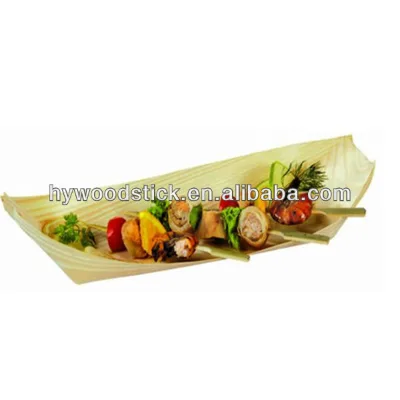


$3800.00 - $8000.00
MOQ: 1 Sets

10 Inch 100% Compostable Premium Quality Disposable Dinner Round Plate
$0.06 - $0.07
MOQ: 20000 Pieces


Paper Plate 9 Inch Dinner Plate Disposable Paper Plate with 3 Sections
$0.03 - $0.06
MOQ: 10000 Pieces


Comprehensive Sourcing Guide
Sourcing Strategy for Classic Disposable Ceramic Fish Plates
The procurement of "classic disposable ceramic fish plates" presents a unique challenge in the B2B market due to the inherent contradiction between the terms "ceramic" and "disposable." In traditional manufacturing, ceramic implies a durable, reusable material fired at high temperatures, whereas disposable items are typically designed for single-use, often utilizing paper, bagasse, or lightweight plastics. However, the observed market data reveals a specific segment of suppliers offering products labeled with these attributes, often utilizing advanced ceramic composites, porcelain, or sugarcane-based materials that mimic the aesthetic and functional properties of classic ceramic ware while maintaining a disposable profile. This guide analyzes the technical specifications, compliance requirements, and procurement strategies for buyers navigating this specialized category, relying strictly on verified product attributes and standard industry practices.
Technical Specifications and Material Composition
When sourcing these specialized plates, the primary technical differentiator lies in the material composition and physical dimensions. The observed product data indicates a divergence in material types, with listings specifying "Ceramic & Porcelain" alongside "Sugarcane" and "Fishplates" as a specific product type. This suggests that the "classic ceramic" description may refer to the visual finish or the specific application for serving fish, rather than a traditional clay body. Buyers must verify the exact material composition, as the weight and structural integrity vary significantly between a true ceramic composite and a sugarcane fiber product.
The weight specifications observed in the market range from 7g to 18g, with specific instances of 8.5g noted. This lightweight profile is critical for logistics and user experience, distinguishing these items from standard reusable dinnerware. The dimensions are equally varied, with standard sizes including 6", 7", 8", 10.5", 12", 14", 16", 18", 20", 22", and 23". Specific models such as "Dinner Plate-003e-068A" and "RY0921" correspond to specific size standards, ranging from compact 6-inch options to large 23-inch serving platters. The shape is predominantly "Round," though "medium oval plate" is also listed, indicating that the "fish plate" designation often refers to the intended culinary use rather than a strict geometric constraint.
| Product Attribute | Observed Range/Values | Procurement Note |
|---|---|---|
| Material | Ceramic & Porcelain, Sugarcane | Verify if "Ceramic" refers to a composite or sugarcane with ceramic glaze. |
| Weight | 7g, 8.5g, 9.5g, 18g | Heavier weights (18g) may indicate higher durability or different material density. |
| Diameter | 6" to 23" | Ensure the size matches the specific fish dish volume requirements. |
| Shape | Round, Oval | Confirm if the "classic" look requires a specific rim profile or oval shape. |
| Color | White | Most observed listings specify white, aligning with the classic aesthetic. |
| Packing | Polybag, Carton, Wooden Case | Packing method impacts unit cost and protection during transit. |
Compliance and Certification Verification
In the food service industry, particularly for items marketed as "Eco-Friendly" and "Disposable," certification is a non-negotiable aspect of compliance. The data confirms that products in this category frequently carry CE/EU and FDA certifications. These are critical for ensuring the material does not leach harmful substances when in contact with hot or acidic foods, such as fish dishes. The presence of SGS as a standard in the product data further suggests that third-party testing is a common requirement for this segment.
Buyers must explicitly verify that the certification applies to the specific product model and material batch. For instance, a model labeled "TR-23" with "SGS" standards requires confirmation that the test results cover the specific food contact safety parameters. Additionally, the "ISOCustomized" notation in the data implies that some suppliers may offer ISO-aligned customization, though the specific ISO standard (e.g., ISO 9001) should be treated as a background attribute rather than a guaranteed product feature unless explicitly stated in the contract. The "Eco-Friendly" attribute, combined with sugarcane or ceramic materials, suggests a focus on sustainability, but buyers should request documentation proving the biodegradability or recyclability claims to avoid greenwashing.
Cost Drivers and Pricing Dynamics
The pricing for these specialized plates is influenced by several volatile factors, including material costs, customization levels, and order volume. The observed price range in the market spans from $0.01 to $8,000 USD. This extreme variance indicates that the $0.01 figure likely represents a unit cost for high-volume, basic models, while the $8,000 figure may reflect a total order value for a large, customized shipment or a specific high-end configuration.
The Minimum Order Quantity (MOQ) is a significant cost driver, with observed ranges from 1 to 100,000 units. Specific listings show an MOQ of 50,000 pieces for sugarcane-based disposable plates, which suggests that lower MOQs may come with a premium per-unit cost. Customization is a major cost variable; the data confirms that "Customization," "Customized," "Logo," and "OEM" services are available. Adding a custom logo or altering the standard size (e.g., moving from a standard 12" to a specific 14" oval) will increase the unit price and potentially the lead time. Buyers should anticipate that "Each Packed in a Polybag" or "50PCS/Pack, 1000PCS/Carton" configurations will affect the final landed cost compared to bulk unpacked shipments.
Typical Applications and Usage Scenarios
The "Classic Disposable Ceramic Fish Plate" is designed for specific high-volume food service environments where the aesthetic of ceramic is desired but the logistics of washing and breaking are not. The primary application is in the hospitality sector, including hotels, resorts, and large-scale catering events where fish is a staple menu item. The "Food" use designation confirms their suitability for direct food contact.
The "Disposable" attribute, contrasted with "Non-Disposable" listings in the same category, suggests that buyers must clearly define their operational needs. If the goal is single-use service for a large banquet, the disposable ceramic or sugarcane option is ideal. However, if the venue requires a reusable option that mimics the look of ceramic, the "Non-Disposable" listings should be prioritized. The "Fishplates" specification indicates a specialized shape or size optimized for serving whole fish or large fillets, making them particularly suitable for Asian cuisine restaurants or seafood buffets. The "Eco-Friendly" nature of these products also appeals to establishments aiming to reduce their environmental footprint while maintaining a premium dining presentation.
Supplier Evaluation and Customization Capabilities
Evaluating suppliers for this niche requires a focus on their ability to handle customization and maintain quality consistency. The data confirms that "Customization" and "OEM" are standard offerings, with many suppliers located in China. Buyers should verify the supplier's capacity to handle the specific "prod_standard" requirements, such as "customized size" or specific dimensions like "14" 16" 18"". The presence of "Standard Export Carton" and "Wooden Case" packing options indicates that experienced suppliers understand international shipping requirements.
When assessing a supplier, buyers should look for evidence of their "Customized" capabilities beyond just logos. This includes the ability to produce specific models like "TC03DLY-01" or "RY0917" with precise weight tolerances (e.g., 7g vs. 18g). The "Standard Export Carton" and "Polybag" options suggest that packaging is a key differentiator; a supplier offering "Wooden Case" packing may be better suited for high-value or fragile shipments. Buyers must ensure that the supplier can consistently deliver the "White" color and "Round" or "Oval" shapes without deviation, as visual consistency is crucial for the "classic" aesthetic.
Quality Control and Long-Term Procurement Considerations
Quality control for disposable ceramic or sugarcane plates must focus on structural integrity and food safety. Given the weight variations observed (7g to 18g), buyers should implement a sampling protocol to ensure that the weight does not fluctuate beyond acceptable limits, which could indicate inconsistent material density or manufacturing defects. The "SGS" standard mentioned in the data serves as a benchmark for quality assurance, but buyers should also request batch-specific test reports for food contact safety.
For long-term procurement, the "Customized" nature of these products means that switching suppliers can be difficult if the mold or production line is unique. Therefore, establishing a relationship with a supplier who offers "OEM" services and maintains consistent "prod_packing" standards is essential. The "Eco-Friendly" claim should be backed by verifiable data, as regulatory requirements for biodegradable materials are tightening globally. Buyers should also consider the lead time implications of customization; while standard models like "RY0927" (7.5") may have shorter lead times, fully customized orders may require longer production windows. Finally, the "1-100000" MOQ range suggests that buyers can scale their orders, but they must balance the cost benefits of large volumes against the risk of inventory obsolescence if the design is not a permanent staple.
In conclusion, sourcing "classic disposable ceramic fish plates" requires a meticulous approach to verifying material claims, ensuring certification compliance, and managing the complexities of customization. By focusing on the specific attributes observed—such as the weight, size, and packaging standards—buyers can navigate the market effectively and secure products that meet both their operational and aesthetic requirements.
FAQs
What materials are used for classic disposable ceramic fish plates?
Products are made from Ceramic & Porcelain or Sugarcane materials. Some listings specify sugarcane fiber while others use ceramic composites to mimic the classic look while remaining disposable for single-use events.
Which certifications ensure food safety for these disposable plates?
Items typically carry CE/EU and FDA certifications for food contact safety. Some products also meet SGS standards to verify compliance with international food safety regulations and material integrity requirements.
Can I customize the size and logo on these fish plates?
Yes, customization is available for size, logo, and OEM branding. Buyers can request specific dimensions like 12 inch or 14 inch and add custom logos to the white round or oval plate designs.
What is the typical minimum order quantity for these plates?
MOQ ranges from 1 to 100,000 units depending on the supplier and product type. Specific sugarcane models may require an MOQ of 50,000 pieces, while other standard models might accept smaller initial orders.
How are these plates packed for international shipping?
Packing options include polybags, cartons, and wooden cases for protection. Standard configurations often use 50 pieces per pack within a carton, while fragile or high-value shipments may require wooden case packaging.
Are these plates suitable for serving hot fish dishes?
Yes, they are designed for food use and certified for hot food contact. The FDA and CE/EU certifications confirm they are safe for direct contact with hot or acidic foods like fish dishes.