Source Cleanroom Latex Finger Cots for SMT, Printing, and Computer Rooms
Compare 30 listings of Cleanroom Latex Finger Cots suitable for SMT production lines, printing workshops, and computer rooms. Buyers can evaluate specifications like size, thickness, and certifications including RoHS and ISO to find the right supplier.
Key considerations
Products List


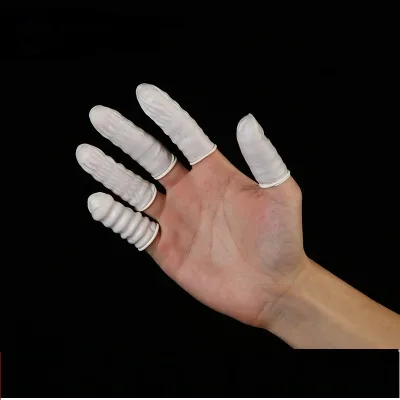
Disposable Pink ESD Antistatic Latex Finger Cots for Industry and Cleanroom
$0.01 - $0.01
MOQ: 10000 Pieces







Comprehensive Sourcing Guide
Strategic Sourcing Guide for Cleanroom Latex Finger Cots
Understanding Technical Specifications and Material Composition
When sourcing Cleanroom Latex Finger Cots, the primary objective is to identify products that balance tactile sensitivity with contamination control. The market offers a variety of configurations, but the core material composition remains a critical differentiator. Available data indicates that the predominant material for these items is latex, specifically described in some listings as "concentrated latex" or simply "latex," while other variants utilize rubber. Buyers must verify the specific material formulation, as the presence of latex can be a constraint for facilities with strict allergen policies, although some listings explicitly note a "NO" status for latex-free claims, confirming the presence of latex.
The physical dimensions of the finger cots are equally vital for operational efficiency. Observed specifications include a standard length of 63mm and a thickness of 0.21mm. These measurements suggest a design optimized for dexterity in precision tasks while maintaining a barrier against particulate matter. The sizing is typically categorized as Small, Medium, and Large (S/M/L), with specific product models often corresponding to these size classes. The "Class1000" attribute observed in product data points to a specific cleanliness standard, implying suitability for environments requiring ISO Class 5 or equivalent cleanliness levels, though buyers should verify the exact classification against their facility's requirements.
The design features also vary significantly. Common attributes include a straight thumb style and an elastic cuff style, which aids in securing the cot to the finger without the need for additional adhesives. The color of the cots is often pink, though customized color options are available to meet specific visual identification needs within a production line. The weight of individual units is a precise metric, with observed values around 0.47g ± 0.02g, indicating consistent manufacturing tolerances. Packaging is another technical consideration; standard configurations include vacuum packaging, with quantities such as 500 pieces per bag or 500g per bag, ensuring the product remains sterile and protected during transit.
Compliance, Certification, and Regulatory Standards
In the cleanroom environment, compliance is not merely a formality but a prerequisite for operational validity. The sourcing process must rigorously verify that the supplied finger cots meet international safety and quality standards. The most frequently observed certifications in the current market data include RoHS (Restriction of Hazardous Substances) and ISO (International Organization for Standardization) certifications. Some product listings also mention CE marking, which indicates conformity with health, safety, and environmental protection standards for products sold within the European Economic Area.
Buyers should be aware that while "ISO" is a broad term, specific cleanroom applications often require adherence to ISO 14644 standards for cleanroom classification. Although some background information references ISO 5 or ISO9001:2008, these should be treated as context rather than guaranteed attributes of every listing. The procurement strategy must involve a direct request for valid certification documents from the supplier to confirm that the specific batch of finger cots meets the required ISO classification. The presence of a "Class1000" label suggests a specific particle count limit, but this must be validated against the actual testing reports provided by the manufacturer.
Furthermore, the chemical composition of the latex must be scrutinized to ensure it does not introduce contaminants. The "RoHS" certification is particularly relevant as it limits the use of hazardous substances like lead, mercury, and cadmium. For facilities operating in combustible and explosive areas, the anti-static function of the cots is a critical compliance feature. Data indicates that specific models possess an "Anti-static" function, which is essential for preventing electrostatic discharge (ESD) that could damage sensitive electronic components or ignite flammable vapors. Verification of this property should be based on the supplier's test data rather than general marketing claims.
Cost Drivers and Pricing Dynamics
The pricing structure for Cleanroom Latex Finger Cots is influenced by several dynamic factors, including material costs, certification levels, and order volume. The observed price range in the market spans from $0.01 to $28 USD, a wide variance that reflects differences in quality, packaging, and order quantity. The lower end of this spectrum typically corresponds to bulk orders of standard, non-customized items, while the higher end may reflect specialized models with custom colors, specific certifications, or smaller packaging units.
The Minimum Order Quantity (MOQ) is a significant cost driver. Listings show an MOQ range from 1 unit up to 1,000,000 units. However, a specific observation notes an MOQ of 10 bags for certain models. For small-scale procurement, the unit cost may be higher due to the fixed costs of packaging and logistics. Conversely, large-volume buyers can leverage economies of scale to reduce the per-unit cost significantly. The "Selling Units" are often listed as single items, but the actual transaction usually occurs in bulk packs, such as 500 pieces per bag.
Additional cost factors include customization and packaging. Customized colors and specific branding (OEM services) often incur additional charges. The packaging method, such as vacuum packing versus standard bagging, also impacts the final price. Vacuum packing, which is noted in several listings, provides superior protection against moisture and contamination but may add to the manufacturing cost. Buyers should also consider the "Single gross weight" and "Single package size" (e.g., 36x12x6 cm) when calculating shipping costs, as these dimensions directly influence freight charges. The "Lead Time" of 3-5 days is relatively short, which can reduce inventory holding costs but may require expedited shipping fees for urgent orders.
Typical Applications and Operational Environments
Cleanroom Latex Finger Cots are designed for high-precision environments where human contact with components must be minimized to prevent contamination. The observed usage scenarios provide a clear picture of their operational scope. These cots are extensively used in SMT (Surface Mount Technology) production lines, where the placement of tiny electronic components requires the highest level of dexterity and cleanliness. The anti-static properties of these cots are crucial in this setting to protect sensitive circuit boards from electrostatic damage.
Beyond electronics manufacturing, these finger cots are essential in printing workshops and electronic component maintenance rooms. In these environments, the cots protect both the product and the operator from dust and particulate matter. The "Computer Room" application highlights their use in data centers and server maintenance, where even microscopic particles can cause overheating or short circuits. A unique and critical application area identified is the "Combustible & Explosive Area." In such hazardous environments, the anti-static function of the cots is non-negotiable, as it prevents the accumulation of static electricity that could trigger an explosion.
The versatility of the product is further demonstrated by its "Waterproof" and "Dustproof" attributes. These features make the cots suitable for applications where the operator's hands might be exposed to moisture or where the environment is particularly dusty. The "New" condition of the products ensures that they are free from previous use, which is a fundamental requirement for cleanroom integrity. The "Class1000" classification suggests that these cots are suitable for environments requiring a high degree of cleanliness, aligning with the needs of industries such as pharmaceuticals, biotechnology, and precision optics, although specific industry standards should always be verified against the supplier's documentation.
Supplier Evaluation and Procurement Considerations
Selecting the right supplier is as critical as selecting the right product. The sourcing guide emphasizes the importance of evaluating suppliers based on their ability to meet specific technical and logistical requirements. The "Place of Origin" for many of these products is Jiangsu, China, a region known for its manufacturing capabilities in the textile and glove industry. However, buyers should not rely solely on the origin but must verify the supplier's production capacity and quality control processes.
Key evaluation criteria include the supplier's ability to offer "Customization" and "OEM" (Original Equipment Manufacturer) services. The availability of these services indicates a flexible manufacturing process capable of adapting to specific buyer needs, such as custom branding or unique packaging requirements. The "Lead Time" of 3-5 days is a positive indicator of supply chain efficiency, but buyers should confirm if this lead time applies to standard orders or if customization extends this period.
Transparency in certification and testing is another vital factor. Buyers should request copies of the RoHS, ISO, and CE certificates, ensuring they are current and valid for the specific product model. The "Standard" attribute, such as "0.45g" or "500g/bag," should be cross-referenced with the actual product specifications to ensure consistency. Additionally, the "Brand Name" (e.g., "baichen") can be a factor in brand recognition and trust, but buyers should prioritize the technical specifications over brand reputation alone.
Quality Control and Long-Term Procurement Strategy
Implementing a robust quality control (QC) protocol is essential for maintaining the integrity of cleanroom operations. The QC process should begin with the verification of incoming goods against the agreed-upon specifications, including dimensions, material composition, and packaging integrity. The "Weight" of the cots, observed as 0.47g ± 0.02g, serves as a quick and effective metric for checking consistency. Deviations from this weight range could indicate manufacturing defects or material inconsistencies.
For long-term procurement, establishing a relationship with a reliable supplier is key. The "MOQ" of 10 bags suggests that even small orders are feasible, allowing for a phased approach to inventory management. However, for cost efficiency, consolidating orders to meet higher volume thresholds is advisable. Buyers should also consider the "Single package size" and "Single gross weight" when planning storage and logistics, ensuring that the warehouse can accommodate the specific dimensions of the vacuum-packed bags.
Long-term success also depends on the supplier's ability to maintain consistent quality over time. This requires regular audits and performance reviews. Buyers should monitor the supplier's adherence to the "Class1000" standard and other relevant certifications. The "Anti-static" function must be periodically tested to ensure it remains effective, especially if the product is used in explosive environments. By maintaining a proactive approach to quality control and supplier management, organizations can ensure a steady supply of high-quality Cleanroom Latex Finger Cots that meet their stringent operational requirements.
Comparative Analysis of Product Attributes
To facilitate informed decision-making, the following table summarizes the key attributes observed in the market data for Cleanroom Latex Finger Cots. This comparison highlights the variations in specifications, certifications, and packaging that buyers should consider.
| Attribute Category | Observed Specification | Variability Notes |
|---|---|---|
| Material | Latex, Rubber, Concentrated Latex | Verify latex content for allergen policies |
| Size | L, M, S, S/M/L | Ensure fit for specific finger sizes |
| Dimensions | Length: 63mm, Thickness: 0.21mm | Critical for dexterity and barrier protection |
| Certification | RoHS, ISO, CE | Verify validity and specific standard versions |
| Class | Class1000 | Correlate with facility ISO cleanliness class |
| Function | Anti-static, Waterproof, Dustproof | Essential for ESD and hazardous areas |
| Packaging | 500PCS/Bag, Vacuum Pack, 500g/Bag | Check for sterility and moisture protection |
| Origin | China (Jiangsu) | Verify supplier location and logistics |
| Lead Time | 3-5 Days | Confirm for urgent vs. standard orders |
| Customization | Available (Color, OEM) | Assess cost implications for custom needs |
This structured approach to sourcing ensures that buyers can navigate the complexities of the cleanroom latex finger cot market with confidence, prioritizing technical accuracy, compliance, and operational reliability.
FAQs
What certifications do Cleanroom Latex Finger Cots typically have?
These products commonly hold RoHS and ISO certifications to ensure safety and quality compliance. Some listings also include CE marking for European market conformity. Buyers should verify specific certification documents for the batch to confirm adherence to required standards.
How are Cleanroom Latex Finger Cots packaged for shipment?
Standard packaging involves vacuum sealing with quantities like 500 pieces per bag or 500 grams per bag. This method protects the product from moisture and contamination during transit. Customized packing options are available upon request for specific buyer requirements.
Which sizes are available for Cleanroom Latex Finger Cots?
The products are available in Small, Medium, and Large sizes to fit various finger dimensions. Specific product models correspond to these size classes for optimal dexterity. A length of 63mm and thickness of 0.21mm are standard specifications across the range.
Can Cleanroom Latex Finger Cots be used in explosive areas?
Yes, specific models feature anti-static functions suitable for combustible and explosive areas. This property prevents electrostatic discharge that could damage components or ignite vapors. Ensure the selected product explicitly lists this function for hazardous environment safety.
What is the typical lead time for Cleanroom Latex Finger Cots?
The standard lead time for these products is between 3 to 5 days. This short duration supports urgent procurement needs for production lines. Buyers should confirm if customization requests extend this timeframe before placing orders.
How much does a bag of Cleanroom Latex Finger Cots weigh?
Individual units weigh approximately 0.47 grams plus or minus 0.02 grams. Bulk packaging often targets a standard weight of 500 grams per bag. This consistent weight helps verify product quality and manufacturing tolerances upon receipt.