Source Collapsible Laminated Tube for Cosmetics, Toothpaste, and Creams
Compare 30 listings of Collapsible Laminated Tube options from verified Chinese manufacturers. Buyers can evaluate specifications like diameter, capacity, and surface treatment for use in cosmetics, toothpaste, and pharmaceutical creams.
Key considerations
Products List

$0.20
MOQ: 30000 Pieces


Aluminum Collapsible Tubes for Cosmetic Packaging OEM Printing Available
$0.01 - $0.04
MOQ: 10000 Pieces


Collapsible Tubes Aluminum Collapsible Tubes Pure Aluminum Collapsible Tubes
$0.05 - $0.07
MOQ: 50000 Pieces


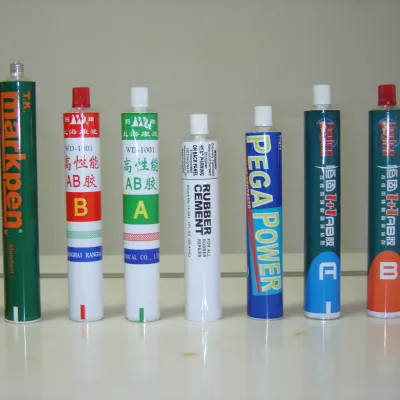


Aluminium Collapsible Tube for Glue Packaging Aluminium Wholesale Tube Packaging Glue Tube
$0.02 - $0.05
MOQ: 30000 Pieces


Cosmetic Collapsible Aluminum Tube, Cosmetic Packaging Tube with Aluminum Cap
$0.06 - $0.20
MOQ: 30000 Pieces

Factory Hot Sale Aluminium Collapsible Tube for Cosmetic Packaging Body Cream
$0.05 - $0.50
MOQ: 50000 Pieces


Comprehensive Sourcing Guide
Strategic Sourcing Guide for Collapsible Laminated Tubes
Technical Specifications and Material Architecture
When evaluating collapsible laminated tubes for procurement, the primary focus must be on the structural integrity of the laminate and the specific material composition. The core product attributes observed in the market indicate a prevalent use of Aluminum-Plastic composites, which offer a robust barrier against moisture, oxygen, and light. This material choice is critical for preserving the efficacy of sensitive contents such as toothpaste, pharmaceutical creams, and cosmetic formulations. The structural design typically features a cylindrical shape with a diameter range that spans from 13.5mm up to 40mm, accommodating various nozzle and cap configurations.
The dimensional standards for these tubes are not uniform across all suppliers, requiring buyers to verify specific size constraints for their production lines. Observed specifications include diameters of 13.5mm, 16mm, 19mm, 22mm, 25mm, 28mm, 30mm, and 32mm, while other listings suggest a broader capacity range from 5ml to 200ml. The standard volume capacities frequently cited include 15ml, 20ml, 30ml, 50ml, 60ml, 100ml, 120ml, and up to 150ml. It is essential to note that the "standard" designation often refers to the volume capacity rather than a fixed physical dimension, meaning the tube length will vary to accommodate the volume while maintaining a consistent diameter.
The cap and closure mechanisms are equally vital to the technical specification. Suppliers offer a variety of cap styles, including screw caps, stand-up tops with slip mechanisms, and long nozzle caps. The cap geometry can be cylindrical, octagonal, or specifically designed for top-slip applications. For applications requiring precise dispensing, the nozzle design must be verified against the viscosity of the product. The surface treatment processes are diverse, with options for offset printing, screen printing, hot stamping, and labeling. The printing capabilities generally support CMYK processes with a maximum of 6 to 9 colors, or the use of paper stickers for branding. The finishing options often include glossy or matte coatings to enhance the visual appeal and tactile feel of the packaging.
Compliance, Certification, and Regulatory Standards
Navigating the regulatory landscape is a non-negotiable aspect of sourcing collapsible laminated tubes, particularly for industries like pharmaceuticals and food. The supply chain data indicates that ISO certification is a common baseline for manufacturers, with some suppliers also holding CE and FSC certifications. These certifications serve as indicators of adherence to quality management systems and sustainable forestry practices, respectively. However, buyers must exercise caution and verify the specific scope of these certifications. For instance, while ISO is frequently mentioned, the specific standard (such as ISO 9001 for quality or ISO 15378 for pharmaceutical packaging) should be explicitly confirmed in the supplier's documentation.
The material composition, specifically the Aluminum-Plastic laminate, raises questions regarding food safety and chemical compatibility. While the product attributes list "Food" and "Medicine" as usage categories, the actual compliance with regulations like REACH or specific pharmaceutical standards (such as USP <659> or EU 10/2011 for plastic materials) is not explicitly guaranteed by the general listing data. Buyers should not assume that a tube labeled for food use automatically meets all local regulatory requirements for direct food contact without specific testing data. The presence of FSC certification suggests a commitment to sustainable sourcing of paper components, which is increasingly important for brands with environmental mandates.
Furthermore, the "recyclable" attribute observed in the product features requires careful interpretation. While the tube is marketed as recyclable, the actual recyclability depends heavily on local waste management infrastructure and the specific lamination technology used. Aluminum-plastic laminates are notoriously difficult to recycle in standard facilities due to the separation of materials. Therefore, buyers should request specific data on the recyclability claims, including any third-party verification or compliance with local recycling directives, rather than relying solely on the general "recyclable" label.
Cost Drivers and Pricing Variables
The pricing structure for collapsible laminated tubes is influenced by a complex interplay of factors, including material costs, order volume, and customization requirements. The observed price range in the market is exceptionally wide, spanning from $0.01 to $900,000. This vast disparity is not indicative of a single product type but rather reflects the difference between unit pricing for small stock items and total contract values for massive industrial orders. The unit cost is heavily dependent on the MOQ (Minimum Order Quantity), which ranges from 1 to 300,000 pieces.
High-volume orders, such as those with an MOQ of 30,000 pieces, typically benefit from economies of scale, significantly reducing the per-unit cost. Conversely, smaller orders or custom runs with lower quantities will incur higher unit prices due to the setup costs for printing plates, tooling, and machine calibration. The customization level is a primary cost driver; tubes with custom colors, complex multi-color offset printing (up to 9 colors), and specialized finishing like hot stamping will command a premium over standard white or single-color tubes.
Additional cost factors include the specific material thickness and the type of barrier layer required. Aluminum content in the laminate adds cost but provides superior barrier properties. The packaging method also impacts the final landed cost; options like reinforced corrugated cartons, plastic pallets, or enhanced cartons with pallets add to the packaging expenses. Buyers should also consider the Incoterms, such as FOB, CIF, or CNF, which determine who bears the freight and insurance costs. The production lead time, typically ranging from 15 to 35 days, can also influence pricing if expedited shipping or rush production fees are required.
Typical Applications and Usage Scenarios
Collapsible laminated tubes are versatile packaging solutions designed for a wide array of industries. The primary applications identified include cosmetics, toothpaste, pharmaceutical creams, and food products. The specific usage scenarios dictate the required material properties. For toothpaste and cosmetic creams, the tube must provide a hermetic seal to prevent drying out and maintain the product's texture. The Aluminum-Plastic material is ideal for these applications as it blocks out light and oxygen, which can degrade active ingredients in pharmaceuticals and cosmetics.
In the pharmaceutical sector, the tubes are used for dispensing ointments, gels, and creams. The requirement for sterility and precise dosing often necessitates specific nozzle designs and cap types, such as long nozzle caps for targeted application. The chemical resistance of the laminate is crucial when packaging chemical products, ensuring that the packaging does not react with the contents. For food applications, the tube must be safe for direct contact with consumables, requiring strict adherence to food safety standards.
The versatility of the tube extends to its shape and size. The round shape is standard, but the diameter and length can be customized to fit specific product volumes. The ability to print up to 9 colors allows for high-fidelity branding, making these tubes suitable for premium cosmetic lines where visual appeal is paramount. The "recyclable" attribute is particularly relevant for brands aiming to reduce their environmental footprint, although the practical implementation of recycling programs must be verified by the buyer.
Supplier Evaluation and Operational Capabilities
Selecting the right supplier requires a thorough evaluation of their operational capabilities, production capacity, and quality assurance processes. The market data indicates that suppliers are located primarily in China, with specific mentions of Guangdong as a manufacturing hub. This region is known for its mature packaging industry and access to raw materials. When evaluating suppliers, buyers should verify the specific location of the factory, as this can impact logistics and lead times.
Key operational metrics to assess include the production lead time and sample availability. Typical mass production lead times range from 15 to 35 days, with some suppliers offering faster turnaround times of 15 to 20 days. Sample availability is another critical factor; many suppliers offer free stock samples, with a sample time of 5 to 7 days. Custom samples may take up to 7 days to produce. Buyers should request samples to verify the quality of the printing, the strength of the laminate, and the functionality of the cap.
The supplier's capacity to handle large orders is also important. With MOQs reaching up to 300,000 pieces, suppliers must have the production lines and workforce to handle high-volume orders without compromising quality. The production time of 25 to 35 days for mass production suggests a need for careful planning and scheduling. Buyers should also inquire about the supplier's experience with specific industries, such as pharmaceuticals or cosmetics, to ensure they understand the unique requirements of those sectors.
Quality Control and Long-Term Procurement Considerations
Implementing a robust quality control (QC) strategy is essential for mitigating risks associated with packaging procurement. Buyers should establish clear QC protocols that cover material inspection, printing quality, and functional testing. The printing process, which includes offset, hot stamping, and screen printing, must be monitored to ensure color accuracy and adhesion. The surface treatment, including glossy or matte coatings, should be checked for consistency and durability.
Long-term procurement considerations involve building a sustainable relationship with the supplier. This includes negotiating favorable terms for volume discounts, ensuring consistent supply chain stability, and maintaining open communication regarding production schedules. The "Customization" attribute suggests that buyers can tailor the product to their specific needs, but this requires a clear understanding of the design specifications and a collaborative approach with the supplier.
Buyers should also consider the environmental impact of their packaging choices. While the tubes are marketed as recyclable, the actual recyclability depends on local infrastructure. Buyers should work with suppliers to explore options for sustainable materials and packaging designs that align with their corporate sustainability goals. Additionally, the use of reinforced corrugated cartons and plastic pallets for shipping helps protect the product during transit, reducing the risk of damage and returns.
Comparative Analysis of Product Attributes
To facilitate decision-making, the following table summarizes the key attributes observed in the market for collapsible laminated tubes. This comparison highlights the variability in specifications and helps buyers identify the features most relevant to their specific needs.
| Attribute Category | Observed Specifications & Options | Verification Requirement |
|---|---|---|
| Material | Aluminum-Plastic, Aluminum | Verify barrier properties and food safety compliance. |
| Dimensions | Diameter: 13.5mm to 40mm; Volume: 5ml to 200ml | Confirm fit with existing filling equipment. |
| Certifications | ISO, CE, FSC (General); ISO 9001/15378 (Implied) | Request specific certificate copies and scope. |
| Printing | Offset, Screen, Hot Stamping; Max 6-9 Colors | Check color proof and adhesion test results. |
| MOQ | 1 to 300,000 PCS | Negotiate based on forecasted volume. |
| Lead Time | 15 to 35 Days (Mass Production); 5-7 Days (Samples) | Align with production schedule and inventory needs. |
| Packaging | Corrugated Cartons, Pallets, Polybag | Ensure packaging meets shipping and storage requirements. |
| Cap Types | Screw, Stand-up, Long Nozzle, Cylindrical, Octagonal | Test cap closure and dispensing functionality. |
This table serves as a reference point for buyers to compare potential suppliers and ensure that the selected product meets all technical and operational requirements. By focusing on these verified attributes, buyers can make informed decisions that balance cost, quality, and performance.
FAQs
What certifications do Collapsible Laminated Tube suppliers hold?
Suppliers commonly hold ISO, CE, and FSC certifications. These indicate adherence to quality management systems and sustainable forestry practices, though specific scopes like ISO 9001 should be verified directly with the manufacturer.
Which materials are used for these collapsible laminated tubes?
The primary material is Aluminum-Plastic composite. This combination provides a robust barrier against moisture, oxygen, and light, making it suitable for toothpaste, pharmaceutical creams, and cosmetic formulations.
How many colors can be printed on these tubes?
Printing capabilities generally support CMYK processes with a maximum of 6 to 9 colors. Options also include offset printing, screen printing, hot stamping, and the use of paper stickers for branding.
What is the typical lead time for mass production?
Mass production lead times typically range from 15 to 35 days. Specific timelines may vary, with some suppliers offering faster turnaround of 15 to 20 days depending on order volume and customization.
Can I get free samples for collapsible laminated tubes?
Free stock samples are often available with a sample time of 5 to 7 days. Custom samples may also be provided within approximately 7 days, allowing buyers to verify quality before placing large orders.
What is the minimum order quantity for these tubes?
Minimum order quantities range from 1 to 300,000 pieces depending on the supplier and customization level. High-volume orders, such as those with an MOQ of 30,000 pieces, typically benefit from lower per-unit costs.
Where are these tubes manufactured?
These tubes are primarily manufactured in China, with specific mentions of Guangdong as a key production hub. Buyers should verify the exact factory location as it impacts logistics and lead times.