Source Waterproof Polycarbonate Dome Tent for Parties, Camping, Beach
Explore 30 options for the Waterproof Polycarbonate Dome Tent suitable for parties, camping, and beach events. Buyers can compare specifications like frame material, roof cover lifespan, and production times to find the right supplier.
Key considerations
Products List





Comprehensive Sourcing Guide
Strategic Sourcing Guide for Waterproof Polycarbonate Dome Tents
Understanding the Technical Architecture of Polycarbonate Dome Structures
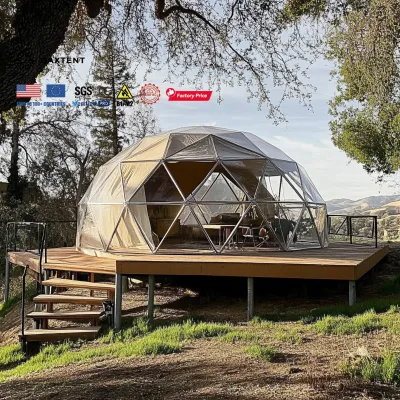
When sourcing waterproof polycarbonate dome tents, buyers must first distinguish between the structural framework and the cladding materials, as these components dictate the overall performance and longevity of the unit. The core keyword implies a specific architectural form—the dome—which offers superior aerodynamic stability and even load distribution compared to traditional pole structures. However, the material composition varies significantly across the market. While the term "polycarbonate" suggests a rigid, transparent, or translucent wall material, the supplied data indicates a complex landscape where some units utilize Polycarbonate for walls while others rely on PVC-coated fabrics for the roof and cover.
The structural integrity of these tents often relies on a Q235 Galvanized Steel Frame, which provides a robust skeleton capable of withstanding environmental stressors. For specific models, the frame lifespan is projected to be between 15 and 20 years, a critical metric for long-term capital planning. In contrast, the roof cover, whether specified as 850GSM Blockout Double Coated PVC Fabric or 950GSM Transparent PVC Fabric, typically carries a shorter lifespan of 6 to 8 years. This discrepancy requires buyers to plan for potential roof replacement cycles even if the frame remains serviceable.
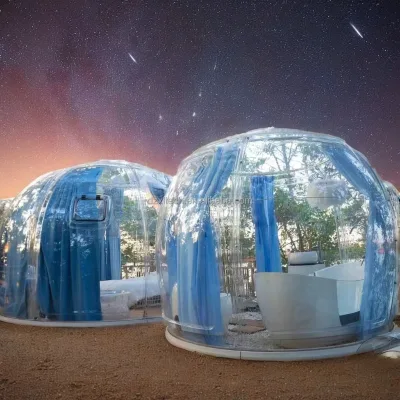
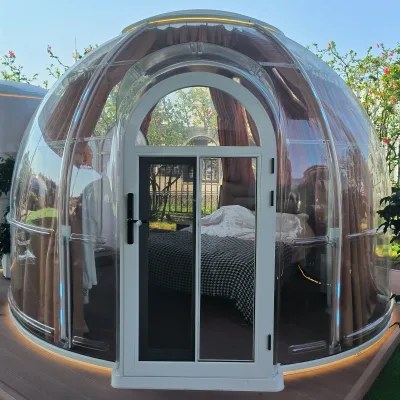
The wall material specification is a primary differentiator. Some configurations explicitly list Polycarbonate as the wall material, offering high impact resistance and light transmission. Others utilize PVC coated on the surface, which is noted for being waterproof and durable. The waterproof index for these structures is observed in the range of 2000-3000mm, a standard that ensures the tent can withstand heavy rainfall without leakage. Buyers should verify the specific material composition of the wall versus the roof, as a "polycarbonate dome" might technically feature polycarbonate walls with a PVC roof, or vice versa, depending on the model's intended use case.
Compliance Verification and Standard Alignment
Navigating the compliance landscape for industrial and commercial tents requires a rigorous verification of standards, as the market contains a mix of international and regional certifications. The supplied product data highlights several key standards that serve as benchmarks for quality and safety. These include SGS, CE, COC, UL, and EN14960. The presence of these standards suggests that reputable suppliers align their manufacturing processes with recognized safety and quality protocols. However, buyers must treat these as observations of specific listings rather than universal guarantees for every product in the category.
The EN14960 standard is particularly relevant for temporary structures, often governing safety requirements for tents and canopies. When evaluating a supplier, procurement teams should request documentation proving that the specific model under consideration meets this standard. Similarly, the UL and CE marks indicate compliance with electrical and safety directives, which is essential if the tent includes integrated lighting or heating systems. The ROHS certification is mentioned in background data, suggesting a focus on restricting hazardous substances, but its inclusion should be verified on a case-by-case basis rather than assumed.
Fire resistance is another critical compliance area, especially for tents used in public events or camping. The data references special processes such as "Anti UV, Fr RM1, M2, B1, B2." These designations likely refer to fire retardancy ratings, where B1 and B2 are common classifications for flammability in various jurisdictions. Buyers must confirm which specific fire rating applies to the product they intend to purchase, as a tent rated for indoor use may not meet the stricter requirements for outdoor public gatherings. The verification process should involve requesting test reports from independent laboratories that validate these claims against the stated standards.
Cost Drivers and Pricing Variables in the Market
The pricing for waterproof polycarbonate dome tents is highly variable, influenced by a complex interplay of size, material quality, and customization levels. The observed listed price range in the market spans from 1 to 6200 USD, a wide spectrum that reflects the diversity of product configurations. At the lower end of this range, buyers may encounter smaller, simpler units with standard dimensions and basic material specifications. Conversely, the upper end of the price spectrum likely corresponds to large-scale structures with custom dimensions, high-grade polycarbonate or PVC materials, and advanced features like double-coated roofs or specialized fire retardancy.
Size is a primary cost driver. The specifications indicate that these tents are available in a wide range of diameters, from 2.7 meters to 50 meters. The jump from a small 3-meter dome to a massive 50-meter structure involves exponential increases in material usage, frame complexity, and logistics costs. Additionally, the wall and roof materials significantly impact the price. A unit with 950GSM Transparent PVC Fabric will cost more than one with standard PVC due to the higher material density and specialized manufacturing process required for transparency and durability.
Customization is another major factor influencing the final cost. The data confirms that customization is available for capacity, size, and potentially other attributes. Custom orders often incur additional charges for engineering, tooling, and production adjustments. The minimum order quantity (MOQ) observed ranges from 1 to 13 units, suggesting that some suppliers offer single-unit purchases for prototyping or small events, while others may require bulk orders to achieve the lower price points. Buyers should be aware that the unit price often decreases as the order volume increases, but the total cost will still be heavily dependent on the specific configuration chosen.
Typical Applications and Usage Scenarios
The versatility of waterproof polycarbonate dome tents makes them suitable for a diverse array of applications, ranging from commercial events to permanent outdoor installations. The supplied data lists several usage categories, including camping tents, beach tents, advertising tents, and party venues. This broad applicability stems from the structural strength of the dome design and the weather-resistant properties of the materials used.
For camping and beach applications, the waterproof index of 2000-3000mm is a crucial feature, ensuring that occupants remain dry during inclement weather. The durability of the frame, with a lifespan of up to 20 years, makes these structures ideal for semi-permanent or permanent camping sites where long-term investment is required. The ability to customize the size allows for the creation of large communal areas or smaller private shelters, depending on the specific needs of the campsite or beach resort.
In the realm of advertising and events, the visual appeal of the dome structure is a significant asset. The availability of clear roofs with 950GSM Transparent PVC Fabric allows for natural light to enter the space, creating an inviting atmosphere for parties and exhibitions. The "Square Centre-pole" and "Single Skin" configurations mentioned in the data suggest that some models are designed for specific aesthetic or functional requirements, such as maximizing interior space or facilitating easy setup. The production time of 4-10 days and build time of 2-4 hours indicate that these tents can be deployed relatively quickly, making them suitable for time-sensitive events like festivals or trade shows.
Supplier Evaluation and Operational Capabilities
Evaluating a supplier for waterproof polycarbonate dome tents requires a deep dive into their operational capabilities, including production capacity, logistics, and quality control processes. The data indicates that the products originate from China, with specific mentions of Guangzhou as a production hub. This geographic concentration suggests a mature supply chain with access to specialized manufacturing facilities and raw materials. However, buyers should not rely solely on the origin location but must verify the specific factory's capabilities.
Production time is a critical operational metric, with the data suggesting a range of 4-10 days for manufacturing. This timeline can vary based on the complexity of the order, the level of customization, and the current production load. Buyers should establish clear communication channels to confirm lead times and ensure that the supplier can meet their project deadlines. The build time of 2-4 hours is another important factor, indicating that the tents are designed for rapid assembly and disassembly, which is essential for event planners and temporary installations.
Quality control is paramount when sourcing large structures. The presence of standards like SGS and CE implies that suppliers have established quality assurance protocols. Buyers should request evidence of these quality control measures, such as inspection reports or third-party audit results. The packing specifications, which include Kraft Paper, Hard Tube, Wood Case, or Steel Pallet, also provide insight into the supplier's attention to detail. Proper packaging is essential to prevent damage during transit, especially for large and complex structures like dome tents.
Long-Term Procurement and Lifecycle Management
Procuring a Waterproof Polycarbonate Dome Tent is not just a one-time purchase but a long-term investment that requires careful lifecycle management. The data highlights significant differences in the lifespan of various components. While the Q235 Galvanized Steel Frame can last 15 to 20 years, the roof cover, whether PVC or polycarbonate, has a shorter lifespan of 6 to 8 years. This disparity necessitates a proactive maintenance strategy to ensure the continued functionality and safety of the structure.
Buyers should plan for periodic inspections and potential replacements of the roof cover. The availability of spare parts and the ease of replacement are critical factors in the long-term cost of ownership. Suppliers that offer comprehensive after-sales support, including maintenance guides and replacement part availability, are preferable. The "Over 5 years" and "Over 15 Years" lifespan claims in the data suggest that some models are designed for extended use, but these figures should be validated against the specific environmental conditions in which the tent will be deployed.
Environmental factors such as UV exposure, wind loads, and temperature fluctuations can accelerate the degradation of materials. The "Anti UV" special process mentioned in the data is a key feature that mitigates this risk, but it is not a guarantee of indefinite performance. Buyers should consider the local climate when selecting a tent and ensure that the chosen model has the necessary protections against UV radiation and other environmental stressors. Regular cleaning and proper storage during off-seasons can also extend the lifespan of the tent, reducing the total cost of ownership over time.
Comparative Analysis of Structural and Material Options
To facilitate informed decision-making, it is helpful to compare the different structural and material options available in the market. The following table summarizes the key attributes observed in the supplied data, highlighting the variations in size, material, and lifespan.
| Feature | Option A: PVC Coated Fabric | Option B: Polycarbonate Walls | Option C: Hybrid (PVC Roof/PC Wall) |
|---|---|---|---|
| Primary Material | PVC Coated on Surface | Polycarbonate | PVC Roof, Polycarbonate Walls |
| Waterproof Index | 2000-3000mm | 2000-3000mm | 2000-3000mm |
| Frame Lifespan | 15-20 Years (Galvanized Steel) | 15-20 Years (Galvanized Steel) | 15-20 Years (Galvanized Steel) |
| Roof Cover Lifespan | 6-8 Years | N/A (Roof may vary) | 6-8 Years |
| Wall Material | PVC | Polycarbonate | Polycarbonate |
| Typical Usage | Camping, Beach, Advertising | Party, Camping, Beach | Party, Camping, Advertising |
| Size Range | 4m to 20m (varies) | 2.7m to 5.5m (dome) | 3m to 50m (diameter) |
| Special Features | Anti UV, Fire Retardant | High Impact Resistance | Transparency, Durability |
This comparison underscores the importance of selecting the right configuration based on the specific needs of the project. While Option A offers a robust and cost-effective solution for general use, Option B provides superior light transmission and impact resistance for applications where visibility is key. Option C combines the benefits of both, offering a versatile solution for a wide range of events. Buyers should carefully evaluate the trade-offs between cost, durability, and aesthetic requirements when making their final selection.
FAQs
What materials are used for the walls and roof?
Walls typically use Polycarbonate while roofs use PVC fabrics. Some models feature 850GSM Blockout Double Coated PVC or 950GSM Transparent PVC for the roof cover to ensure durability and weather resistance.
How long does the frame and roof cover last?
The Q235 Galvanized Steel Frame lasts 15 to 20 years. The roof cover has a shorter lifespan of 6 to 8 years, requiring potential replacement cycles even if the frame remains serviceable.
Can I customize the size and capacity of the tent?
Yes, customization is available for capacity and size. Units range from 2.7 meters to 50 meters in diameter, allowing for tailored solutions for specific event or camping requirements.
What certifications do these tents meet?
Products meet standards such as SGS, CE, COC, UL, and EN14960. These certifications indicate compliance with safety and quality protocols for temporary structures and materials.
How long does production and build time take?
Production time ranges from 4 to 10 days depending on customization. The build time for assembly is typically 2 to 4 hours, facilitating rapid deployment for events.
What is the waterproof rating of the structure?
The waterproof index is observed between 2000 and 3000mm. This rating ensures the tent can withstand heavy rainfall without leakage during outdoor use.
Where are these tents manufactured and shipped from?
Products originate from China, with specific manufacturing hubs in Guangzhou. Shipping involves packaging in Kraft Paper, Hard Tubes, Wood Cases, or Steel Pallets.