Source Cotton Blowroom Mixing Machine for Sofa Cushions, Pillows, and Toys
Find 30 Cotton Blowroom Mixing Machine listings with varying production capacities and chamber counts. Buyers can compare specifications like working width, installed power, and output rates for home textile applications.
Key considerations
Products List


Durable Used Five-Roller Mixing Machine for Efficient Cotton Blending
$8000.00 - $60000.00
MOQ: 1 Pieces

Durable Used Five-Roller Cotton Mixing Machine with Uniform Blending
$8000.00 - $60000.00
MOQ: 1 Pieces


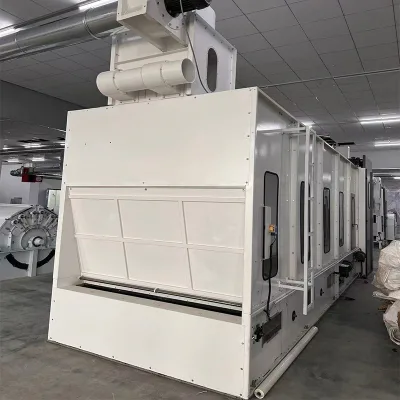


$15000.00 - $550000.00
MOQ: 1 Sets


High Quality Textile Machine Big Cabinet Blender / Cotton Mixing Machine
$20000.00 - $50000.00
MOQ: 1 Sets


Comprehensive Sourcing Guide
Strategic Sourcing Guide for Cotton Blowroom Mixing Machines
The global textile industry relies heavily on the efficiency of the blowroom section, where raw cotton is opened, cleaned, and mixed before spinning. For procurement professionals, sourcing a Cotton Blowroom Mixing Machine requires a disciplined approach that balances technical capability with supply chain reliability. The market offers a diverse array of equipment, ranging from standalone mixers to integrated production lines. This guide outlines the critical factors buyers must evaluate to ensure the acquisition of machinery that meets specific production demands without compromising on quality or compliance.
Technical Specifications and Production Capacity
When evaluating a Cotton Blowroom Mixing Machine, the primary focus must be on production capacity and physical dimensions, as these dictate the machine's fit within an existing facility and its output potential. The observed market data indicates significant variation in performance metrics. Buyers should verify the maximum production rate, which in current listings ranges from 1000 kg/h to 1600 kg/h. A machine with a production capacity of 1600 kg/h, for instance, is suitable for high-volume operations, whereas a 1000 kg/h unit may suffice for smaller mills or specialized applications.
Physical dimensions are equally critical for facility planning. The standard footprint for these machines varies, with observed working widths spanning from 1200 mm to 1600 mm. The overall machine dimensions can be substantial, with some models measuring approximately 12114 mm in length, 2194 mm in width, and 4504 mm in height. Other configurations, such as the JWF1029 series, may present a more compact profile at roughly 6787 mm by 1618 mm by 4122 mm. Buyers must cross-reference these dimensions with their factory floor plans to ensure adequate space for operation and maintenance.
Power consumption is another key technical parameter. The installed power for these units typically ranges between 9.99 kW and 14.4 kW, depending on the specific model and chamber configuration. For example, a model with eight chambers may require 14.4 kW, while a six-chamber variant might operate on 9.99 kW. Understanding the voltage requirements is essential, as the market supports multiple standards including 220V, 380V, and 415V. Procurement teams must confirm that the facility's electrical infrastructure aligns with the machine's voltage specifications to prevent operational disruptions.
Configuration and Customization Options
The flexibility of the machinery is a decisive factor for many buyers, as textile mills often have unique processing needs. The current market landscape shows that customization is a prevalent feature. Buyers can expect options where the machine painting color and specific packing requirements are tailored to the client's needs. While some listings describe the product as "Customized," others note "Non-Customized" attributes, indicating that the level of personalization depends on the specific supplier and order volume.
The configuration of the mixing chambers is a vital technical detail. Available models feature varying numbers of chambers, with six and eight chambers being common configurations. The choice between these depends on the desired mixing intensity and the volume of material to be processed. Furthermore, the machine type is often defined as a "Spinning Production Line" or a dedicated "Cotton Fiber Mixer Machine." Some advanced setups are described as a combination of units, such as a configuration involving JWF1081A, JWF1035, and JWF1127 models, which suggests a modular approach to building a complete mixing and opening system.
Packing standards also vary, with options including standard packages, wooden boxes, or crates. For international shipments, the choice of packaging must align with the destination's import regulations and the fragility of the equipment. Buyers should explicitly state their preference for "Standard Package" or "Be Made According to Customer Need" to ensure the equipment arrives in optimal condition.
Compliance, Certification, and Safety Standards
Ensuring that the machinery meets international safety and quality standards is non-negotiable for B2B procurement. The observed market data highlights that many units come with CE and ISO9001 certifications. These certifications are critical indicators that the manufacturer adheres to specific European safety directives and international quality management systems. However, buyers must treat these as observations rather than universal guarantees for every listed product.
When evaluating a potential supplier, procurement teams should request valid certification documents to verify the current status of CE and ISO9001 compliance. The absence of these certifications may indicate a lack of adherence to international safety protocols, which could pose risks during installation and operation. Additionally, the warranty period is a standard metric for assessing supplier confidence. A 12-month warranty is commonly observed in the market, providing a baseline for after-sales support. Buyers should clarify the scope of this warranty, including coverage for parts, labor, and specific exclusions, to avoid future disputes.
Cost Drivers and Pricing Structures
The pricing of cotton blowroom mixing machines is influenced by several factors, including production capacity, customization level, and the complexity of the configuration. The observed price range in the market is extensive, spanning from 1,800 USD to 550,000 USD. This wide disparity reflects the difference between basic standalone mixers and comprehensive, automated production lines.
Buyers should be aware that the "Lowest Reasonable Offers in The Market" is a common attribute listed, but this should be interpreted as a negotiation starting point rather than a fixed price. The final cost is heavily dependent on the specific model selected, such as the JWF1027-8 or the multi-unit JWF1081A combination. Customization requests, such as specific painting colors or unique packing requirements, will also impact the final price. Furthermore, the minimum order quantity (MOQ) appears to be flexible, with observed values ranging from 1 to 1, suggesting that buyers can often procure single units without needing to meet high volume thresholds.
Typical Applications and Material Compatibility
Understanding the intended application of the machine is essential for selecting the right equipment. The primary function of these machines is the mixing of cotton fibers, but they are also versatile enough to handle polyester fibers. This dual capability makes them suitable for a broad range of textile products, including home textiles, pillows, quilts, cushions, and soft toys. The "Function" of the machine is explicitly defined as "Mixing Fiber," and the "Usage" category encompasses a wide array of end products.
The machine is often part of a larger ecosystem of related equipment. Buyers should consider how the mixing machine integrates with upstream and downstream processes. Related machines frequently include fiber opening machines, pillow filling machines, and soft toy stuffing machines. Ensuring compatibility with these related units is crucial for maintaining a smooth production flow. The "Spinning Method" associated with these machines is typically "Ring Spinning," which implies that the output is optimized for this specific spinning technique.
Supplier Evaluation and Quality Control
Selecting the right supplier requires a rigorous evaluation process that goes beyond the product listing. Buyers should prioritize suppliers who demonstrate a clear understanding of the "Producing Process" and can provide detailed specifications for their "Automatic Grade" machinery. The fact that the product origin is listed as China indicates a significant portion of the global supply comes from this region, but it does not define the quality.
Quality control measures should be a central part of the supplier evaluation. Buyers must verify the "Condition" of the machine, which is typically listed as "New." However, "New" can sometimes be ambiguous, so it is advisable to request evidence of the manufacturing process and quality assurance protocols. The "Standard" for the machine should be clearly defined, whether it is a specific model number like JWF1029 or a customized standard.
When comparing suppliers, buyers should create a comparison table to evaluate key attributes side-by-side. This ensures that all critical factors, such as working width, production rate, and power consumption, are considered objectively.
| Attribute | Model A (Example) | Model B (Example) | Verification Requirement |
|---|---|---|---|
| Production Capacity | 1000 kg/h | 1600 kg/h | Confirm actual output under load |
| Working Width | 1200 mm | 1600 mm | Verify fit with existing line |
| Installed Power | 9.99 kW | 14.4 kW | Check electrical compatibility |
| Chambers | 6 | 8 | Assess mixing efficiency needs |
| Certification | CE, ISO9001 | CE, ISO9001 | Request valid certificate copies |
| Warranty | 12 Months | 12 Months | Review terms and exclusions |
Long-Term Procurement Considerations
Sourcing a Cotton Blowroom Mixing Machine is not just a one-time transaction but an investment in long-term operational efficiency. Buyers should consider the availability of spare parts and the technical support provided by the supplier. The "Automatic" nature of the machinery implies a reliance on electronic controls and automated systems, which may require specialized maintenance.
Lead times and delivery logistics are also critical factors. While specific lead times are not provided in the general data, the complexity of the machine and the customization level will influence the time required for manufacturing and shipping. Buyers should negotiate clear delivery schedules and ensure that the "Standard Package" or custom packing is sufficient to protect the equipment during transit.
Finally, the total cost of ownership (TCO) should be calculated, including energy consumption, maintenance costs, and potential downtime. A machine with a higher initial price but better energy efficiency and reliability may offer a lower TCO over its lifespan. By focusing on these long-term considerations, buyers can secure a partnership that supports their production goals for years to come.
FAQs
What is the production capacity range for these machines?
Production capacity ranges from 1000 kg/h to 1600 kg/h depending on the specific model selected. Buyers should verify the maximum output rate to ensure it matches their mill's volume requirements before placing an order.
Can the machine color and packaging be customized?
Yes, machine painting color and packing can be made according to customer needs or standard packages. This flexibility allows buyers to align the equipment appearance and shipping protection with their specific facility or logistics preferences.
Which certifications are commonly observed for these units?
Commonly observed certifications include CE and ISO9001, indicating adherence to safety and quality management standards. Buyers should request valid certificate copies to verify compliance before finalizing procurement decisions for international shipments.
How many mixing chambers are typically available in these models?
Available models typically feature six or eight mixing chambers to suit different mixing intensity needs. The choice between these configurations impacts the installed power, which ranges from 9.99 kW to 14.4 kW.
What is the warranty period for new spinning production lines?
A 12-month warranty is commonly observed for new machines in this category. Buyers should clarify the scope of this warranty, including coverage for parts and labor, to ensure adequate after-sales support.
Which voltage standards are supported by these automatic machines?
These machines support multiple voltage standards including 220V, 380V, and 415V. Procurement teams must confirm that the facility's electrical infrastructure aligns with the machine's specific voltage requirements to prevent operational disruptions.
What is the minimum order quantity for purchasing one unit?
The minimum order quantity is flexible, with observed values ranging from 1 to 1 unit. This allows buyers to procure single units without needing to meet high volume thresholds for initial acquisition.