Source Cotton Bandana for Outdoor Activities, Leisure, and Fashion
Compare 30 Cotton Bandana options from Jiangsu, China, featuring digital printing and custom sizes. Buyers can review materials like cotton and polyester, packaging details, and delivery times ranging from 3 to 7 days for bulk orders.
Key considerations
Products List
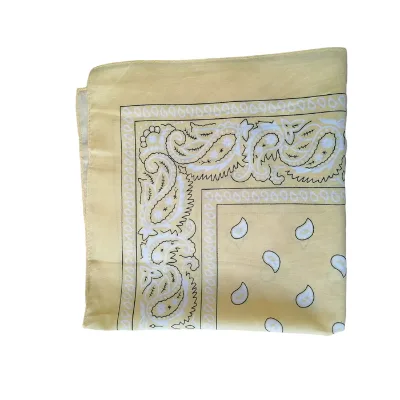
Custom MultiPurpose Cotton Bandana Party Outdoor Favor Scarf Headband Bandana
$0.20 - $0.80
MOQ: 100 pieces
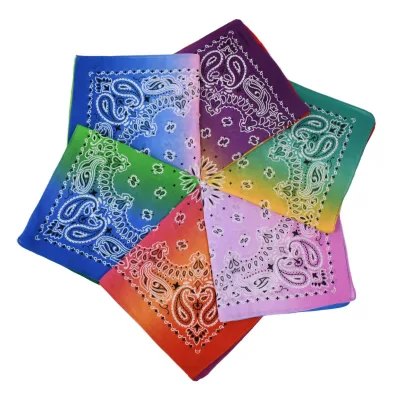
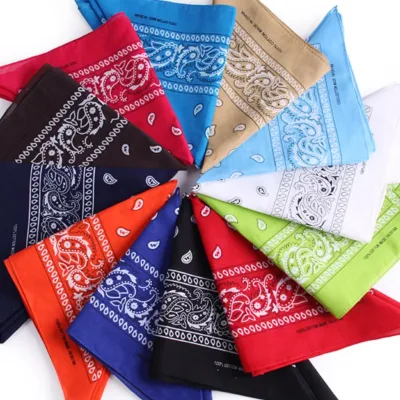


Square Bandana Multifunction 100% Cotton Bandanas Tube Bandana Scarf Bandanas
$0.20 - $1.80
MOQ: 600 Pieces


Comprehensive Sourcing Guide
Strategic Sourcing Guide for Cotton Bandanas in the B2B Market
Understanding Product Specifications and Material Composition
When sourcing cotton bandanas for B2B procurement, the primary focus must be on precise technical specifications that align with the intended application. The core product category, identified as "Cotton Bandana," often presents variations in material composition that significantly impact performance and cost. Based on observed market data, the material profile is not uniform; while the primary attribute is cotton, specific listings indicate a blend of cotton and polyester. This hybrid composition is frequently cited for products labeled as "custom printing cotton polyester square bandana," suggesting that buyers must verify the exact fiber ratio before placing orders.
The physical dimensions of these items are equally critical. Standard observations indicate a size of 5454CM, though "custom" sizing is a prevalent attribute, with some listings specifying 55cm55cm or 22"X22". The weight of the fabric is another technical variable; specific data points reference a weight of 74gsm for polyester variants, which serves as a benchmark for thickness and opacity. Buyers should note that the single package size varies significantly depending on the product model, ranging from compact 10X10X4 cm packages to larger 25X25X1 cm configurations. This variation suggests that logistics planning must account for different packaging densities.
Furthermore, the printing method is a decisive technical factor. Digital printing is the standard method observed for these products, allowing for high-resolution customization. The color options are extensive, ranging from standard primary colors like black, white, red, and blue to specific shades such as Army Green, Sky Blue, and Light Purple. Some listings explicitly mention "Multicolor" elements, indicating the capability for complex, multi-hued designs. The style is generally categorized as "European and American Style" or "Fashion," with patterns ranging from plain to intricate custom prints. Understanding these specifications is the first step in ensuring the product meets the functional requirements of the end-user, whether for outdoor activities, leisure, or promotional use.
Compliance Standards and Certification Verification
In the realm of textile procurement, compliance and certification are non-negotiable elements that protect both the buyer and the end consumer. The supplied data highlights specific factory audit standards, noting that facilities may hold WCA (Worldwide Compliance Audit) and BSCI (Business Social Compliance Initiative) certifications. These are critical indicators of a supplier's adherence to social responsibility and labor standards. Buyers should treat these as baseline requirements rather than optional extras, especially when sourcing from major manufacturing hubs like Jiangsu, China.
However, it is essential to distinguish between observed factory audits and product-specific certifications. While the background context mentions GOTS (Global Organic Textile Standard), OEKO-TEX, and REACH, these are not explicitly confirmed as active certifications for every listed product in the provided data. Therefore, procurement strategies must involve direct verification. Buyers should request current certificates of compliance for OEKO-TEX or REACH if the target market has strict chemical restrictions. The absence of these specific labels in the primary product attributes does not imply non-compliance, but it does necessitate a rigorous audit of the supplier's quality assurance documentation.
Additionally, some product listings reference CE standards, which typically apply to safety requirements for products sold in the European Economic Area. While bandanas are generally low-risk items, the presence of CE indicates a higher level of regulatory adherence. Buyers must verify if this standard applies to the specific batch or if it is a general company claim. The "Factory Audit" status is a more reliable proxy for the manufacturing environment's integrity. When evaluating suppliers, the presence of WCA or BSCI certification should be a primary filter, as these audits cover a broad spectrum of operational ethics, from working conditions to environmental management.
Cost Drivers and Pricing Dynamics
The pricing structure for cotton bandanas is influenced by a complex interplay of material costs, customization levels, and order volume. The observed price range in the market spans from $0.09 to $5.99 USD. This wide disparity is not arbitrary; it reflects the difference between basic, unbranded items and high-end, custom-printed products with specific material blends. The lower end of the spectrum likely corresponds to standard cotton or cotton-polyester blends with minimal customization, while the upper end encompasses complex digital printing, unique fabric weights, or specialized packaging.
Order volume is the most significant driver of cost efficiency. The Minimum Order Quantity (MOQ) ranges from 50 to 10,000 units. Suppliers offering lower MOQs, such as 50 units, often charge a premium per unit to cover setup costs for digital printing and small-batch production runs. Conversely, orders approaching the 10,000-unit threshold typically unlock significant economies of scale, reducing the per-unit cost. Buyers must balance their inventory needs against the upfront capital required. For instance, a brand launching a new product line might opt for a higher MOQ to secure a lower price point, whereas a test market campaign might prioritize a lower MOQ despite the higher unit cost.
Material composition also plays a pivotal role in pricing. Products listed with a specific GSM (grams per square meter), such as 74gsm, may command different prices than standard weights. The inclusion of polyester in the blend can alter the cost structure, potentially offering durability at a different price point than 100% cotton. Additionally, the complexity of the design affects the price. Digital printing allows for full-color customization, but the number of colors and the intricacy of the pattern can influence the printing setup fees. Buyers should request detailed breakdowns of costs, separating material, printing, and packaging expenses to understand the true value proposition of each quote.
Typical Applications and Usage Scenarios
Cotton bandanas are versatile accessories with a wide range of applications, driven by their multifunctional nature. The primary usage category identified is "Outdoor Activities," which includes hiking, camping, and sports. In these scenarios, the bandana serves as a sweatband, sun protection, or a dust mask. The "Leisure" category further expands the use case to casual wear, festivals, and travel. The "Unisex" gender classification and "Adult" age group designation confirm that these products are designed for a broad demographic, making them suitable for corporate giveaways, team uniforms, or fashion statements.
The "European and American Style" attribute suggests that these products are tailored to Western fashion trends, which often favor bold prints, classic patterns, or minimalist designs. The "Fashion" style tag reinforces this, indicating that bandanas are not just utilitarian but also serve as style accessories. The "Multicolor" and "Plain" pattern options allow for customization based on brand identity or event themes. For example, a sports team might choose a plain bandana with a specific logo, while a fashion retailer might opt for a multicolor, custom-printed design.
The packaging and weight specifications also hint at the intended application. The single gross weight of 0.050 kg to 0.074 kg indicates lightweight products that are easy to distribute and carry. The "12 pc/opp Bag" or "Carton" packing options suggest that these items are often sold in bulk for retail or promotional purposes. The "Outdoor" applicable scene is a key selling point, as the material's breathability and absorbency make it ideal for active use. Buyers should consider the specific environment where the bandana will be used; for instance, a cotton-polyester blend might be preferred for high-sweat activities due to its durability, while 100% cotton might be chosen for comfort in moderate climates.
Supplier Evaluation and Operational Capabilities
Selecting the right supplier requires a deep dive into their operational capabilities and production flexibility. The supply chain data indicates that the place of origin is primarily Jiangsu, China, a region known for its textile manufacturing infrastructure. The "OEM/ODM" attribute being "Warmly Welcomed" is a strong indicator of a supplier's willingness to customize products according to buyer specifications. This flexibility is crucial for brands looking to create unique designs or private-label products.
Lead time is another critical factor in supplier evaluation. The observed delivery time ranges from 3 to 7 days, which is exceptionally fast for manufacturing and shipping. However, buyers should verify if this timeframe applies to sample production, standard stock items, or custom orders. Customization often extends lead times due to the need for design approval, printing setup, and quality checks. The "Customization: Available" attribute confirms that suppliers are equipped to handle bespoke requests, but the specific timeline for these custom orders must be clarified during negotiations.
The "Model Number" and "prod_model" fields, such as BYB0010A, BYT001, and 002, suggest that suppliers have established product lines. This standardization can streamline the ordering process, but buyers should ensure that the specific model matches their requirements for size, material, and print. The "Single package size" variations (10X10X4 cm to 25X25X1 cm) also highlight the need for clear communication regarding packaging preferences. Suppliers that offer multiple packaging options, such as "12PC/OPP" or "Carton," demonstrate a higher level of logistical adaptability.
When evaluating suppliers, buyers should prioritize those with verified factory audits like WCA or BSCI. These certifications provide assurance that the manufacturing process adheres to international standards. Additionally, the "Brand Name" variations, such as "Boyue" or generic "Bandana," indicate that some suppliers offer both branded and unbranded options. Buyers seeking private label services should confirm the supplier's ability to apply their own branding without compromising quality or compliance.
Quality Control and Long-Term Procurement Strategy
Ensuring consistent quality is paramount in long-term procurement. The "Feature: Multifunction" and "Style: Fashion" attributes imply that the product must maintain its aesthetic and functional integrity over time. Quality control measures should focus on the durability of the digital printing, the consistency of the color fastness, and the structural integrity of the fabric. The "Elements: Multicolor" and specific color lists (e.g., Gray, blue, red, Purple) require rigorous testing to ensure that the colors do not fade or bleed during washing or exposure to sunlight.
For long-term success, buyers should establish a clear quality assurance protocol. This includes requesting pre-production samples to verify the material composition, print quality, and dimensions. The "Single gross weight" specifications (0.050 kg to 0.074 kg) should be monitored to ensure that the product weight remains consistent across batches. Any deviation could indicate changes in material density or packaging, which might affect the product's perceived value.
Sustainability and ethical sourcing are increasingly important in B2B procurement. While specific certifications like GOTS or OEKO-TEX are not universally confirmed in the provided data, buyers should proactively request evidence of compliance with environmental and labor standards. The "Factory Audit" status serves as a foundation, but additional verification may be necessary depending on the target market's regulations.
Finally, building a strong relationship with the supplier is essential for long-term procurement. The "OEM/ODM" flexibility and "Customization: Available" attributes suggest that suppliers are open to collaboration. Buyers should leverage this by engaging in open communication about design requirements, volume forecasts, and quality expectations. By maintaining a strategic partnership, buyers can ensure a steady supply of high-quality cotton bandanas that meet their evolving market needs.
FAQs
What materials are used for cotton bandanas?
Products are primarily made of cotton, though some listings specify a cotton and polyester blend. This hybrid composition is common for custom printing options and offers durability. Buyers should verify the exact fiber ratio before ordering to ensure it meets specific performance needs.
How large are the standard Cotton Bandana sizes?
Standard dimensions are typically 54 by 54 centimeters or 55 by 55 centimeters. Custom sizing is widely available to accommodate specific requirements. Some models also list sizes as 22 by 22 inches, so confirming the exact measurement is essential for fit.
Can suppliers provide custom printing for these items?
Yes, digital printing is the standard method observed for these products, allowing for high-resolution customization. OEM and ODM services are warmly welcomed by manufacturers. Buyers can request specific designs, with options for multicolor elements or plain patterns depending on the order.
What is the typical lead time for delivery?
The observed delivery time ranges from 3 to 7 days for production. This timeframe may vary depending on whether the order involves standard stock or custom designs. Buyers should clarify if this rapid turnaround applies to their specific customization requirements before finalizing the purchase.
Which certifications do the factories hold?
Factory audits often include WCA and BSCI certifications to ensure social compliance. Some listings reference CE standards for regulatory adherence. While other certifications like OEKO-TEX are mentioned in background contexts, buyers should request current certificates to verify specific compliance for their target market.
What is the minimum order quantity for cotton bandanas?
The minimum order quantity ranges from 50 to 10,000 units depending on the supplier. Lower MOQs often carry a higher per-unit cost due to setup fees for digital printing. Higher volumes typically unlock better pricing through economies of scale, so buyers should balance inventory needs with budget.
Where are these cotton bandanas manufactured?
The primary place of origin for these products is Jiangsu, China. This region is known for its textile manufacturing infrastructure and supply chain capabilities. Buyers sourcing from this location should consider the logistical implications of shipping from this specific manufacturing hub.