Source Customized Puppy Cat Collar for Training Home Use
Compare 30 Customized Puppy Cat Collar options from verified suppliers. Buyers can review materials like nylon, sizes ranging from XS to XL, and features such as buckle or break-away closures for various pet training and home applications.
Key considerations
Products List


$0.80 - $1.80
MOQ: 1000 Pieces


Dog Collar with Custom Logo, Promotional Dog Collar, Promotion Dog Collar
$0.35 - $0.45
MOQ: 1000 Pieces


Comprehensive Sourcing Guide
Strategic Sourcing Guide for Customized Puppy and Cat Collars
The global market for pet accessories has seen a significant surge in demand for specialized, personalized items, with customized puppy and cat collars representing a high-growth segment. For B2B buyers, navigating this sector requires a disciplined approach that balances aesthetic customization with rigorous technical specifications and supply chain reliability. The following guide synthesizes observed market data and product attributes to provide a framework for sourcing these items effectively, ensuring that procurement decisions are grounded in verifiable facts rather than unverified marketing claims.
Understanding Technical Specifications and Material Composition
The foundation of a successful procurement strategy lies in a precise understanding of the technical specifications that define product quality and suitability. In the current market, the material composition is a primary differentiator. Observed product data indicates that Nylon is a dominant material choice for these collars, valued for its durability and resistance to wear. However, buyers must remain vigilant, as some listings reference standards described as "Cotton or poly," suggesting that material blends or variations exist across different supplier catalogs. When sourcing, it is critical to verify the exact material composition for each SKU, as the performance characteristics of nylon differ significantly from cotton or polyester blends regarding moisture resistance and tensile strength.
Dimensions and sizing are equally critical, particularly for puppies and kittens whose growth rates vary. The market offers a wide range of sizes, including specific designations such as S, M, L, XL, and XS. Width specifications also vary, with observed data showing widths of 2CM and 2.5CM. A 2CM width is often suitable for smaller breeds or younger puppies, while 2.5CM may provide better stability for medium-sized cats or larger dogs. Buyers should not assume a single size fits all applications; instead, they must align their inventory strategy with the specific size ranges (S, L, M, XL) required by their target demographic. Furthermore, the weight of the product is a logistical factor; observed net weights range from approximately 0.129 Kg to 0.29 Kg, with some lighter variants noted at 20g to 60g per unit. These variations directly impact shipping costs and packaging efficiency.
Closure Mechanisms and Functional Design
The functional design of a collar is paramount for pet safety and owner convenience. The market features distinct closure types, primarily Buckle and Break Away mechanisms. Buckle collars are standard for general use and training applications, offering a secure fit that is easy to adjust. Conversely, Break Away collars are specifically engineered for safety, designed to release under pressure to prevent choking or injury, making them a preferred choice for cats or active puppies. The product data highlights "Types" such as Buckle Collars and Stud Collars, indicating a diversity in design intent.
When evaluating functional attributes, buyers should also consider the "Suitable for" classification. While many products are explicitly marked as suitable for dogs, some listings broaden the scope to "All Kinds of Pets." This distinction is vital for inventory planning. A collar marketed for general pet use may have different safety standards than one specifically engineered for canine training. Additionally, the "Condition" is consistently listed as New, implying that buyers should expect fresh stock rather than refurbished items. The "Style" attributes range from Casual to Christmas, suggesting that seasonal customization is a viable strategy for increasing order volumes during specific times of the year.
Compliance, Standards, and Safety Verification
In the realm of pet products, compliance and safety standards are non-negotiable, yet the provided data presents a complex landscape regarding certifications. Some product listings reference standards described simply as "Cotton or poly" or provide packaging dimensions (e.g., 542937CM, 604030cm) rather than explicit safety certifications like ISO or ASTM. This absence of explicit certification data in the general product attributes necessitates a proactive verification process by the buyer.
Buyers must not assume that a product labeled with a specific standard automatically meets international safety requirements for the destination market. Instead, the procurement process should include a mandatory request for third-party test reports regarding tensile strength, buckle durability, and material toxicity. For instance, while the "prod_standard" field may list packaging dimensions, this does not equate to a safety standard for the collar itself. Buyers should verify if the supplier adheres to specific regional regulations regarding pet safety, particularly concerning the "Break Away" functionality, which must reliably release at a specific force threshold to be considered safe. The "Factory Service" is noted as OEM, which implies that the supplier can customize the product, but this also means the buyer is responsible for defining the quality benchmarks that the OEM must meet.
Cost Drivers and MOQ Considerations
The cost structure for customized collars is influenced by several variables, including material choice, customization complexity, and order volume. The observed price range in the market spans from 0.1 to 4.8 USD, a wide spectrum that reflects differences in material quality, branding, and order size. The Minimum Order Quantity (MOQ) is another significant cost driver, with observed ranges extending from as low as 8 units to as high as 3000 units. Some specific product lines list an MOQ of 200PCS or 300PCS, which can be a barrier for small buyers but manageable for established retailers.
Customization is a key value-add in this sector, with "Customization" and "Customized" listed as available attributes. The ability to add a "Customized Logo" is frequently mentioned as an additional service. However, the cost implications of customization must be carefully calculated. While the base unit price may be low, the setup costs for custom logos, color matching, and specific packaging (such as "Poly Bag and Carton" or "OPP Polybag") can increase the effective cost per unit. Buyers should analyze the trade-off between the MOQ and the unit price; often, a higher MOQ results in a lower unit cost, but it also increases inventory risk. The "Sample" availability is a crucial factor in mitigating this risk, allowing buyers to validate quality before committing to larger orders.
Supplier Evaluation and Origin Analysis
Evaluating suppliers requires a focus on their operational capabilities and geographic origins. The product data indicates that manufacturing origins are primarily in China, with specific mentions of Jiangsu and Zhejiang provinces. These regions are known for their textile and manufacturing clusters, which can offer competitive advantages in terms of supply chain efficiency. However, the specific location of the factory can influence lead times and communication efficiency.
When assessing a supplier, buyers should look for evidence of "Factory Service" capabilities, specifically OEM (Original Equipment Manufacturer) experience. This indicates that the supplier has the infrastructure to handle custom orders rather than just selling off-the-shelf inventory. The "Additional Services" such as "Customized Logo" and "Sample" availability are strong indicators of a supplier's flexibility and willingness to engage in a collaborative procurement relationship. Buyers should also verify the "Packing" standards, as options like "1PC/OPP Polybag" or "Carton" affect the final product presentation and protection during transit. A supplier that offers robust packing solutions demonstrates a commitment to product integrity, which is essential for maintaining brand reputation.
Quality Control and Long-Term Procurement Strategy
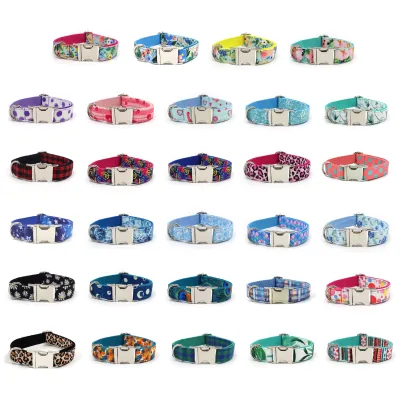
Implementing a robust quality control (QC) protocol is essential for long-term success in this category. Given the variability in observed specifications, such as different widths (2CM vs 2.5CM) and materials (Nylon vs Cotton/Poly), a standardized QC checklist is necessary. This checklist should include checks for closure integrity, color consistency across the "White, Black, Grey, Red, Pink, Blue, Purple, Green, Yellow, Orange, Brown, Multicolor" spectrum, and dimensional accuracy. The "Feature" attributes like "Sturdy" and "Soft" are subjective and must be translated into objective test criteria, such as pull-force tests for buckles and tactile assessments for material softness.
For long-term procurement, buyers should prioritize suppliers who offer consistent "All Season" applicability, ensuring that inventory remains relevant year-round. The "Application" fields, which include "Home" and "Training," suggest that collars can be marketed for multiple use cases, expanding the potential customer base. However, buyers must ensure that the customization options (such as the "prod_model" variations like ZS0720, ZS0719, MC24SB001) do not lead to excessive SKU proliferation that complicates inventory management. A strategic approach involves selecting a core set of models that can be easily customized with different colors or logos to meet seasonal trends without requiring a complete overhaul of the production line.
Comparative Analysis of Product Attributes
To facilitate decision-making, the following table summarizes key attributes observed in the market, highlighting the variations that buyers must navigate during the sourcing process.
| Attribute Category | Observed Variations | Sourcing Implication |
|---|---|---|
| Material | Nylon, Cotton, Poly | Verify exact composition for durability and comfort claims. |
| Size Range | S, M, L, XL, XS | Ensure size charts match target pet demographics (puppy vs. cat). |
| Closure Type | Buckle, Break Away | Match closure type to safety requirements (e.g., cats need break-away). |
| Width | 2CM, 2.5CM | Select width based on breed size and training needs. |
| MOQ | 8, 200, 300, 3000 | Balance order volume with cash flow and inventory risk. |
| Origin | Jiangsu, Zhejiang, China | Assess logistics and lead times based on specific province. |
| Packing | Poly Bag, Carton, OPP | Determine packaging needs for retail presentation and shipping. |
| Customization | Logo, Color, Style | Confirm feasibility and cost of specific custom requests. |
Conclusion
Sourcing customized puppy and cat collars requires a meticulous approach that prioritizes technical verification over marketing assertions. By focusing on the specific attributes of material, closure type, and sizing, and by rigorously evaluating supplier capabilities regarding OEM services and quality control, buyers can build a resilient supply chain. The wide range of observed prices and MOQs offers flexibility, but it also demands careful financial planning. Ultimately, the success of a procurement strategy in this sector depends on the buyer's ability to translate the diverse product data into a coherent inventory plan that meets the safety and aesthetic needs of the end consumer while maintaining operational efficiency.
FAQs
What materials are used for customized puppy cat collars?
Nylon is the dominant material used for these collars, offering durability and wear resistance. Some listings reference standards described as Cotton or poly, so buyers must verify the exact composition for each SKU to ensure performance characteristics match their needs.
Which closure types are available for these collars?
The market features distinct closure types including Buckle and Break Away mechanisms. Buckle collars are standard for training and general use, while Break Away collars are engineered for safety to release under pressure, making them preferred for cats or active puppies.
Can buyers customize the logo on these collars?
Yes, customization is available, and adding a Customized Logo is frequently mentioned as an additional service. Buyers should analyze the trade-off between the MOQ and unit price, as setup costs for custom logos and color matching can increase the effective cost per unit.
What is the typical MOQ for ordering these collars?
The Minimum Order Quantity ranges from 8 units to 3000 units depending on the supplier and product line. Some specific product lines list an MOQ of 200PCS or 300PCS, which can be a barrier for small buyers but manageable for established retailers.
How do product dimensions vary across different models?
Width specifications vary, with observed data showing widths of 2CM and 2.5CM to suit different breed sizes. Size designations include S, M, L, XL, and XS, requiring buyers to align their inventory strategy with the specific size ranges required by their target demographic.
Where are these collars typically manufactured?
Manufacturing origins are primarily in China, with specific mentions of Jiangsu and Zhejiang provinces. These regions are known for their textile and manufacturing clusters, which can offer competitive advantages in terms of supply chain efficiency and lead times.
What packaging options are available for these products?
Packaging options include Poly Bag and Carton, OPP Polybag, or 1PC/OPP Polybag configurations. A supplier that offers robust packing solutions demonstrates a commitment to product integrity, which is essential for maintaining brand reputation during transit and retail presentation.