Source Dog Waste Bag Dispensers for Cats, Dogs, and Birds
Find and compare 30 Dog Waste Bag Dispenser options from China. These manual, waterproof PE tape bags are designed for household and shopping use, featuring customizable sizes and recyclable materials for pet waste cleaning.
Key considerations
Products List


Certificate Eco Friendly Dog Poop Bags Dog Poop Bag Dispenser Wholesale
$0.20 - $0.25
MOQ: 10000 Rolls


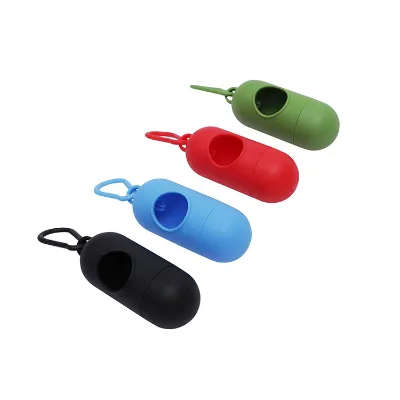


Comprehensive Sourcing Guide
Dog Waste Bag Dispenser Sourcing Guide
The Dog Waste Bag Dispenser occupies a small but commercially significant niche within the broader pet cleaning products category. Buyers sourcing this item typically encounter it alongside related SKUs such as pet waste bags on roll, tape bags, and garbage bag variants, since many factories producing the dispenser also supply the consumable refill bags that drive repeat purchases. Treating the dispenser as an entry point into a wider pet waste cleaning assortment is a practical framing for retail buyers, e-commerce sellers, and promotional product distributors alike.
This guide organizes the sourcing decision into the areas that most affect outcomes: understanding what the observed listings actually cover, verifying technical specifications, requesting appropriate compliance documentation, managing cost drivers, qualifying suppliers, and building long-term procurement discipline. Throughout, the emphasis is on what a buyer should confirm directly with a supplier rather than assumptions drawn from a product listing page.
Product Scope and Observed Listing Signals
Observed listings in this category cluster around several distinct product types that a buyer should separate before comparing quotes. The category data includes manual-operation toilet and pet cleaning products, PE-based bag products in black and multicolor, tape bags, heat-seal bags, and items marketed for pet waste cleaning with applications spanning cat, dog, and bird. Some listings describe bag products with handles, on-roll packing, or block packing, while others reference dispensers and packaging in printed retail boxes. A dispenser buyer should first clarify whether a given listing covers the dispenser hardware, the refill bags, or a combined set, because mixing these in a single RFQ invites mismatched quotes.
Several listing signals are worth noting as observations rather than universal guarantees. Customization is listed as available, meaning logos, printing, and sizes can in some cases be specified, but the extent varies by listing — one observed product states "without logo printing" as its default condition, while others advertise customized designs. Sizes appear as both fixed standards (one listing cites 23×33 cm for a bag product) and "customized," and packaging is described variously as box, carton, or printed retail box. Waterproof and recyclable features appear in the data, as does a weight limit of more than 10 kg on one item. Buyers should treat these as listing-level attributes to confirm, not category-wide guarantees.
Technical Specifications to Verify
The most consequential specification for a dispenser program is the material. Observed listings identify PE as the plastic type, which aligns with trusted category knowledge that polyethylene dominates both the dispenser housings and the bag refills in this segment. Buyers should confirm the exact grade — LDPE, HDPE, or blends — because this affects flexibility, transparency (listings range from opaque to stated opacity "yes"), and durability of moving parts or tear-off mechanisms. One listing notes a "medium soft" hardness rating, which is relevant to bag products rather than rigid dispensers and underscores why each specification must be tied to the specific SKU in question.
For bag components, thickness and capacity deserve explicit verification. Observed data shows thickness offered at "12 to 25 microns or as required" and capacities in the 2L–3L range, with standard or customized sizes available. Buyers should also pin down packing format — "on roll or in block" appears in the data and directly affects dispenser compatibility, since roll-core bags and coreless roll bags are not interchangeable. Heat seal as the stated sealing method, handle type ("hand length handle" in one listing), and the small/medium/large size tiers all require written confirmation in the specification sheet before samples are approved.
Compliance and Safety Documentation
Because these products are household items in contact with pet waste and handled by adults, buyers should request documentation proportional to their market's requirements rather than assuming certifications exist. The observed listing data makes no certification claims, so any statement about recyclability, biodegradability, or disposability — features that do appear in the data — should be substantiated by the supplier with material declarations or test reports appropriate to the destination market. A buyer selling into regulated markets should ask what documentation the factory can actually provide rather than relying on listing keywords.
Product standard references in the observed data are limited to dimensional descriptions ("23×33 cm" and "customized"), so buyers should not infer conformity to any named national or international standard from the listings. For claims such as biodegradable, request the specific standard or test basis in writing. Where dispensers include mechanical parts or printed retail packaging, confirm that inks and packaging inks comply with the destination market's requirements. The disciplined approach is to request sample-based documentation alongside the physical sample, so claims and material can be checked together.
Cost Drivers and Commercial Terms
Observed pricing in the category spans a wide range — from around USD 0.12 at the low end to USD 4,000 at the high end — reflecting the mix of simple consumable bags, dispenser units, and possibly unrelated listings within the same dataset. Buyers should therefore benchmark like against like: a refill bag unit price, a dispenser unit price, and a combined set price are three different comparisons. MOQs in the observed data range from as low as 2 pieces to 50,000, and one listing states a 2,000 kg minimum for bag products by weight, illustrating how consumables are often quoted by mass rather than unit count.
Commercial terms to confirm include customization premiums, packing format costs (retail printed boxes versus plain cartons), and the shipping economics implied by the data: one listing cites delivery of 25 to 30 days for a 20ft container, which is a useful reference point for planning but should be reconfirmed per order. Free existing samples are offered in at least one listing — a reasonable ask for any buyer — while customized samples may carry cost. Because product origin in the observed data is China (including Shandong for one listing), buyers should budget for freight, duties, and inland logistics separately from unit prices and clarify Incoterms explicitly.
Supplier Qualification and Quality Control
Qualification should begin with a product-specific capability check rather than a general factory review. Ask whether the supplier manufactures the dispenser and the refill bags in-house or trades one component; mixed-supply programs create attribution problems when defects appear. Confirm customization scope in writing — observed listings indicate customization is "available" but also show defaults like "without logo printing," so the buyer's artwork, color, and printing requirements must be itemized in the purchase specification, not assumed.
Quality control should be anchored to the physical sample. Approve a golden sample covering material, color (black and multicolor options both appear in the data), thickness where applicable, sealing, and packing format, then reference it in the purchase order. For bag products, define inspection points such as roll consistency, tear-off performance, seal integrity under the stated heat-seal method, and carton packing condition. Agree on an AQL-based inspection regime appropriate to a consumable item, and verify that packaging — box or carton, with printed retail box as an option in the data — protects the goods through the container transit implied by the 25–30 day delivery reference.
Long-Term Procurement Checks
Sustained supply in this category depends on managing the consumable-to-dispenser relationship deliberately. Because refills generate repeat revenue, buyers should secure continuity on roll format, thickness within the stated 12–25 micron band or agreed alternative, and bag dimensions across reorders; a silent change in any of these breaks dispenser compatibility and triggers customer complaints. Establish a periodic re-confirmation of the specification sheet and a change-notification clause so material or process changes cannot be introduced unilaterally.
Finally, institutionalize supplier performance review around delivery reliability, defect rates at inspection, and responsiveness on reprints or artwork revisions. Re-validate compliance documentation periodically, especially for any biodegradable or recyclable claims that face evolving scrutiny in consumer markets. Keep at least one qualified alternate source for the refill bags even when the primary supplier performs well, since consumable continuity is the commercial backbone of the program. Over time, consolidating dispenser and refill sourcing with a single capable supplier can simplify logistics — one listing's carton-based packing and container-level delivery terms suggest such consolidation is practical — but only after the qualification and QC groundwork above has been completed.
FAQs
What materials are used for dog waste bag dispensers?
The products are primarily constructed from PE plastic, ensuring durability and waterproof performance. These bags are opaque and available in black or multicolor options. The material hardness is medium soft, providing flexibility during use. This composition supports recyclable features, making them suitable for eco-conscious pet owners who prioritize sustainable waste management solutions.
Can I customize the design of these waste bags?
Yes, customization is available for both printing and sizing. Buyers can request customized designs and logos, although some standard items may come without logo printing. Sizes can be standard or customized to fit specific dispenser requirements. This flexibility allows businesses to tailor the product to their brand identity or specific operational needs effectively.
What is the typical MOQ for these pet waste bags?
The minimum order quantity ranges from 2 to 50,000 units depending on the specific product model. For instance, one model lists an MOQ of 2,000 kgs, while others start as low as 2 units. This wide range accommodates both small trial orders and large-scale industrial procurement, offering flexibility for various business sizes and inventory requirements.
How are these products packaged for shipping?
Packaging options include boxes, cartons, rolls, or blocks. Some items are packed in printed retail boxes for direct consumer sale, while bulk orders use cartons. The packaging is designed to protect the PE plastic bags during transit. This versatile packaging approach ensures product integrity and supports different distribution channels, from retail shelves to wholesale warehouses.
What is the lead time for delivery?
Delivery typically takes 25 to 30 days for a 20FT container. This timeline applies to standard production runs and may vary based on customization requirements. Buyers should account for this lead time when planning inventory. Existing samples are often available for free to verify quality before committing to larger orders.
Are these bags suitable for different types of pets?
Yes, the application scope includes cats, dogs, and birds. The products are designed for general pet waste cleaning, with weight limits supporting pets over 10 kg. This versatility makes them suitable for multi-pet households or professional grooming services. The manual operation type ensures ease of use across various pet care scenarios.