Source Dual DVR Wireless Motorcycle Dashcam for Fleet Use
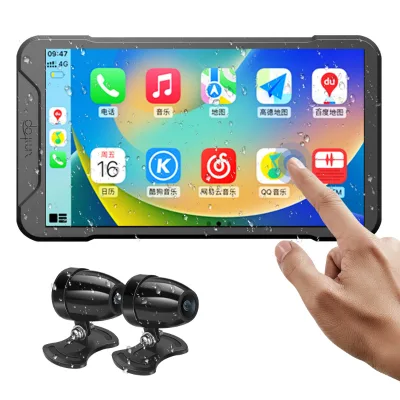
Source a Dual DVR Wireless Motorcycle Dashcam from 30 verified listings. Compare features like 1080P resolution, 120-150° shooting angles, and WiFi support to find the right unit for fleet management, accident analysis, and secure video storing; compare the available evidence and request quotations based on your requirements.
Key considerations
Products List

Dual 1080P Motorcycle DVR Dash Cam with WiFi TPMS GPS Motorcycle Dashcam
$62.50 - $66.50
MOQ: 20 Pieces


Dash Cam on Motorcycle Dual WiFi GPS 1080P Motorcycle Dashcam for Motorcycles
$50.50 - $54.50
MOQ: 20 Pieces

Dual 1080P Waterproof Motorcycle DVR Dash Cam with WiFi GPS Moto Recorder
$54.50 - $58.50
MOQ: 20 Pieces

Dual 1080P WiFi GPS Motorcycle Dashcam Driving Recorder Best Motorbike Dash Cam
$54.50 - $58.50
MOQ: 20 Pieces

Dual 1080P WiFi GPS Motorbike Dash Cam Motorcycle Dashcam Best Motorbike Dashcam
$50.50 - $54.50
MOQ: 20 Pieces


4G LTE 2K+1K Front and Rear Dashcam with 24h Parking Monitor and Dual Radar
$59.80 - $64.80
MOQ: 10 Pieces


High Quality HD 1080P Motorcycle Camera Dashcam Car DVR Front Rear Dash Cam Cameras
$26.00 - $30.00
MOQ: 1 Pieces

Fee Installation Dashcam for Motorcycle 1296p HD Wide Angle Camera with 2 Cameras
$16.80 - $19.80
MOQ: 2 Pieces



Comprehensive Sourcing Guide
Dual DVR Wireless Motorcycle Dashcam Sourcing Guide
Sourcing a Dual DVR Wireless Motorcycle Dashcam requires distinguishing between general driving data recorders and specialized units designed for two-wheeled stability and vibration resistance. The observed product range includes models with dual-channel recording capabilities, supporting functions like accident analysis and data communication essential for fleet management. Buyers must verify that the specific unit selected offers the necessary 120° to 150° shooting angles to capture wide road views without blind spots.
Procurement decisions should prioritize units that explicitly support wireless connectivity and multi-language interfaces for international deployment. The market data indicates a variety of storage capacities ranging from 16GB to 128GB, allowing buyers to match hardware to their specific video retention policies. It is critical to confirm that the selected model includes the required sensor types, such as the V09 or similar, to ensure reliable performance under varying lighting conditions.
Product Scope and Observed Listing Signals
The available product listings demonstrate a clear segmentation between standard HD recorders and advanced units featuring fatigue driving warnings and identity recognition. Some models are marketed specifically as image recorders with wide-angle lenses, while others function as comprehensive data recorders with dual-channel video storage. Buyers should carefully review the product style and type attributes to ensure the device aligns with the intended operational environment, whether for personal safety or commercial fleet monitoring.
Listing signals reveal that packaging standards vary significantly, from neutral packages to color boxes and large carton shipments measuring up to 57cm in length. This variation impacts logistics planning and requires buyers to calculate shipping costs based on the specific model's standard dimensions, such as the 383757cm configuration observed in certain heavy-duty units. Understanding these physical constraints is vital for determining the feasibility of bulk orders and warehouse storage requirements.
Technical Specifications to Verify
Buyers must rigorously verify the video resolution and frame rate capabilities, as observed models support 1080P+1080P recording at 25fps for high-definition clarity. The presence of a 2.0-inch or 3-inch LCD screen is a key differentiator, influencing the ease of on-device playback and menu navigation for field operators. It is essential to confirm that the selected unit supports the specific video format, such as VGA or Full HD, required by the organization's data processing infrastructure.
The internal hardware architecture, including the CPU model like Jl5203 and sensor specifications, directly impacts processing speed and low-light performance. Verification of the aperture value, typically F1.8, is necessary to ensure adequate light intake for night recording, especially for units claiming a night version capability. Additionally, confirming the battery capacity, often around 200mAh, helps assess the device's autonomy during short rides or emergency power loss scenarios.
Compliance and Safety Documentation
Safety compliance for motorcycle dashcams often involves verifying water resistance ratings, with some observed units meeting the IP67 standard for dust and water protection. Buyers should request documentation confirming that the device can withstand the specific environmental conditions of motorcycle operation, including exposure to rain and road debris. While specific certification names are not universally listed, the presence of universal installation features suggests compatibility with various mounting systems.
Documentation regarding data communication and self-checking functions is crucial for ensuring the device meets operational reliability standards. Buyers must ensure that the supplier provides clear instructions on how the device handles over-speed warnings and fatigue driving alerts, as these are critical safety features. It is also necessary to verify that the product origin, typically China, aligns with the importing country's regulatory requirements for electronic safety equipment.
Cost Drivers and Commercial Terms
The observed price range of 5 to 119.9 USD reflects significant variation based on feature sets, such as the inclusion of night vision, dual-channel recording, or advanced warning systems. Buyers should analyze the cost per unit against the specific functional requirements, noting that models with larger storage capacities or specialized sensors may command higher prices. Understanding these cost drivers helps in negotiating better terms when ordering in bulk quantities.
Minimum Order Quantities (MOQ) observed in the market range from 1 to 100 units, offering flexibility for both small-scale pilots and large fleet deployments. Procurement strategies should account for these MOQ thresholds to optimize inventory levels without incurring unnecessary holding costs. Additionally, the variation in packing styles, from simple boxes to complex carton configurations, can influence the final landed cost and should be factored into the total budget.
Supplier Qualification and Quality Control
Supplier qualification should focus on their ability to provide consistent product attributes, such as the specific model numbers SE75, SE30, or SF-DSC10, without deviation. Buyers must verify that the supplier maintains strict quality control over the production of dual-channel recording units to ensure consistent video quality and sensor performance. It is advisable to request samples that match the exact specifications of the intended order to validate the physical build and functional capabilities.
Quality control processes should include testing for the durability of the 2-way camera system and the reliability of the wireless connectivity features. Buyers should establish clear acceptance criteria for the product's standard dimensions and packing materials to prevent damage during transit. Ensuring that the supplier can consistently deliver units with the correct CPU and sensor configurations is essential for maintaining operational consistency across the fleet.
Long-Term Procurement Checks
Long-term procurement success depends on verifying the availability of spare parts and the longevity of the storage media, such as SD cards up to 64GB. Buyers should assess the supplier's track record for providing firmware updates or technical support for features like data input and display printing. Establishing a relationship with a supplier who can support the full lifecycle of the device ensures that the fleet remains operational and up-to-date.
Regular audits of the product's performance in real-world conditions are necessary to validate claims regarding accident recording and data communication. Buyers should monitor the device's ability to maintain high-definition video quality over extended periods and verify that the battery capacity remains sufficient for daily operations. Continuous feedback loops with the supplier help identify any recurring issues and drive improvements in future production batches.
FAQs
What video resolution does the SE75 model provide?
The SE75 model provides 1080P+1080P resolution at 25fps. It features a 120-degree shooting angle and supports WiFi connectivity. The device includes a 2.0-inch LCD screen and uses a Jl5203 CPU with a V09 sensor. Storage options range from 16GB to 128GB, ensuring ample space for driving data recording and video storing.
Can the MT823 dashcam operate in waterproof conditions?
Yes, the MT823 dashcam is IP67 waterproof. It offers a 140-degree wide-angle lens and Full HD video resolution. The unit includes a 64GB SD card memory size and supports night version functionality. Its universal installation style makes it suitable for various motorcycle applications while ensuring reliable accident recording and analyzing.
Which models support fatigue driving warning features?
The SF-DSC10 and SF-DSC08 models support fatigue driving warning. These devices also include over-speed warning, identity recognition, and self-checking functions. They feature dual recording channels and display capabilities. The SF-DSC10 has a 3-inch screen, while the SF-DSC08 offers compact packaging. Both models facilitate comprehensive driving data recording and data communication.
How many recording channels do these dual DVRs have?
These dual DVRs feature dual recording channels, capturing video from two perspectives simultaneously. This setup enhances accident recording and analyzing capabilities. The devices store data efficiently for driving data recording purposes. With high-definition video resolution and wide shooting angles, they provide comprehensive coverage for motorcycle safety and data communication needs.
What is the battery capacity of the SE75 model?
The SE75 model has a battery capacity of 200mAh. It supports driving data recording and video storing functions. The device features a 2.0-inch LCD screen and WiFi connectivity. With a 120-degree shooting angle and 1080P resolution, it ensures clear footage. The neutral package design facilitates easy distribution and installation for various motorcycle applications.
Are customization options available for these dashcams?
Yes, customization is available for these dashcams. Buyers can request specific packaging or branding options. The products support multi-language interfaces and various video formats. Customization allows for tailored solutions for different market needs. This flexibility ensures that the devices meet specific operational requirements for driving data recording and accident analysis.