Source eco friendly fabric iron-on patches for Clothes Bags Caps
Find 30 listings for eco friendly fabric iron-on patches suitable for clothes, bags, and caps. Buyers can compare customization options, materials like twill and chenille, and production times from factories in Guangdong.
Key considerations
Products List


High-Quality Iron-on Cloth Patches with Custom Logo and Embroidery Options
$0.07 - $0.11
MOQ: 100 Pieces


Personalized Custom Logo Embroidered Patches Iron on Patches for Clothing
$0.10 - $0.50
MOQ: 50 Pieces


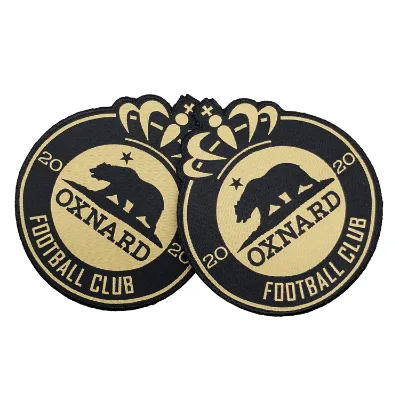


Custom Fabric Embroidered Patch Badges Embroidery Patches Clothing Woven Patch
$0.08 - $0.12
MOQ: 500 Pieces


Comprehensive Sourcing Guide
Strategic Sourcing Guide for Eco-Friendly Fabric Iron-On Patches
Understanding Product Definitions and Core Specifications
When sourcing eco-friendly fabric iron-on patches, buyers must first establish a precise understanding of the product's physical and functional attributes. The core keyword implies a specific intersection of material sustainability, application method, and decorative function. Based on available market data, these items are fundamentally classified as patches designed for use on clothes, bags, caps, and home textiles. The defining characteristic of the "iron-on" style is the application method, which distinguishes these items from sew-on or adhesive-only variants. However, the market also presents a significant variety of "sew-on" options, meaning buyers must explicitly verify the backing type before finalizing an order to ensure compatibility with their manufacturing or customization workflow.
The material composition is a critical factor in meeting the "eco-friendly" criteria. Observed product attributes indicate that these patches are frequently manufactured from Twill, Cotton, Polyester, and Chenille fabrics. Twill and Cotton are often preferred for their natural fiber origins, while Polyester offers durability and color retention. The production techniques vary significantly, with "Embroidered" and "Woven" being the primary methods observed. Embroidered patches often feature a 3D effect, adding texture and depth, whereas woven patches may offer finer detail. The shape of the patch is typically customizable, ranging from standard rounds to specific requests, and the border style often includes a Merrow border for durability and a finished look.
| Attribute Category | Common Observations | Verification Requirement |
|---|---|---|
| Application Style | Iron-On, Sew-On | Confirm backing type (heat-activated vs. thread) |
| Primary Materials | Twill, Cotton, Polyester, Chenille | Verify fiber content for eco-certification |
| Production Technique | Embroidered, Woven | Check stitch density and thread quality |
| Visual Features | 3D, Solid Color, Custom Design | Request physical samples for color accuracy |
| Customization | Custom Size, Logo, Color | Confirm if design assistance is included |
Technical Compliance and Certification Verification
The term "eco-friendly" in the B2B context requires rigorous verification rather than reliance on marketing labels. While specific certifications like GOTS or OEKO-TEX are often associated with sustainable textiles, the provided data does not confirm their universal presence across all listings. Instead, buyers should treat certifications as specific claims that must be validated per supplier. The data indicates that RoHS certification is a documented attribute for some products, which is crucial for ensuring that the materials do not contain restricted hazardous substances. This is particularly relevant for patches used on children's clothing or items that may come into contact with skin.
Buyers must also scrutinize the "Button Material" and other component materials, which are listed as customizable. Even if the fabric is organic, the adhesive backing or any metallic embellishments must comply with relevant safety standards. The "Nickel-Free" feature observed in some product listings is a specific attribute that buyers should request if their end-use application involves sensitive skin or strict chemical regulations. It is essential to understand that "Eco-Friendly" is a composite claim; it may refer to the fabric source, the dyeing process, or the manufacturing energy efficiency. Therefore, procurement teams should request specific test reports or certification documents for each batch rather than assuming a blanket certification status based on the product category.
Cost Drivers and Pricing Structure Analysis
The pricing structure for custom patches is highly variable and influenced by several distinct factors. The observed price range in the market spans from $0.01 to $15.00 USD per unit. This wide disparity is not arbitrary but is driven by the complexity of the design, the quantity ordered, and the specific materials selected. A simple, small, embroidered patch on a twill base will naturally fall at the lower end of this spectrum, while a large, 3D chenille patch with a complex custom logo and special eco-certified materials will command a higher price.
Volume is the most significant cost driver. The Minimum Order Quantity (MOQ) ranges from 1 to 6,000 units. Suppliers offering an MOQ of 1 are typically catering to prototyping or very small boutique orders, which inherently carries a higher unit cost due to setup fees and lack of economies of scale. Conversely, orders approaching the 6,000-unit threshold will benefit from optimized production runs. Buyers should also consider the "Sample Time" and "Production Time" as indirect cost factors. With sample times of 3-5 shipping days and production times of 5-7 days, the total lead time is relatively short, which can reduce inventory holding costs. However, rush orders or complex custom designs that require "Design Before Produce" assistance may incur additional service fees or extend the timeline, impacting the overall cost structure.
Typical Applications and Usage Scenarios
The versatility of eco-friendly fabric iron-on patches makes them suitable for a diverse range of industries. The primary usage categories identified include garments, bags, caps, and home textiles. In the fashion sector, these patches are frequently used as decorative elements on denim jackets, t-shirts, and caps, allowing for brand reinforcement or personalized styling. The "Garment Accessory" classification highlights their role in enhancing the aesthetic value of apparel without altering the structural integrity of the base fabric.
Beyond fashion, the application extends to the bag and luggage industry, where patches serve as branding tools or identification markers. The "Use: Cloth" and "Use: Clothes, Bag etc." attributes confirm their adaptability to various textile substrates. In the home textiles sector, these patches can be applied to pillows, curtains, or upholstery to add a custom touch or repair worn areas. The "3D" feature and "Handmade" attributes observed in some listings suggest that these patches are also used in high-end or artisanal products where texture and uniqueness are valued. Buyers should ensure that the chosen patch type (iron-on vs. sew-on) aligns with the intended application; for instance, items that undergo frequent washing or heavy abrasion might benefit from the durability of a sew-on patch, even if an iron-on version is initially selected for ease of application.
Supplier Evaluation and Business Model Assessment
Selecting the right supplier is critical for maintaining quality and meeting sustainability goals. The data indicates that the majority of suppliers in this category operate as "Factories & Manufacturers" or "Factories & Manufacturers," suggesting a direct production capability rather than a trading company model. This distinction is vital for buyers seeking transparency in the supply chain and the ability to verify production processes. Suppliers located in Guangdong, China, and specifically Zhongshan, are the primary hubs for this type of manufacturing, offering access to a mature ecosystem of textile production.
When evaluating potential partners, buyers should look for suppliers who offer "Design" assistance, as indicated by the "Can Help Design Before Produce" attribute. This capability is essential for custom orders, ensuring that the final product matches the intended vision. The "Business Type" should be verified to ensure the supplier has the capacity to handle the required volume, especially given the wide MOQ range. Additionally, the "Automatic Grade" and "Power Supply: Electric" attributes suggest that the production process is mechanized, which can ensure consistency in stitch quality and application. However, the "Handmade" feature observed in some listings indicates that human craftsmanship is still a component of the process, which may be a selling point for premium, high-detail patches. Buyers should prioritize suppliers who can provide clear evidence of their production capabilities and quality control measures.
Quality Control and Long-Term Procurement Considerations
Maintaining consistent quality in custom patch production requires a robust quality control (QC) framework. The "Condition: New" attribute implies that products should be delivered in pristine condition, free from defects such as loose threads, misaligned embroidery, or damaged backing. The "Standard: Custom" specification means that quality benchmarks are often defined by the buyer's specific requirements rather than a universal industry standard. Therefore, buyers must establish clear acceptance criteria regarding stitch density, color fastness, and adhesion strength before production begins.
Long-term procurement strategies should focus on building relationships with suppliers who offer "Customisation Welcome" and "Custom Size" options. This flexibility allows for scaling and adaptation as brand needs evolve. The "prod_packing" methods, such as OPP Bag or Poly Bag and Outer Box, are important for protecting the patches during transit and storage. Buyers should verify that the packaging is sufficient to prevent crushing or soiling, especially for 3D or delicate patches. Furthermore, the "7 Days Sample Order Lead Time" support indicates a supplier's agility, which is beneficial for rapid prototyping and iteration. For long-term contracts, buyers should negotiate terms that balance the "Production Time" of 5-7 days with volume discounts and consistent quality assurance protocols. By focusing on these operational details, buyers can ensure a reliable supply chain that supports their sustainability goals and product quality standards.
FAQs
What materials are used for eco friendly fabric iron-on patches?
These patches are commonly made from Twill, Cotton, Polyester, and Chenille fabrics. Buyers should verify specific fiber content to ensure the material meets their sustainability requirements and desired durability for the application.
Can I customize the size and logo for these patches?
Yes, customization for size, logo, and color is welcome for these products. Suppliers often offer design assistance before production begins, allowing for unique shapes and specific branding needs to be met effectively.
Which certifications are available for eco friendly fabric iron-on patches?
RoHS certification is a documented attribute for some products in this category. While other standards like GOTS are often associated with sustainability, buyers must request specific test reports to verify the absence of hazardous substances.
How long does it take to produce custom patches?
Production typically takes 5 to 7 days after the sample is approved. Sample orders can be shipped within 3 to 5 days, allowing for a relatively quick turnaround time for prototyping and initial bulk orders.
What is the minimum order quantity for these patches?
The minimum order quantity ranges from 1 to 6000 units depending on the supplier. Lower MOQs are available for small boutique orders, while larger volumes benefit from optimized production runs and lower unit costs.
Are these patches suitable for use on bags and caps?
Yes, these patches are designed for use on clothes, bags, caps, and home textiles. They function as garment accessories that enhance aesthetic value without altering the structural integrity of the base fabric or item.