Source Eco-Friendly Expandable Folding House for Hotels and Dorms
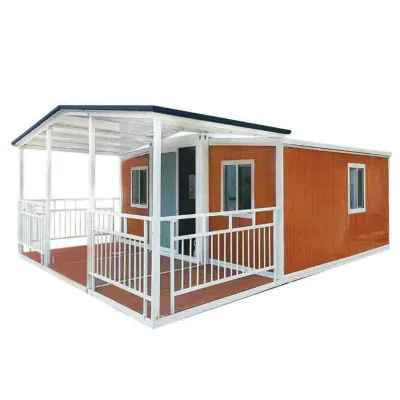
Compare 30 listings for the eco-friendly expandable folding house designed for hotels, dormitories, and emergency relief. These steel structure units offer fast installation, wind resistance, and customizable layouts in 20FT or 40FT sizes.
Key considerations
Products List


Eco-Friendly Expandable Container House for Sustainable Living Solutions
$4099.00 - $4599.00
MOQ: 1 Pieces


Customized Prefabric House Foldable Prefab House Portable Expandable House
$1200.00 - $1750.00
MOQ: 1 Pieces

Comprehensive Sourcing Guide
Eco-Friendly Expandable Folding House Sourcing Guide
Procuring eco-friendly expandable folding houses requires a strategic approach that balances rapid deployment capabilities with long-term structural integrity. These modular units are increasingly favored for their ability to provide immediate shelter solutions while minimizing environmental impact through reusable materials and efficient logistics. Buyers must navigate a market where terminology can vary, ensuring that the "expandable" or "folding" mechanism described actually meets the specific spatial and durability needs of the project. The following guide outlines the critical verification steps, technical parameters, and commercial considerations necessary for successful procurement.
Product Scope and Observed Listing Signals
The current market for these units reveals a diverse range of configurations, primarily centered around steel structure frames that offer robustness against environmental stressors. Listings indicate a price range of approximately $1,100 to $18,500 USD, reflecting variations in size, customization, and included amenities. The observed minimum order quantities (MOQ) typically span from 1 to 16 units, suggesting flexibility for both single-unit pilot projects and larger-scale deployments. Buyers should note that while some listings highlight "fast installation," the actual time required can vary significantly based on site preparation and the specific folding mechanism employed, such as hydraulic versus manual systems.
Product attributes frequently cited include wind resistance, waterproofing, thermal insulation, and earthquake resistance, which are critical for diverse applications ranging from residential hostels to emergency disaster relief. The standard dimensions often observed are 20FT or 40FT, with expanded dimensions around 590cm × 630cm × 248cm for certain models. It is essential to distinguish between the collapsed shipping dimensions and the fully expanded living space, as this directly impacts transportation costs and on-site footprint. The material composition is predominantly steel, with some units featuring Q235 hot-dip galvanized steel for the main frame to enhance corrosion resistance and longevity.
Technical Specifications to Verify
Verifying the structural integrity and operational parameters of the folding mechanism is paramount. Buyers should confirm the connection method, which often involves a hinged folding structure with a buckle fixing system, ensuring that the unit locks securely into its expanded state. The operating temperature range is a critical specification, with some units rated for -20℃ to 50℃, making them suitable for extreme climates. Additionally, the waterproof rating, often cited as IP65, indicates a high level of protection against dust and water jets, which is vital for maintaining interior comfort and preventing mold or structural damage in wet environments.
Seismic and wind resistance capabilities must be explicitly verified against local building codes. Some listings claim seismic resistance up to Grade 8 and wind resistance classes of Grade 8-10, corresponding to wind speeds of 17.2-28.4m/s, while others may claim Level 11 wind resistance. These claims require independent verification through engineering certificates or third-party testing reports. The floor load-bearing capacity, often specified as ≥150kg per square meter, determines the allowable interior fit-out and furniture weight. Buyers must also check the service life expectations, which can range from 10 years for basic models to longer durations for high-specification units with enhanced protective coatings.
Compliance and Safety Documentation
Documentation is the primary evidence of a product's compliance with international safety and quality standards. Buyers should request certificates such as CE and ISO9001, which indicate adherence to European safety directives and quality management systems, respectively. However, possession of these certificates does not automatically guarantee compliance with local building codes in the destination country. It is the buyer's responsibility to cross-reference these international certifications with regional requirements, particularly regarding fire safety, electrical standards, and structural engineering approvals.
Fire resistance ratings are another critical area for documentation. Some units are described with a fire resistance rating of Level A, which implies a high degree of non-combustibility. Buyers must verify the specific materials used in the wall panels and insulation to ensure they meet the required fire safety standards for the intended application, whether it be temporary housing, commercial tourism, or medical facilities. Additionally, electrical systems should be verified for dual-mode voltage support, such as 220V civilian power, and compatibility with off-grid configurations if solar or battery storage is included.
Cost Drivers and Commercial Terms
The total cost of ownership extends beyond the unit price to include logistics, installation, and customization. The observed price range of $1,100 to $18,500 USD is influenced by factors such as the size (20FT vs. 40FT), the complexity of the folding mechanism, and the level of interior finishing. Customization options, such as specific layouts with multiple bedrooms, living rooms, and bathrooms, can significantly increase the unit cost. Buyers should also consider the "standard packing" method, which may affect shipping volume and associated freight costs, especially when comparing containerized shipping versus bulk air or road transport.
Commercial terms regarding reusability and modularity are key value drivers. Units that are detachable and reusable multiple times offer better long-term value for projects requiring relocation or expansion. The ability to support infinite horizontal or vertical splicing allows for scalable solutions, but this capability must be confirmed with the supplier. Buyers should negotiate clear terms regarding the warranty period, maintenance responsibilities, and the availability of spare parts for the folding mechanism and electrical systems. Understanding the total landed cost, including duties and taxes, is essential for accurate budgeting.
Supplier Qualification and Quality Control
Supplier qualification involves assessing their manufacturing capabilities and quality control processes. Given that the origin is typically China, buyers should verify the supplier's production capacity and experience in exporting similar modular structures. Requesting factory audits or video tours can provide insight into the precision of the steel fabrication and the assembly line processes. It is crucial to ensure that the supplier has a robust quality control system in place, particularly for the welding of the steel frame and the installation of waterproofing and insulation layers.
Quality control should also extend to the testing of the folding mechanism. Buyers should request test videos or reports demonstrating the smooth operation of the hydraulic or manual folding systems. Inquiring about the material certifications for the steel and other components can help ensure that the products meet the specified durability standards. Establishing a clear communication channel for technical support and after-sales service is also vital, as any issues with the folding mechanism or structural integrity during deployment can be costly to resolve remotely.
Long-Term Procurement Checks
Long-term procurement success depends on the supplier's ability to provide consistent quality and support over multiple orders. Buyers should establish a framework for periodic quality audits, especially if ordering in large quantities or over an extended period. Monitoring the performance of initial units in the field can provide valuable feedback on durability, ease of maintenance, and user satisfaction. This feedback loop should be used to refine specifications and negotiate improvements in future contracts.
Additionally, buyers should stay informed about changes in international shipping regulations and environmental standards that may affect the importation of modular structures. Keeping abreast of advancements in sustainable materials and energy-efficient technologies can help in selecting the most eco-friendly and cost-effective options. Building a long-term relationship with a reliable supplier can lead to better pricing, priority production, and access to new product innovations, ensuring that the procurement strategy remains aligned with evolving project needs and market conditions.
FAQs
What is the standard layout for a 20FT container house?
The standard layout for a 20FT container house includes two bedrooms, one living room, and one bathroom. This configuration is designed for efficient residential use in hotels or hostels while maintaining a modern minimalist style.
Can this eco-friendly house withstand severe weather conditions?
Yes, the structure offers Grade 8 to 10 wind resistance and is rated for Grade 8 earthquakes. It also features a waterproof rating of IP65 and is designed to operate safely between -20 and 50 degrees Celsius.
How is the main frame constructed for durability?
The main frame is built using Q235 hot-dip galvanized steel to ensure long-term structural integrity. This material choice supports the product's service life of 10 years and allows for multiple detachable reuses.
What certifications does the manufacturer hold for this product?
The product holds international certifications including CE and ISO9001. These standards verify the quality and safety compliance of the steel structure and its manufacturing processes for global sourcing requirements.
How does the folding mechanism work for transport?
The house utilizes a hinged folding structure with a buckle fixing system for easy deployment. It supports hydraulic or manual folding methods, allowing for flexible horizontal and vertical splicing to create larger spaces.
Is an off-grid power configuration available for this unit?
Yes, an off-grid configuration is available featuring a 48V DC system with 16kWh energy storage. It includes 1200W solar panels to support independent operation in remote locations or emergency relief scenarios.