Source Eco Friendly Handmade Christmas Wreath for homes, events, and retail
Compare 30 listings of Eco Friendly Handmade Christmas Wreath from verified Chinese manufacturers. Buyers can evaluate customization options, materials, and pricing for indoor and outdoor decoration needs.
Key considerations
Products List




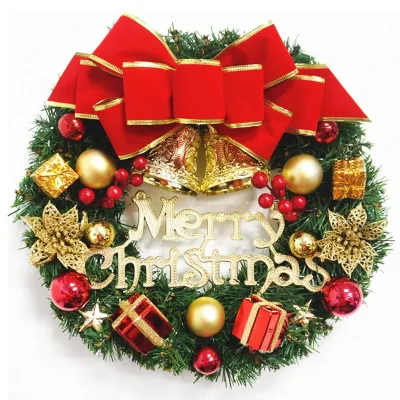


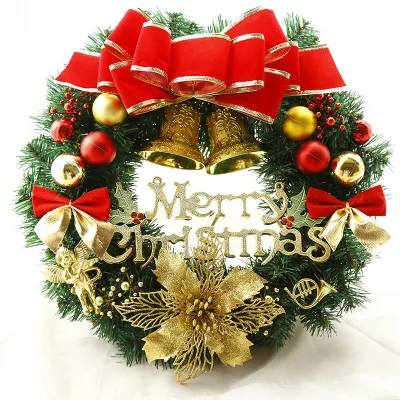


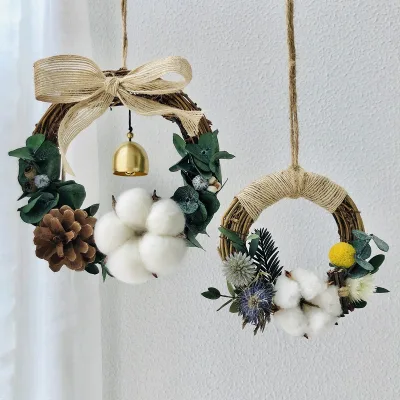

Wholesale Decoration Green Handmade Christmas Soft PVC Artificial Wreath
$2.17 - $2.38
MOQ: 420 Pieces


Comprehensive Sourcing Guide
Strategic Sourcing Guide for Eco-Friendly Handmade Christmas Wreaths
The global demand for sustainable holiday decor has elevated the profile of eco-friendly handmade Christmas wreaths in B2B procurement channels. Buyers seeking these items must navigate a complex landscape where artisanal craftsmanship meets industrial supply chain requirements. This guide provides a disciplined framework for sourcing these specific products, leveraging observed market data to ensure alignment between product attributes and commercial objectives. The focus remains on verifying claims, understanding technical specifications, and establishing robust supplier relationships without relying on unverified assertions.
Technical Specifications and Material Composition
When evaluating eco-friendly handmade Christmas wreaths, the primary technical differentiator lies in the material composition and construction process. Market observations indicate that while the "Eco-friendly" attribute is frequently listed, the actual material often cited in product specifications is plastic, specifically noted as "Plastic" for feather materials in several listings. This presents a critical verification point for buyers. True eco-friendly claims in this category often rely on the use of recycled plastics, biodegradable binders, or the longevity of the product which reduces replacement frequency. Buyers must scrutinize the "Feather Material" specification to determine if the plastic used is virgin or recycled, as this distinction defines the environmental impact.
The physical dimensions and structural integrity are equally vital. Observed product models reveal a wide range of standard sizes, including 30CM, 40CM, and 50CM diameters, with specific standards like "25*25" or "55CM weight: 94G" appearing in technical data. The "Single gross weight" of 1.500 kg for certain units suggests substantial density, which impacts shipping costs and structural durability. The "Shape" is predominantly round, but the "Style" varies between "Modern" and "Classic Traditional Style," influencing the design of the wreath's core structure. Furthermore, the "Processing" method is consistently listed as "Hand-made," which implies a lower degree of automation and potentially higher variability in unit-to-unit consistency. Buyers should request detailed material safety data sheets (MSDS) to confirm the specific type of plastic and any chemical treatments used, ensuring the "Eco-friendly" label is backed by verifiable material science rather than marketing terminology.
Compliance, Certification, and Safety Standards
In the B2B sector, the "Eco-friendly" designation must be supported by tangible compliance documentation. While specific certification names are not universally standardized in the provided data, the "Safety Design" attribute often includes "Scratch-Proof Design," which is a functional safety feature rather than a regulatory certification. However, for international trade, particularly into markets like the European Union or North America, buyers must verify adherence to regional safety standards for decorative items. The "prod_standard" field lists dimensions like "25*25" and "50cm DIA," but these are physical specifications, not regulatory codes.
Buyers should explicitly request proof of compliance with fire safety standards, as "Outdoor and Indoor Decorative" usage exposes these items to various environmental conditions. The "Place of Origin" is identified as Guangdong, China, a major manufacturing hub, but origin alone does not guarantee compliance. The "Brand name" JBM and "Merry Tree" appear in the data, yet brand presence does not equate to certification status. Procurement teams must demand third-party test reports for flammability, chemical content (such as lead or phthalates), and material recyclability. The "Power Supply" is listed as "Manual" or "Non Power," which simplifies electrical safety concerns but does not eliminate the need for material safety verification. Without specific certification data in the public listing, the burden of proof rests entirely on the supplier to provide valid documentation before a purchase order is finalized.
Cost Drivers and Pricing Dynamics
The pricing structure for handmade Christmas wreaths is influenced by a complex interplay of labor intensity, material costs, and logistical factors. The observed price range of 0.85 to 10 USD indicates a significant variance, likely driven by the complexity of the "Hand-made" process and the specific decorative add-ins used. Items featuring "Ribbon" as a decorative add-in or specific shapes like "Red Knot Angel Wreath" may command higher prices due to the intricate assembly required. The "Single package size" of 45X30X15 cm and the "Single gross weight" of 1.500 kg contribute directly to volumetric weight calculations, which are a primary cost driver in ocean freight.
The "MOQ range" of 2 to 5000 units suggests flexibility in order sizes, but the unit price often decreases as volume increases. However, the "Hand-made" nature of the product imposes a ceiling on scalability; increasing production volume may require expanding the artisan workforce, which can lead to higher labor costs or longer lead times. The "Customization" availability is a key cost variable. Custom orders, such as specific color variations like "White" or "Green," or unique shapes, often incur setup fees and higher per-unit costs compared to standard SKUs. Buyers should analyze the "Selling Units" (Single item) versus bulk packaging to understand the true landed cost. The "Packing" method, whether "Carton," "Paper Carton," or "by Sea," also affects the final cost, as specialized eco-friendly packaging materials may carry a premium.
Typical Applications and Market Segmentation
The versatility of these wreaths allows for application in diverse commercial settings. The "Adaptable Scene" is explicitly noted as "Public Activity Spaces," indicating suitability for hotels, shopping malls, and corporate lobbies. The "Application" field confirms usage in both "Indoor" and "Outdoor" environments, though the "Outdoor" capability depends heavily on the material's resistance to weather. The "Material Feature" of "Durability Low-Temperature Resistant" suggests that these products are engineered to withstand cold climates, making them viable for outdoor winter displays.
The "Christmas Item Type" is broadly categorized as "Christmas decoration supplies," but the specific "Style" and "Color" options allow for targeted marketing. For instance, "30cm red knot flying deer wreath" or "40cm red knot angel wreath" cater to specific thematic decorations. The "Light Bulb Color" of Gold suggests that some variants may include integrated lighting elements, although the "Power Supply" is listed as "Manual," implying these might be battery-operated or purely decorative. The "Installation" method of "Wall Hanging" dictates the mounting hardware requirements, which is a crucial consideration for retail display setups. Buyers should match the product's "Spectacle" rating (Outdoor and Indoor Decorative) with the specific environmental conditions of their target market to ensure longevity and customer satisfaction.
Supplier Evaluation and Verification Protocols
Evaluating suppliers for handmade, eco-friendly products requires a rigorous due diligence process. The "Brand name" and "Place of Origin" (Guangdong, China) provide initial data points, but they are insufficient for final selection. Buyers must verify the supplier's capacity to maintain the "Hand-made" quality standard at scale. The presence of multiple "prod_model" numbers (e.g., SIT5-102801, DT008, DT010, 17-W6-50CM) suggests a supplier with a diverse catalog, but this also increases the risk of quality inconsistency.
A critical evaluation step is to assess the supplier's supply chain transparency regarding the "Feather Material." Since the material is listed as "Plastic," buyers must confirm the source of this plastic and its environmental footprint. The "Customized" attribute indicates the supplier's willingness to adapt, but this flexibility must be balanced against their ability to maintain strict quality control. Buyers should request samples of the "Hand-made" process to verify the consistency of the "Scratch-Proof Design" and the durability of the "Ribbon" add-ins. Additionally, the "Packing" method should be inspected to ensure it protects the delicate handmade elements during transit. The "Lead time" is not explicitly stated in the data, but the complexity of the "Hand-made" process implies that suppliers with shorter lead times may be cutting corners on quality.
Quality Control and Long-Term Procurement Strategy
Quality control for handmade wreaths must focus on the consistency of the "Hand-made" process and the integrity of the "Eco-friendly" claims. Given the "Single gross weight" of 1.500 kg and the "Single package size" of 45X30X15 cm, physical inspection of a random sample from the production batch is essential. Buyers should check for defects in the "Ribbon" attachment, the structural stability of the "Round" shape, and the uniformity of the "Color" application. The "Feature" of "Eco-friendly" should be validated through a third-party audit of the manufacturing process to ensure that the "Plastic" used is indeed sustainable.
For long-term procurement, establishing a clear communication channel regarding the "Customization" requirements is vital. The "Style" variations, from "Modern" to "Classic Traditional," require precise design specifications to avoid production errors. Buyers should also consider the "Standard" dimensions, such as "25*25" or "55CM weight: 94G," as benchmarks for future orders. The "Power Source" being "Non Power" simplifies the product but requires careful handling to prevent damage during installation. Finally, the "Brand name" consistency across orders ensures that the product maintains its market identity. By focusing on these technical and operational details, buyers can build a resilient supply chain that delivers high-quality, sustainable Christmas wreaths that meet both aesthetic and ethical standards.
FAQs
What materials are used for eco friendly handmade christmas wreaths?
The feather material is typically plastic, specifically noted as durable and low-temperature resistant. Buyers must verify if the plastic is recycled to confirm true eco-friendly status, as the product listing specifies plastic rather than natural fibers.
Can these wreaths be used in outdoor public activity spaces?
Yes, the product is designed for both indoor and outdoor applications in public activity spaces. The material features include low-temperature resistance, ensuring durability in cold climates suitable for winter displays.
Which customization options are available for these handmade wreaths?
Customization is available for various styles, colors, and specific decorative add-ins like ribbons. Buyers can request specific dimensions such as 30cm or 40cm, though the hand-made process may impact production consistency.
How is the installation handled for these round shape wreaths?
The installation method is designed for wall hanging, making them suitable for various display setups. The round shape and scratch-proof design ensure they remain intact during mounting and long-term display.
What is the typical price range for these Christmas decoration supplies?
The observed price range is between 0.85 and 10 USD per unit. This variance depends on the specific model, size, and whether customization or specific decorative elements like gold ribbons are included.
What are the standard dimensions for these Christmas tree or wreath models?
Standard sizes include 30cm, 40cm, and 50cm diameters, with specific models like DT008 measuring 55cm. The single package size is typically around 45x30x15 cm with a gross weight of 1.500 kg.
Where are these handmade Christmas decorations manufactured?
The place of origin is Guangdong, China, a major manufacturing hub for these items. The brand names JBM and Merry Tree are associated with products originating from this region.