Source Eco-Friendly Hand-Painted Sublimation Mug for Promotion, Daily Use, and Gift
Find 30 verified options for the eco-friendly hand-painted sublimation mug suitable for promotion, daily use, and gifting. Buyers can compare specifications like capacity, customization, and material across multiple suppliers to select the best fit for their needs.
Key considerations
Products List


Wholesale Sublimation Coated Ceramic Mugs
$4.00 - $8.00
MOQ: 1000 Pieces
Chaozhou City Cha'an District Fengtang Town Sai Si Ceramics Factory


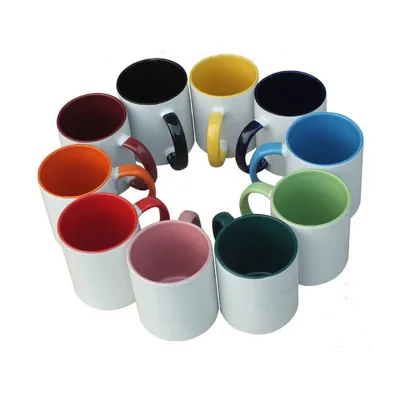
Hot Sale Various Colors Ceramic Cup
$2.00 - $4.00
MOQ: 1000 Pieces
Chaozhou City Cha'an District Fengtang Town Sai Si Ceramics Factory


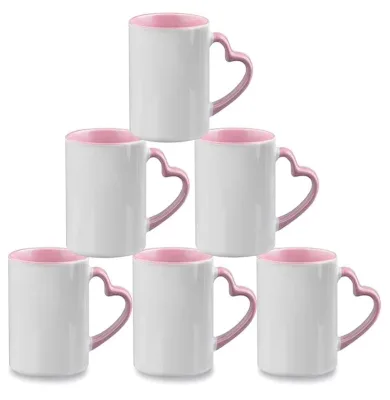
Customizable Eco-Friendly Sublimation Ceramic Coffee Mug with Heart Handle
$0.75 - $0.90
MOQ: 36 Pieces


Promotional 20oz Hot Change Color Mug Pattern Mug Sublimation Black Ceramic Color Change Mug
$0.30 - $1.20
MOQ: 5000 Pieces




Comprehensive Sourcing Guide
Strategic Sourcing Guide for Eco-Friendly Hand-Painted Sublimation Mugs
Understanding the Product Category and Core Attributes
The procurement of eco-friendly hand-painted sublimation mugs requires a precise understanding of the intersection between traditional ceramic craftsmanship and modern digital printing technologies. These products are primarily categorized as ceramic or pottery drinkware, designed for adult usage in daily life, promotional campaigns, and gifting scenarios. The defining characteristic of this category is the dual nature of the product: it combines the structural integrity of a single-layer ceramic cup with the aesthetic flexibility of sublimation printing and hand-painted detailing.
When evaluating suppliers, buyers must recognize that "hand-painted" in this context often refers to specific artistic techniques applied to the ceramic surface, potentially alongside sublimation transfers. The product attributes observed in the market indicate a strong emphasis on customization. Suppliers frequently offer custom logos, custom colors, and even customized shapes, allowing brands to create unique merchandise. The material is consistently identified as ceramic or pottery, which provides the necessary thermal mass to withstand high temperatures, a critical feature for hot beverage applications.
The visual appeal of these mugs is often enhanced by features such as color-changing capabilities and multicolor printing. While the base material is ceramic, the finish can vary from simple printed designs to complex, hand-painted artistic interpretations. The capacity of these mugs typically ranges from 10 oz to 14 oz, with specific models available in the 240ml to 400ml range. This size variability allows buyers to select products that fit specific branding needs, whether for a standard office coffee mug or a larger promotional gift item.
Technical Specifications and Material Standards
Technical due diligence is paramount when sourcing ceramic drinkware. The core material is ceramic, a class of inorganic, non-metallic solids that offers excellent thermal resistance. Buyers should verify that the supplier explicitly states the product's ability to withstand high temperatures, ensuring the mug does not crack or degrade during the sublimation process or when filled with boiling liquids. The structural integrity is generally maintained through a single-layer ceramic construction, which is standard for this type of drinkware.
Dimensions and capacity are critical for logistics and user experience. Market data indicates that capacities vary, with specific models noted at 10 oz, 12 oz, and 14 oz. The physical dimensions also vary, with some specifications listing standard sizes like 8295mm or larger custom dimensions such as 90115*118mm. When evaluating a specific product model, such as those identified by codes like CM-Mugs-088 or M-14, buyers must cross-reference the listed dimensions with their packaging requirements.
The production standards for these mugs often align with custom specifications rather than rigid, pre-defined industrial standards. While some listings mention specific standard dimensions, the "Customized" nature of the product means that the final standard is often agreed upon between the buyer and the manufacturer. It is essential to confirm the surface treatment process. Sublimation requires a polymer-coated ceramic surface to accept the dye, while hand-painting involves direct application of pigments. The combination of these techniques demands a rigorous quality check to ensure the paint adheres properly and the sublimation image remains vibrant without peeling.
Compliance, Certification, and Safety Verification
In the realm of eco-friendly ceramic products, compliance is not merely a formality but a core component of the product's value proposition. The term "eco-friendly" suggests that the manufacturing process or the materials used adhere to specific environmental standards. However, buyers must not assume certification status based solely on marketing descriptions. Instead, procurement teams should request specific documentation regarding the safety of the glazes and inks used in the hand-painting and sublimation processes.
Food safety is the primary concern for ceramic drinkware. Buyers should verify that the products comply with relevant food contact safety regulations for the target market, such as FDA regulations in the United States or EU Framework Regulation (EC) No 1935/2004. While the supplied facts do not list specific certification numbers, the presence of "Eco-Friendly" as a feature implies a focus on non-toxic materials. It is the buyer's responsibility to confirm that the supplier can provide test reports verifying that the heavy metal content (such as lead and cadmium) in the ceramic glaze and the printed inks falls within acceptable limits.
Furthermore, the "eco-friendly" claim often extends to the packaging. The observed product attributes mention "Carton" and "Export Carton" as well as "Color Box Individually Packed." Buyers should inquire whether these packaging materials are recyclable or made from post-consumer recycled content to align with the product's environmental claims. The absence of specific certification data in the general product listings necessitates a proactive approach where the buyer explicitly requests compliance certificates before placing a bulk order.
Cost Drivers and Pricing Dynamics
The pricing of eco-friendly hand-painted sublimation mugs is influenced by a complex matrix of factors, including material costs, labor intensity, and order volume. The observed price range in the market spans from $0.19 to $45.50, a significant variance that reflects differences in quality, customization complexity, and order size. The lower end of the spectrum typically corresponds to standard, mass-produced mugs with simple sublimation printing and minimal customization. The higher end often includes hand-painted designs, complex custom shapes, or premium packaging.
Minimum Order Quantity (MOQ) is a critical cost driver. The market data shows an MOQ range from as low as 1 piece to as high as 5000 pieces. For buyers seeking small batches or prototypes, suppliers with an MOQ of 1 or 2000 pieces offer flexibility, though the unit cost will be higher. Conversely, large-scale procurement can leverage economies of scale, but the buyer must be prepared to commit to higher volumes to achieve the lower price points. The specific model number, such as 4517 or M-14, may also influence pricing based on the complexity of the mold or the specific design requirements.
Labor costs are another significant factor, particularly for "hand-painted" items. Unlike fully automated sublimation printing, hand-painting requires skilled artisans, which increases the production time and cost. Suppliers in regions like Liling, Hunan, or Guangdong, China, may offer competitive labor rates, but the specific technique used (e.g., hand-painted vs. printed) will dictate the final price. Buyers should request a detailed cost breakdown that separates the base mug cost, the printing/painting cost, and the packaging cost to understand where the value is being added.
Supplier Evaluation and Geographic Considerations
Geographic location plays a pivotal role in the sourcing strategy for ceramic mugs. The supplied facts identify key manufacturing hubs in China, specifically Liling (Hunan), Fujian, and Guangdong. These regions have established ecosystems for ceramic production, with Liling being particularly renowned for its porcelain and ceramic tableware industry. Sourcing from these locations often provides access to a wide range of suppliers with varying levels of specialization.
When evaluating suppliers, buyers should look for those who demonstrate transparency in their production capabilities. Key indicators of a reliable supplier include the ability to provide samples within a short timeframe (typically 3-5 days) and a clear production lead time (often 15-20 days for bulk orders). The ability to customize logos, colors, and shapes is a standard expectation, but the quality of the customization execution is what differentiates top-tier suppliers. Buyers should verify the supplier's experience with "hand-painted" techniques specifically, as this requires a different skill set than standard sublimation printing.
Logistics and packaging are also critical evaluation criteria. The observed packing methods include "Export Carton" and "Color Box Individually Packed." A supplier that uses robust export packaging demonstrates an understanding of the fragility of ceramic products. Buyers should assess the supplier's track record for minimizing breakage during transit. Additionally, the supplier's responsiveness to custom design requests and their ability to manage the "Customized" nature of the product (e.g., accepting custom designs and custom colors) are essential for a successful partnership.
Quality Control and Long-Term Procurement Strategy
Implementing a robust quality control (QC) protocol is essential for maintaining the integrity of eco-friendly hand-painted sublimation mugs. Given the manual nature of hand-painting, there is a higher risk of variation between units compared to fully automated processes. Buyers should establish clear acceptance criteria for visual defects, such as uneven paint application, smudged sublimation images, or color inconsistencies. The "Color Changing" feature, if present, must be tested to ensure it functions correctly and consistently across the batch.
Long-term procurement considerations involve building a relationship with a supplier who can scale with the buyer's needs. The production time of 15-20 days suggests that lead times are manageable but require advance planning. For repeat orders, buyers should negotiate fixed pricing and standardized specifications to streamline the process. The ability to maintain consistent quality over multiple production runs is crucial, especially when the product is used for ongoing promotional campaigns or as a staple item in a company's gift program.
Buyers should also consider the lifecycle of the product. The "Eco-Friendly" attribute should be validated through the durability of the product. A high-quality ceramic mug should withstand repeated washing and use without the design fading or the glaze chipping. Establishing a clear communication channel with the supplier for feedback on product performance can help identify areas for improvement in future orders. By focusing on these quality and sustainability metrics, buyers can ensure that their procurement of eco-friendly hand-painted sublimation mugs meets both functional and ethical standards.
Application Scenarios and Market Fit
The versatility of eco-friendly hand-painted sublimation mugs makes them suitable for a wide array of applications. The primary use cases identified include promotion, daily use, health care, gifting, weddings, and birthdays. The ability to customize the logo and design allows these mugs to serve as effective marketing tools for corporate branding, event souvenirs, and retail merchandise. The "Advertising Coffee Image Photo" application highlights their utility in the hospitality and coffee shop sectors, where branded mugs enhance customer experience and brand visibility.
For promotional purposes, the "Eco-Friendly" aspect adds significant value, appealing to environmentally conscious consumers and corporate social responsibility initiatives. The hand-painted element adds a touch of exclusivity and artistry, making these mugs ideal for high-end gifts or special occasion favors. The "Sport" style mentioned in the attributes suggests that these mugs can also be tailored for sports teams or fitness events, further expanding their market reach.
The following table summarizes the key application areas and their corresponding product attributes:
| Application Area | Key Product Attributes | Strategic Value |
|---|---|---|
| Corporate Promotion | Custom Logo, Eco-Friendly, Sublimation | Brand visibility and sustainability messaging |
| Daily Use | High Temp Resistance, Ceramic Material | Durability and functional utility |
| Gifts & Weddings | Hand-Painted, Custom Shape, Color Box | Personalization and aesthetic appeal |
| Health Care | Eco-Friendly, Promotion | Alignment with wellness and safety values |
| Sports Events | Sport Style, Custom Color | Team identity and fan engagement |
By aligning the specific attributes of the mugs with the intended application, buyers can maximize the return on investment and ensure the product resonates with the target audience. The combination of customization, eco-friendly materials, and artistic design creates a versatile product that can adapt to diverse market needs.
FAQs
Can I get a custom logo on these mugs?
Yes, custom logos are accepted for these eco-friendly hand-painted sublimation mugs. Suppliers typically support custom designs and colors, allowing brands to create unique promotional items or gifts with their specific branding applied to the ceramic surface.
What is the typical production time for these mugs?
The standard production time for these ceramic mugs is 15 to 20 days. This lead time applies to bulk orders after the sample phase, which usually takes 3 to 5 days, ensuring sufficient time for hand-painting and sublimation processes.
Which capacities are available for these ceramic mugs?
Available capacities range from 10 oz to 14 oz, with specific models offering 12 oz options. Some listings also specify a volume range of 240ml to 400ml, providing flexibility for different daily use or promotional needs.
How much is the minimum order quantity for these mugs?
The minimum order quantity varies significantly, ranging from 1 piece for samples to 2000 pieces for standard bulk orders. Some suppliers may require up to 5000 pieces depending on the specific customization and model selected.
Where are these ceramic mugs manufactured?
These mugs are manufactured in key ceramic hubs in China, including Liling in Hunan, Fujian, and Guangdong. These locations are known for their established ecosystems in producing pottery and ceramic drinkware with various finishing techniques.
What features do these mugs offer for buyers?
These mugs feature eco-friendly materials, color-changing capabilities, and multicolor printed designs. They are designed for daily use, health care, and promotion, often including accessories like handles or covers and withstand high temperatures.