Source Eco Friendly Handheld Slicer for shredding, slicing, and grinding
Find 30 verified options for an Eco Friendly Handheld Slicer designed for shredding, slicing, and grinding vegetables. Compare stainless steel and plastic models with FDA and LFGB certifications to find the right manual cutter for your needs.
Key considerations
Products List


Compact Twist Handheld Spiralizer Vegetable Slicer with Three Blades Spiral Cutter
$1.30 - $1.40
MOQ: 5000 Pieces


Handheld Cutter Vegetable V-Slicer Salad Utensil Perfect Vegetable Adjustable Slicers
$4.36 - $4.40
MOQ: 227 Pieces


Multifunctional Vegetable Cutter Set Vegetable Food Slicer with Storage Box
$1.30 - $1.80
MOQ: 1000 Pieces


Classic Aftertaste, Fresh Meat Slicer Reproduces The Essence of Manual Cutting
$2600.00 - $3100.00
MOQ: 1 Pieces

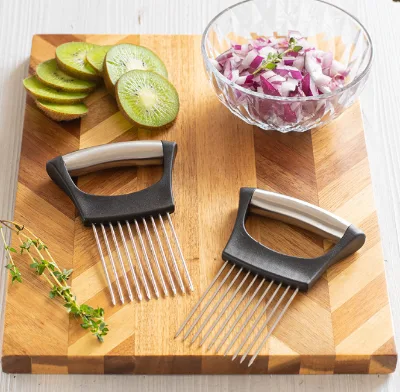


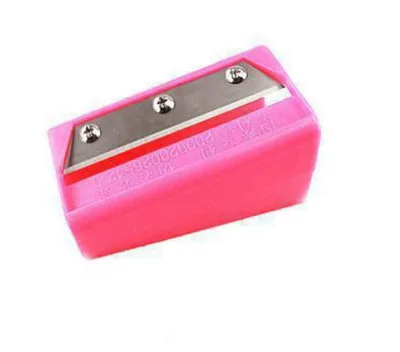
Comprehensive Sourcing Guide
Strategic Sourcing Guide for Eco-Friendly Handheld Slicers
Understanding the Product Category and Functional Diversity
The global market for kitchen tools has seen a significant shift toward multi-functional, space-saving appliances that prioritize efficiency and sustainability. When sourcing an eco-friendly handheld slicer, buyers must first distinguish between the various mechanical designs available. The core keyword "handheld slicer" encompasses a range of devices, from simple rotary graters to complex manual roller systems. Based on current product observations, these tools are primarily categorized by their mechanical action, such as "Rotary" or "Multi-Faceted Vertical" designs. The functional scope is broad, with specific models engineered for distinct tasks like shredding, slicing, and grinding. Some units are explicitly marketed as "Potato Graters" or "Cheese Graters," while others are defined by their "Multifunction" capabilities, allowing a single tool to handle multiple preparation stages.
A critical distinction in this category is the power source. While some modern kitchen appliances rely on electricity, the specific "Manual Multifunction Hand Roller Vegetable Slicer" observed in the market operates without external power, relying entirely on user force. This manual operation is a key component of its eco-friendly profile, eliminating the need for electricity and reducing the carbon footprint associated with manufacturing and operation. The product attributes indicate that these tools are designed for "Household" applications, suggesting a focus on durability and ease of use for everyday cooking rather than industrial-scale processing. Buyers should verify that the specific model selected aligns with the intended usage frequency and the types of food items being processed, as the "Function" attributes vary significantly between simple slicing and complex grinding operations.
Technical Specifications and Material Composition
When evaluating the technical specifications of handheld slicers, material composition is the primary determinant of both performance and environmental impact. The supplied data reveals a diverse range of materials used in construction. High-end or heavy-duty models often utilize "Stainless Steel" for the blade components, ensuring sharpness, corrosion resistance, and longevity. This is crucial for maintaining the "Shred" and "Slice" functions over time. However, the housing and structural components frequently incorporate "Plastic" and "Metal" combinations. Specifically, "PP" (Polypropylene) is identified as the plastic type used in several models. PP is a thermoplastic polymer known for its chemical resistance and durability, making it a suitable choice for food contact applications.
The weight of these devices varies considerably depending on the materials and design complexity. Observed weight specifications range from lightweight units at 75g to more substantial models weighing 180g or even 77g. This variance impacts the user experience; a lighter tool may be easier to maneuver for extended periods, while a heavier unit might offer better stability during the slicing process. The physical dimensions are equally important for storage and logistics. Standard product dimensions observed include sizes such as 10.45.2510.7cm and 15.68.18.1cm. These compact sizes are ideal for kitchen drawers and cabinets.
Furthermore, the design architecture plays a vital role in functionality. The "Multi-Faceted Vertical" design allows for versatile cutting angles, while the "Rotary" feature enables a smooth, continuous motion for slicing. For the manual roller variant, the specifications note a "Product Name" that explicitly describes it as a "Manual Multifunction Hand Roller Vegetable Slicer." Buyers must pay close attention to the "prod_standard" dimensions, which can range from 17.553.8cm to larger outer box sizes like 513263cm for the roller models. These specifications directly influence the packaging requirements and the final retail presentation.
Compliance, Certification, and Environmental Standards
In the realm of food contact products, compliance with international safety and environmental standards is non-negotiable. The supplied product data highlights specific certifications that are critical for market entry, particularly in North America and Europe. The most frequently observed certifications for these slicers are "FDA" (Food and Drug Administration) and "LFGB" (German Food and Feed Code). The presence of these certifications indicates that the materials used, including the stainless steel blades and PP plastic components, have been tested for safety and do not leach harmful substances into food.
For buyers focusing on the "Eco-Friendly" aspect of the keyword, the material composition itself serves as a primary indicator of sustainability. The use of PP plastic, combined with stainless steel, suggests a product designed for long-term use rather than single-use disposability. The "Eco-Friendly" attribute explicitly listed for certain models reinforces this positioning. However, buyers should be aware that while specific certifications like FDA and LFGB are confirmed in the data, other common standards such as CE, BSCI, ISO 9001, REACH, and RoHS are listed in the background information as low-confidence facts. Consequently, procurement teams should not assume these additional certifications are present unless explicitly verified with the supplier.
When verifying compliance, buyers must request current test reports that specifically reference the material composition. For instance, if a product claims to be made of "Plastic, Metal," the supplier must provide documentation confirming that the plastic is food-grade PP and the metal is food-grade stainless steel. The "Certificate" field in the product data shows "FDA, LFGB" for specific models, which serves as a baseline for verification. Buyers should ensure that the certification applies to the specific model number (e.g., SY772057 or SY521702) and not just the general product line. Additionally, the "Logo" customization option allows for branding, but any eco-labels or sustainability claims added to the product must be supported by valid third-party verification to avoid greenwashing.
Cost Drivers and Packaging Logistics
The cost structure of handheld slicers is influenced by several factors, including material costs, manufacturing complexity, and packaging requirements. The observed price range in the market is extensive, spanning from $0.13 to $3100. This wide disparity suggests that the market includes both basic, low-cost manual graters and highly specialized, perhaps motorized or premium multi-functional units. For the specific "Manual Multifunction Hand Roller Vegetable Slicer" category, the cost drivers are likely tied to the complexity of the roller mechanism and the quality of the stainless steel blades.
Packaging plays a significant role in the total landed cost. The data indicates that packaging can vary from individual "Piece" units to "Color Box" packaging, or even "Set" configurations. The "prod_packing" field notes options like "1PC/Box" with "16boxes/CTN" for certain models. The carton specifications are critical for logistics planning. For example, one model has a carton size of 544051cm with a gross weight of 14.4kg and a net weight of 13.4kg, containing 1200 pieces. In contrast, another model has a larger carton size of 444468cm, weighing 23.5kg gross, but containing only 100 pieces. This variation in "Qty/CTN" (Quantity per Carton) significantly impacts shipping efficiency and freight costs.
Buyers must calculate the cost per unit based on the specific packaging configuration. A high "Qty/CTN" reduces the shipping cost per unit but requires larger storage space. Conversely, a low "Qty/CTN" with larger packaging dimensions may increase freight costs but offer better retail presentation. The "G/W./N.W." (Gross Weight/Net Weight) ratios also provide insight into the amount of packaging material used. A ratio close to 1:1 indicates minimal packaging waste, which aligns with eco-friendly goals, whereas a large difference suggests excessive packaging.
Supplier Evaluation and Operational Capabilities
Selecting the right supplier requires a thorough evaluation of their operational capabilities, particularly regarding customization and lead times. The product data confirms that "Customization" is "Available" for these slicers, including options for logo customization ("Logo: Can Be Customized"). This flexibility is essential for buyers looking to brand their products. However, the ability to customize must be balanced with the supplier's production capacity and lead times.
The observed lead time for delivery is consistently noted as "20 Days" or "20days" for various models. This indicates a relatively short production cycle, which is advantageous for buyers needing to replenish stock quickly. However, buyers should verify if this lead time includes the time for mold creation if custom designs are requested. The "prod_origin" is listed as "China" and specifically "Dongguan, China" for some models. Dongguan is a major manufacturing hub for kitchenware, known for its supply chain efficiency.
When evaluating suppliers, buyers should request a detailed breakdown of the "Qty/CTN" and "CTN Size" to ensure the supplier can meet their specific volume requirements. For instance, a supplier offering a "Qty/CTN" of 240PCS with a carton size of 55.542.546.5cm may be more suitable for a buyer with moderate storage needs compared to one offering 1200PCS per carton. Additionally, the "Feature" attributes, such as "Eco-Friendly" or "Rotary," should be verified against the supplier's actual production lines to ensure consistency. Buyers should also inquire about the supplier's quality control processes, especially given the "Low-confidence" status of certain certifications in the background data.
Quality Control and Long-Term Procurement Strategy
Ensuring consistent quality in handheld slicers requires a robust quality control (QC) strategy. The primary areas of focus should be the integrity of the blades and the durability of the plastic components. Since the "Blade Material" is specified as "Stainless Steel," buyers must verify the grade of the steel to prevent rust and ensure sharpness retention. For the plastic components, the "PP" type must be confirmed to be food-grade and free from harmful additives. The "Feature" of being "Eco-Friendly" should be backed by the supplier's commitment to sustainable manufacturing practices, even if specific environmental certifications are not explicitly listed in the high-confidence data.
Long-term procurement considerations involve building a relationship with suppliers who can maintain consistent quality and delivery times. The "Delivery" time of 20 days is a standard benchmark, but buyers should negotiate terms that account for potential delays during peak seasons. The "prod_model" numbers, such as SY772057 or SY52290, serve as unique identifiers for tracking specific product iterations. Maintaining a clear record of these model numbers is essential for ensuring that future orders match the original specifications.
Buyers should also consider the "Usage" attributes when planning for the product lifecycle. A "Potato Grater" or "Cheese Grater" designed for heavy-duty use will require different QC checks than a light-duty slicer. The "Weight" of the product, ranging from 75g to 180g, should be consistent across batches to ensure user satisfaction. Finally, the "Package" type, whether "Color Box" or "Carton," must be durable enough to protect the product during transit. Regular audits of the supplier's production line and random sampling of finished goods are recommended to maintain the high standards expected in the B2B market.
Comparative Analysis of Key Product Attributes
To facilitate a clearer understanding of the differences between available models, the following table summarizes the key attributes observed in the product data. This comparison highlights the variations in weight, packaging, and specifications that buyers should consider when making a selection.
| Attribute | Model A (SY772057) | Model B (SY521702) | Model C (SY52290) | Manual Roller Variant |
|---|---|---|---|---|
| Material | Stainless Steel | Plastic, Metal | Plastic, Metal | Plastic, Metal |
| Weight | 75g | 180g | 77g | Not Specified |
| Function | Shred, Slice, Grinding | Shred, Slice | Multifunction | Slicing, Grinding |
| Qty/CTN | 1200 PCS | 100 PCS | 240 PCS | 16 Boxes (1PC/Box) |
| CTN Size | 544051cm | 444468cm | 55.542.546.5cm | 513263cm |
| Certification | FDA, LFGB | LFGB, FDA | Not Listed | Not Listed |
| Origin | China | China | China | Dongguan, China |
| Design | Multi-Faceted Vertical | Rotary | Rotary | Hand Roller |
This table illustrates that while the core function of slicing and shredding remains consistent, the physical attributes and packaging configurations vary significantly. Model A offers high volume per carton, suitable for large-scale distribution, while Model B is more compact but has a lower quantity per carton. The Manual Roller Variant stands out with its specific packaging configuration and origin in Dongguan, suggesting a specialized manufacturing process. Buyers should use this data to align their procurement strategy with their specific logistical and market requirements.
FAQs
What certifications do eco friendly handheld slicers have?
These slicers typically hold FDA and LFGB certifications for food safety. Buyers must verify that the specific model number, such as SY772057, has valid documentation confirming the materials are safe for contact with food items like potatoes and cheese.
How long is the delivery time for these products?
The standard delivery time is 20 days for most models. This lead time applies to production and preparation but does not include potential delays for custom mold creation or extended shipping logistics from the origin in China.
Which materials are used for the blades and body?
Blades are made of stainless steel to ensure sharpness and corrosion resistance. The body often combines plastic, specifically PP type, with metal components to provide durability while maintaining an eco-friendly profile for household use.
Can buyers customize the logo on these slicers?
Yes, logo customization is available for these handheld slicers. Buyers can request specific branding on the product or packaging, though they should confirm if this requires additional time beyond the standard 20-day delivery window.
What is the minimum order quantity for these items?
The minimum order quantity ranges from 1 to 5000 pieces depending on the specific model. Buyers should check the quantity per carton, which varies from 100 to 1200 pieces, to optimize their shipping and storage costs.
How are these slicers packaged for shipment?
Packaging options include individual color boxes, sets, or bulk cartons. For example, some models ship 1200 pieces per carton measuring 54 by 40 by 51 cm, while others use smaller cartons with 100 pieces per unit.
What functions do these multi-functional slicers perform?
These devices can shred, slice, and grind various food items. Specific models are designed as potato graters or cheese graters, utilizing rotary or multi-faceted vertical designs to handle different preparation tasks efficiently.