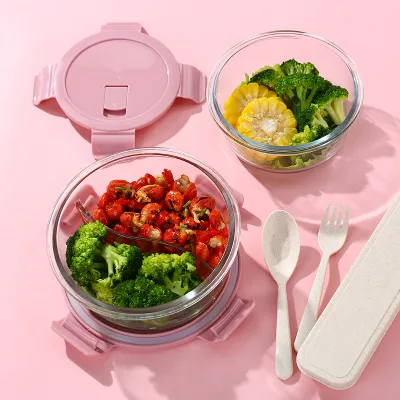
Source eco-friendly heatable glass lunch box for storage, travel, and catering
Compare 30 listings for the eco-friendly heatable glass lunch box featuring high borosilicate construction and various capacities. Buyers can evaluate options with FDA and LFGB certifications for food storage, meal prep, and catering applications.
Key considerations
Products List




$0.01 - $0.13
MOQ: 10000 Piece


Comprehensive Sourcing Guide
Strategic Sourcing Guide for Eco-Friendly Heatable Glass Lunch Boxes
The global shift toward sustainable food packaging has elevated the demand for eco-friendly, heatable glass lunch boxes. For B2B procurement professionals, sourcing these items requires a nuanced understanding of material science, regulatory compliance, and supply chain logistics. Unlike single-use plastics or paper-based alternatives, glass offers superior thermal stability and chemical inertness, making it ideal for food storage and reheating applications. This guide synthesizes observed market data and technical attributes to provide a disciplined framework for evaluating suppliers and selecting products that meet rigorous operational and environmental standards.
Material Composition and Thermal Performance
The foundation of a high-performance lunch box lies in its raw material composition. The market data indicates a prevalence of High Borosilicate glass as the primary material for heat-resistant containers. This specific type of glass is distinct from standard soda-lime glass due to its low coefficient of thermal expansion, which allows it to withstand rapid temperature changes without cracking. When evaluating potential suppliers, buyers must verify that the product specifications explicitly state "High Borosilicate" rather than generic "Glass."
The thermal capabilities of these containers are critical for the "heatable" aspect of the core keyword. Products designed for food storage and serving must be capable of withstanding microwave heating and steam sterilization. Observed product attributes confirm that certain models possess "Steamable" features, a vital characteristic for commercial food service environments where hygiene and reheating are paramount. The capacity of these units varies significantly, with observed specifications ranging from 300ml to 1500ml. This range accommodates diverse use cases, from individual portion control to bulk meal preparation. Buyers should ensure that the selected capacity aligns with their specific operational needs, noting that larger volumes may require thicker glass walls to maintain structural integrity during heating cycles.
Regulatory Compliance and Certification Verification
In the food contact sector, certification is not merely a marketing badge but a legal necessity. The supply chain for glass lunch boxes is heavily regulated, particularly for products intended for export to the European Union and the United States. Observed data highlights a cluster of critical certifications, including FDA, CE/EU, CIQ, LFGB, and EEC. These certifications indicate that the manufacturer has undergone testing for heavy metal leaching, thermal shock resistance, and general food safety compliance.
When vetting suppliers, procurement teams must demand current, verifiable documentation for these specific standards. The FDA certification ensures compliance with U.S. food contact regulations, while LFGB (Lebensmittel- und Futtermittelgesetzbuch) is the stringent German standard often required for the European market. CE marking indicates conformity with health, safety, and environmental protection standards for products sold within the European Economic Area. CIQ (China Inspection and Quarantine) is essential for export clearance from China. It is imperative to note that not every listed product in a general catalog will possess every single certification; buyers must verify the specific certification status for the exact model number they intend to purchase. Relying on a supplier's general claim without requesting the certificate for the specific batch or model poses a significant compliance risk.
Customization, Design, and Packaging Logistics
The flexibility of the supply chain is often defined by the level of customization available. Market observations reveal a bifurcation in product offerings: some suppliers provide "Non-Customized" stock items, while others offer extensive "Customized" options, including custom shapes and designs. The ability to customize the design, such as incorporating fruit motifs or specific branding, can be a strategic advantage for private label brands. However, customization typically impacts the Minimum Order Quantity (MOQ) and lead times.
Packaging plays a dual role in protecting the product and enhancing its marketability. The data indicates that glass lunch boxes are frequently packed in "Color Box" packaging for retail presentation, while bulk shipments may utilize "Carton" packaging. For smaller orders or specific logistics requirements, some suppliers offer individual polybag packing. The choice of packaging must be balanced against the fragility of the glass material. A robust outer carton is essential to prevent breakage during transit, especially given the high density and weight of glass compared to plastic alternatives. Buyers should also consider the "Eco-Friendly" attribute of the packaging itself, ensuring that the outer cartons and inserts align with the sustainability goals of the final product.
Cost Drivers and Minimum Order Quantities
Understanding the cost structure of glass lunch boxes is essential for budget planning. The observed price range in the market spans from $0.01 to $5.10 USD, a wide variance that reflects differences in capacity, glass thickness, certification levels, and customization complexity. The primary cost drivers include the raw material cost of high borosilicate glass, the energy-intensive manufacturing process required for heat resistance, and the labor involved in quality control and packaging.
Minimum Order Quantities (MOQ) are another critical financial factor. The data shows a broad MOQ range, from 10 units to 100,000 units, with specific observed thresholds such as 500, 2000, and 10,000 pieces. Lower MOQs are typically associated with standard, non-customized models that are held in stock, whereas higher MOQs are required for custom shapes, specific branding, or large-scale production runs. Buyers must align their order volume with their cash flow and storage capabilities. It is important to note that the "MOQ" is not a static figure; it often fluctuates based on the specific model number and the current production capacity of the supplier. Procurement strategies should account for these thresholds to avoid unnecessary inventory costs or production delays.
Supplier Evaluation and Quality Control Protocols
Selecting the right supplier requires a rigorous evaluation process that goes beyond price comparison. Given the fragility of glass and the strict regulatory environment, quality control (QC) is the most significant differentiator among suppliers. Buyers should prioritize suppliers who demonstrate a clear commitment to testing and inspection. The presence of certifications like FDA and LFGB suggests a baseline level of quality, but on-site audits or third-party inspection reports provide deeper assurance.
Key areas for QC evaluation include visual inspection for bubbles, scratches, or uneven rims, which can compromise the seal or safety of the container. Thermal shock testing is also critical to ensure the product meets the "heatable" claim without failure. Buyers should request test reports that verify the product's ability to withstand specific temperature differentials. Furthermore, the origin of the product is a relevant factor; observed data points to production hubs in China, specifically regions like Liling, Hunan, which have established expertise in glass and ceramic manufacturing. However, buyers must verify the specific factory location and ensure it matches the claimed origin to avoid misrepresentation.
Long-Term Procurement and Application Strategy
The long-term viability of sourcing glass lunch boxes depends on the alignment between product capabilities and end-user applications. The primary usage identified in the market is for food storage, meal preparation, and serving. The "Eco-Friendly" nature of the product makes it particularly suitable for brands targeting environmentally conscious consumers who are moving away from single-use plastics. The "Non-Disposable" attribute of glass containers supports a circular economy model, where the product is designed for repeated use over an extended period.
For businesses planning to scale, the availability of "Stocked" items versus "Customized" items will dictate the speed of market entry. Stocked items allow for immediate deployment, while customized items require longer lead times but offer better brand differentiation. Buyers should also consider the lifecycle of the product; glass is durable but heavy, which impacts shipping costs and carbon footprint compared to lighter alternatives. Therefore, a strategic procurement plan should balance the environmental benefits of glass with the logistical realities of its weight and fragility. By carefully managing the relationship between capacity, certification, and customization, buyers can build a resilient supply chain that meets both regulatory requirements and consumer expectations for sustainable, high-quality food storage solutions.
Comparative Analysis of Product Attributes
To facilitate decision-making, the following table summarizes the key attributes observed in the market for eco-friendly heatable glass lunch boxes. This comparison highlights the variability in specifications that buyers must navigate.
| Attribute Category | Observed Options | Strategic Implication |
|---|---|---|
| Material | High Borosilicate, Glass | Essential for thermal shock resistance; verify "High Borosilicate" for heating. |
| Capacity | 300ml, 500ml, 1000ml, 1500ml | Select based on portion size; larger capacities may require thicker glass. |
| Certifications | FDA, CE/EU, LFGB, CIQ, EEC | Mandatory for food contact; verify specific certificates for target markets. |
| Customization | Available, Custom Shape, Non-Customized | Custom shapes increase MOQ; stock items offer faster lead times. |
| MOQ Range | 10 to 100,000 units | Lower MOQs for stock; higher MOQs for custom branding or shapes. |
| Packing | Color Box, Carton, Polybag | Ensure outer packaging protects against breakage during transit. |
| Features | Eco-Friendly, Steamable, Non-Disposable | Critical for marketing and functional utility in food service. |
| Origin | China (including Liling, Hunan) | Verify factory location for quality control and logistics planning. |
This structured approach to sourcing ensures that buyers can make informed decisions based on verified data rather than marketing claims. By focusing on material integrity, regulatory compliance, and supply chain transparency, procurement professionals can secure a reliable supply of high-quality, eco-friendly glass lunch boxes that meet the demands of modern food service and retail markets.
FAQs
What material ensures thermal stability for heating?
High Borosilicate glass ensures thermal stability for heating applications. This material withstands rapid temperature changes without cracking, unlike standard soda-lime glass, making it ideal for microwave and steam use.
Which certifications are required for food contact safety?
FDA, CE/EU, LFGB, CIQ, and EEC certifications are required for food contact safety. These verify compliance with heavy metal leaching limits and thermal shock resistance standards for export to the US and EU.
Can I find stock items with specific capacity sizes?
Yes, stock items are available in capacities of 300ml, 500ml, 1000ml, and 1500ml. These non-customized units allow for immediate deployment without the longer lead times associated with custom shape production runs.
How does customization affect the minimum order quantity?
Customization typically increases the minimum order quantity to thresholds like 2000 or 10000 pieces. Stocked items often have lower MOQs, while custom shapes and designs require larger volumes to justify production setup costs.
What packaging options protect glass during transit?
Glass lunch boxes are packed in color boxes for retail or cartons for bulk shipping. Individual polybag packing is also available, but robust outer cartons are essential to prevent breakage due to the material's weight.
Are these containers suitable for steam sterilization?
Yes, specific models feature steamable capabilities suitable for commercial hygiene standards. This attribute confirms the container can withstand steam sterilization cycles without structural failure, ensuring safety for repeated food service use.
Where are the primary manufacturing locations for these boxes?
Primary manufacturing locations include China, with specific hubs in Liling, Hunan. Buyers should verify the specific factory origin to ensure quality control and accurate logistics planning for the supply chain.