Source Eco-Friendly Heat Insulation Bamboo Mat for Bathrooms, Hotels, Homes
Compare 30 listings of eco-friendly heat insulation bamboo mat options featuring customizable designs and various packing methods. Buyers can evaluate specifications like moisture content, density, and surface treatment to find suitable solutions for bathroom, hotel, or home applications.
Key considerations
Products List









Comprehensive Sourcing Guide
Strategic Sourcing Guide for Eco-Friendly Heat Insulation Bamboo Mats
Procuring eco-friendly heat insulation bamboo mats requires a disciplined approach that balances material authenticity, thermal performance expectations, and supply chain reliability. The global market for sustainable building and household materials has expanded significantly, yet the specific niche of bamboo mats designed for heat insulation presents unique challenges regarding standardization and performance verification. Buyers must navigate a landscape where "bamboo" is a broad category encompassing various processing methods, from raw weaving to engineered composites. This guide outlines the critical factors for sourcing these products, grounded in observed market data and technical realities.
Understanding Material Composition and Thermal Properties
The foundation of any successful procurement strategy lies in understanding the raw material. In the current market, bamboo mats are primarily derived from specific species, such as Mao Bamboo, which is noted for its density and structural integrity. The material composition is often a blend of bamboo and wood, processed to enhance durability and insulation capabilities. The observed market data indicates that the density of these mats typically ranges around 680kg/Cbm, a figure that serves as a baseline for evaluating structural soundness. However, density alone does not guarantee heat insulation; the internal structure and moisture content are equally critical.
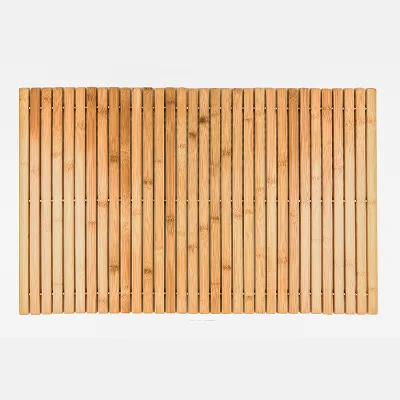
Moisture content is a vital specification for bamboo products, as high humidity can compromise insulation values and lead to mold growth. Standard industry observations suggest a moisture content range of 8% to 10% for optimal performance. Buyers must verify that the supplier maintains this range during production and storage. Furthermore, the surface treatment plays a significant role in the final product's utility. Polished surfaces are common, offering a smooth finish that may affect friction and installation, but the primary insulation mechanism often relies on the natural air pockets within the bamboo fiber structure or the specific weaving pattern.
When evaluating the "heat insulation" claim, buyers should be aware that bamboo is naturally a thermal insulator compared to metals or dense stones, but it is not a high-performance thermal barrier like specialized foam or fiberglass. The effectiveness depends heavily on the thickness and the specific application. For instance, mats with dimensions of 800*500mm are common, but the thickness is a variable that directly impacts the R-value (thermal resistance). Procurement teams must request specific thermal conductivity data from suppliers rather than relying on general marketing terms.
Technical Specifications and Customization Capabilities
The flexibility of bamboo mat production is a significant advantage for B2B buyers. The market data confirms that customization is widely available, allowing for tailored solutions in terms of size, model, and design. The "Customizable" attribute appears frequently across product listings, indicating that suppliers can adjust the model number and physical dimensions to meet specific project requirements. For example, while a standard size might be 800*500mm, the ability to order custom-made dimensions ensures that the mats fit unique architectural or interior design constraints.
Design flexibility extends beyond dimensions to include aesthetic and functional features. The pattern options observed include solid colors and wave designs, with a style range spanning from Bohemian to Modern and European influences. This versatility allows buyers to source mats that align with specific interior design themes while maintaining the eco-friendly core. The color palette is generally natural, featuring shades of bamboo or brown, which appeals to sustainability-focused markets. However, the "Eco-Friendly" label should be scrutinized; it often refers to the renewable nature of the raw material rather than the chemical treatments used in processing.
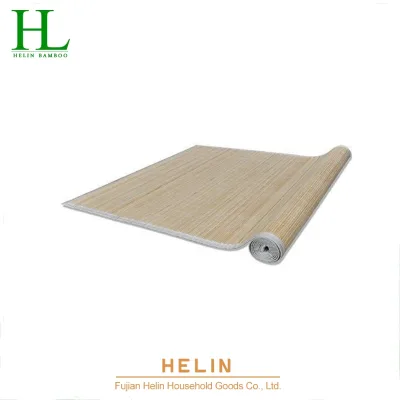
Packaging is another technical specification that requires attention. The observed data lists multiple packaging methods, including OPP bags, cartons, and palletizing. The choice of packaging impacts logistics costs and product protection during transit. For large orders, palletizing is often the preferred method to ensure stability, while single-item sales might utilize roll packaging with hangtags. The single gross weight of approximately 0.980 kg per unit provides a baseline for calculating shipping freight, which is a major cost driver in international trade.
Compliance, Certification, and Regulatory Standards
Navigating the regulatory landscape is essential for importing bamboo products, particularly when claiming eco-friendly status. The market data highlights several certifications, including Intertek, BSCI, and ISO. These certifications serve as third-party validations of the supplier's quality management systems, social compliance, and product safety. Intertek, for instance, is a globally recognized testing and certification body that can verify material composition and performance claims. BSCI (Business Social Compliance Initiative) ensures that the manufacturing process adheres to ethical labor standards, which is increasingly important for Western buyers.
However, the presence of a certification does not automatically guarantee that every batch of bamboo mats meets specific thermal or fire safety standards. Buyers must verify the scope of the certification. For example, while ISO 9001:2015 is a background standard often associated with quality management, it does not specifically certify thermal insulation performance. Buyers should request specific test reports related to fire resistance, formaldehyde emissions, and thermal conductivity. The "Customizable" standard attribute suggests that suppliers may adapt their products to meet regional regulations, but this must be confirmed in the contract.
In the context of heat insulation, fire safety is a critical compliance area. Bamboo is a natural organic material and is combustible. Depending on the destination market, there may be strict requirements for fire retardancy. Buyers should ask suppliers if the mats have been treated with fire-retardant chemicals and if these treatments have been tested according to local building codes. Without explicit documentation, the "Eco-Friendly" claim should not be assumed to include fire safety compliance.
Cost Drivers and Economic Factors
The pricing of bamboo mats is influenced by a complex interplay of factors, including raw material costs, processing complexity, and logistics. The observed price range in the market is broad, spanning from $0.03 to $68 per unit. This wide variance reflects differences in quality, size, thickness, and the level of customization. The lower end of the spectrum likely represents basic, unprocessed mats or smaller units, while the higher end may include custom-engineered products with advanced treatments or larger dimensions.
Minimum Order Quantity (MOQ) is another significant economic factor. The market data shows an MOQ range from 1 to 20,000 pieces. A low MOQ of 1 piece allows for sampling and small-scale testing, which is crucial for verifying quality before committing to large orders. However, for bulk procurement, the MOQ of 1000 pieces or higher is common. Buyers should negotiate MOQs based on their specific needs, understanding that higher volumes often yield better unit prices.
Lead times and sample availability also impact the total cost of ownership. The observed sample day is typically 7-15 days, which is a standard timeframe for custom manufacturing. Delays in sample approval can cascade into production delays, affecting project timelines. Additionally, the "Handmade/Other" processing method suggests a labor-intensive production process, which can drive up costs compared to fully automated manufacturing. Buyers should factor in the potential for higher labor costs when evaluating the total price.
Typical Applications and Usage Scenarios
Bamboo mats are versatile products with applications ranging from household use to commercial settings. The observed application scenarios include bathrooms, hotels, and general home environments. In residential settings, these mats are often used as flooring underlayment, wall coverings, or decorative elements that provide a natural aesthetic. The "Built-in Storage" attribute suggests that some designs may incorporate functional elements, such as storage compartments, which adds value to the product.
In commercial applications, such as hotels, the durability and aesthetic appeal of bamboo mats are highly valued. The "Easy to Clean" attribute is particularly relevant for high-traffic areas where maintenance is a priority. The non-woven textile technique mentioned in the data indicates that some mats may be designed for specific acoustic or thermal properties, making them suitable for conference rooms or guest areas where comfort is key.
The "Disposable" attribute observed in some listings suggests that there is a segment of the market for single-use bamboo mats, perhaps for event decoration or temporary installations. However, for long-term projects, buyers should prioritize non-disposable, durable options. The "General" application scenario implies that these mats are not limited to a single use case but can be adapted to various needs. Buyers should clearly define their intended use to ensure the selected product meets the required performance standards.
Supplier Evaluation and Quality Control Protocols
Selecting the right supplier is critical for ensuring product consistency and reliability. The market data indicates that suppliers are located primarily in Guangdong, China, a region known for its manufacturing capabilities. When evaluating suppliers, buyers should look for a combination of technical expertise, quality control systems, and communication responsiveness. The "OEM Accepted" attribute indicates that suppliers are willing to work with buyers to create custom-branded products, which is a positive sign of flexibility.
Quality control should be a multi-stage process. Buyers should request pre-production samples to verify material quality, dimensions, and finish. During production, third-party inspection services can be employed to monitor the manufacturing process and ensure adherence to specifications. Post-production, random sampling and testing should be conducted to verify that the final products meet the agreed-upon standards. The "Intertek" certification mentioned earlier can be leveraged to arrange independent testing of the finished goods.
Communication is another key factor in supplier evaluation. The "Customizable" nature of the products requires clear and detailed specifications. Buyers should ensure that the supplier understands the nuances of their requirements, particularly regarding thermal performance and moisture content. A supplier that is transparent about their limitations and capabilities is more likely to deliver a satisfactory product.
Long-Term Procurement and Sustainability Considerations
For long-term procurement, buyers should consider the sustainability of the supply chain. The "Eco-Friendly" claim should be backed by verifiable evidence of sustainable harvesting practices. Bamboo is a renewable resource, but the sourcing methods can vary. Buyers should ask suppliers about their supply chain transparency and whether they adhere to responsible forestry practices.
Additionally, the lifecycle of the product should be considered. Bamboo mats are durable, but their longevity depends on the environment in which they are used. In humid environments, the moisture content must be carefully managed to prevent degradation. Buyers should develop a maintenance plan that includes regular inspections and cleaning protocols to extend the life of the mats.
Finally, buyers should plan for future scalability. As demand grows, the ability of the supplier to increase production without compromising quality is essential. The "Customizable" and "OEM Accepted" attributes suggest that suppliers are equipped to handle growth, but buyers should establish a long-term partnership agreement that includes volume commitments and price stability clauses. This approach ensures a steady supply of high-quality bamboo mats while mitigating the risks of market volatility.
FAQs
Can I get custom sizes for these bamboo mats?
Yes, the product model and dimensions are fully customizable to meet your specific project needs. While standard sizes like 800 by 500mm exist, you can request custom-made specifications to fit unique architectural or interior design constraints.
What certifications do these bamboo mats hold?
The mats typically carry certifications from Intertek, BSCI, and ISO to validate quality and social compliance. These third-party validations confirm material safety and ethical manufacturing standards, though specific thermal test reports should be requested separately.
How long does it take to receive a sample?
Sample preparation usually takes between 7 to 15 days depending on the customization level required. This timeframe allows the factory to produce a custom-made unit that matches your specific design and material requirements before shipping.
What is the minimum order quantity for these mats?
The minimum order quantity varies significantly, ranging from as low as one piece for sampling up to 20,000 pieces for bulk orders. A common baseline for standard production runs is often set at 1000 pieces, but this can be negotiated.
Are these bamboo mats waterproof?
No, these bamboo mats are not waterproof and should not be used in constantly wet environments. They are suitable for bathrooms and hotels but require proper moisture control, with an ideal moisture content of 8 to 10 percent for performance.
What packaging methods are used for these mats?
Products are shipped using various methods including OPP bags, cartons, and palletizing for large orders. Single items may come in a roll with a hangtag, while bulk shipments utilize palletizing to ensure stability during international transit.
Which material is used to make these mats?
The mats are primarily made from Mao Bamboo, sometimes blended with wood for enhanced durability. This natural material is processed with techniques like carving or polishing to achieve a density around 680kg per cubic meter and a smooth finish.