Source eco-friendly natural pet memorial urn for Cat, Small Pet, and Adult Pet
Compare 30 listings for eco-friendly natural pet memorial urn options made from ceramics and wood. Buyers can evaluate customization, packing, and dimensions for cat, small pet, and adult pet applications.
Key considerations
Products List


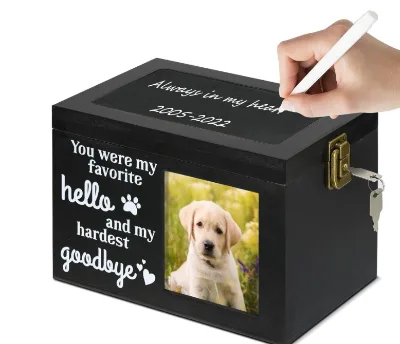
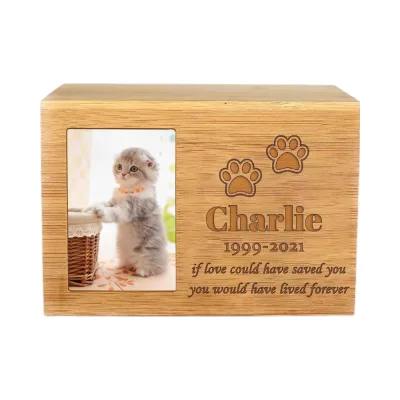
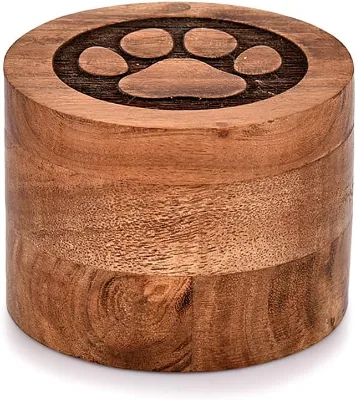
Eco-Friendly Wooden Pet Urn for Caskets Memorable & Sustainable Memorial Product
$5.10 - $5.80
MOQ: 300 pieces


Comprehensive Sourcing Guide
Strategic Sourcing Guide for Eco-Friendly Natural Pet Memorial Urns
Understanding Product Categories and Material Integrity
When sourcing eco-friendly natural pet memorial urns, buyers must first distinguish between the primary material classes available in the global market. The supplied product data indicates a clear bifurcation between ceramic and wood-based solutions, each offering distinct aesthetic and functional properties. Ceramic urns, often categorized under specific model numbers such as HF010 or DS-698, are characterized by their durability and ability to withstand various environmental conditions. These products frequently appear in a range of sizes, with standard dimensions observed in the market data including 101016cm, 87cm, and larger configurations like 11.512.5*20.5cm. The material grade for some ceramic variants is described as "Luxury," suggesting a higher finish quality suitable for premium memorial needs.
Conversely, the wood category presents a strong alternative for buyers prioritizing organic aesthetics. The data explicitly identifies "Wood" as a primary material, with specific sub-types including MDF or Rubber Wood. These natural material urns often carry attributes such as "Natural," "Eco-Friendly," and "Sustainable," which are critical keywords for modern procurement strategies. The manufacturing process for these items often involves "Handmade" techniques, with surface treatments ranging from "Spraying" to "Natural" finishes that preserve the grain and texture of the wood. The "European Style" is noted as a prevalent design language for these wooden units, often paired with specific colors like Red or White to match diverse interior design preferences. Understanding these material distinctions is the first step in aligning supplier capabilities with specific buyer requirements for natural, eco-conscious memorial products.
Technical Specifications and Dimensional Variability
A critical aspect of sourcing pet memorial urns is the verification of technical specifications, particularly dimensions and capacity. The market data reveals a significant variance in standard sizes, which directly impacts the suitability of the product for different pet sizes. For instance, specific models are designated as "Small" or "Large," with exact dimensional standards provided for certain SKUs. A "Small" model might adhere to a standard of 87cm, while larger units may reach dimensions of 1913.89.5cm or even 11.514*18.5cm. Buyers must exercise caution when interpreting these figures, as the data also lists a standard labeled simply as "s," which requires clarification from the supplier to ensure it meets the intended capacity.
Capacity is another variable that requires careful verification. While some product attributes list capacity as "Customized," others provide fixed dimensions. The presence of specific model numbers like "0035," "0055," and "zx" suggests that manufacturers offer a catalog of pre-defined sizes. However, the "Customized" attribute for capacity indicates that suppliers are willing to adjust internal volumes to accommodate specific needs. When evaluating technical specs, buyers should cross-reference the external dimensions (Length, Width, Height) with the internal volume to ensure the urn can hold the necessary remains. The data also notes that some products come in "Box" or "Carton" packing, which may influence the effective dimensions when calculating shipping logistics. It is essential to request a detailed specification sheet that confirms the internal volume relative to the external packaging size to avoid discrepancies in procurement planning.
Customization Capabilities and Surface Treatments
The ability to customize is a defining feature of the modern pet memorial market, and the supplied data highlights several avenues for personalization. Customization is explicitly marked as "Available" and "Yes" across multiple product entries. A key area of customization is the branding and identification of the urn. Suppliers indicate that "Custom Logo" options are acceptable, typically achieved through "Laser Engraving" or "Ink Printing." This allows buyers to add names, dates, or specific designs to the memorial product, enhancing its sentimental value. The choice between laser engraving and ink printing will depend on the material; for example, laser engraving is often preferred for wood to create a permanent, etched look, while ink printing might be used for ceramic surfaces.
Surface treatment is another critical customization parameter that affects the final appearance and durability of the urn. The data lists "Spraying" and "Polishing" as common processes. For wooden urns, a "Natural" finish is highly desirable for those seeking an eco-friendly aesthetic, as it minimizes chemical usage and preserves the organic feel. In contrast, "Spraying" may involve the application of protective coatings or paints, which could be Red, White, or other colors depending on the design. The "Luxury" grade mentioned in the data often correlates with more intricate surface treatments. Buyers should verify the specific surface treatment process to ensure it aligns with their environmental standards, particularly regarding the use of volatile organic compounds (VOCs) in sprays or the sustainability of the polishing agents used.
Compliance, Certification, and Environmental Standards
In the realm of eco-friendly products, compliance and certification are paramount, though the data presents a nuanced picture regarding specific certifications. The background information mentions "FSC" (Forest Stewardship Council) as a relevant certification, but it is flagged as low-confidence and should not be asserted as a universal standard for all listed products. Buyers must independently verify if a specific supplier or product batch holds FSC certification, especially when sourcing wood-based urns made from MDF or Rubber Wood. The absence of a guaranteed certification in the primary data means that the claim of "Eco-Friendly" and "Sustainable" must be substantiated through direct inquiry and documentation from the supplier.
When evaluating compliance, buyers should look for evidence of sustainable sourcing practices. The attribute "Natural" implies a lower processing intensity, but without a verified certification, this remains an observation rather than a guaranteed standard. For ceramic products, the focus shifts to the sourcing of raw materials and the energy efficiency of the firing process. Since the data does not provide specific test results or environmental performance claims, procurement teams should request third-party audit reports or material safety data sheets (MSDS) to confirm that the products meet international environmental standards. The "Customized" standard attribute suggests that some suppliers may offer bespoke compliance solutions, but this requires a clear definition of the required standards before the order is placed.
Cost Drivers, Pricing, and Order Economics
Understanding the cost structure of pet memorial urns is essential for effective budget management. The observed price range in the market data spans from $1.98 to $25 USD, indicating a wide spectrum of product values based on material, craftsmanship, and customization level. The lower end of the spectrum likely corresponds to standard, non-customized ceramic or basic wooden units, while the higher end reflects luxury-grade items with complex surface treatments, custom logos, or specialized packaging. The "Luxury" grade mentioned in the data suggests that price points near the $25 mark are associated with premium finishes and materials.
Minimum Order Quantity (MOQ) is another significant cost driver. The data shows an MOQ range of 10 to 500 units, with specific entries noting an MOQ of 300 for certain wood-based products. This variance allows for flexibility; buyers with smaller budgets or those testing the market can start with orders as low as 10 units, while bulk purchasers can leverage economies of scale. The "Small Orders: Accepted" attribute confirms that suppliers are accommodating of smaller volumes, which is beneficial for startups or niche retailers. Additionally, the "Sample Before Order: Acceptable" policy allows buyers to validate quality before committing to larger quantities, though this may incur a sample fee. Payment terms, such as "50% in Advance 50% Before Shipping," are standard and should be factored into cash flow planning. Buyers should calculate the total cost of ownership, including shipping and potential customs duties, as the origin is listed as "China," which may impact logistics costs.
Supplier Evaluation and Quality Assurance Protocols
Selecting the right supplier requires a rigorous evaluation process that goes beyond the basic product attributes. The data indicates that the products originate from "China," a major manufacturing hub for ceramics and wood products. When evaluating suppliers, buyers should prioritize those who demonstrate transparency regarding their production processes. The "Handmade" attribute for wooden urns suggests a labor-intensive process, which can be a quality differentiator but also a potential bottleneck for lead times. Buyers should inquire about the specific artisans or workshops involved to ensure consistent craftsmanship.
Quality control should be a central part of the procurement strategy. The "Sample Time" of 5 to 7 days provides a window for buyers to assess the physical quality of the product before mass production. During this phase, buyers should verify the durability of the "Polishing" or "Spraying" treatments and the accuracy of the "Laser Engraving." For ceramic products, checking for cracks, glaze consistency, and dimensional accuracy against the stated standards (e.g., 1913.89.5cm) is crucial. The "Export Packing" and "Cartons" attributes indicate that the supplier considers shipping protection, but buyers should still request photos of the packing process to ensure the urns are protected against breakage during transit. Furthermore, the "Customization" aspect requires a clear communication channel to ensure that the final product matches the design specifications exactly.
Long-Term Procurement and Market Sustainability
Sourcing eco-friendly pet memorial urns is not just a transactional activity but a strategic decision that impacts long-term brand reputation and market positioning. The "Sustainable" and "Eco-Friendly" attributes are increasingly important to consumers who value environmental responsibility. Buyers should consider the lifecycle of the product, from raw material sourcing to end-of-life disposal. Wood urns made from sustainable sources like Rubber Wood offer a biodegradable option, which aligns with the "Natural" and "Eco-Friendly" claims. However, the use of MDF (Medium Density Fiberboard) requires scrutiny, as it often involves adhesives that may not be as environmentally benign as solid wood.
To maintain a competitive edge, buyers should build relationships with suppliers who are committed to continuous improvement in sustainability. The "Customized" nature of the products allows for innovation, such as using recycled materials or developing new, non-toxic surface treatments. The ability to accept "Small Orders" and provide samples suggests a flexible supply chain that can adapt to changing market demands. As the market for pet memorials grows, the demand for high-quality, ethically sourced urns will likely increase. Buyers who prioritize suppliers with verified environmental standards and transparent manufacturing processes will be better positioned to meet the evolving expectations of their customers. By focusing on these long-term considerations, procurement teams can ensure a steady supply of high-quality, eco-friendly pet memorial urns that resonate with the values of the modern consumer.
FAQs
What materials are used for eco-friendly natural pet memorial urns?
The primary materials are ceramics and wood, including MDF or Rubber Wood. Ceramic models like HF010 offer durability, while wooden options provide a natural, sustainable aesthetic suitable for eco-conscious buyers seeking organic finishes.
Can I request a custom logo on these pet memorial urns?
Yes, custom logos are acceptable via laser engraving or ink printing. This customization allows for personalization on both ceramic and wooden surfaces, ensuring the memorial product carries specific names or designs as required.
What is the minimum order quantity for these memorial urns?
The minimum order quantity ranges from 10 to 500 units depending on the specific product. Some wood-based models have an MOQ of 300, while others accept small orders starting at just 10 units for testing purposes.
How long does it take to receive a sample before ordering?
Sample time is typically 5 to 7 days for preparation. Buyers can accept samples before placing a full order to verify quality, dimensions, and surface treatments like polishing or spraying before committing to larger quantities.
Which standard sizes are available for these pet urns?
Standard sizes vary from 8*7cm to 19*13.8*9.5cm and include larger configurations like 11.5*14*18.5cm. Specific models are designated as small or large, with some capacity options available for customization to fit different pet sizes.
What payment terms are required for these memorial products?
The standard payment term is 50% in advance and 50% before shipping. This arrangement is common for orders originating from China and applies to both ceramic and wooden urns regardless of the customization level.