Source eco-friendly nickel-free metal pendants for fashion, decoration, and religious use
Compare 30 listings of eco-friendly nickel-free metal pendants made from stainless steel and metal. Buyers can evaluate styles, plating options, and customization features for female, male, children, and elderly applications.
Key considerations
Products List


Custom Design Fashion Jewelry Personalized Letter Square Necklace Pendant
$2.68 - $2.88
MOQ: 100 Pieces


Colorfast DIY Pendant-Free Titanium Steel Necklace for Fashion Jewelry Accessories
$0.55 - $0.82
MOQ: 100 Pieces



Comprehensive Sourcing Guide
Strategic Sourcing Guide for Eco-Friendly Nickel-Free Metal Pendants
Understanding Material Integrity and Base Composition
The foundation of sourcing eco-friendly metal pendants lies in verifying the base material composition. In the current B2B marketplace, the term "nickel-free" is not merely a marketing descriptor but a critical material specification that dictates both regulatory compliance and consumer safety. Based on observed product attributes in the sector, stainless steel emerges as the predominant material choice for this category. Specifically, 316 stainless steel is frequently cited in product descriptions as the optimal substrate for jewelry making due to its inherent corrosion resistance and hypoallergenic properties. This material class is distinct from base metals that may require heavy plating to mask underlying allergens.
When evaluating suppliers, buyers must distinguish between solid stainless steel and plated alternatives. The supply chain data indicates that products are often described with attributes such as "Stainless Steel Jewelry" and "316 Stainless Steel." However, the presence of plating processes, such as gold plating, rose-gold plating, or black plating, introduces a layer of complexity. While the plating enhances the aesthetic appeal and aligns with fashion trends, the underlying metal must remain nickel-free to satisfy the core keyword requirement. Buyers should verify that the "Nickel-Free" claim applies to the base alloy rather than just the surface finish. The observed product attributes confirm that "Lead & Nickel Free" is a standard specification for certain high-grade pendants, ensuring that the material does not release harmful metals during wear or over time.
Furthermore, the manufacturing process plays a pivotal role in maintaining material integrity. Techniques such as polishing and plating are standard, but the quality of these processes determines the longevity of the nickel-free status. If a plating layer is too thin or applied poorly, it may wear away, exposing the base metal. Therefore, the sourcing strategy must prioritize suppliers who utilize robust plating technologies, such as those noted in the data which include "Plating Rose-Gold" and "Inseting Diamond" alongside high-quality polishing. The goal is to ensure that the "No Discoloration" and "No Deformation" advantages observed in the market are achieved through genuine material quality rather than superficial treatments.
Compliance Standards and Certification Verification
Navigating the regulatory landscape for metal jewelry requires a rigorous approach to certification verification. The "eco-friendly" and "nickel-free" claims are subject to various international standards that vary by destination market. In the observed product data, certifications such as SGS, CE, and BV (Bureau Veritas) appear frequently. These are not merely labels but represent third-party verification of material safety and manufacturing standards. For instance, the "SGS, CE" standard is explicitly linked to specific pendant models, indicating that these items have undergone testing for heavy metal content and compliance with European safety directives.
Buyers must understand that "CE" marking in the context of jewelry often relates to the Restriction of Hazardous Substances (RoHS) directives, which strictly limit the use of nickel, lead, and cadmium. Similarly, "SGS" certification provides a scientific basis for the "Lead & Nickel Free" assertion. However, the presence of a certificate does not guarantee that every batch from a supplier meets the same standard. The data shows that some products list "CE SGS" while others list "SGS, BV," suggesting that certification status can vary by product line or model. Consequently, procurement teams should not rely on a single certificate for the entire supplier catalog but must request specific test reports for the exact models being ordered.
The "Standard" attribute in the product data also includes specific dimensions like "35MM*55MM" or model-specific standards like "TN1067." While these are dimensional or model identifiers, they often correlate with the specific compliance testing performed for that design. Buyers should verify that the "Standard" listed on the product page aligns with the regulatory requirements of their target market. For example, if the target market is the United States, the focus might be on California Proposition 65, whereas the European market requires strict adherence to EN 1811 for nickel release. The observed "Lead & Nickel Free" standard is a strong indicator of compliance, but it must be backed by recent, batch-specific test reports from recognized bodies like SGS or BV to be actionable for B2B procurement.
Cost Drivers and Economic Factors in Procurement
The pricing structure for eco-friendly nickel-free metal pendants is influenced by a combination of material costs, processing complexity, and order volume. The observed price range in the market spans from $0.20 to $15.90 USD, a significant variance that reflects differences in material purity, plating thickness, and design intricacy. The lower end of this spectrum typically corresponds to standard stainless steel pendants with basic plating, while the higher end often involves more complex designs, such as those featuring diamond insets or specialized rose-gold plating.
Order Volume is a critical economic factor, as evidenced by the observed Minimum Order Quantity (MOQ) ranging from 1 to 500 pieces. Suppliers offering an MOQ of 100 pieces, as seen in specific product listings, allow for smaller batch testing, which is beneficial for startups or brands validating a new product line. However, for large-scale procurement, negotiating lower unit costs requires understanding the volume tiers. The "OEM&ODM" availability is a key cost driver; suppliers offering custom design services often have higher base costs but provide value through unique branding and design differentiation.
Additionally, the packaging method impacts the final landed cost. The data indicates a variety of packaging options, including "OPP Bag," "PP Bag," and "Export Carton." While "OPP Bag" is a standard, cost-effective solution for individual units, "Export Carton" packaging is essential for bulk shipping to prevent damage and ensure compliance with international shipping regulations. The choice between "Custom" packaging and standard packaging also influences the unit price, as custom branding requires additional setup and material costs. Buyers should factor in these packaging variables when calculating the total cost of ownership, ensuring that the "Eco-friendly" claim is not compromised by excessive or non-recyclable packaging materials.
Technical Specifications and Design Attributes
Technical specifications define the functional and aesthetic boundaries of the product. In the realm of metal pendants, key attributes include the pendant shape, size, and plating finish. The observed data highlights a diverse range of shapes, including "Cross," "Round," and "Square," catering to various fashion trends and religious or decorative needs. The "Cross" shape is particularly prevalent, often associated with religious usage, while "Round" and "Square" shapes align with modern fashion aesthetics. The "Style" attribute further categorizes these items into "Fashion" and "Cute," indicating that the design language is versatile enough to appeal to different demographics.
Size specifications are equally critical for procurement. The data lists specific dimensions such as "35MM*55MM" and chain lengths like "45cm." These measurements are not arbitrary; they dictate the visual impact and wearability of the pendant. Buyers must ensure that the dimensions provided match their design requirements, especially when integrating the pendants into existing product lines. The "Product Model" identifiers, such as "TN1067," "hdx1072," and "P02043," serve as unique references for these specifications, allowing for precise ordering and inventory management.
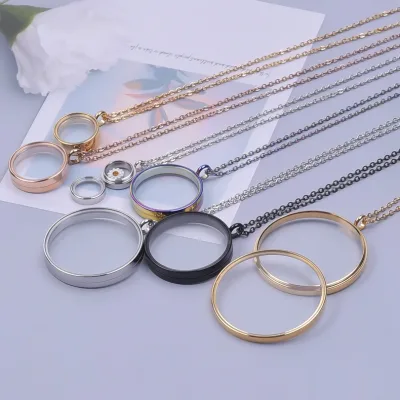
Plating is another technical specification that requires careful attention. The observed plating options include "Gold," "Silver," "Rose-Gold," and "Black." The choice of plating affects both the color and the durability of the product. For instance, "Plated Black" and "Rose-Gold" plating often require specific electroplating processes to ensure adhesion and color consistency. The "Technology" attribute mentions "Plating Rose-Gold" and "Inseting Diamond," suggesting that some pendants may incorporate gemstones or advanced plating techniques. Buyers should verify the thickness of the plating, as this directly correlates with the "Warranty" period, which ranges from 1 to 3 years in the observed data. A longer warranty typically indicates a higher quality plating process that resists fading and discoloration.
Supplier Evaluation and Operational Capabilities
Evaluating suppliers for eco-friendly metal pendants requires a holistic assessment of their operational capabilities, including origin, customization options, and logistics. The primary origin for these products is identified as "China," with specific hubs in "Shen Zhen" and "Shenzhen." These regions are known for their robust manufacturing ecosystems and expertise in jewelry production. However, the geographic location also implies specific logistical considerations, such as shipping times and customs procedures.
Customization is a significant differentiator among suppliers. The data confirms that "Customization" is available, and "OEM&ODM" services are explicitly welcomed. This flexibility allows buyers to tailor products to their brand identity, including custom shapes, plating colors, and packaging. The "Packaging" attribute lists options like "OPP Bag/Custom" and "PP Bag," indicating that suppliers can accommodate both standard and bespoke packaging needs. Buyers should assess the supplier's capacity to handle custom orders, including their ability to manage design files, produce samples, and scale production without compromising quality.
Logistics and shipping methods are also critical components of supplier evaluation. The observed shipping options include "DHL," "UPS," "EMS," "FedEx," and "TNT." These carriers offer varying levels of speed and cost, and the choice of shipping method can impact the overall supply chain efficiency. Suppliers who offer multiple shipping options demonstrate flexibility and a commitment to meeting diverse customer needs. Additionally, the "Warranty" period, ranging from 1 to 2 years or 1 to 3 years, serves as a proxy for the supplier's confidence in their product quality. A longer warranty period suggests that the supplier stands behind their manufacturing processes and is willing to address potential defects.
Quality Control and Long-Term Procurement Strategy
Maintaining quality control is essential for ensuring that the "nickel-free" and "eco-friendly" claims remain valid throughout the product lifecycle. The observed product attributes emphasize advantages such as "No Discoloration," "No Irritation," and "No Deformation." These claims must be backed by rigorous quality control protocols. Buyers should implement a system of pre-shipment inspections that verify the material composition, plating thickness, and dimensional accuracy of the pendants. The "Standard" attributes, such as "SGS, CE" and "Lead & Nickel Free," should be cross-referenced with physical test results to ensure consistency.
Long-term procurement considerations involve building a sustainable relationship with suppliers who can consistently deliver high-quality products. The "Warranty" period is a key indicator of long-term reliability. Suppliers offering warranties of 1 to 3 years demonstrate a commitment to product durability. However, buyers should also consider the "Usage" attributes, which include "Decoration," "Health," and "Religious." These usage scenarios imply that the pendants will be worn frequently and exposed to various environmental conditions. Therefore, the quality control process must include stress testing to ensure that the pendants can withstand daily wear without losing their nickel-free status or aesthetic appeal.
Finally, the "Suitable for" attribute, which includes "Female," "Male," "Children," and "Elderly," highlights the versatility of the product. This broad applicability means that the quality control standards must be stringent enough to meet the needs of all demographic groups. For instance, pendants intended for children may require additional safety checks to prevent choking hazards or sharp edges. By integrating these diverse requirements into the quality control framework, buyers can ensure that their procurement strategy supports both immediate sales and long-term brand reputation. The observed data suggests that a successful sourcing strategy relies on a balance of technical precision, regulatory compliance, and supplier reliability to deliver truly eco-friendly and nickel-free metal pendants.
FAQs
What materials are used for eco-friendly nickel-free metal pendants?
Stainless steel is the predominant material used for these pendants, often specifically 316 grade for its hypoallergenic properties. Some products also feature gold or silver plating to enhance aesthetics while maintaining a nickel-free base alloy for safety.
Which certifications verify that metal pendants are lead and nickel free?
SGS, CE, and BV certifications are commonly used to verify material safety and compliance with international standards. These third-party tests confirm that the products meet strict regulations regarding heavy metal content and hazardous substances.
Can buyers request custom packaging for bulk orders of metal pendants?
Yes, customization is available for packaging, including options like OPP bags, PP bags, or custom export cartons. Suppliers often welcome OEM and ODM requests to tailor packaging solutions to specific branding needs.
What is the typical price range for stainless steel pendant necklaces?
The observed price range spans from 0.20 to 15.90 USD per unit, depending on design complexity and plating. Basic stainless steel pendants with standard plating are found at the lower end, while intricate designs with diamond insets cost more.
How long is the warranty period for fade-proof metal pendants?
Warranty periods typically range from 1 to 3 years, with some products offering 1 to 2 years of fade-proof coverage. This duration reflects the supplier's confidence in the plating quality and the durability of the stainless steel base.
Which shipping methods are available for delivering metal pendants internationally?
Common shipping methods include DHL, UPS, EMS, FedEx, and TNT, offering various speeds and cost options. Buyers can select the most suitable carrier based on their urgency and budget requirements for international delivery.