Source Eco Friendly Welded Gabion for Civil Engineering, Road Building, Military Applications
Compare 30 listings of Eco Friendly Welded Gabion boxes featuring galvanized iron or low-carbon steel wire. Buyers can review specifications like mesh opening, wire diameter, and surface treatment for civil engineering, road building, and military applications.
Key considerations
Products List


Welded Gabion Retaining Wall China Manufacturers Welded Wire Stone Gabion
$25.00 - $65.00
MOQ: 300 Pieces

Welded Mesh Gabion Box Welded Metal Gabion Wall Strong Structural Support Gabion
$25.00 - $65.00
MOQ: 300 Pieces


Eco-Friendly Durable Gabion Solutions for Sustainable Construction Needs
$8.79 - $15.59
MOQ: 200 Pieces


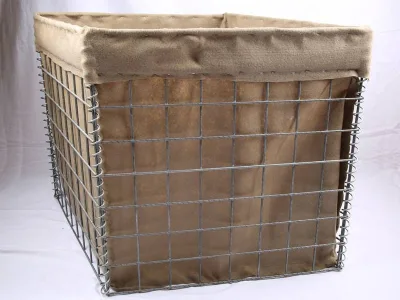


High Quality Welded Wire Mesh Gabion for Riverbank Protection Durable and Long-Lasting
$0.90 - $1.65
MOQ: 100 Square Meters


Comprehensive Sourcing Guide
Sourcing Guide for Eco-Friendly Welded Gabion Systems
Understanding the Technical Architecture of Welded Gabion Mesh
When sourcing welded gabion systems, buyers must first distinguish between the fundamental construction methods and material compositions that define the product's longevity and environmental impact. The core of a welded gabion lies in the wire drawing and welding process. Unlike traditional woven gabions, welded gabions are constructed using a specific technique where individual wires are fused at their intersections. The supplied data indicates that the primary technical method for these units is "Welded," utilizing a "Hot Drawing" process for metal wire drawing. This method ensures a rigid, grid-like structure that is particularly advantageous for civil engineering applications where structural integrity is paramount.
The material composition varies significantly across the market, directly influencing the "eco-friendly" designation. While some listings specify "Low-Carbon Iron Wire" or "Low Carbon Steel Wire," others point to "Stainless Steel Wire" or "Galvanized Iron Wire." The eco-friendly aspect often hinges on the surface treatment and the longevity of the material, which reduces the frequency of replacement and subsequent waste. The data highlights "Hot Dipped Galvanized" as a primary surface treatment, often paired with "Heavy Zinc Coating" or "Galfan Coating." These coatings are critical for corrosion resistance. Additionally, the market offers options for "Powder Spray Coated" or "PVC Vinyl Coated" finishes, which provide an extra layer of protection and can be colored to blend with natural landscapes, reducing visual pollution.
The physical specifications of the mesh are equally diverse. Buyers will encounter aperture sizes ranging from "5050mm" to "100100mm," with specific examples like "60*80mm" or "5X5" mesh configurations. The wire diameter is a critical metric, with observed ranges including "3.40mm," "3.5, 4mm," and "4.0-5.0mm." The thickness of the wire, described in some contexts as "Metal Thick Wire," directly correlates to the load-bearing capacity of the gabion unit. Furthermore, the cross-sectional shape of the wire is typically "Round," though the overall unit shape can be customized. The standard dimensions for these units often include "1m x 1m x 1m," "2m x 1m x 1m," or smaller modular sizes like "100x80x30cm." Understanding these variables is essential for matching the product to specific engineering requirements.
Compliance, Certification, and Environmental Verification
Verifying the environmental claims and compliance standards of welded gabion suppliers requires a rigorous approach, as the term "eco-friendly" is often used loosely in marketing materials. In the context of gabion sourcing, eco-friendliness is primarily derived from the durability of the product and the safety of the materials used. A long-lasting gabion system reduces the need for frequent reconstruction, thereby minimizing the carbon footprint associated with manufacturing, transportation, and installation over the lifecycle of a project.
Buyers must verify the specific standards applied to the wire and the coating. The supplied data references a standard wire diameter of "3.40mm" and various model numbers such as "JS-FWG010" and "JS-FWG004," which may correspond to internal manufacturer standards or specific project requirements. However, for international procurement, reliance on generic model numbers is insufficient. Buyers should request documentation confirming adherence to international standards for galvanized coatings, such as ISO 1461 for hot-dip galvanized coatings, or ASTM A641 for zinc-coated steel wire. The presence of "Heavy Zinc Coating" or "Galfan Coating" suggests a focus on corrosion resistance, but the exact thickness of the zinc layer (measured in microns or grams per square meter) must be verified through mill test certificates.
Regarding certifications, the data does not explicitly list third-party environmental certifications like ISO 14001 for the suppliers themselves. Therefore, buyers should not assume a supplier is certified based on product attributes alone. Instead, the procurement strategy should include a request for the supplier's environmental management system certification and proof of compliance with local and international environmental regulations regarding the disposal of raw materials and the manufacturing process. The "Customization" attribute noted in the data implies that suppliers can tailor products, which is a positive sign for meeting specific project environmental goals, such as using specific recycled content or non-toxic coatings. However, the buyer must explicitly define these requirements in the purchase order and request evidence of compliance before finalizing the contract.
Cost Drivers and Pricing Dynamics in the Gabion Market
The pricing of welded gabion systems is influenced by a complex interplay of material costs, processing requirements, and logistical factors. The observed price range in the market spans from $0.90 to $65.00 USD, a wide variance that reflects differences in wire gauge, coating type, and unit size. The primary cost driver is the raw material, specifically the type of steel wire used. "Low-Carbon Iron Wire" is generally more cost-effective than "Stainless Steel Wire," which commands a premium due to its superior corrosion resistance and longer lifespan. Similarly, the choice of surface treatment significantly impacts the final price. "Hot Dipped Galvanized" is a standard, cost-efficient option, whereas "PVC Vinyl Coated" or "Powder Spray Coated" finishes add processing steps and material costs, pushing the price toward the higher end of the spectrum.
The dimensions of the gabion unit also play a crucial role in pricing. Larger units, such as those measuring "2m x 1m x 1m," require more material and energy to produce than smaller units like "100x50x30mm." However, larger units may offer better economies of scale per cubic meter of containment volume. The "Wire Thickness" is another critical factor; thicker wires, such as those in the "4.0-5.0mm" range, use more steel and require more robust welding equipment, increasing the unit cost. Additionally, the "Mesh Opening" size affects the amount of stone fill required, which indirectly influences the total project cost, though this is a downstream consideration for the buyer.
Logistics and packaging are significant cost components that buyers must account for. The data indicates that products are typically packed in "Carton Packing," "Pallet Packing," or "Brown Carton" configurations, with package sizes like "60.00cm * 80.00cm * 100.00cm." Efficient packing is essential to minimize shipping volume and weight. Suppliers located in "Hebei, China" or generally "China" may offer competitive base prices due to regional manufacturing clusters, but freight costs can vary widely depending on the destination and the volume of the order. The "MOQ range" of 50 to 2000 units suggests that smaller buyers may face higher per-unit costs due to the inability to achieve full container loads or production line efficiencies. Buyers should negotiate based on total landed cost, including packaging, freight, and insurance, rather than focusing solely on the unit price.
Typical Applications and Engineering Suitability
Welded gabion systems are versatile solutions designed for a wide array of civil engineering and environmental applications. The data explicitly lists "Civil Engineering," "Road Building," and "Military Applications" as primary usage areas. In civil engineering, these units are frequently employed for slope stabilization, retaining walls, and erosion control along riverbanks and coastlines. The rigid structure of welded gabions makes them particularly suitable for applications where high structural stability is required, such as in road embankments where the risk of settlement is a concern.
The "Application" field in the data highlights "Gabion Mesh," "Construction Wire Mesh," "Decorative Mesh," and "Screen" uses. This versatility allows the same product to serve functional and aesthetic purposes. For instance, in urban planning, welded gabions can be used as decorative retaining walls or sound barriers, where the "Color: Customized" attribute allows for integration with the surrounding architecture. The "Protecting Mesh" and "Fence Mesh" applications indicate their use in security and perimeter control, leveraging the strength of the welded construction to deter unauthorized access while allowing for drainage.
The "Usage" in "Military Applications" suggests that these systems are robust enough for rapid deployment in field fortifications or temporary barriers. The ability to customize the "Size" and "Aperture" allows engineers to design gabions that can hold specific types of fill material, from large rocks for heavy-duty retaining walls to smaller stones for decorative landscaping. The "Processing Service" options, including "Bending," "Welding," "Decoiling," "Cutting," and "Punching," further enhance their suitability for complex projects where standard dimensions may not suffice. Buyers should evaluate the specific load requirements of their project against the "Wire Diameter" and "Mesh Opening" specifications to ensure the selected gabion system can withstand the intended environmental and structural stresses.
Supplier Evaluation and Quality Assurance Protocols
Evaluating suppliers of welded gabion systems requires a focus on technical capability, consistency, and transparency. The data indicates that the "prod_origin" is primarily "Hebei, China" or generally "China," a region known for its extensive steel wire manufacturing infrastructure. However, the presence of multiple product models and varying specifications suggests a fragmented market with diverse levels of quality. Buyers should prioritize suppliers who demonstrate a clear understanding of the "Technics" involved, specifically the "Welded" process, and who can provide evidence of consistent quality control.
Quality assurance should begin with the verification of the "Material" and "Surface Treatment." Buyers must ensure that the "Galvanized Type" matches the project requirements, whether it is "Heavy Zinc Coating" or "Galfan Coating." The "Status" of the wire, noted as "Hard State," indicates a specific level of tensile strength that must be maintained throughout the manufacturing process. Suppliers should be able to provide mill test certificates that verify the chemical composition of the steel and the thickness of the zinc coating. Additionally, the "Processing Service" capabilities should be assessed to ensure the supplier can meet specific customization needs, such as "Bending" or "Cutting" to exact dimensions.
The "prod_packing" methods, such as "Carton Packing" or "Pallet Packing," are also indicators of a supplier's attention to detail. Proper packaging is essential to prevent damage during transit, which can compromise the integrity of the welded joints. Buyers should request photos of the packaging process and verify that the "Package Size" aligns with the shipping requirements to minimize damage risks. Furthermore, the "Customization" attribute suggests that suppliers should be flexible in adapting to specific project needs. Buyers should evaluate the supplier's responsiveness to customization requests and their ability to provide samples or prototypes before committing to a large order.
Long-Term Procurement and Lifecycle Management
Procuring welded gabion systems is a long-term investment that requires careful consideration of the product's lifecycle and maintenance requirements. The "Eco-friendly" aspect of these systems is largely dependent on their durability and resistance to environmental degradation. The "Surface Treatment" options, including "Hot Dipped Galvanized," "Powder Spray Coated," and "PVC Vinyl Coated," play a crucial role in extending the lifespan of the gabion units. Buyers should select the coating that best suits the specific environmental conditions of the project site, such as exposure to saltwater, acidic soils, or extreme temperature fluctuations.
The "Wire Diameter" and "Mesh Opening" specifications also influence the long-term performance of the system. Thicker wires and smaller mesh openings generally offer greater resistance to corrosion and mechanical damage, ensuring the gabion retains its structural integrity over decades. However, these features may come at a higher initial cost. Buyers should conduct a lifecycle cost analysis to determine the most cost-effective option, considering factors such as installation, maintenance, and potential replacement costs.
The "Customization" capability of suppliers is a key factor in long-term procurement. As project requirements evolve or as new environmental standards are introduced, the ability to customize the "Size," "Aperture," and "Color" of the gabion units allows for future adaptability. Buyers should establish a long-term relationship with suppliers who can provide consistent quality and support for future orders or modifications. Additionally, the "Processing Service" options, such as "Decoiling" and "Cutting," can be valuable for on-site adjustments, reducing waste and ensuring a precise fit for the project.
In conclusion, sourcing eco-friendly welded gabion systems requires a comprehensive understanding of the technical specifications, material properties, and supplier capabilities. By carefully evaluating the "Material," "Surface Treatment," and "Processing Service" options, buyers can select products that meet their engineering requirements while adhering to environmental and sustainability goals. The wide range of available options, from "Low-Carbon Iron Wire" to "Stainless Steel Wire," and from "Hot Dipped Galvanized" to "PVC Vinyl Coated," provides the flexibility needed to address diverse project needs. Through rigorous supplier evaluation and quality assurance protocols, buyers can ensure the successful implementation of welded gabion systems that deliver long-term value and environmental benefits.
FAQs
How is Eco Friendly Welded Gabion constructed?
It is constructed using a welded technique where wires are fused at intersections. The process involves hot drawing metal wire, typically low-carbon steel or galvanized iron, to ensure structural rigidity for civil engineering applications.
What materials are used for Eco Friendly Welded Gabion?
Common materials include low-carbon iron wire, low carbon steel wire, and stainless steel wire. These are often treated with heavy zinc coating, Galfan coating, or PVC vinyl coating to enhance corrosion resistance and longevity.
Which surface treatments improve Eco Friendly Welded Gabion durability?
Hot dipped galvanized, powder spray coated, and PVC vinyl coated finishes are available. These treatments provide heavy zinc or Galfan protection, ensuring the mesh resists rust and reduces the need for frequent replacement.
Can Eco Friendly Welded Gabion be customized for projects?
Yes, customization is available for size, mesh opening, and wire diameter. Buyers can specify dimensions like 1m x 1m x 1m or 2m x 1m x 1m, with mesh openings ranging from 50x50mm to 100x100mm.
What are the standard wire diameters for welded gabion?
Standard wire diameters range from 3.40mm to 5.0mm, with common options including 3.5mm, 4.0mm, and 4.5mm. Thicker wires like 4.0-5.0mm offer higher load-bearing capacity for heavy-duty civil engineering uses.
How are Eco Friendly Welded Gabion units packaged?
Units are typically packed in carton boxes or on pallets to ensure safe transport. Package sizes vary, with common dimensions around 60cm x 80cm x 100cm, and some options include brown carton packaging for specific orders.
Where are Eco Friendly Welded Gabion products manufactured?
Products are primarily manufactured in Hebei, China, a region known for steel wire production. The origin is listed as China, with specific models like JS-FWG010 and JS-FWG004 produced in these facilities.