Source Eco-Friendly Woven Damask Woven Labels for Garments, Shoes, Bags
Explore 30 verified listings for eco-friendly woven damask woven labels tailored for garment, shoe, and bag applications. Buyers can compare customization options, material types, and MOQs to find the right supplier for their production needs.
Key considerations
Products List


Woven Garment Labels Custom Cheap Damask Garment Woven Labels for Clothing
$0.01 - $1.00
MOQ: 30 Pieces


Customized Design Woven Damask Tag Wholesale Woven Label for Clothing Labels
$0.01 - $0.10
MOQ: 100 Pieces



Comprehensive Sourcing Guide
Strategic Sourcing Guide for Eco-Friendly Woven Damask Labels
Navigating the global market for eco-friendly woven damask labels requires a precise understanding of material composition, manufacturing techniques, and the specific compliance landscape of the textile industry. For procurement professionals, the transition from generic labeling solutions to sustainable, high-performance woven tags is not merely a design choice but a strategic supply chain decision. This guide synthesizes available product attributes and industry standards to provide a comprehensive framework for sourcing these critical garment accessories. The focus remains on verified observations regarding material properties, customization capabilities, and the logistical realities of sourcing from major manufacturing hubs like Dongguan and Shanghai.
Understanding Material Composition and Technical Specifications
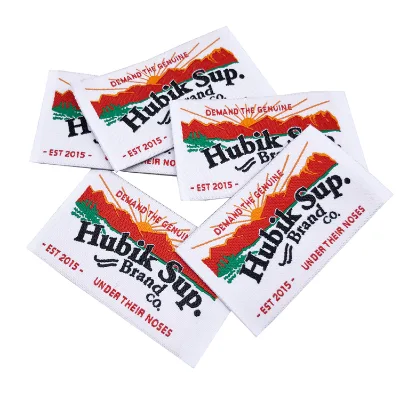
The foundation of any sustainable label lies in its material composition. In the current market, the primary material observed for eco-friendly woven labels is polyester, often sourced in a woven fabric format. This material choice is significant because polyester offers durability and resistance to washing, which are non-negotiable for garment care labels. The specific technical attribute of "woven" indicates a manufacturing process where threads are interlaced on a loom, creating a dense, textured surface that is superior to printed alternatives for longevity.
When evaluating technical specifications, buyers must distinguish between standard woven labels and those with specific structural characteristics. The "damask" weave, often associated with high-end woven labels, provides a reversible design with a distinct texture. However, the observed product data highlights several specific structural variations available in the market. These include "Straight cut" fold types and "Center Fold" styles, which dictate how the label is finished and applied to the garment. The "Folded" attribute is a critical observation, indicating that the labels are pre-processed to a specific shape before packaging, reducing the labor required during the garment assembly phase.
Size and model specifications vary significantly based on the application. While some products are listed with specific model numbers such as "008," "YG-WL20," "CQ22030307," and "WL009," the general trend supports "Custom Size" and "Custom" standards. This flexibility allows brands to tailor labels to specific design requirements, ranging from standard size labels to specialized tags. The "Size Label" attribute suggests that these products often serve dual purposes, acting as both brand identifiers and size indicators. Buyers should verify that the chosen model number corresponds to the desired physical dimensions, as the standard "3cm7cm" or "4635*35" packing dimensions may not reflect the actual label size.
Customization Capabilities and Design Flexibility
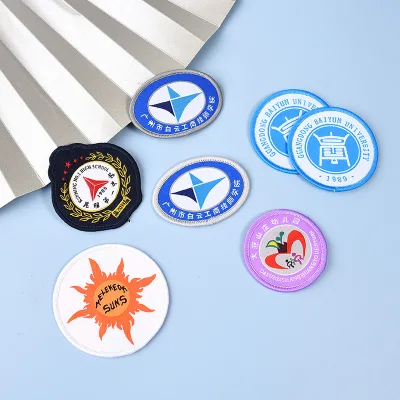
One of the most compelling advantages of sourcing woven labels is the extensive customization available. The product data confirms that "Custom" is a recurring attribute across color, size, and logo application. This level of flexibility is essential for brands seeking to differentiate their products in a crowded marketplace. The "Custom Color" attribute implies that labels can be produced in specific Pantone shades or custom dye lots, ensuring brand consistency. Furthermore, the "Custom Logo" feature allows for intricate brand emblems to be woven directly into the fabric, a process that offers superior durability compared to printed logos.
The customization extends beyond aesthetics to functional design. The "Type" attribute lists "In-Mould Label" and "Shrink Label" alongside the primary "woven label" category. While the core keyword focuses on woven damask, the presence of these alternative types suggests that suppliers often offer a portfolio of solutions. Buyers must clearly distinguish between a woven label and a shrink label, as the latter is typically made from plastic and used for different applications. For the specific need of eco-friendly woven labels, the "woven" technics and "woven fabric" material are the primary identifiers.
The "Backing" attribute is another critical customization point. Labels can be supplied with various backing options such as "Sewing on," "Iron on," or "Sticking on." This flexibility allows the procurement team to align the label application method with the garment's construction process. For instance, a "Sewing on" backing is standard for high-end garments, while "Iron on" or "Sticking on" might be preferred for faster assembly lines or specific fabric types. The "Fold" attribute, specifically "Center Fold," indicates a specific finishing technique that can enhance the aesthetic appeal and structural integrity of the label when attached to the garment.
Compliance, Sustainability, and Certification Verification
The term "eco-friendly" is a powerful marketing claim, but in a B2B context, it requires rigorous verification. The observed product attributes frequently list features such as "Eco-Friendly," "Sustainable," "Recyled," and "Washable." These terms indicate a commitment to environmental responsibility, likely involving the use of recycled polyester or sustainable manufacturing processes. However, the provided data does not confirm specific certifications like FSC, OEKO-TEX, or GOTS. Therefore, buyers must treat these sustainability claims as observations that require validation rather than guaranteed facts.
When evaluating compliance, the buyer should prioritize suppliers who can provide third-party test results or certification documentation. The absence of explicit certification data in the product list means that the onus is on the procurement team to request proof of sustainability claims. This includes verifying the source of the polyester, the dyeing processes used, and the end-of-life disposal options for the labels. The "Recyled" attribute suggests the use of recycled materials, but the percentage of recycled content and the specific recycling process should be confirmed.
Additionally, the "Anti-counterfeit" and "Barcode" features listed in the product attributes highlight the functional role of labels in supply chain security. These features can be integrated into woven labels through specific weaving techniques or by embedding QR codes. While the "Barcode" feature is noted, its integration into a woven format requires technical expertise to ensure scannability and durability. Buyers should verify that the anti-counterfeit measures meet the specific security standards required by their brand and target markets.
Cost Drivers and Minimum Order Quantities
Understanding the cost structure of woven labels is essential for budgeting and negotiation. The observed MOQ (Minimum Order Quantity) ranges from 30 to 1000 units, with specific listings showing MOQs of 100, 100PCS, and 30. This variability suggests that costs are heavily influenced by the order volume and the complexity of the customization. Smaller MOQs, such as 30 units, may be available for standard designs or samples, while larger orders typically secure better unit pricing.
The "7_days_sample_order_lead_time" attribute indicates that suppliers can provide samples quickly, which is crucial for the prototyping phase. However, lead times for full production runs are not explicitly stated in the provided data. Buyers should anticipate that complex customizations, such as specific damask weaves or intricate logos, may extend the production timeline. The "Polybag" and "Carton" packing options also influence logistics costs, with bulk carton packing being more efficient for large shipments.
Price observations in the market range from 0 to 1 USD, but this range is likely indicative of sample costs or very small unit prices for bulk orders. It is important to note that this range does not reflect the total landed cost, which includes shipping, duties, and potential tariffs. The "Custom" nature of the product means that pricing is highly variable and dependent on the specific requirements of the order. Buyers should request detailed quotes that break down material costs, weaving charges, and finishing fees to ensure transparency.
Supplier Evaluation and Geographic Considerations
The geographic origin of the labels is a significant factor in sourcing decisions. The product data identifies "Dongguan" and "Shanghai, China" as key production locations, with a general "Made in China" origin. These regions are known for their robust textile manufacturing infrastructure and expertise in woven label production. Dongguan, in particular, is a hub for garment accessories, offering a wide range of suppliers with varying capabilities.
When evaluating suppliers, buyers should look for those with a proven track record in producing eco-friendly woven labels. The presence of "woven" technics and "woven fabric" materials in the product descriptions is a positive indicator of technical capability. However, the lack of specific supplier names in the data means that buyers must conduct their own due diligence. This includes verifying the supplier's capacity to handle custom orders, their quality control processes, and their ability to meet sustainability claims.
The "prod_packing" attribute, listing "Polybag" and "Carton," provides insight into the supplier's packaging standards. Proper packaging is essential to prevent damage during transit and to maintain the quality of the labels. Buyers should ensure that the packaging meets their specific requirements, such as moisture resistance or eco-friendly packaging materials. The "Standard" attribute, listing "ANY SIZE" and "3cm*7cm," suggests that suppliers are flexible in their production capabilities, but buyers should confirm that the supplier can consistently meet the required standards for their specific needs.
Quality Control and Long-Term Procurement Strategy
Quality control is paramount when sourcing woven labels, as defects can lead to significant issues in the final garment. The "Washable" and "Wash Care" features indicate that the labels must withstand repeated laundering without fading or deteriorating. Buyers should implement a rigorous quality control process that includes visual inspections for weaving defects, color consistency checks, and durability tests. The "Fold" and "Back" attributes should be verified to ensure that the labels are finished correctly and can be applied as intended.
For long-term procurement, building a strategic relationship with suppliers is essential. The "Custom" nature of the labels means that the supplier becomes an extension of the brand's design team. Buyers should prioritize suppliers who offer consistent quality, reliable lead times, and a commitment to sustainability. The ability to produce "Recyled" and "Eco-Friendly" labels consistently is a key differentiator in the market.
The "Feature" attributes, including "Eco-Friendly," "Sustainable," and "Washable," should be treated as ongoing commitments rather than one-time claims. Buyers should establish clear quality benchmarks and conduct regular audits to ensure that the supplier maintains these standards over time. The "prod_model" variations, such as "008" and "YG-WL20," suggest that suppliers have a range of products, but buyers should focus on the specific models that best meet their sustainability and quality requirements.
In conclusion, sourcing eco-friendly woven damask labels requires a balanced approach that considers material specifications, customization needs, compliance requirements, and supplier capabilities. By leveraging the observed product attributes and adhering to rigorous quality control standards, buyers can secure a reliable supply of high-quality, sustainable labels that enhance their brand value and meet the demands of the modern market. The flexibility of the "Custom" options and the robust manufacturing base in China provide a strong foundation for successful procurement, provided that buyers remain vigilant in verifying sustainability claims and maintaining high quality standards.
FAQs
How can I customize the color and logo on these labels?
You can request custom colors and logos for these woven labels. The product data confirms that custom color and custom logo options are available for the woven fabric material used in production.
What is the minimum order quantity for these eco-friendly labels?
The minimum order quantity ranges from 30 to 1000 units depending on the specific supplier. Some listings show an MOQ of 30, while others require 100 or 1000 pieces for production runs.
Can I get samples of these woven labels within a week?
Yes, sample orders with a lead time of 7 days are supported by the suppliers. This allows you to verify the quality of the recycled polyester and the woven texture before committing to a larger order.
Which locations are the primary manufacturing hubs for these labels?
The primary manufacturing origins for these labels are Dongguan and Shanghai in China. These locations are known for producing woven fabric labels with various customization options for garment and bag applications.
What materials are used to make these sustainable woven labels?
These labels are primarily made from woven polyester fabric. The material is described as eco-friendly and recycled, offering durability and washability suitable for garments, shoes, and bags.
How are these labels finished and applied to the product?
The labels come in folded styles such as straight cut or center fold. They can be applied using sewing, ironing, or sticking methods depending on the specific backing requirements for your garment assembly.