Source eco-friendly woven polyester clothing label for Garments, Shoes, Bags
Compare 30 listings for eco-friendly woven polyester clothing label options including custom sizes, wash care features, and various attachment methods like iron-on or self-adhesive. Buyers can evaluate specifications from manufacturers in China with sample lead times as short as 2-5 working days.
Key considerations
Products List


Customized High Density Polyester Center Fold Woven Clothing Label for Garment
$0.01 - $0.03
MOQ: 100 Pieces

Washable Clothing Brand Label Custom Logo Woven Cloth Labels for Garments
$0.01 - $0.30
MOQ: 100 Pieces




Comprehensive Sourcing Guide
Strategic Sourcing Guide for Eco-Friendly Woven Polyester Clothing Labels
The global textile industry is undergoing a significant transformation driven by sustainability mandates and consumer demand for transparent supply chains. Within this landscape, the eco-friendly woven polyester clothing label has emerged as a critical component for brands seeking to balance durability with environmental responsibility. Sourcing these labels requires a nuanced understanding of material properties, manufacturing techniques, and the specific verification protocols necessary to ensure that "eco-friendly" claims are substantiated by tangible product attributes rather than marketing rhetoric. This guide provides a comprehensive framework for procurement professionals to navigate the complexities of sourcing high-quality, sustainable woven labels.
Technical Specifications and Material Composition
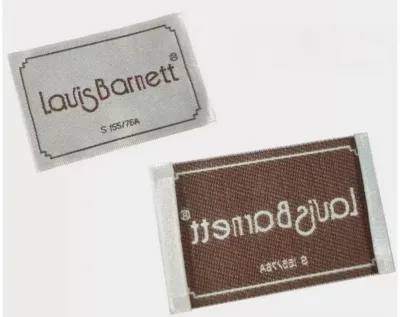
The foundation of any successful label procurement lies in the precise definition of technical specifications. For the core keyword of eco-friendly woven polyester clothing labels, the primary material observation is woven fabric. This distinguishes the product from printed or embroidered alternatives, offering superior durability and a distinct tactile quality that is often preferred for premium garment applications. The production technique is consistently identified as "Woven" or "Digital Woven," indicating a loom-based manufacturing process that creates a dense, textured surface capable of withstanding repeated washing cycles.
When evaluating technical requirements, buyers must scrutinize the backing and application method. The supply data indicates that these labels often feature a "Self Adhesive" backing or options for "Sewing on, Iron on, Sticking on." This versatility allows for integration into various garment construction workflows. However, the "Self Adhesive" type requires specific attention to the adhesive quality, as it must remain stable under heat and moisture conditions typical of garment care. Furthermore, the shape of the label is a critical design variable. Observed configurations include "Folded" shapes, specifically "Center Fold," as well as "Triangle" shapes. The size is frequently listed as "Custom," meaning that standard dimensions may not apply, and buyers must provide exact measurements to ensure the label fits the intended garment location without compromising comfort or aesthetics.
The product model identifiers, such as 008, 003, 001, and YG-WL20, suggest a modular approach to manufacturing where specific designs or weaving patterns are standardized. While these codes help in internal inventory management, the buyer's focus should remain on the physical attributes: the weave density, the thread count, and the colorfastness. The color is noted as "Custom," implying a broad spectrum of available hues, but the eco-friendly aspect often necessitates the use of low-impact dyes or recycled polyester threads, which must be verified during the sampling phase.
Compliance Verification and Certification Protocols
In the realm of sustainable sourcing, the term "eco-friendly" carries significant weight and requires rigorous verification. While the supply context mentions potential background certifications like FSC, OEKO-TEX, and ISO 14001, these are not confirmed as active standards for every listed product. Therefore, procurement teams must treat these as verification targets rather than guaranteed attributes. The presence of features such as "Eco-Friendly," "Recycled," and "Sustainable" in product descriptions serves as a starting point for inquiry, but it does not constitute proof of compliance.
Buyers should explicitly request documentation proving the source of the polyester material. Is it post-consumer recycled (PCR) content? Is it pre-consumer waste? The percentage of recycled content is a vital metric that varies by supplier and must be quantified. Additionally, the "Anti-counterfeit" and "Barcode" features listed in the product attributes indicate that these labels often serve a dual purpose: brand identification and supply chain security. This adds a layer of complexity to compliance, as the printing or weaving of barcodes must not interfere with the eco-friendly material composition.
When assessing standards, buyers should look for specific test results regarding chemical usage. The "Wash Care" and "Washable" features imply that the labels must withstand laundering without degrading or releasing harmful substances. Verification should include inquiries about the dyeing process, ensuring that no restricted substances are used in the production of the woven fabric. While the supply data mentions "Custom" standards, this is a red flag for compliance; a reputable supplier should be able to align with international standards such as OEKO-TEX Standard 100, which tests for harmful substances, rather than leaving the standard undefined.
Cost Drivers and Economic Considerations
Understanding the cost structure of eco-friendly woven labels is essential for budgeting and negotiation. The primary cost drivers include the material composition, the complexity of the weaving pattern, and the customization level. The use of recycled polyester typically incurs a higher material cost compared to virgin polyester, which directly impacts the unit price. The observed price range in the market data is noted as 0-1 USD, but this range is likely indicative of bulk pricing tiers or specific promotional offers rather than a standard unit cost for custom orders. Buyers should be cautious of prices that seem abnormally low, as they may indicate compromised material quality or a lack of genuine eco-friendly content.
The Minimum Order Quantity (MOQ) is another significant economic factor. The data presents a wide range of MOQs, from 2 to 1000 units, with specific instances of 30, 100, and 100 PCS. This variability suggests that suppliers offer flexible terms based on the order volume and the complexity of the design. For smaller brands or those testing new designs, an MOQ of 30 or 100 units may be sufficient. However, larger production runs often yield better economies of scale, reducing the per-unit cost.
Packaging also influences the total landed cost. The observed packing methods include "Polybag," "Small Box," and "Paper & Poly Bag & Carton." The choice of packaging can affect shipping costs and environmental impact. Eco-conscious buyers should prioritize suppliers who offer recyclable or minimal packaging options, as this aligns with the overall sustainability goals of the brand. Additionally, the "Sample Time" of 2-5 working days and the "7 Days Sample Order Lead Time" support indicate that the supply chain is responsive, but rush orders may incur additional fees. Buyers should factor in these lead times when planning their production schedules to avoid expedited shipping costs.
Typical Applications and Functional Requirements
Eco-friendly woven polyester labels are designed for a diverse range of applications, primarily within the garment, footwear, and bag industries. The product attributes explicitly list "Garments," "Shoes," and "Bags" as usage categories. This versatility makes them suitable for a wide array of fashion and lifestyle products. The "Folded" and "Center Fold" shapes are particularly common for neck labels in t-shirts and dresses, where comfort against the skin is paramount. The "Triangle" shape is often utilized for decorative tags or hangtags attached to bags and outerwear.
The functional requirements for these labels extend beyond mere identification. The "Wash Care" feature indicates that these labels often contain care instructions, which must be clearly legible and durable. The "Washable" attribute confirms that the labels are designed to survive the rigors of commercial and home laundering without fading or fraying. For brands focusing on sustainability, the "Recycled" and "Eco-Friendly" features are not just marketing points but functional requirements that align with the brand's ethos.
Furthermore, the "Self Adhesive" and "Sewing on" options provide flexibility in application. For garments where sewing is difficult or where a seamless look is desired, the adhesive backing offers a practical solution. However, the "Sticking on" method must be evaluated for its long-term adhesion properties, especially on synthetic fabrics that may be prone to heat sensitivity. The "Digital Woven Label" technology mentioned in the attributes suggests that high-resolution graphics and complex logos can be produced, allowing for detailed branding without the need for additional printing processes that might compromise the eco-friendly status of the product.
Supplier Evaluation and Quality Assurance
Selecting the right supplier is a critical step in the procurement process. The supply data indicates origins in "Dongguan," "Zhejiang, China," and generally "Made in China." While these locations are known for textile manufacturing, the specific origin does not guarantee quality. Buyers must evaluate suppliers based on their ability to meet the specific technical and compliance requirements outlined earlier. A robust supplier evaluation process should include a review of their production capabilities, their quality control systems, and their commitment to sustainability.
Quality control should be a continuous process, not just a final inspection. Buyers should request samples to verify the "Woven" texture, the color accuracy, and the adhesion strength of the backing. The "Design: Free Artwork Design Services" feature suggests that suppliers may offer support in creating the label design, which can be beneficial for ensuring the final product meets the brand's aesthetic standards. However, the buyer must retain control over the final design to ensure it aligns with the eco-friendly narrative.
The "OEM: Yes" attribute indicates that suppliers are capable of producing private label goods, which is standard for this industry. However, buyers should verify the supplier's capacity to handle custom orders without compromising on quality. The "Product Type: Garment Labels" confirms the specialization of the supplier, but buyers should also inquire about their experience with other applications like shoes and bags to ensure versatility.
Long-Term Procurement and Supply Chain Resilience
Long-term procurement of eco-friendly woven labels requires a strategic approach that considers supply chain resilience and scalability. The "Shipping Way: by Express or by Sea" options provide flexibility, but buyers should plan their logistics to minimize carbon footprint. Sea freight is generally more sustainable for large orders, while express shipping should be reserved for urgent samples or small batches. The "Lead Time" variability, with some suppliers offering 7-day sample orders, suggests a responsive supply chain, but buyers should establish clear communication channels to manage expectations during peak seasons.
Sustainability is not a one-time purchase but a continuous commitment. Buyers should work with suppliers who are transparent about their sourcing practices and willing to adapt to changing environmental regulations. The "Custom" nature of the product means that as brand requirements evolve, the labels can be modified to reflect new sustainability goals or design trends. This flexibility is a key advantage of working with specialized woven label manufacturers.
In conclusion, sourcing eco-friendly woven polyester clothing labels involves a careful balance of technical precision, compliance verification, and strategic supplier selection. By focusing on the specific attributes of woven fabric, custom shapes, and verified eco-friendly materials, buyers can ensure that their labels not only meet functional requirements but also uphold the brand's commitment to sustainability. The procurement process should be viewed as a partnership with suppliers who share the vision of a more sustainable textile industry, ensuring that every label tells a story of quality, durability, and environmental responsibility.
FAQs
What material is used for eco-friendly woven polyester clothing labels?
The primary material is woven fabric, specifically designed for durability. These labels often incorporate recycled polyester threads to meet eco-friendly standards while maintaining a textured surface suitable for premium garments.
Can these labels be customized for specific brand requirements?
Yes, customization is available for color, size, and design. Buyers can request custom logos and artwork, with free design services offered by some suppliers to ensure the final product aligns with brand aesthetics.
How do the labels attach to garments, shoes, or bags?
Labels feature self-adhesive backing or options for sewing and ironing on. This versatility allows for secure attachment to various materials like garments, shoes, and bags without compromising the fabric integrity.
What is the minimum order quantity for these woven labels?
The minimum order quantity varies between 30 and 1000 units depending on the supplier. Specific instances show MOQs of 30, 100, or 100 pieces, offering flexibility for small brands testing new designs.
Are these labels washable and durable for repeated laundering?
Yes, the labels are explicitly washable and designed to withstand repeated washing cycles. They feature wash care instructions and maintain legibility without fading or fraying under typical commercial and home laundering conditions.
Which shapes are available for these clothing labels?
Available shapes include folded configurations like center fold and triangular designs. The folded type is common for neck labels, while triangle shapes are often used for decorative tags on bags and outerwear.
How long does it take to receive samples of these labels?
Sample time typically ranges from 2 to 5 working days. Some suppliers support a 7-day sample order lead time, allowing for quick verification of material quality and design accuracy before bulk production.