Source Expandable Container Home for Hotel, Apartment, Office
Compare 30 Expandable Container Home options from verified suppliers. These modular units offer customizable sizes, eco-friendly features, and fast installation for hotels, apartments, and offices.
Key considerations
Products List


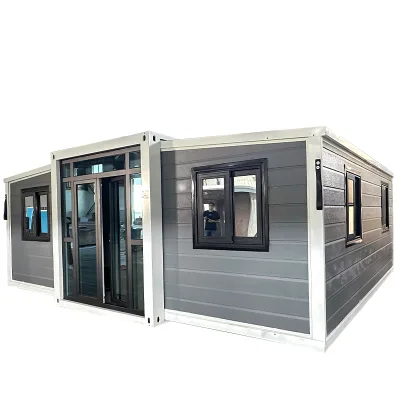


Comprehensive Sourcing Guide
Strategic Sourcing Guide for Expandable Container Homes
The global demand for modular and prefabricated housing has surged, driven by the need for rapid deployment, cost efficiency, and sustainable construction methods. Among the various options available, the Expandable Container Home has emerged as a versatile solution for diverse sectors ranging from emergency relief to permanent residential developments. For procurement professionals, navigating this market requires a disciplined approach to evaluating technical specifications, verifying compliance, and understanding the total cost of ownership. This guide provides a structured framework for sourcing expandable container homes, relying on verified product attributes and industry standards to ensure informed decision-making.
Technical Specifications and Structural Integrity
The foundation of any successful procurement strategy lies in a rigorous understanding of the product's technical architecture. Expandable container homes are not merely shipping containers; they are engineered structures designed to unfold and expand, offering significantly more interior space than their folded footprint suggests. Based on current market data, the structural framework is predominantly constructed from galvanized steel, ensuring durability and resistance to corrosion. This steel structure forms the backbone of the unit, providing the necessary rigidity to withstand the stresses of transportation and the forces of expansion.
Wall construction is a critical differentiator in this category. Buyers must distinguish between various insulation and paneling materials. The observed market data indicates the use of sandwich panels with thicknesses ranging from 50mm to 75mm. Common core materials include EPS (Expanded Polystyrene), Rock Wool, and PUR (Polyurethane). Rock Wool offers superior fire resistance and thermal performance, making it a preferred choice for high-safety applications, while EPS provides a cost-effective insulation solution. The exterior and interior finishes often utilize MGO (Magnesium Oxide) boards or SPC (Stone Plastic Composite) flooring, which are noted for their moisture resistance and ease of maintenance.
Dimensional flexibility is another key technical attribute. Standard configurations typically include sizes of 10FT, 20FT, 30FT, and 40FT, with some suppliers offering customized dimensions to meet specific site requirements. The internal area of these units can range from approximately 36.54 square meters to 74.34 square meters, depending on the expansion state and model. Window and door specifications vary, with options including aluminum windows, plastic steel windows, and double-tempered glass units. The inclusion of double-tempered glass is particularly relevant for safety and sound insulation, which is often rated at 30dB or higher to ensure acoustic privacy in residential or office settings.
Compliance, Certification, and Safety Standards
In the B2B procurement of construction modules, compliance is non-negotiable. Buyers must verify that the products adhere to international and local building codes. The supply chain data highlights several recognized standards, including SGS, ISO, GB (Guobiao), and BV (Bureau Veritas). These certifications indicate that the manufacturer has undergone third-party verification for quality management systems and product safety. However, buyers should not assume that every listed product automatically satisfies all these standards; verification of specific test reports for the ordered batch is essential.
Safety features are paramount, especially for structures intended for human occupancy. The observed product attributes emphasize earthquake resistance, with some units rated for Seismic Category 8. This level of resistance is crucial for deployment in seismically active regions. Additionally, the materials used must meet fire safety requirements. Rock Wool, for instance, is inherently non-combustible, whereas EPS requires fire-retardant additives to meet safety codes. Buyers should request specific fire rating certificates for the wall panels and insulation materials.
Waterproofing and leak-proofing are also critical compliance factors. The product features list includes "Waterproof," "Leak Proof," and "Weatherproof" as standard attributes. To validate these claims, procurement teams should review the sealing mechanisms of the expansion joints and the quality of the roofing membranes. The "Fast Installation" attribute suggests that the design minimizes on-site sealing work, but the integrity of the final seal depends on the precision of the assembly. Furthermore, the warranty card, typically offered for one year, serves as a baseline guarantee for structural and functional defects, though the scope of this warranty must be clearly defined in the contract.
Cost Drivers and Pricing Dynamics
Understanding the cost structure of expandable container homes is vital for budgeting and negotiation. The observed price range in the market spans from 1,100 to 8,000 USD per unit. This wide variance is driven by several factors, including the level of customization, the quality of insulation materials, and the extent of interior finishing. A unit with 50mm EPS insulation will naturally cost less than one with 75mm Rock Wool. Similarly, the choice of flooring—whether standard MGO board or premium SPC—will significantly impact the final price.
The Minimum Order Quantity (MOQ) is another critical cost driver. The data indicates an MOQ range of 1 to 6 units. For buyers requiring a single unit for a pilot project or a specific remote site, the per-unit cost may be higher due to the lack of economies of scale. Conversely, bulk orders of 30 units or more can leverage production efficiencies, potentially lowering the unit price. The "Flat Pack Shipping" attribute is a significant logistical cost saver. By shipping the units in a collapsed state, buyers can maximize container utilization during transit, reducing freight costs compared to fully assembled structures.
Lead times also influence the overall cost of ownership. A standard lead time of three weeks is observed for production, but this can fluctuate based on order volume and material availability. Buyers should account for potential delays in the supply chain, particularly for specialized components like double-tempered glass or custom-colored steel panels. The "Productivity" rate of 30 sets per month indicates the manufacturer's capacity; orders exceeding this threshold may require staggered delivery schedules, which can affect project timelines and associated costs.
Typical Applications and Use Cases
Expandable container homes are highly adaptable, serving a wide array of applications beyond simple housing. The product attributes explicitly list applications such as hotels, residential hostels, apartments, offices, warehouses, villas, and dormitories. This versatility makes them suitable for both temporary and semi-permanent projects.
In the hospitality sector, these units are increasingly used as eco-friendly hotel accommodations. Their "Eco-Friendliness" and "Easily Movable" features allow for rapid deployment in tourist destinations with minimal environmental impact. For the construction industry, they serve as temporary offices and dormitories for workers, offering a safe and comfortable living environment that can be relocated as the project progresses. The "Modern" design style ensures that these units can blend seamlessly with contemporary architectural aesthetics, making them viable for permanent residential developments or luxury villas.
The "Flexibly Combinable" feature is particularly valuable for institutional applications. Schools, hospitals, and government agencies can configure multiple units to create larger complexes. The ability to expand the units allows for flexible space planning, accommodating varying occupancy needs without the need for new construction. The "Life Time" of 20 years and "Lift Span" of 30 years suggest a long service life, making them a cost-effective alternative to traditional brick-and-mortar buildings for long-term institutional use.
Supplier Evaluation and Capacity Assessment
Selecting the right supplier requires a thorough evaluation of their capabilities and track record. The origin of the products is predominantly China, with specific mentions of Hebei as a manufacturing hub. Buyers should verify the supplier's production capacity, as indicated by the "Productivity" metric of 30 sets per month. If a project requires a large volume of units, the supplier must demonstrate the ability to scale production or manage a multi-factory supply chain.
Quality control processes are essential to ensure consistency. Buyers should inquire about the supplier's internal testing protocols for structural integrity, waterproofing, and insulation performance. The presence of certifications like SGS and ISO suggests a commitment to quality management, but on-site audits or third-party inspections of the manufacturing facility are recommended for high-value contracts. The "Fast Installation" attribute implies that the supplier provides clear assembly instructions and potentially on-site support, which is a critical factor for buyers with limited technical expertise.
Transparency in the supply chain is another evaluation criterion. Buyers should request detailed information about the sourcing of raw materials, such as the steel grade and the origin of the insulation panels. The "Customization" availability is a key differentiator; suppliers that offer tailored solutions for color, size, and interior layout demonstrate greater flexibility and customer focus. However, buyers must balance customization with lead times, as bespoke orders may extend the production schedule beyond the standard three weeks.
Quality Control and Long-Term Procurement Considerations
Ensuring the long-term performance of expandable container homes requires a proactive approach to quality control. The "Warranty Card" typically covers one year, but buyers should negotiate extended warranty terms for critical components like the steel frame and roofing. Regular maintenance schedules should be established to inspect the expansion mechanisms, sealing gaskets, and insulation integrity. The "Sound Insulation Effect" of ≥30dB should be verified upon delivery to ensure it meets the acoustic requirements of the intended application.
Long-term procurement considerations also include the end-of-life management of the units. The "Eco-Friendliness" feature suggests that these structures are designed with sustainability in mind, but buyers should inquire about the recyclability of the materials. The steel structure and MGO boards are generally recyclable, but the disposal of insulation materials like EPS or Rock Wool requires specific handling procedures.
Finally, buyers should consider the scalability of their procurement strategy. As the demand for modular housing grows, establishing a long-term partnership with a reliable supplier can provide cost advantages and priority access to production slots. The "Standard Package" and "Flat Pack Shipping" options facilitate efficient logistics, but buyers should ensure that the packaging is robust enough to protect the units during transit and storage. By focusing on these technical, compliance, and logistical factors, procurement professionals can secure high-quality expandable container homes that meet their specific project requirements and deliver value over the product's entire lifecycle.
FAQs
What is the minimum order quantity for expandable container homes?
The minimum order quantity is 1 unit, allowing buyers to purchase single units for pilot projects. Some suppliers may require up to 6 units, so verify the specific MOQ before placing an order.
How long is the lead time for production?
The standard lead time is 3 weeks for production. This duration may vary depending on order volume and the availability of specialized components like double-tempered glass or custom colors.
Which certifications do these homes typically hold?
Products often comply with standards such as SGS, ISO, GB, and BV. Buyers should verify specific test reports for the ordered batch rather than assuming all units automatically satisfy every listed standard.
Can the units be customized for specific applications?
Yes, customization is available for color, size, and interior layouts. Buyers can select from various wall materials like EPS or Rock Wool to meet specific thermal or fire safety requirements.
What is the expected lifespan of the structure?
The typical life time is 20 years, with a lift span of 30 years. This durability makes them suitable for long-term residential or institutional use compared to traditional temporary structures.
How are the units packaged for shipping?
Units are typically shipped in a flat pack to maximize container utilization and reduce freight costs. Standard packages are used, but some suppliers offer customized packing solutions for specific logistics needs.