Source Fast Ethernet Switch for Enterprise, Industrial, and Network Sites
Find 30 Fast Ethernet Switch options from Chinese manufacturers with varying bandwidths and port configurations. Compare specifications like 10/100Mbps and 10/100/1000Mbps rates, storage temperatures, and mounting types for enterprise and industrial applications.
Key considerations
Products List


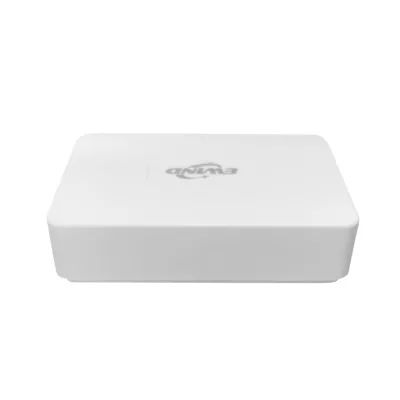


Full Function 10 Gigabit Switch New Management Network Optical Switch
$1190.00 - $1215.00
MOQ: 1 Pieces

Comprehensive Sourcing Guide
Strategic Sourcing Guide for Fast Ethernet Switches
Understanding Fast Ethernet Switch Technology and Core Specifications
When initiating a procurement strategy for fast Ethernet switches, buyers must first distinguish between legacy Fast Ethernet (10/100Mbps) and modern Gigabit (10/100/1000Mbps) architectures, as the market often blends these categories under broad search terms. The core keyword "Fast Ethernet Switch" typically refers to devices supporting transmission rates up to 100Mbps, though many modern procurement requests inadvertently include Gigabit-capable units. Based on observed market data, the transmission rate landscape is bifurcated. Some units are explicitly rated for ≦Transmission Rate:10/100Mbps, adhering to the strict definition of Fast Ethernet. Conversely, other available models support ≧Transmission Rate:10/100/1000Mbps, offering backward compatibility with faster networks.
The physical interface configuration is a primary determinant of suitability. Available configurations include specific port counts such as 24 10/100/1000Mbps RJ45 ports with auto-negotiation capabilities. For applications requiring strictly Fast Ethernet, buyers should verify that the port structure supports the 10/100Mbps standard without forcing a downgrade in performance for connected devices. The communication mode is another critical technical attribute; observed products support both Full-Duplex and Half-Duplex modes. This flexibility allows the switch to adapt to different network segments, though modern enterprise environments predominantly utilize Full-Duplex to eliminate collisions and maximize throughput.
The internal architecture also varies significantly among suppliers. Some units utilize a Crossbar System architecture, which is designed for high-performance line-rate routing, while others may employ a Store-and-Forward mechanism. The Store-and-Forward approach performs error checking on packets before forwarding them, which can introduce slight latency but ensures higher data integrity. In contrast, a Line-Rate Router performance claim suggests the device can handle traffic at the maximum theoretical speed of the interface without bottlenecks. Buyers must align these architectural choices with their specific network latency and reliability requirements. Additionally, the MAC address table size is a crucial specification; observed units support up to 16K MAC addresses, which is generally sufficient for small to medium-sized deployments but may require verification for larger, dense networks.
Compliance, Certification, and Environmental Standards
Procuring network hardware requires rigorous verification of compliance standards to ensure the equipment meets regulatory requirements for the target market. While specific certification statuses vary by manufacturer, the market data indicates that certain models carry CE/EMC, CE/LVD, and FCC Certification. These certifications are essential for selling or deploying equipment in the European Union and North America, respectively. The CE marking confirms conformity with health, safety, and environmental protection standards for products sold within the European Economic Area. The FCC certification is mandatory for electronic devices in the United States to ensure they do not cause harmful interference.
Environmental resilience is another pillar of compliance, particularly for industrial or outdoor deployments. Observed product attributes indicate a storage temperature range of -40~85℃, which suggests robustness against extreme thermal conditions. For physical protection, some units are rated with an IP40 Protection Level, indicating protection against solid objects larger than 1mm, though this is generally suitable for indoor environments. The outer shell material is frequently specified as a Metal Shell, which provides necessary electromagnetic interference (EMI) shielding and physical durability.
Dimensional standards are critical for rack mounting and space planning. The market presents a variety of form factors. Some units adhere to standard dimensions of 42.5 x 120 x 161mm, while others are larger, such as 19313191mm or 22311391mm. A specific industrial model is noted with dimensions of 40.678103mm. Buyers must cross-reference these dimensions with their rack space or DIN rail availability. The mounting type is often specified as Standard DIN35mm Rail Mounting or Wall Mounting, offering flexibility for installation in control cabinets or on walls. Power consumption is another compliance metric, with observed units consuming <8W, which aids in thermal management and energy efficiency calculations.
Cost Drivers and Pricing Variables in the Market
The pricing structure for fast Ethernet switches is influenced by a complex interplay of technical specifications, packaging, and supply chain factors. The observed listed price range in the market is extremely broad, spanning from 0.1 to 9999 USD. This variance is not arbitrary but correlates directly with the complexity of the device. A basic 8-port Fast Ethernet Switch will naturally sit at the lower end of this spectrum, while a modular unit with Gigabit uplinks, Power over Ethernet (PoE) capabilities, and advanced routing features will command a premium price.
One of the most significant cost drivers is the bandwidth capacity. While the core keyword focuses on Fast Ethernet, many suppliers offer units with Bandwidth specifications of 80g or 128g, which implies higher internal switching capacities and potentially higher costs. The presence of PoE functionality is another major price determinant. Units supporting PoE standards such as 802.3af and 802.3at, with a maximum output of 30W, require additional circuitry and thermal management, increasing the unit cost. The PoE distance capability, observed to be up to 100m, adds value for deployments where power and data need to be delivered over long cable runs without repeaters.
Packaging and logistics also contribute to the final landed cost. The market shows variations in packing standards, ranging from "Original Packing" to "Box" or "Carton." Some industrial units are shipped in specialized Unit Package Sizes, such as 53225980mm with 5PCS/CTN, which affects shipping volume and freight costs. The origin of the product, primarily noted as China or specifically Dongguan Guangdong China, influences labor costs and shipping lead times. Buyers should also consider the Minimum Order Quantity (MOQ), which ranges from 1 to 1000 units. A higher MOQ often reduces the per-unit cost but increases inventory risk and capital tie-up. Customization availability is another factor; while customization is listed as available, this service typically incurs additional engineering and setup fees, pushing the total cost higher than off-the-shelf solutions.
Typical Applications and Deployment Scenarios
Fast Ethernet switches are versatile components deployed across a wide array of network environments. The primary application category identified is "Enterprise," where these switches serve as the backbone for connecting workstations, printers, and servers. In enterprise settings, the choice between Fast Ethernet and Gigabit often depends on the age of the infrastructure and the bandwidth requirements of the specific applications. For legacy systems or low-bandwidth IoT devices, Fast Ethernet remains a cost-effective solution.
Industrial applications are another critical sector. The presence of Metal Shells, IP40 ratings, and wide temperature storage ranges (-40~85℃) indicates suitability for factory floors, control rooms, and outdoor cabinets. In these environments, the Network Site classification as "Intermediate Node Routers" is common, where the switch acts as a critical aggregation point for data from various sensors and control units. The ability to mount on a DIN35mm rail makes these units ideal for integration into standard industrial control panels.
Power over Ethernet (PoE) applications are increasingly common. With support for 802.3af and 802.3at standards, these switches can power devices such as IP cameras, VoIP phones, and wireless access points directly through the Ethernet cable. The PoE distance of up to 100m is particularly valuable in large facilities where running separate power lines to each device is impractical. The Power Pin Assignment of Mode a 1/2(+), 3/6(-) is a specific technical detail that buyers must verify to ensure compatibility with their PoE-powered devices, as different standards utilize different pin pairs.
Furthermore, the "Without Firewall" attribute observed in some listings clarifies that these devices are primarily Layer 2 switches. They are designed for connectivity and traffic switching rather than advanced security filtering. In scenarios requiring network security, these switches must be paired with dedicated firewall appliances or routers. The modular port structure allows for scalability, making these switches suitable for growing networks where additional ports or uplink modules may be required in the future.
Supplier Evaluation and Quality Assurance Protocols
Evaluating suppliers for fast Ethernet switches requires a focus on quality assurance and long-term reliability rather than just initial price. The market data highlights a "Quality Guarantee" of 3 Years for certain models, which serves as a baseline for buyer expectations. When selecting a supplier, buyers should verify if this warranty period is standard or specific to certain product lines. A longer warranty often indicates higher confidence in the product's durability and the supplier's commitment to after-sales support.
Verification of the product origin is essential for supply chain transparency. The data indicates a strong concentration of manufacturing in China, with specific mentions of Dongguan, Guangdong. While this region is a global hub for electronics manufacturing, buyers should ensure that the specific supplier has a proven track record of consistent quality control. The "Customization: Available" attribute suggests that suppliers are flexible, but buyers must assess the supplier's capability to manage custom orders without compromising on lead times or quality standards.
Quality control should extend to the physical attributes of the product. The weight of the units is observed to be ≤2kg, which is a useful metric for verifying the authenticity of the product against counterfeit or substandard versions that might use lighter, cheaper materials. The "Original Packing" and "Box" or "Carton" specifications should be matched against the supplier's shipping documentation to ensure the product arrives in pristine condition. Additionally, the "Unit Package Size" for bulk shipments (e.g., 5PCS/CTN) should be verified to ensure it matches the supplier's logistics capabilities.
Buyers should also scrutinize the technical documentation provided by the supplier. The presence of specific standards like CE/EMC and FCC should be backed by valid certificates. The absence of a firewall in the product description is a technical specification, not a defect, but it must be clearly communicated to the end-user to manage expectations regarding network security. Finally, the "3 Years" quality guarantee should be reviewed for its terms and conditions, including what constitutes a valid claim and the process for replacement or repair.
Long-Term Procurement and Lifecycle Management
Sourcing fast Ethernet switches is not merely a transactional event but a strategic decision impacting long-term network stability. The "Customization: Available" feature offers a pathway for future-proofing, allowing organizations to adapt hardware to evolving network topologies without replacing entire systems. However, buyers must balance this flexibility against the obsolescence of Fast Ethernet technology. As network demands grow, the 10/100Mbps limit may become a bottleneck, necessitating a migration plan to Gigabit or higher speeds.
Inventory management is a critical consideration given the wide MOQ range of 1 to 1000. For small deployments, an MOQ of 1 allows for precise purchasing, while large enterprises may leverage higher MOQs to secure volume discounts. The lead time, though not explicitly quantified in the data, is a variable that must be negotiated. The "Original Packing" and standardized dimensions (e.g., 42.5 x 120 x 161mm) facilitate easier warehousing and replacement, reducing the logistical burden of spare parts management.
Energy efficiency is a growing concern in long-term procurement. With power consumption observed at <8W, these switches offer a low operational cost profile. However, as the network scales, the cumulative power draw of hundreds of switches can become significant. Buyers should consider the total cost of ownership (TCO), including energy costs, cooling requirements, and the potential need for redundant power supplies in critical environments.
Finally, the "3 Years" quality guarantee provides a safety net for the initial deployment phase. Beyond this period, the focus shifts to maintenance and replacement. The modular nature of some switches allows for component-level repairs, extending the lifecycle of the hardware. Buyers should establish a relationship with suppliers who can provide firmware updates and technical support beyond the warranty period, ensuring the network remains secure and functional as technology evolves. The ability to source replacement units with identical specifications, such as the same port structure and power pin assignments, is vital for maintaining network consistency over time.
FAQs
What transmission rates do fast ethernet switches support?
These switches support transmission rates up to 100Mbps or 1000Mbps depending on the model. Some units are rated for 10/100Mbps while others handle 10/100/1000Mbps with auto-negotiation capabilities for flexible network integration.
Can these switches operate in full-duplex and half-duplex modes?
Yes, the observed products support both full-duplex and half-duplex communication modes. This flexibility allows the switch to adapt to different network segments and legacy devices while maintaining efficient data flow.
Which certifications are available for these network switches?
Certain models carry CE/EMC, CE/LVD, and FCC certifications for regulatory compliance. These standards ensure the equipment meets safety and environmental protection requirements for deployment in the European Union and North America.
What is the storage temperature range for industrial models?
Industrial units are designed with a storage temperature range of -40 to 85 degrees Celsius. This wide range ensures robustness against extreme thermal conditions suitable for factory floors and outdoor cabinet environments.
How much power do these switches typically consume?
Observed units consume less than 8 watts of power during operation. This low power consumption aids in thermal management and contributes to overall energy efficiency for the network infrastructure.
What mounting types are supported for installation?
The switches support standard DIN35mm rail mounting or wall mounting options. This versatility allows for easy integration into control cabinets or direct attachment to walls in various industrial and enterprise settings.
Are customization options available for these switches?
Customization is available for buyers with specific requirements. This service allows for tailored solutions but may incur additional engineering fees and affect lead times compared to standard off-the-shelf units.