Source Foldable Golden Pocket Mirror for Travel, Home, and Gifts
Compare 30 Foldable Golden Pocket Mirror options from verified suppliers. These double-sided cosmetic mirrors feature metal and plastic frames with customizable logos, suitable for home use and personal grooming; compare the available evidence and request quotations based on your requirements.
Updated
Key considerations
Products List












Comprehensive Sourcing Guide
Foldable Golden Pocket Mirror Sourcing Guide
Sourcing foldable golden pocket mirrors requires a nuanced understanding of material composition, aesthetic customization, and commercial terms that vary significantly across suppliers. The market offers a diverse range of options, from classic metal-and-glass constructions to modern ABS or PS plastic frames, each presenting distinct durability and cost profiles. Buyers must carefully evaluate the interplay between the mirror’s physical dimensions, such as the observed 64mm to 72mm diameters, and the specific finishing techniques like silver plating or gold tones that define the final product’s visual appeal.
This guide provides a structured approach to evaluating suppliers and products based on observed listing signals and technical specifications. It emphasizes the importance of verifying material integrity, confirming customization capabilities, and understanding the commercial implications of low minimum order quantities. By focusing on these critical areas, procurement professionals can mitigate risks associated with quality inconsistencies and ensure that the selected mirrors align with both brand identity and functional requirements for home or travel use.
Product Scope and Observed Listing Signals
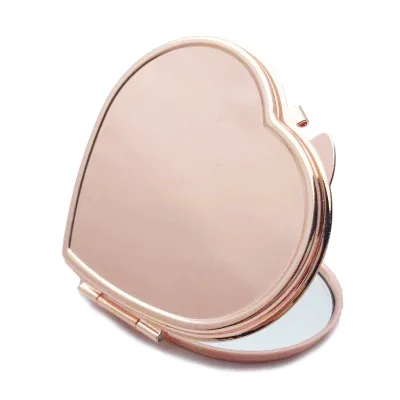
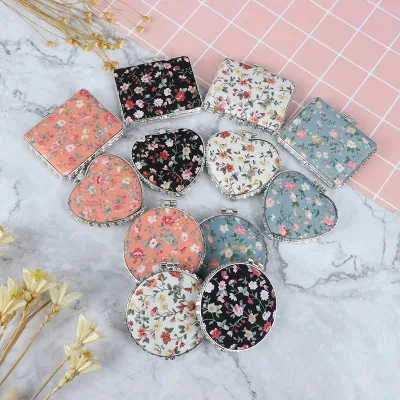
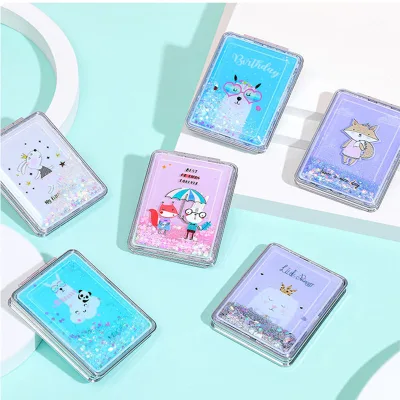
The current market landscape for foldable golden pocket mirrors reveals a wide spectrum of product attributes, primarily centered around personalization and portability. Listings frequently highlight dual-sided functionality, with one side offering standard magnification and the other providing a clear reflection, catering to diverse grooming needs. The observed product range includes various shapes, such as round and heart designs, alongside rectangular options, allowing buyers to select forms that best suit their target demographic. Materials range from durable metal and glass combinations to lightweight ABS and PS plastics, each offering different tactile experiences and price points.
Key listing signals indicate a strong emphasis on OEM and ODM services, with many suppliers warmly welcoming custom logo applications and personalized designs. The presence of sample acceptance policies suggests a flexible procurement environment where buyers can validate quality before committing to larger orders. Additionally, the observation of low minimum order quantities, starting from just one piece, lowers the barrier to entry for testing market response. Packaging details, such as individual OPP bags or polybags, are standard, ensuring basic protection during transit while maintaining a cost-effective shipping profile for bulk orders.
Technical Specifications to Verify
Verifying technical specifications is crucial to ensuring the mirror meets functional and aesthetic expectations. Buyers should confirm the exact dimensions, as observed listings show variations in diameter, such as 64mm, 67mm, and 72mm, which directly impact portability and storage requirements. The weight of the mirror is another critical factor, with observed weights ranging from approximately 34.5g to 42g, influencing the perceived quality and user comfort. It is essential to distinguish between the frame material, whether metal, ABS, or PS, and the mirror substrate, which is typically glass, to assess durability and clarity.
Further verification should include the folding mechanism’s robustness, as the product is described as foldable and folded, requiring a hinge that can withstand repeated use without failure. The finishing process, often described as silver or gold plating, must be examined for uniformity and resistance to tarnishing, especially for golden variants. Buyers should also check the single package size, which impacts shipping costs and storage efficiency, with observed dimensions like 12x12x5 cm providing a baseline for logistics planning. Confirming these details ensures that the final product aligns with the intended use case, whether for home use or travel.
Compliance and Safety Documentation
While specific certification statuses are not universally confirmed in the observed listings, buyers should proactively request documentation to ensure product safety and regulatory compliance. Standards such as RoHS and REACH are relevant for products containing metals and plastics, ensuring that harmful substances are within acceptable limits. Although these certifications are mentioned in background contexts, their applicability to specific suppliers must be verified through direct inquiry and documentation review. Buyers should ask for test reports that confirm the absence of lead, mercury, or other hazardous materials in the mirror’s construction and finishing layers.
Additionally, compliance with general product safety standards is essential, particularly for items intended for use by all ages, including children. Buyers should verify that the mirror’s edges are smooth and free from sharp points, reducing the risk of injury during handling. For products marketed in specific regions, such as the European Union or North America, compliance with local labeling and safety regulations is mandatory. Requesting a Declaration of Conformity from the supplier can provide assurance that the product meets these requirements, protecting the buyer from potential liability and ensuring a safe end-user experience.
Cost Drivers and Commercial Terms
The cost of foldable golden pocket mirrors is influenced by several factors, including material choice, customization complexity, and order volume. Metal and glass constructions typically command higher prices than ABS or PS plastic alternatives due to the cost of raw materials and manufacturing processes. Customization, such as adding a personalized logo or unique design, introduces additional setup costs and may affect the unit price, especially for smaller order quantities. Buyers should negotiate clearly on whether these customization fees are one-time charges or recurring costs per order.
Commercial terms, including minimum order quantities (MOQ) and payment conditions, vary widely across suppliers. Observed MOQs range from 1 to 5000 pieces, offering flexibility for both small-scale testing and large-volume procurement. Buyers should leverage this range to negotiate favorable terms, such as reduced MOQs for initial samples or discounted pricing for bulk orders. It is also important to clarify shipping terms, such as FOB or EXW, to understand the total landed cost. Understanding these commercial dynamics allows buyers to optimize their procurement strategy and achieve better cost efficiency.
Supplier Qualification and Quality Control
Evaluating supplier qualification is a critical step in ensuring consistent product quality and reliable service. Buyers should assess the supplier’s manufacturing capabilities, including their experience with metal and glass or plastic mirror production. Requesting references or case studies from previous clients can provide insights into the supplier’s reliability and quality standards. Additionally, verifying the supplier’s location, such as Zhejiang, China, can help in assessing logistical advantages and potential supply chain risks. A supplier with a strong track record in OEM/ODM services is likely to offer better support for customization needs.
Quality control measures should be clearly defined and agreed upon before production begins. Buyers should specify inspection criteria, such as mirror clarity, frame durability, and finishing uniformity, and request pre-shipment inspections. Implementing a robust quality assurance process, including random sampling and defect rate thresholds, helps mitigate the risk of receiving substandard products. Establishing a clear communication channel for addressing quality issues and defining remediation steps is essential for maintaining a productive supplier relationship and ensuring that the final product meets the buyer’s expectations.
Long-Term Procurement Checks
Establishing long-term procurement checks ensures sustained quality and value from the supplier relationship. Regular performance reviews, based on metrics such as on-time delivery, defect rates, and responsiveness to issues, help identify areas for improvement. Buyers should maintain open communication with the supplier to address any emerging challenges and explore opportunities for cost optimization or product enhancement. Periodic audits of the supplier’s quality control processes can provide assurance that standards are consistently maintained over time.
Additionally, buyers should stay informed about market trends and technological advancements in mirror manufacturing to remain competitive. This includes monitoring changes in material availability, finishing techniques, and design preferences. By fostering a collaborative relationship with the supplier, buyers can leverage their expertise to innovate and improve product offerings. Long-term checks also involve reviewing contract terms periodically to ensure they remain aligned with business objectives and market conditions, ensuring a resilient and adaptable procurement strategy.
FAQs
Can I customize the logo on the Foldable Golden Pocket Mirror?
Yes, customized logos are accepted for this product. The manufacturer warmly welcomes OEM and ODM requests, allowing you to brand the mirror with your specific design. This customization is available for the metal and glass models as well as the plastic frame variants, ensuring your branding needs are met effectively.
What is the minimum order quantity for this mirror?
The minimum order quantity is one piece. This low MOQ allows buyers to test the product quality before committing to larger volumes. It is suitable for sampling, as sample acceptance is explicitly stated, making it easy to verify the foldable design and double-sided mirror performance for your specific requirements.
What materials are used in the Foldable Golden Pocket Mirror?
The mirrors are constructed from metal and glass or ABS plastic with a plastic frame. The metal version features a silver finish, while the plastic variant uses PS material. Both options provide a durable, foldable design suitable for home use, with weights ranging from approximately 34.5g to 38.3g.
What sizes are available for the pocket compact mirror?
Available sizes include a 7cm diameter model and a 64mm diameter variant. Another option measures 67mm in diameter. The single package size is listed as 12x12x5 cm. These dimensions ensure the mirror remains compact and portable, fitting easily into pockets or cosmetic bags for convenient daily use.
Where is the Foldable Golden Pocket Mirror manufactured?
The product originates from Zhejiang, China. The manufacturing location is confirmed as China for both the metal and plastic frame versions. This origin supports the supply chain for global buyers seeking reliable production sources for cosmetic mirrors with double-sided functionality and foldable designs for various age groups.
How is the mirror packaged for shipping?
Each mirror is packed individually in an OPP bag or polybag. The packaging details specify one piece per bag, ensuring protection during transit. This simple packaging method helps keep costs low while maintaining product integrity. The gross weight per single package is approximately 0.2 kg, facilitating efficient logistics handling.