Source Foldable Rechargeable Pocket Fan for Travel Camping Home
Explore 30 options for the Foldable Rechargeable Pocket Fan suitable for travel, camping, and home use. Buyers can compare battery capacity, charging time, and portability features across various models from Chinese manufacturers.
Key considerations
Products List




Comprehensive Sourcing Guide
Strategic Sourcing Guide for Foldable Rechargeable Pocket Fans
The global demand for portable cooling solutions has driven significant innovation in the personal fan sector, with the Foldable Rechargeable Pocket Fan emerging as a dominant category for both B2B and B2C procurement. For buyers navigating this market, the primary challenge lies in distinguishing between generic commodity items and products engineered for specific durability, safety, and performance requirements. This guide synthesizes observed market data and technical specifications to provide a disciplined framework for sourcing these devices, ensuring that procurement decisions are grounded in verifiable facts rather than marketing assertions.
Technical Specifications and Functional Architecture
When evaluating foldable rechargeable pocket fans, the technical architecture determines the product's utility in real-world scenarios. The core mechanism typically involves a motor system, a battery pack, and a folding chassis. Based on observed product attributes, the power source for these units varies significantly between battery-operated and electric-powered models, though the "rechargeable" designation implies an integrated battery system for portability.
The battery capacity is a critical specification that directly correlates with runtime and usage time. Market observations indicate a wide variance in capacity, ranging from 500 mAh to 2000 mAh. A unit with a 500 mAh capacity typically offers a use time of 1 to 3 hours, whereas models with 1500 mAh or 2000 mAh capacities are designed for extended operation. Buyers must verify the specific capacity listed on the product datasheet, as this figure dictates the suitability of the fan for short commutes versus all-day outdoor events.
Speed control is another essential technical differentiator. While some models feature a single wind speed setting, others provide multiple options, with observed specifications including speeds of 2 or 3 levels. The presence of a digital display is a premium feature found in specific high-end models, offering precise feedback on battery levels and current speed settings. Additionally, the charging interface is standardized in many cases to Micro USB with a 5V input, though the charging time can vary from 2 hours to approximately 4 hours depending on the battery chemistry and charger specifications.
The physical design must accommodate the "foldable" requirement. Standard dimensions for these units often range from compact sizes like 18.8 x 9 x 4.65 cm to larger profiles such as 59.9 x 31 x 50 cm, depending on the fully extended versus folded state. The material composition is predominantly plastic, selected for its lightweight properties and cost-effectiveness, though the structural integrity of the folding joints is paramount.
Compliance and Certification Verification
In the consumer electronics sector, compliance is not merely a regulatory formality but a prerequisite for market access and liability protection. When sourcing foldable pocket fans, buyers must rigorously verify that products meet the safety standards of the target destination. Common certifications observed in the market include CE and ROHS, which indicate compliance with European health, safety, and environmental protection standards.
The CE mark signifies that the manufacturer has assessed the product and meets EU safety, health, and environmental requirements. The ROHS directive restricts the use of specific hazardous materials in electrical and electronic equipment. However, the presence of these certifications cannot be assumed for every listed product; they must be confirmed via valid test reports issued by accredited laboratories. Buyers should request current certification documents before finalizing any order, as regulations can change, and suppliers may list certifications that are expired or not applicable to the specific batch of goods.
Furthermore, electrical safety standards regarding battery handling and charging circuits are critical. Since these devices contain lithium-ion or similar rechargeable cells, they must adhere to strict guidelines to prevent overheating or thermal runaway. While specific test results are not universally published in general product listings, the supplier must be able to provide evidence of compliance with relevant international safety standards for portable battery-operated devices.
Cost Drivers and Pricing Dynamics
The pricing of foldable rechargeable pocket fans is influenced by a complex interplay of factors, including battery capacity, feature set, and production volume. Observed price ranges in the market span from $0.18 to $33.90, a disparity that reflects the vast difference between basic, single-speed models and advanced units with digital displays and high-capacity batteries.
The primary cost driver is the battery. A unit with a 2000 mAh battery will inherently cost more than one with a 500 mAh capacity due to the raw material costs of the cells and the associated management circuitry. Similarly, features such as digital displays, multiple speed settings, and folding mechanisms add to the manufacturing complexity and cost. The packaging also plays a role; units shipped in individual color boxes (e.g., 116 x 45 x 36 mm) incur higher packaging costs compared to bulk carton shipments.
Volume is another significant determinant. The Minimum Order Quantity (MOQ) varies widely, with some suppliers offering MOQs as low as 1 carton, while others may require orders up to 3000 units. Larger orders typically benefit from economies of scale, reducing the unit cost. Buyers should analyze the total landed cost, which includes the unit price, shipping, and any tariffs, rather than focusing solely on the ex-works price. The shipping method, whether by sea or air, also impacts the final cost, with air freight being significantly more expensive but faster.
Typical Applications and Use Cases
Understanding the intended application of the fan is essential for matching the right product to the buyer's needs. The primary use case for these devices is cooling small spaces, making them ideal for personal use in various environments. The "table" installation attribute suggests that some models are designed to sit on desks or nightstands, while the "easy carry" feature highlights their utility for travel.
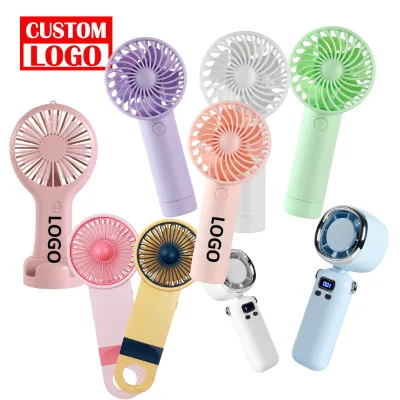
Outdoor activities represent a significant market segment. The compact size and rechargeable nature of these fans make them suitable for camping, hiking, and outdoor festivals where access to mains electricity is unavailable. The color options, ranging from white, pink, and green to purple and red, allow for customization to match brand identities or consumer preferences in different regions.
In the corporate gifting sector, these fans are often used as promotional items. The ability to customize the color and potentially the packaging makes them attractive for branding campaigns. The "mix" color attribute allows for variety in promotional distributions, ensuring that the product appeals to a broad audience. However, for corporate use, the durability of the folding mechanism and the reliability of the battery are crucial to maintain brand reputation.
Supplier Evaluation and Sourcing Channels
Selecting the right supplier requires a due diligence process that goes beyond simple price comparison. The origin of the products is a key indicator of manufacturing capabilities. Most observed products originate from China, with specific manufacturing hubs like Shantou and Shenzhen being prominent. Shantou is known for its toy and plastic manufacturing base, while Shenzhen is a global hub for electronics and battery technology.
When evaluating suppliers, buyers should verify their production capacity and quality control processes. The ability to provide samples is a standard practice that allows buyers to assess the build quality, folding mechanism, and battery performance firsthand. It is also important to confirm the supplier's ability to handle customization, as many buyers require specific branding or packaging modifications.
The shipping logistics provided by the supplier, such as the option for sea and air freight, should align with the buyer's timeline and budget constraints. Lead times can vary based on order volume and production scheduling, so clear communication regarding delivery dates is essential. Buyers should avoid suppliers who cannot provide clear information about their production location or who are vague about their certification status.
Quality Control and Long-Term Procurement Considerations
Implementing a robust quality control (QC) strategy is vital to mitigate risks associated with mass production. For foldable fans, QC checks should focus on the mechanical integrity of the folding joints, the consistency of the battery performance, and the reliability of the charging interface. Visual inspections should verify that the color and finish match the approved samples, and functional tests should confirm that all speed settings and digital displays operate correctly.
Long-term procurement considerations involve building a sustainable supply chain. This includes establishing clear specifications for future orders to ensure consistency. Buyers should also consider the environmental impact of the products, particularly regarding battery disposal and packaging materials. The use of recyclable materials in the color box and carton packaging can enhance the product's appeal in markets with strict environmental regulations.
Furthermore, maintaining a relationship with a reliable supplier can facilitate better pricing and priority production during peak seasons. Regular audits and performance reviews of the supplier's output can help identify potential issues before they escalate into major problems. By focusing on these strategic elements, buyers can secure a steady supply of high-quality foldable rechargeable pocket fans that meet their specific market demands.
Comparative Analysis of Product Attributes
To assist buyers in making informed decisions, the following table summarizes key attributes observed in the market for foldable rechargeable pocket fans. This comparison highlights the variability in specifications that buyers must navigate.
| Attribute | Low-End / Basic Model | High-End / Premium Model |
|---|---|---|
| Battery Capacity | 500 mAh | 2000 mAh |
| Use Time | 1-3 Hours | Extended (Dependent on load) |
| Wind Speed | One Speed | 2 to 3 Speeds |
| Display | None | Digital Display |
| Material | Plastic | Plastic (Reinforced) |
| Charging Time | 2 Hours | Approx 4 Hours |
| Packaging | Carton / Bulk | Color Box (Individual) |
| Dimensions | ~18.8 x 9 x 4.65 cm | ~59.9 x 31 x 50 cm |
| Certification | Variable (Verify CE/ROHS) | CE, ROHS |
| Origin | Shantou / Shenzhen | Shenzhen |
This table illustrates that while the core function remains the same, the execution varies significantly. Buyers must align their procurement strategy with the specific needs of their target customers, ensuring that the selected product offers the right balance of performance, cost, and durability. By adhering to these guidelines and verifying all claims against the supplied facts, buyers can navigate the complex landscape of portable fan sourcing with confidence and precision.
FAQs
What certifications are available for these fans?
Some models carry CE and ROHS certifications for safety and environmental compliance. Buyers must verify valid test reports for each batch, as certifications are not guaranteed for every listed product.
Which battery capacities are offered for these units?
Available capacities range from 500 mAh to 2000 mAh depending on the model. Higher capacity units support longer use times, while lower capacity options suit short commutes.
How many wind speeds do these fans typically have?
Wind speed options vary from one setting to three levels across different models. Some units feature multiple speeds, while others operate with a single fixed wind speed setting.
Can buyers customize the color and packaging of orders?
Customization is available for colors like white, pink, and green, as well as packaging types. Buyers should confirm specific mix options and box dimensions with the supplier before ordering.
What is the typical MOQ for these products?
Minimum order quantities range from 1 carton up to 3000 units based on the supplier. Bulk orders often benefit from lower unit costs compared to smaller carton quantities.
Where are these fans primarily manufactured?
Most units originate from China, with specific hubs in Shantou and Shenzhen. Shantou focuses on plastic manufacturing while Shenzhen is known for electronics and battery technology integration.