Source Folding Forearm Crutches for Elderly, Handicapped, and Youth
Compare 30 available Folding Forearm Crutches from verified manufacturers. These walking aids feature height adjustment, aluminum alloy construction, and customizable options for adults and children needing mobility support.
Key considerations
Products List


Four Leg Antiskid and Stable Retractable Walking Aid Crutches for Elderly
$13.99 - $15.99
MOQ: 1000 Pieces


Professional Orthopedic Crutches – Ideal for Fractures & Long-Term Support
$2.30 - $2.85
MOQ: 200 Pieces


Comprehensive Sourcing Guide
Strategic Sourcing Guide for Folding Forearm Crutches
Understanding Product Categories and Technical Specifications
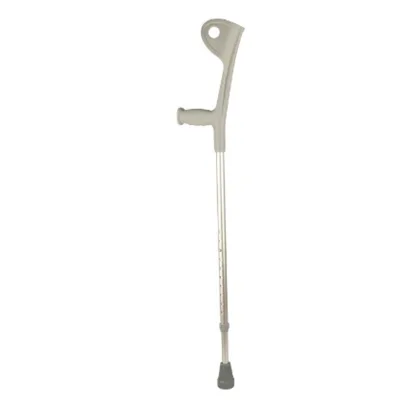
When initiating a procurement strategy for Folding Forearm Crutches, buyers must first distinguish between the broad category of walking aids and the specific engineering requirements of forearm-style devices. The core keyword "Folding Forearm Crutches" implies a device designed for users requiring upper body support, typically those with lower limb mobility issues, spinal cord injuries, or conditions affecting balance. Unlike standard underarm crutches, forearm crutches feature a cuff that encircles the forearm and a handgrip, allowing for a more natural gait and better weight distribution.
Based on available market data, the technical architecture of these devices often utilizes aluminum or aluminum alloy tubing. This material choice is critical as it balances structural integrity with portability. The observed specifications indicate that frames are frequently constructed from 3/4" anodized aluminum tubing, which provides resistance to corrosion and wear while maintaining a lightweight profile. The folding mechanism is a defining feature for this category, enabling the crutches to collapse for storage in vehicles or compact transport, a necessity for users with active lifestyles or limited storage space.
Height adjustability is another paramount specification. The supply chain data highlights standard height ranges, such as 31"-39", 37"-45", 44"-52", and 52"-60". These ranges suggest that suppliers offer models tailored to different user demographics, including tall adults, standard adults, youth, and children. Buyers must verify that the specific model selected, such as those designated by model numbers like BME10011 or BME3003, aligns with the anthropometric needs of the target user base. The load capacity is another critical technical metric, with observed data indicating a capacity range of 100-200kg. This range ensures the device can safely support a wide spectrum of adult body weights, but procurement teams must confirm the exact limit for the specific unit being purchased to prevent structural failure.
Compliance, Certification, and Safety Standards
In the medical and assistive device sector, compliance is not merely a regulatory formality but a fundamental component of product safety and liability management. When sourcing Folding Forearm Crutches, buyers must rigorously verify the certification status of the manufacturer and the specific product batch. The available data confirms that many products in this category carry CE certification, indicating conformity with health, safety, and environmental protection standards for products sold within the European Economic Area. Furthermore, RoHS (Restriction of Hazardous Substances) and ISO certifications are frequently observed, suggesting adherence to international quality management systems and restrictions on hazardous materials.
The presence of ISO certification is particularly significant, as it implies that the manufacturing process follows standardized procedures for quality control. However, buyers should not assume that all listed products automatically possess every certification mentioned in general descriptions. The data shows variations, with some listings citing CE and ISO, while others may only list CE or ISO individually. Therefore, the procurement process must include a direct request for current, valid certification documents for the specific model number, such as RJ924 or RJ-CR01, before finalizing any order.
Additionally, the product condition is listed as "New," which is a baseline requirement for medical equipment. Buyers must ensure that the "New" status refers to factory-fresh inventory rather than refurbished units, unless explicitly stated otherwise. The warranty terms, often cited as "1 Year" from the shipment date, serve as a secondary indicator of manufacturer confidence in product durability. However, a warranty is only as valuable as the supplier's ability to honor it. Consequently, verifying the origin of the product, often noted as Jiangsu or generally China, is essential for understanding the regulatory environment under which the product was manufactured and the legal recourse available in case of non-compliance.
Cost Drivers and Pricing Dynamics
The pricing structure for Folding Forearm Crutches is influenced by a complex interplay of material costs, manufacturing complexity, and order volume. The observed price range in the market spans from $0.01 to $15.99 USD. This wide variance suggests that the lower end of the spectrum may represent bulk unit costs, promotional pricing, or basic models with minimal customization, while the higher end likely reflects premium features, specialized packaging, or lower volume orders.
Material composition is a primary cost driver. The use of aluminum alloy, specifically anodized tubing, commands a higher price point than standard steel or plastic alternatives due to the material's superior strength-to-weight ratio and corrosion resistance. The complexity of the folding mechanism also impacts cost; a robust hinge system that ensures stability without compromising the folding capability requires precise engineering and quality control, which adds to the manufacturing expense.
Order Volume is the most significant variable affecting the final unit price. The Minimum Order Quantity (MOQ) data indicates a range from 1 to 10,000 units, with specific listings showing an MOQ of 150 pieces. Buyers purchasing in smaller quantities, perhaps for direct-to-consumer testing or small clinic orders, will face a higher per-unit cost compared to large-scale distributors. Customization is another factor that drives costs upward. While many suppliers offer "Accepted Customized Logo" and OEM services, these services require additional setup time and resource allocation. The "Standard Package" versus "Carbon Box" or "Carton Box" options also influence the final landed cost, with specialized packaging often incurring higher fees.
Typical Applications and User Demographics
Folding Forearm Crutches serve a diverse range of applications, extending beyond simple mobility assistance. The primary user demographic includes the elderly, individuals with handicaps, and those recovering from lower limb injuries. The product attributes explicitly mention usage for "Elders, Handicapped etc," highlighting the broad applicability of these devices. The ability to adjust the height to fit "Tall Adult, Adult, Youth, Child" makes these crutches versatile for family use or for institutions serving a mixed population.
The environment in which these crutches are used is another critical consideration. The data indicates that these devices are suitable for both "Indoor" and "Outdoor" use. This dual capability is essential for users who need to navigate varied terrains, from smooth hospital corridors to uneven outdoor paths. The "Walking Assist" and "Walking Aid" functions are designed to provide stability and reduce the load on the lower extremities, making them ideal for rehabilitation centers, nursing homes, and personal home care.
Furthermore, the design features, such as the "Matte Silver" finish and "Welcome Custom" design options, suggest that these products are also marketed for aesthetic appeal and personalization. This is particularly relevant for younger users or those who view the crutches as a lifestyle accessory rather than purely a medical necessity. The "Single Foot Cane" classification in some data points suggests that some products in this category may be hybrid designs, combining the functionality of a cane with the support of a forearm crutch, offering users a transition option during recovery.
Supplier Evaluation and Operational Logistics
Evaluating suppliers for Folding Forearm Crutches requires a focus on reliability, transparency, and logistical capability. The observed lead time of "2-4 Weeks After Payment" provides a baseline for supply chain planning. Buyers must account for this window when forecasting inventory needs, especially for seasonal demand spikes or emergency restocking. The origin of the products, consistently noted as Jiangsu or China, indicates a concentration of manufacturing in a specific region, which can be advantageous for logistics but requires careful vetting of local suppliers to ensure consistent quality.
Customization capabilities are a key differentiator among suppliers. The data confirms that "Customized Logo" and "OEM" services are accepted, allowing buyers to brand the products for their specific market or organization. However, the presence of "Non-Customized" options alongside "Customized" ones suggests that buyers must clearly specify their requirements to avoid receiving generic stock. The "Standard Packing" and "Carton" options, with a density of "8 Prs/Carton," are standard logistical parameters that affect shipping costs and storage efficiency.
When selecting a supplier, buyers should verify the "Design" capabilities, ensuring that the manufacturer can accommodate specific structural or aesthetic requests. The "Properties: Other" category in the data is vague and should be clarified during the supplier evaluation phase to understand any unique features or limitations of the product line. Additionally, the "Wheel Hub: Aluminum Alloy" specification, while seemingly specific to wheelchairs, indicates that the supplier may have a broader portfolio of mobility aids, suggesting a comprehensive understanding of the assistive technology market.
Quality Control and Long-Term Procurement Considerations
Ensuring long-term value in the procurement of Folding Forearm Crutches requires a robust quality control (QC) strategy. The "1 Year" warranty period is a standard metric, but buyers should investigate the specific terms of this warranty, including what constitutes a defect and the process for claims. The "New" condition of the products is a baseline, but QC protocols should extend to checking the integrity of the folding mechanism, the stability of the handgrips, and the durability of the anodized finish.
Long-term procurement considerations also involve the scalability of the supply chain. With an MOQ range extending up to 10,000 units, suppliers must demonstrate the capacity to handle large orders without compromising quality or lead times. The "Standard Package" and "Carbon Box" options should be evaluated for their ability to protect the product during transit, especially given the mechanical complexity of folding crutches.
Finally, buyers should consider the lifecycle of the product. The use of aluminum alloy suggests a long service life, but the moving parts in the folding mechanism are potential points of failure. Regular maintenance schedules and the availability of replacement parts should be discussed with the supplier. The "Design: Welcome Custom" aspect also implies that the supplier should be open to iterative improvements based on user feedback, ensuring that the product evolves to meet changing market needs. By focusing on these technical, compliance, and logistical factors, buyers can secure a reliable supply of high-quality Folding Forearm Crutches that meet the diverse needs of their customers.
FAQs
What certifications do Folding Forearm Crutches typically have?
Many models carry CE, RoHS, and ISO certifications to ensure safety and quality. Buyers should verify specific documents for each model like BME10011 before ordering to confirm compliance with regional standards.
Can these crutches be customized with a logo?
Yes, suppliers accept customized logos and offer OEM services for branding. However, some listings indicate non-customized options, so buyers must explicitly state their design requirements to avoid receiving generic stock.
What is the typical lead time for delivery?
The standard delivery time is 2-4 weeks after payment is received. This timeline applies to orders from manufacturers in Jiangsu, China, and should be factored into inventory planning for bulk purchases.
Which height ranges are available for different users?
Standard height ranges include 31-39 inches, 37-45 inches, 44-52 inches, and 52-60 inches. These specifications allow the devices to fit tall adults, standard adults, youth, and children effectively.
How much weight can the crutches support?
The observed load capacity ranges from 100 to 200 kilograms. This ensures safe support for a wide spectrum of adult body weights, but the exact limit must be confirmed for specific units.
What materials are used for the frame construction?
Frames are constructed from aluminum or aluminum alloy tubing, often anodized for durability. This material choice provides a lightweight profile while maintaining structural integrity and resistance to corrosion during use.
What is the minimum order quantity for these products?
The minimum order quantity varies from 1 to 10,000 units depending on the supplier. Specific listings show an MOQ of 150 pieces, which affects the per-unit cost for smaller buyers.