Source Ford Explorer Cabin Air Filter for FORD EDGE, Lincoln, Ford Flex
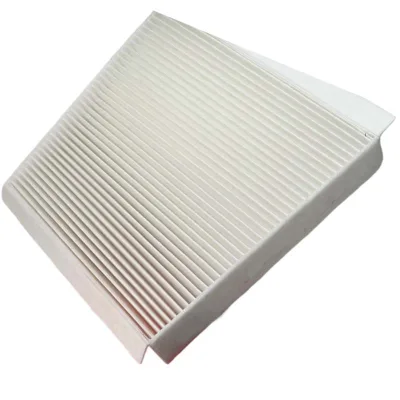
Compare 30 verified listings for Ford Explorer Cabin Air Filter compatible with FORD EDGE, Lincoln Continental, and Ford Flex models. Buyers can review specifications, OEM numbers, and supplier details to find suitable replacement parts for repair or maintenance needs.
Key considerations
Products List


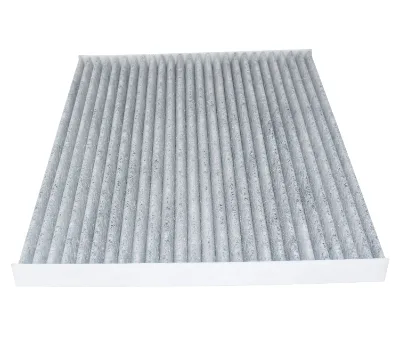
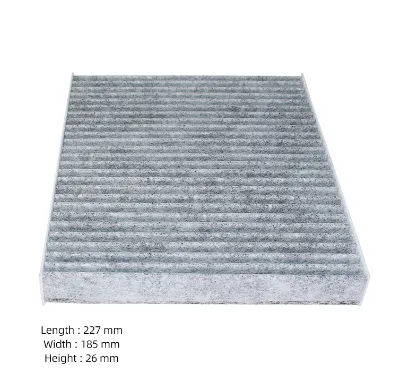
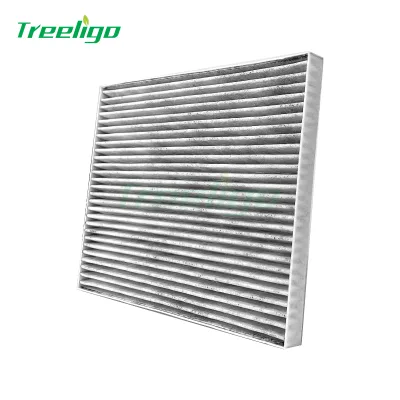


$0.85 - $1.20
MOQ: 1000 Pieces

$0.85 - $1.20
MOQ: 1000 Pieces


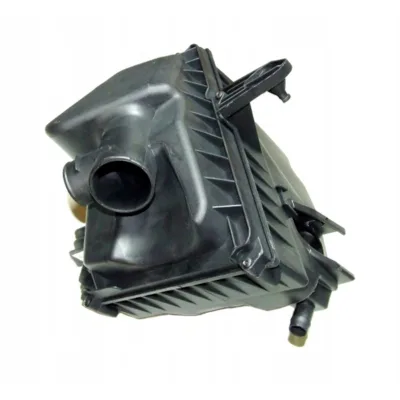



Comprehensive Sourcing Guide
Strategic Sourcing Guide for Ford Explorer Cabin Air Filter Procurement
Technical Specifications and Model Compatibility
When sourcing cabin air filters specifically for the Ford Explorer, the primary technical challenge lies in matching the filter's physical dimensions and filtration media to the vehicle's specific generation and manufacturing year. The Ford Explorer has undergone significant platform changes over the decades, necessitating precise model identification before any procurement action. Based on available market data, filters are explicitly designed for specific vehicle lines, including the Ford Edge and Lincoln Continental, which share platform architectures with certain Explorer variants. Buyers must verify that the selected component carries the correct OEM part numbers, such as DG9Z19N619A, AE9Z19N619A, or DG9H18D483AA, to ensure compatibility.
The physical specifications of the product are critical for successful installation. Observed data indicates that single package sizes can vary significantly, ranging from compact dimensions of 10x10x5 cm for certain filter types to larger units measuring 25x19x30 cm for more complex assemblies. The gross weight of these units also fluctuates, with recorded instances of 0.300 kg for lighter components and up to 2.000 kg for heavier, more robust units. These variations suggest that a "one-size-fits-all" approach is ineffective. Procurement teams must cross-reference the vehicle's model year, such as the 2015-2024 Ford Edge range which often shares filtration requirements with the Explorer, against the supplier's provided model numbers like CF442009-3 or RC-12020.
Furthermore, the internal construction of the filter matters. While some products are marketed as "Air condition filter" with a focus on general replacement, others may offer specialized features. Buyers should confirm whether the filter includes activated carbon layers for odor reduction or if it is a standard particulate filter. The condition of the product must be verified as "New," as the market for used or refurbished cabin filters is generally unsuitable for OEM replacement standards. The purpose of the component is strictly defined as "for replace/repair," indicating that it is a consumable part designed to restore the HVAC system's efficiency rather than a permanent upgrade.
Compliance, Certification, and Quality Standards
In the automotive aftermarket, compliance with international standards is non-negotiable for maintaining vehicle safety and warranty integrity. When evaluating potential suppliers for Ford Explorer cabin air filters, buyers must prioritize vendors who can provide documented proof of certification. The supply chain data indicates that products may carry CE certification, which is a mandatory requirement for goods entering the European Economic Area, and ISO certification, which signifies adherence to international quality management systems. These certifications are not merely marketing labels; they represent a supplier's commitment to consistent manufacturing processes and quality control.
Beyond external certifications, the product standard itself is a critical verification point. The market data references a "Standard" product classification, which implies adherence to baseline industry specifications for filtration efficiency and structural integrity. However, "Standard" is a broad term. Buyers should request specific test data regarding particle capture efficiency, airflow resistance, and material durability. The absence of specific test results in general product listings does not mean the product is substandard, but it does place the burden of verification on the buyer. Procurement teams should demand third-party laboratory reports that validate the filter's ability to capture dust, pollen, and exhaust fumes to the levels required by automotive engineering standards.
Additionally, the origin of the product plays a role in compliance. The supply chain data points to origins in Zhejiang and Guangdong, China. While these regions are major manufacturing hubs, buyers must ensure that the specific factory meets the environmental and labor standards required by their own corporate policies and the regulations of their destination market. The "Place of Origin" must be clearly stated on the packaging and documentation to facilitate customs clearance and ensure traceability. A lack of clear origin information can lead to delays or rejection of goods at the border, particularly if the destination country has strict rules regarding automotive parts sourcing.
Cost Drivers and Pricing Dynamics
Understanding the cost structure of cabin air filters is essential for effective budget management. The observed price range in the market spans from $0.40 to $123.76 USD. This wide disparity is not indicative of a single product type but rather reflects differences in filtration technology, brand positioning, packaging, and order volume. The lower end of the spectrum likely represents basic particulate filters with minimal branding and standard packaging, while the higher end may include premium activated carbon filters, specialized OEM-branded units, or products with extensive documentation and warranty support.
Several factors drive these costs. First, the Minimum Order Quantity (MOQ) significantly impacts the unit price. Data shows MOQs ranging from 30 pieces to 1,000 pieces. Suppliers offering lower MOQs, such as 30 pieces, often charge a premium per unit to cover the administrative and logistical costs of handling smaller batches. Conversely, buyers committing to larger volumes, such as the 100-piece or 1,000-piece thresholds, can negotiate more favorable pricing. The "Selling Units" are typically listed as "Single item," but bulk purchasing agreements are common in B2B transactions.
Packaging and logistics also contribute to the final cost. The market data notes "Export Carton Package" and "Neutral packing" as common options. Neutral packing can reduce costs by eliminating custom branding expenses, but it may not be suitable for buyers who require branded packaging for retail distribution. Furthermore, the weight of the product affects shipping costs. With single gross weights ranging from 0.300 kg to 2.000 kg, the total shipping cost for a large order can vary substantially. Buyers should calculate the landed cost, including freight, insurance, and duties, rather than focusing solely on the ex-works price. The "Supply Ability" of 10,000 pieces per month suggests that suppliers have the capacity to handle large orders, but buyers must confirm if this capacity is consistent year-round or subject to seasonal fluctuations.
Typical Applications and Vehicle Fitment
The application of cabin air filters extends beyond a single vehicle model, often covering a range of Ford and Lincoln vehicles that share the same HVAC architecture. The supply data explicitly mentions compatibility with the Ford Edge, Ford Flex, Lincoln Continental, and Ford Explorer. This cross-compatibility is a common feature in the automotive aftermarket, where manufacturers design HVAC systems with shared components to reduce production costs. However, this shared architecture does not guarantee interchangeability without verification.
For the Ford Explorer, the specific model year is the most critical determinant of fitment. The data references a "For FORD EDGE 2015-2024" specification, which suggests that filters designed for this period may also fit the Explorer models produced during the same timeframe. Buyers must be cautious, as the Explorer's dimensions and filter housing design may have changed between generations. The OEM numbers provided, such as C36286/19N619/LA924/FP71/800187P/FI1258C and FP68/F00E369123/CAF1885P/61624068/CF11176/PA4461/FI1235C, serve as the definitive guide for compatibility. These numbers correspond to specific filter assemblies used in various Ford models.
The "Purpose" of the filter is defined as "for replace/repair," indicating that it is intended to restore the original performance of the vehicle's climate control system. In applications where the vehicle is used in high-pollution environments, such as urban centers or industrial zones, the filtration efficiency becomes even more critical. Buyers should consider the specific usage patterns of their target vehicles. For fleet operators managing a large number of Ford Explorers, selecting a filter with a longer service life or higher efficiency can reduce maintenance frequency and improve driver comfort. The "Condition" must always be "New" to ensure that the filter performs as designed and does not introduce contaminants into the cabin air system.
Supplier Evaluation and Verification
Evaluating a supplier for cabin air filters requires a rigorous assessment of their capabilities, reliability, and transparency. The supply chain data highlights several key attributes that buyers should use as evaluation criteria. The "Brand Name" is a significant factor; while some suppliers operate under their own brands like "hongsean" or "Treeligo," others may offer OEM-equivalent products without a specific brand. Buyers should verify the reputation of the brand and its history in the automotive parts market. A well-established brand often implies a track record of quality and reliability.
The "Warranty" period is another critical metric. The observed data shows warranty periods ranging from 1 year to 18 months. A longer warranty period often indicates the supplier's confidence in the product's durability and quality. However, buyers must read the warranty terms carefully to understand what is covered and what exclusions apply. The "Port of dispatch" is also relevant; suppliers listing "Shanghai or Ningbo" as their dispatch points are located in major shipping hubs, which can facilitate faster and more cost-effective logistics.
Lead time is a crucial factor in supply chain planning. The data indicates a "Delivery Time" of 7 days, which is relatively short and suggests efficient production and logistics processes. However, buyers should confirm if this lead time is consistent for all order sizes and if it includes customs clearance time. The "Supply Ability" of 10,000 pieces per month demonstrates that the supplier has the capacity to meet high demand, but buyers should verify if this capacity is sustainable during peak seasons. Finally, the "Customization" availability is a valuable feature for buyers with specific requirements. Suppliers offering customization can tailor the filter size, material, or packaging to meet unique needs, providing a competitive advantage in the market.
Quality Control and Long-Term Procurement Strategy
Implementing a robust quality control (QC) strategy is essential for maintaining the integrity of the supply chain. Buyers should establish clear QC protocols that include pre-shipment inspections, random sampling, and testing of critical performance metrics. The "Quality" attribute is listed as "High-Quality" in some product descriptions, but this is a subjective claim. Buyers must verify this claim through independent testing or by reviewing the supplier's QC reports. Key metrics to test include filtration efficiency, airflow resistance, and structural integrity under pressure.
Long-term procurement considerations involve building a sustainable relationship with suppliers. This includes negotiating favorable terms, ensuring consistent supply, and fostering open communication. The "Packaging Details" should be standardized to prevent damage during transit and to ensure that the product arrives in optimal condition. "Neutral packing" may be cost-effective, but it must be robust enough to protect the filter from moisture, dust, and physical damage. The "Single package size" and "Single gross weight" should be used to optimize container loading and reduce shipping costs.
Buyers should also consider the environmental impact of their procurement decisions. Selecting suppliers who adhere to strict environmental standards and use sustainable materials can enhance the brand's reputation and align with corporate sustainability goals. The "Standard" product classification should be reviewed to ensure it meets the latest environmental regulations. Finally, buyers should maintain a diversified supplier base to mitigate risks associated with supply chain disruptions. By carefully evaluating suppliers based on the criteria outlined above, buyers can secure a reliable supply of high-quality cabin air filters for the Ford Explorer, ensuring optimal vehicle performance and driver satisfaction.
FAQs
What certifications are available for Ford Explorer Cabin Air Filter suppliers?
Suppliers offer CE and ISO certifications for these filters. Buyers should verify documentation to ensure compliance with international quality management systems and European entry requirements before placing orders.
How long is the delivery time for Ford Explorer Cabin Air Filter orders?
The standard delivery time is 7 days from order confirmation. This lead time applies to standard production runs, though bulk orders may require verification of current supply capacity.
Which minimum order quantity applies to Ford Explorer Cabin Air Filter purchases?
Minimum order quantities range from 30 to 1,000 pieces depending on the supplier. Lower MOQs like 30 pieces often carry higher unit costs compared to bulk orders of 100 pieces or more.
Can I find customized Ford Explorer Cabin Air Filter options from manufacturers?
Customization is available for these filters to meet specific requirements. Buyers can request tailored specifications or packaging, subject to the manufacturer's production capabilities and agreed-upon terms.
What is the warranty period for Ford Explorer Cabin Air Filter products?
Warranty periods typically range from 1 year to 18 months. Buyers must review specific terms to understand coverage details and ensure the product condition is verified as new.
Where are Ford Explorer Cabin Air Filter manufacturers located?
Manufacturers are located in Zhejiang and Guangdong, China. These regions serve as major production hubs, and the place of origin must be clearly stated for customs clearance and traceability.
How does packaging affect the shipping of ford explorer cabin air filters?
Products use export carton packages or neutral packing options. Packaging dimensions and weight vary, influencing logistics costs, so buyers should calculate landed costs including freight and duties.