Source Fuel Filter Assembly for Trucks Excavators and Burners
Compare 30 available Fuel Filter Assembly options for trucks, excavators, and industrial burners. Buyers can review specifications like filtration accuracy, material composition, and OEM compatibility to select the right component for liquid or air separation applications.
Key considerations
Products List
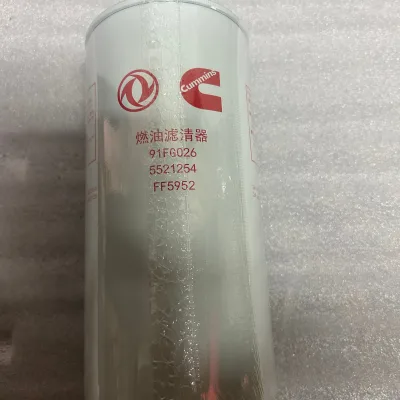

Oil Filter Fuel Filter Assembly Water Separator Filter for Heavy Duty Truck Parts
$800.00 - $1368.00
MOQ: 4 Pieces


Comprehensive Sourcing Guide
Strategic Sourcing Guide for Fuel Filter Assemblies
Navigating the global market for fuel filter assemblies requires a disciplined approach that balances technical precision with supply chain reliability. For procurement professionals, the core keyword "Fuel Filter Assembly" encompasses a diverse range of components designed to protect critical engine and burner systems from contamination. The following guide synthesizes available market data and established industry practices to provide a robust framework for evaluating potential suppliers and products. This analysis focuses on verified attributes, structural requirements, and compliance markers without relying on unverified marketing claims.
Technical Specifications and Structural Variability
The technical landscape of fuel filter assemblies is defined by significant variability in structure, application, and filtration mechanisms. Buyers must first distinguish between different structural configurations, as the market lists products ranging from "Filter Element/Assy" to "Fixed" structures. The choice between these configurations often depends on the specific machinery, such as trucks, excavators, or industrial burners. For instance, some assemblies are designed specifically for "Liquid" applications, while others serve "Solid-Liquid Separation" or "Oil-Water Separator" functions.
A critical technical differentiator is the filtration pattern. The observed market data indicates the existence of both "Wet" and "Dry" pattern filters. This distinction is vital for system compatibility, as the wrong pattern can lead to premature failure or inefficient operation. Furthermore, the mechanical principle driving these filters is typically "Pressure Filtration," which ensures that contaminants are captured effectively under operational stress. The body materials are equally diverse, with "Steel" and "Filter Paper" being common combinations. This material selection directly impacts durability and resistance to corrosion, particularly in harsh environments where "Oil Impurities" and "Oil and Gas Separation" are primary concerns.
Performance metrics also vary widely. While some products are described with general attributes like "Sophisticated Filters" or "High Pressure" capabilities, specific performance claims must be validated against the intended operating conditions. For example, a filter designed for "Riello G10 G20 Burners" will have different flow dynamics compared to one intended for heavy-duty truck engines. The "Drive" mechanism for associated pumps is often "Electric," and the "Flow Rate" may be a "Variable Pump," requiring precise matching with the filter assembly to maintain system efficiency.
Compliance, Certification, and Quality Standards
In the B2B procurement of industrial components, compliance is not merely a formality but a prerequisite for operational safety and warranty validity. The supply chain for fuel filter assemblies includes suppliers who hold recognized quality management certifications. Specifically, the market data confirms the presence of products certified under "IATF 16949" and "ISO 9001." These standards are critical for buyers in the automotive and heavy machinery sectors, as they indicate a supplier's commitment to consistent quality control and defect prevention.
However, buyers must exercise caution regarding other certification claims. While "CE" is mentioned in background data, it is flagged as low-confidence and should not be treated as a guaranteed attribute for every listed product. Procurement teams should explicitly request current, valid certification documents from the supplier rather than relying on product page summaries. Similarly, the "Filtration Accuracy" is cited as "99.9%" in specific contexts, but this figure should be treated as a product-specific observation rather than a universal standard. Buyers must verify if this accuracy applies to the specific micron rating required for their application, as "Hepa Filter" is also listed as a filtration grade in some contexts, which may not be suitable for all fuel systems.
Quality assurance extends beyond certifications to the physical condition of the product. The market consistently lists items as "New," but the "Warranty" status is often marked as "Unavailable." This absence of a standard warranty term suggests that warranty conditions are likely negotiated on a case-by-case basis or are specific to the supplier's internal policies. Consequently, buyers should prioritize suppliers who offer clear warranty terms and post-sales support, as the "Good Service" attribute observed in the market is a qualitative indicator that requires verification through reference checks.
Cost Drivers and Pricing Dynamics
Understanding the cost structure of fuel filter assemblies is essential for budgeting and negotiation. The observed price range in the market is extensive, spanning from $1 to $1,368 USD. This wide disparity is driven by several factors, including the complexity of the assembly, the materials used, and the specific application. A simple "Filter Element" may fall at the lower end of the spectrum, while a complete "Assy" with advanced "Fixed" structures and specialized materials like steel and high-grade filter paper will command a higher price.
The "MOQ" (Minimum Order Quantity) is another significant cost driver, with observed ranges from 1 to 500 units. Suppliers offering an MOQ of 1 are ideal for prototyping or emergency replacements, but they may have higher unit costs. Conversely, suppliers requiring an MOQ of 500 often provide better economies of scale but tie up more capital in inventory. The "Selling Units" are typically listed as "Single item," which can complicate bulk purchasing if the supplier does not offer tiered pricing.
Customization is a major factor influencing cost. The market indicates that "Customization" is "Available," and "Standard Carton Case" or "Carton Packaging" options exist. However, some suppliers offer "According to Customer's Requirement" for both packing and standards, which implies a higher level of service but likely comes with a premium. Buyers must weigh the cost of standard OEM parts against the potential savings or performance benefits of custom specifications. Additionally, the "Delivery Time" of "30 Days After Received Deposite" is a standard lead time observed, which affects the total cost of ownership by influencing inventory holding costs and production downtime risks.
Typical Applications and System Compatibility
Fuel filter assemblies are integral to a wide array of machinery, and selecting the correct unit requires a deep understanding of the target application. The data highlights specific compatibility with "Truck" and "Excavator" models, indicating that heavy-duty transportation and construction equipment are primary markets. For these applications, the "OE No." (Original Equipment Number) is a critical identifier. Specific references such as "75900fhx30" and "75900fhx10" are listed, suggesting that these are common part numbers for specific vehicle or engine models.
Beyond heavy machinery, the scope extends to industrial heating and power generation. The market explicitly mentions compatibility with "Riello G10 G20 Burners" and "Diesel/Light Oil Burners." In these contexts, the filter must protect the "Nozzle Tip" from clogging, which is a primary function listed. The "Function" of protecting the nozzle tip is crucial for maintaining combustion efficiency and preventing equipment damage. Furthermore, the "Compatible Brand" is often listed as "Other," which implies that many suppliers produce aftermarket replacements for various brands, including "Racor Parker."
The "Size" of the filter is another critical compatibility factor. Most products adhere to "OEM Standard Size," which simplifies the replacement process for maintenance teams. However, the "Standard" dimension of "1 inch" is also noted, suggesting that specific connection sizes must be verified. Buyers should always cross-reference the "Reference No." and "prod_model" (such as "FF167" or "FF113") with their existing inventory to ensure a perfect fit. Mismatched sizes or incorrect filtration grades can lead to system failure, making precise identification non-negotiable.
Supplier Evaluation and Operational Verification
Evaluating a supplier for fuel filter assemblies requires a multi-faceted approach that goes beyond the product listing. The "Place of Origin" is a key indicator, with "Henan, China" and "Shanghai, China" being prominent locations. While these regions are known for manufacturing capabilities, buyers should verify the specific factory's capacity and reputation. The "Service" attribute of "OEM ODM" suggests that suppliers are capable of Original Equipment Manufacturing and Original Design Manufacturing, which is beneficial for companies seeking private labeling or custom engineering.
Verification of the "Quality" attribute, often described simply as "Good," requires tangible evidence. Buyers should request sample testing results, specifically looking for data on "Filtration Accuracy" and "Mechanical Principle" performance. The "Condition" being "New" is standard, but the "Warranty" being "Unavailable" in many listings is a red flag that warrants further inquiry. A reputable supplier should be able to provide a clear warranty policy, even if it is not prominently displayed on the initial product page.
The "Video outgoing-inspection" is listed as "Not Available," which means buyers cannot rely on visual verification of the final product before shipment. This absence underscores the importance of third-party inspection services or on-site audits for high-value orders. Additionally, the "prod_packing" varies from "Standard Carton Case" to "According to Customer's Requirement," which affects logistics and storage. Buyers should ensure that the packaging is robust enough to prevent damage during transit, especially for "Steel" and "Filter Paper" components that may be sensitive to moisture or physical impact.
Long-Term Procurement and Supply Chain Resilience
Sourcing fuel filter assemblies is not a one-time transaction but a long-term relationship that impacts operational continuity. The "Delivery Time" of 30 days after deposit is a standard lead time, but buyers must consider the potential for delays, especially when dealing with "Customization" requests. The "Flow Rate" and "High Pressure" performance requirements of the system mean that any delay in filter replacement can lead to significant downtime or equipment damage.
To mitigate these risks, buyers should establish a diversified supplier base. Relying on a single source for critical components like fuel filters can be dangerous if that supplier faces production issues or quality lapses. The availability of "Customization" and "OEM ODM" services allows buyers to work with multiple suppliers to create redundancy in their supply chain. Furthermore, the "Service" aspect, including "Good Service" and "OEM ODM" capabilities, should be a key criterion in supplier selection, as it indicates a willingness to support the buyer through technical issues and supply disruptions.
Finally, buyers must remain vigilant about the "Classification" and "Type" of the product. The market lists "Oil Filter," "Air Filter," and "Fuel Filter" under the same "Type" category in some instances, which can lead to confusion. It is imperative to ensure that the specific "Fuel Filter" is being purchased, as using an "Air Filter" or "Oil Filter" in a fuel system can be catastrophic. The "Application" being "Liquid" confirms the intended use, but the specific "Structure" and "Pattern" must align with the system's design. By maintaining a rigorous verification process and focusing on long-term supplier relationships, buyers can ensure a steady supply of high-quality fuel filter assemblies that protect their equipment and optimize operational efficiency.
FAQs
What certifications do Fuel Filter Assembly suppliers hold?
Suppliers often hold IATF 16949 and ISO 9001 certifications for quality management. These standards indicate a commitment to consistent quality control and defect prevention in the manufacturing process.
How long is the standard delivery time for these filters?
The standard delivery time is typically 30 days after receiving the deposit. This lead time applies to most orders unless customization or specific packaging requirements alter the schedule.
Which filtration grades are available for liquid applications?
Available filtration grades include Hepa Filter and specific oil separation capabilities. These filters are designed for liquid applications involving solid-liquid separation and oil impurity removal.
Can I request custom packaging for my order?
Customization is available, including packaging according to customer requirements. Standard options include carton packaging or standard carton cases, but specific needs can often be accommodated.
What is the minimum order quantity for these assemblies?
The minimum order quantity ranges from 1 to 500 units depending on the supplier. Lower MOQs allow for prototyping, while higher quantities often provide better economies of scale.
Which brands are compatible with these fuel filter assemblies?
These assemblies are compatible with brands like Racor Parker and various other manufacturers. They are designed to fit specific truck and excavator models with OEM standard sizes.