Source Fuel Injector Nozzle Holder Assembly for Bulldozers, Excavators, and Fuel Dispensers
Compare 30 available Fuel Injector Nozzle Holder Assembly options from verified suppliers. This selection includes models for bulldozers, fuel dispensers, and diesel engines with varying materials like aluminum and plastic.
Key considerations
Products List


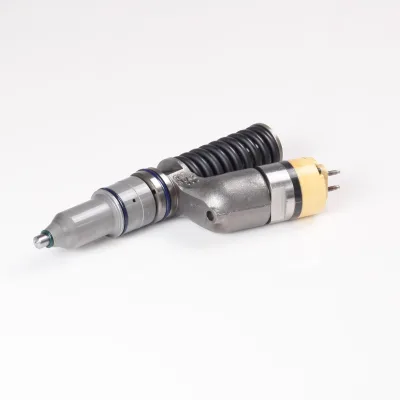
Fuel Injector 3411759 for N14 Injector Assembly OEM Standard
$230.00 - $270.00
MOQ: 10 Pieces
Di Sai Long Electronic Fuel Injection System (Dongguan) Co.,Ltd.


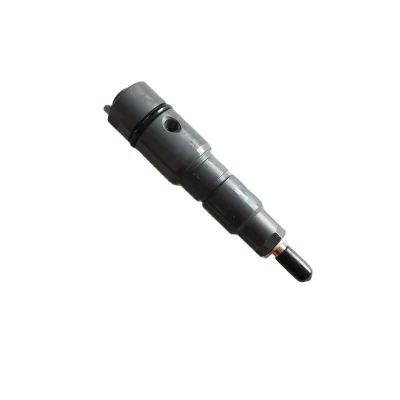
Fuel Injection Nozzle 85003950 Fuel Injector in Engine Parts
$165.00 - $205.00
MOQ: 10 Pieces
Di Sai Long Electronic Fuel Injection System (Dongguan) Co.,Ltd.

Fuel Inejction 21340612 Fuel Injector Nozzle OEM Standard
$165.00 - $205.00
MOQ: 10 Pieces
Di Sai Long Electronic Fuel Injection System (Dongguan) Co.,Ltd.






Comprehensive Sourcing Guide
Strategic Sourcing Guide for Fuel Injector Nozzle Holder Assemblies
Understanding Product Variants and Core Specifications
The procurement landscape for fuel injector nozzle holder assemblies requires a nuanced understanding of the diverse product categories often grouped under this core keyword. Buyers must distinguish between components designed for heavy-duty machinery, such as bulldozers, and those intended for fuel dispensing infrastructure. The supplied market data indicates a significant divergence in product attributes, ranging from specific vehicle model compatibility to general fuel dispenser applications.
A primary observation in the current market is the variation in product naming and functional classification. Some listings explicitly identify the item as a "Fuel Injector" or "Fuel Nozzle Holder with Switch," while others describe it as an "Aluminium Fuel Dispenser Nozzle Holder." This semantic overlap necessitates rigorous specification verification before placing orders. For instance, one segment of the market offers components with the model number NH-105, constructed from aluminium alloy, while another segment lists the model 3264700 or 1705181, which are associated with specific engine applications like the 3306 or D7h.
The material composition is a critical differentiator. The observed data highlights two distinct material profiles: aluminium and plastic. Aluminium variants are frequently cited for their durability and are often paired with stainless steel or nylon standards in high-performance contexts. Conversely, plastic components are noted for specific applications, such as the "Nozzle Boot" or insulators. The choice between these materials often depends on the operating environment; aluminium is typically preferred for structural integrity in high-vibration machinery, whereas plastic may be utilized for insulating components or specific dispenser nozzles where weight reduction is a priority.
Buyers must also scrutinize the technical specifications provided in the product listings. Dimensions and thread types vary significantly across the supply base. For example, specific models list an inlet thread of BSPF/NPT 3/4" and an oil outlet caliber of 13/16". Others specify a diameter of spout at 3/4" or 1/2". The working voltage for electrically actuated holders is noted as 250VAC in certain configurations, indicating the presence of integrated switches or solenoids. These numerical values are not universal; they are specific to the model and manufacturer. A procurement strategy that assumes a single standard dimension for all "nozzle holders" will likely result in compatibility failures.
Compliance, Certification, and Standard Verification
In the industrial procurement of fuel system components, compliance with international standards and certifications is paramount. The supplied data points to the existence of ISO:9001 certification among certain suppliers, which serves as a baseline indicator of quality management systems. However, buyers should not assume that all listed products carry this certification. The presence of "OEM Standard" as a listed attribute suggests that some manufacturers adhere to original equipment manufacturer specifications, while others may operate under different internal standards.
When evaluating compliance, the buyer must verify the origin of the product and the associated standards. The data reveals a mix of origins, including domestic production in regions like Xuzhou, Hubei, and Jiangsu, as well as "Abroad" and "Mx" (Mexico) origins. This geographic diversity implies that the regulatory environment and quality control protocols may vary. For instance, products originating from Jiangsu, China, are noted to follow specific packing standards like "Standard Carton Box and Pallet," which may differ from the "Original Factory with Neutral Packaging" seen in other listings.
Buyers should explicitly request documentation regarding the "prod_standard" attribute. While some listings mention "nylon, Stainless Steel, Aluminum alloy" as standards, these are material compositions rather than formal industry standards like ISO or ASTM. It is essential to confirm whether the product meets specific safety and performance standards relevant to the end application. For fuel dispensers, standards regarding self-closure times and flow rates are critical. The data indicates a self-closure time of 0.1s for certain self-closure fuel nozzles, but this is a specific product attribute, not a universal requirement. Procurement teams must verify if the supplier can provide test reports or certification documents that validate these specific performance metrics against relevant industry norms.
Furthermore, the "Certificate" field in the data suggests that ISO:9001 is a verifiable attribute for some suppliers. Buyers should treat this as a minimum requirement for serious vendors but must also investigate if additional certifications, such as those related to fire safety or fuel compatibility, are required for their specific jurisdiction. The absence of a specific certification in a product listing does not necessarily indicate non-compliance, but it does require a deeper inquiry into the supplier's quality assurance processes.
Cost Drivers and Pricing Dynamics
The pricing structure for fuel injector nozzle holder assemblies is influenced by a complex array of factors, including material costs, customization options, and supply chain logistics. The observed price range in the market spans from $0.80 to $512.00 USD. This wide disparity underscores the importance of defining the exact scope of the requirement before engaging with suppliers. The lower end of the price spectrum likely corresponds to simple plastic components or basic holders, while the higher end reflects complex assemblies with integrated switches, specific vehicle model adaptations, or premium materials like high-grade aluminium alloys.
Material costs are a primary driver of price variation. Aluminium components, which are frequently cited in the data, generally command a higher price than plastic equivalents due to the raw material cost and the energy-intensive manufacturing processes involved. Additionally, the inclusion of stainless steel or nylon components can further elevate the cost. Customization is another significant cost factor. The data confirms that "Customization: Available" is a standard offering in this sector. Buyers seeking custom dimensions, specific thread types, or unique color options for insulators (Red/Green/Blue/Yellow/Black) should anticipate a price premium compared to standard off-the-shelf items.
Order volume also plays a crucial role in pricing. The observed Minimum Order Quantity (MOQ) ranges from 1 to 1000 units. Suppliers offering an MOQ of 1 are likely catering to small-scale procurement or replacement needs, often at a higher unit cost. Conversely, suppliers requiring an MOQ of 1000 are targeting bulk industrial buyers, where economies of scale can significantly reduce the per-unit price. Buyers must balance their immediate inventory needs with the potential cost savings of bulk purchasing.
Logistics and packaging standards also impact the final landed cost. Listings mention various packing methods, from "Standard Carton" to "10PCS/Carton" and "Standard Carton Box and Pallet." The choice of packaging affects shipping efficiency and potential damage rates. While "Original Factory with Neutral Packaging" might reduce costs, it may not be suitable for all supply chain requirements. Buyers should factor in the cost of secondary packaging or handling if the supplier's standard packing does not meet their internal logistics protocols.
Typical Applications and Industry Segmentation
The Fuel Injector Nozzle Holder Assembly serves a diverse range of applications, necessitating a clear segmentation of the market. The data highlights two primary application areas: heavy machinery and fuel dispensing infrastructure. In the heavy machinery sector, these components are integral to diesel engines found in bulldozers and other construction equipment. Specific model references, such as "for 3306 966g D7h," indicate that these parts are often designed as direct replacements for OEM components in specific engine families. The application of "Diesel Engine" is explicitly noted, confirming the fuel type compatibility.
In the fuel dispensing sector, the application is distinct. Products are described as "Fuel Nozzle Holder with Switch for Fuel Dispenser," designed to hold the nozzle in place and often incorporating an electrical switch for safety or automation. The attribute "Application: Put Nozzle of Fuel Dispenser" further clarifies this use case. These components often feature specific flow rate capabilities, such as 0-45L/min, and self-closure mechanisms to prevent fuel spillage. The color coding of insulators (Red/Green/Blue/Yellow/Black) is a common feature in this segment, likely used to differentiate fuel types or flow rates at the point of use.
The distinction between these applications is critical for procurement. A component designed for a bulldozer engine may not be suitable for a fuel dispenser due to differences in pressure ratings, flow dynamics, and mounting configurations. Buyers must ensure that the "Vehicle Model" or "Application" field in the supplier's listing matches their specific operational requirements. For example, a part listed for "Bulldozer" application should not be used in a fuel station without thorough engineering validation.
Supplier Evaluation and Geographic Considerations
Evaluating suppliers for fuel injector nozzle holder assemblies requires a careful assessment of their geographic location and service capabilities. The data reveals a concentration of suppliers in China, specifically in regions like Xuzhou, Hubei, and Jiangsu. These regions are known for their manufacturing capabilities in automotive and industrial parts. However, the data also lists "Abroad" and "Mx" (Mexico) as origins, indicating a global supply base. Buyers should consider the implications of sourcing from different regions, including lead times, shipping costs, and regulatory compliance.
Service capabilities are another key evaluation criterion. The data indicates that "Video" service is available, which can be a valuable resource for buyers to understand the product's physical characteristics and installation process. Additionally, "After-Sales Service: 1years" is a common offering, providing a safety net for buyers in case of early failures. However, the availability of these services should be verified directly with the supplier, as they may vary by product line or order volume.
When selecting a supplier, buyers should also consider the "Product Name" and "Type" consistency. The market contains products labeled as "Quick Coupling," "Nozzle Holder," and "Fuel Injector." While these terms are often used interchangeably in casual conversation, they represent distinct functional categories. A supplier that offers a wide range of types may be more versatile, but buyers must ensure that the specific product they are purchasing matches their technical requirements.
Quality Control and Long-Term Procurement Strategies
Maintaining high quality in fuel system components is essential for operational safety and efficiency. The data suggests that "Quality: Higher" is a claimed attribute for some products, but this is a subjective claim that requires objective verification. Buyers should implement a robust quality control process that includes incoming inspection, testing of critical dimensions, and verification of material properties. The "Standard Carton" and "Original Factory" packing methods mentioned in the data can help protect the product during transit, but they do not guarantee the quality of the component itself.
Long-term procurement strategies should focus on building relationships with suppliers who demonstrate consistency in quality and delivery. The "Delivery Time" of 7-15 days observed in the data provides a baseline for lead time planning, but buyers should confirm this with their specific supplier, as it may vary based on order volume and production schedules. Establishing clear communication channels and agreeing on quality standards before the first order can mitigate risks associated with supply chain disruptions.
Buyers should also consider the "Customization" aspect as a long-term strategy. As operational needs evolve, the ability to customize components can provide a competitive advantage. Suppliers who offer customization services can help buyers adapt to changing requirements without the need for a complete supplier switch. However, customization should be approached with caution, ensuring that the modified components meet all necessary safety and performance standards.
In conclusion, sourcing fuel injector nozzle holder assemblies requires a meticulous approach that balances technical specifications, compliance requirements, cost considerations, and supplier reliability. By leveraging the detailed product attributes available in the market data and applying rigorous evaluation criteria, buyers can secure high-quality components that meet their specific operational needs. The diversity of the market offers numerous options, but success depends on the ability to navigate this complexity with precision and foresight.
FAQs
What materials are used for fuel injector nozzle holder assemblies?
These assemblies are commonly constructed from aluminium, plastic, or stainless steel alloys. Aluminium variants offer durability for heavy machinery, while plastic is used for specific insulators or nozzles in dispensers.
Can I find these products with ISO 9001 certification?
Yes, some suppliers offer products certified to ISO 9001 standards. Buyers should verify this certification directly as it is not universal across all listings or origins in the market.
What is the typical delivery time for these components?
The standard delivery time ranges from 7 to 15 days for most suppliers. This timeframe applies to orders placed with manufacturers in regions like Jiangsu, China, or other listed origins.
Which specifications apply to fuel dispenser nozzle holders?
Specific models feature an inlet thread of BSPF/NPT 3/4 inch and an oil outlet caliber of 13/16 inch. These dimensions are critical for compatibility with fuel dispensing infrastructure.
How does the minimum order quantity vary for these parts?
The minimum order quantity ranges from 1 to 1000 units depending on the supplier. Lower MOQs suit replacement needs, while higher volumes target bulk industrial procurement for better pricing.
What customization options are available for these assemblies?
Customization is available for dimensions, thread types, and insulator colors like red, green, or blue. Buyers seeking specific OEM standards or unique configurations should confirm these details with the vendor.
Can these holders be used for bulldozer diesel engines?
Yes, specific models are designed for bulldozer applications with diesel engines. These parts often match vehicle models like 3306 or D7h and require verification of the specific product model number.