Source Full Carbon Tennis Racket for Training, Competition, and Practice
Explore 30 Full Carbon Tennis Racket options from verified Chinese manufacturers. Buyers can compare specifications like weight, material, and customization to find the ideal racket for training, competition, or practice sessions; compare the available evidence and request quotations based on your requirements.
Key considerations
Products List


Sporty 12K Padel Racket Carbon Fiber Beach Tennis Racket for Active Players
$33.00 - $35.00
MOQ: 1 Pieces


High Quality High Tension Tennis Racket Full Carbon Fiber Racket Anyball Brand
$28.00 - $38.00
MOQ: 2 Pieces


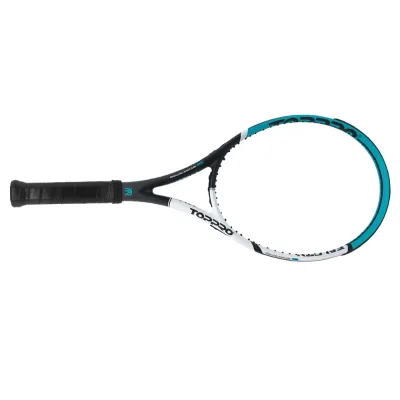

Comprehensive Sourcing Guide
Full Carbon Tennis Racket Sourcing Guide
Sourcing full carbon tennis rackets requires distinguishing between general training equipment and high-performance competition models, as the supplied data indicates a split in product attributes. Buyers must verify whether a listing targets general training or specific competition needs, noting that some items are explicitly marked for training while others support both usage scenarios. The presence of carbon fiber materials, often combined with EVA cores, suggests a focus on lightweight performance and shock absorption, which are critical for adult users seeking durability and power.
Procurement decisions should also account for the variability in customization options and packaging standards observed across listings. While some suppliers offer canvas or bubble bag packaging, others provide custom packaging solutions or specific box types, which impacts logistics and retail presentation. The availability of customization for accessories and branding allows buyers to tailor products to their specific market, but this requires clear communication of requirements to ensure the final output matches the intended design and functional specifications.
Product Scope and Observed Listing Signals
The observed product scope reveals a diverse range of models, including specific identifiers like Padel rackets, RL-SO1, YF01, and YX-78, each with distinct dimensional profiles. Buyers should note that while some listings specify a length of 50cm or 455mm, others reference standard sizes like 57, 59, or 61 inches, indicating a need to verify the exact physical dimensions against the intended sport rules. The weight variance between 320g and 365g further highlights the importance of selecting a racket that aligns with the specific power and control requirements of the target user demographic.
Listing signals also indicate significant variation in shape and material composition, with options ranging from teardrop to diamond shapes and materials including carbon fiber and EVA cores. These structural differences directly influence the racket's balance and swing weight, which are critical for player performance. Buyers must carefully review the specific model numbers and associated specifications to ensure the selected product matches the desired playing style, as the generic term "full carbon" may encompass a wide spectrum of performance characteristics depending on the specific construction details provided.
Technical Specifications to Verify
Verifying technical specifications is paramount when sourcing full carbon rackets, as the data shows conflicting or varied measurements for length, width, and thickness. For instance, while some models list a length of 50cm and a width of 24.3cm, others provide specific dimensions like 476mm by 255mm by 38mm. Buyers must confirm these exact measurements to ensure compatibility with standard court dimensions and player ergonomics, as even minor deviations can affect the racket's handling and the player's ability to generate optimal power.
Material composition and weight distribution are equally critical verification points, with listings citing carbon fiber, 3K/12K/18K carbon, and EVA cores. The weight range observed, from 320g to 365g, suggests different balance points and stiffness levels that impact shock absorption and lightness. Procurement teams should request detailed material breakdowns and weight tolerance data, such as the +/-10g variance noted in some listings, to ensure consistency across batches and to guarantee that the final product meets the rigorous performance standards required for competitive play.
Compliance and Safety Documentation
While specific certification data is limited in the provided context, buyers must prioritize safety documentation to ensure the rackets meet international standards for sports equipment. The presence of a low-confidence CE certification mention suggests that compliance is a potential area of focus, but it should not be assumed without direct verification from the supplier. Procurement teams should explicitly request valid test reports and safety certifications to confirm that the materials used, particularly the carbon fiber and EVA cores, are free from harmful substances and meet the necessary safety thresholds for commercial distribution.
Documentation regarding the manufacturing origin and standard compliance is also essential for risk management, as the data indicates production in various Chinese regions including Guangdong, Fujian, and Dongguan. Buyers should verify that the supplier adheres to the stated standards, such as the specific dimensions or material grades like 3K/12K/18K carbon, and that these claims are backed by third-party validation. Ensuring that all safety and compliance documents are up-to-date and specific to the model being purchased helps mitigate liability risks and ensures the product is suitable for its intended market.
Cost Drivers and Commercial Terms
Cost drivers for full carbon tennis rackets are heavily influenced by material quality, customization levels, and order volume, as evidenced by the wide MOQ range from 1 piece to 500 units. The availability of custom packaging and branding options adds complexity to the pricing structure, requiring buyers to negotiate clear terms for these value-added services. Understanding the relationship between the MOQ and the unit price is crucial, as higher customization and lower order volumes typically result in increased per-unit costs, necessitating a strategic approach to inventory planning and budget allocation.
Commercial terms also vary significantly regarding shipping and lead times, with some suppliers offering sample times within 7 days and shipping within 15 days, while others specify sea, land, or air transportation options. Buyers must evaluate these logistics parameters to determine the most cost-effective and timely delivery method for their specific needs. Additionally, the flexibility in packaging, ranging from standard cartons to custom requirements, can impact overall costs and should be factored into the total landed cost calculation to ensure accurate financial forecasting and supply chain efficiency.
Supplier Qualification and Quality Control
Supplier qualification should focus on verifying the consistency of production capabilities, particularly given the diverse origins and model numbers observed in the listings. Buyers must assess whether the supplier can consistently deliver on the specified material grades, such as carbon fiber and EVA cores, and maintain the precise dimensional tolerances required for high-performance rackets. The variation in model identifiers like GS10, WQ01, and YF01 suggests a need to confirm that the supplier has the technical expertise to manage these different product lines without compromising quality or performance standards.
Quality control processes must be rigorously defined to address the observed weight variances and material specifications. Buyers should implement strict inspection protocols to ensure that the final products match the agreed-upon weight ranges, such as the 365g +/-10g specification, and that the carbon fiber construction meets the required stiffness and durability standards. Establishing clear quality benchmarks and conducting regular audits of the production line will help mitigate the risk of receiving substandard goods and ensure that the full carbon tennis rackets delivered meet the high expectations of the end-user market.
Long-Term Procurement Checks
Long-term procurement strategies should include regular re-evaluation of supplier performance against the initial specifications and commercial terms agreed upon. Buyers must monitor the consistency of product attributes, such as weight, dimensions, and material composition, over multiple production cycles to ensure that the quality remains stable. The ability of the supplier to maintain the specified standards, such as the 3K/12K/18K carbon grades and the precise packaging requirements, is a key indicator of their reliability and capacity to support long-term business growth.
Additionally, buyers should establish a feedback loop to continuously assess the market relevance of the product models and their alignment with evolving player needs. As the tennis equipment market evolves, the demand for specific features like shock absorption, light weight, and customization may shift, requiring suppliers to adapt their production capabilities accordingly. Regular reviews of the supplier's innovation capacity and their ability to incorporate new technologies or design changes will ensure that the procurement strategy remains competitive and responsive to the dynamic demands of the Full Carbon Tennis Racket market.
FAQs
What are the standard dimensions for these rackets?
The standard dimensions vary by model, with some measuring 476mm by 255mm and others reaching 57 to 61 inches in length. Specific models also feature a width of 24.3cm and a thickness of 2.2cm to ensure optimal performance for adult users during training or competition.
Can I customize the packaging for my order?
Yes, customization is available for packaging, including options like canvas bags, bubble bags, or custom boxes. Buyers can also request specific packing requirements tailored to their needs, ensuring the products are protected during sea, land, or air transportation from the factory.
What is the minimum order quantity for these rackets?
The minimum order quantity varies significantly depending on the specific supplier and model selected. Some listings require a custom MOQ of 200 units, while others may have a standard MOQ of 300, and certain options allow for a minimum order of just one piece.
How long does it take to receive samples?
Sample time is typically within seven days for most suppliers offering these carbon fiber rackets. Once the sample is prepared, the shipping time to the destination usually takes within fifteen days, depending on the selected logistics method and the specific origin location in China.
Which materials are used to construct these rackets?
These rackets are primarily constructed using carbon fiber combined with an EVA core for enhanced shock absorption. Some models feature a net material of pure carbon fiber, while others utilize a 3K, 12K, or 18K carbon fiber weave to achieve a lightweight and durable design.
Where are these tennis rackets manufactured?
These rackets are manufactured in various locations across China, including Guangdong, Fujian, and Dongguan. The products are explicitly marked as made in China, ensuring they meet specific regional manufacturing standards while being available for international export through multiple transportation channels.