Source Glycolic Acid Toner for Home Use, Anti-Aging, and Pore Shrinking
Compare 30 Glycolic Acid Toner options from Chinese manufacturers offering customization, OEM services, and certifications like CE and GMP. These products feature ingredients such as AHA, Niacinamide, and Hyaluronic Acid for moisturizing, brightening, and skin revitalizing needs.
Key considerations
Products List


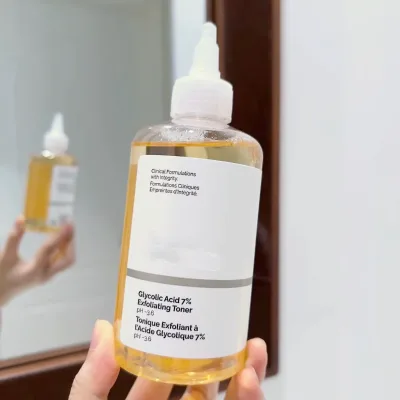
Custom Deep Exfoliating Anti Aging 7% Glycolic Acid Toner with Rose Water
$1.30 - $2.50
MOQ: 3000 Pieces

Premium Quality Ingredients Nutrient Toner Hyaluronic Acid Essence Toner
$1.78 - $2.88
MOQ: 3000 Pieces


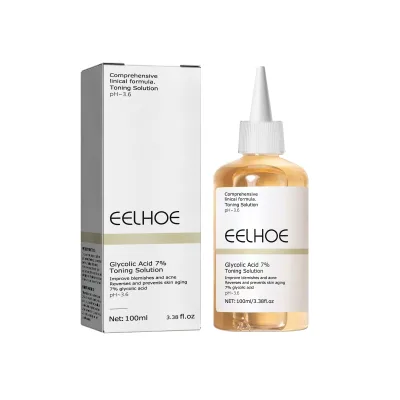


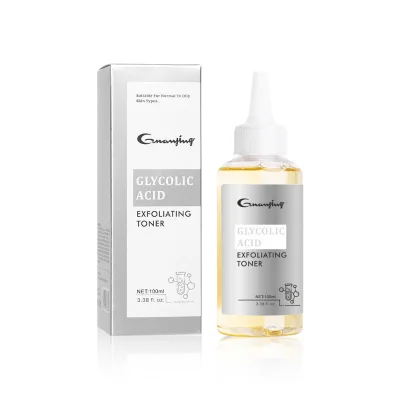


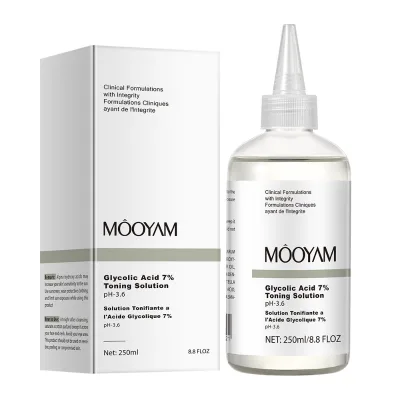
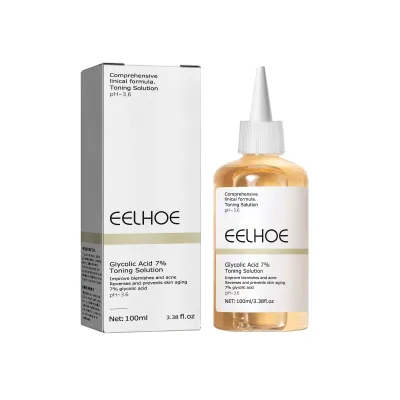




Comprehensive Sourcing Guide
Strategic Sourcing Guide for Glycolic Acid Toner Procurement
Understanding Product Specifications and Formulation Diversity
When sourcing glycolic acid toners, buyers must first navigate the complex landscape of technical specifications that define product viability. The core keyword, glycolic acid, is a prominent alpha-hydroxy acid (AHA) used for exfoliation and skin revitalization. However, the supplied data indicates that the market offers a wide array of formulations beyond a single active ingredient. The observed product attributes reveal a diverse range of main ingredients, including Arbutin, Niacinamide, Tranexamic Acid, Kojic Acid, Retinol, Peptides, and Vitamin E. This suggests that a "Glycolic Acid Toner" in a B2B context may often be part of a broader, multi-ingredient strategy designed to address specific skin concerns like pigmentation, acne, or aging simultaneously.
Volume is another critical specification variable. The data lists several standard capacities, including 236ml, 237ml, 200ml, 177ml, and 283ml, alongside smaller units like 50ml, 30ml, 15ml, and 90ml. Procurement decisions must align with the target demographic and usage frequency. For instance, the "236ml" and "237ml" standards appear to be the most common bulk sizes, likely corresponding to standard retail bottles. Conversely, the "15ml" and "30ml" options suggest travel-sized or sample packaging, which may be relevant for promotional campaigns or specific regional market preferences. The physical form is also a consideration; while the primary product is identified as a "Facial Toner," the data explicitly notes a "Spray" form factor. Buyers must verify whether the glycolic acid formulation is stable in a spray mechanism or if this is a separate product line within the supplier's catalog.
The packaging specifications further influence logistics and shelf life. The observed single package size is noted as 10x10x10 cm, with a single gross weight of 0.500 kg. This standardization is crucial for calculating freight costs and warehouse storage requirements. Additionally, the availability of "Customized Packaging" and "Boxes" as options allows for significant branding flexibility. However, the presence of "Customized Packaging" as a distinct attribute from standard "Boxes" implies that buyers may need to negotiate specific mold costs or minimum order quantities (MOQs) for non-standard container shapes.
Compliance, Certification, and Regulatory Standards
Navigating the regulatory landscape is paramount when importing cosmetic ingredients like glycolic acid. The supplied facts confirm that suppliers in this category frequently hold a robust set of certifications, including CE, GMP, MSDS, EEC, and FDA. The presence of these certifications indicates a baseline commitment to quality management systems and safety standards. GMP (Good Manufacturing Practice) is particularly significant as it ensures the product is consistently produced and controlled according to quality standards.
The MSDS (Material Safety Data Sheet) is a non-negotiable document for any chemical-based cosmetic product, especially those containing acids. It provides essential information on the handling, storage, and emergency measures required for glycolic acid toners. Buyers must ensure that the MSDS provided matches the specific concentration of glycolic acid in the final formulation, as safety protocols vary significantly with concentration levels. The mention of "CE" and "EEC" certifications suggests compliance with European Union regulations, which are among the strictest globally regarding cosmetic safety.
Furthermore, the ingredient lists highlight "Paraben-Free," "Silicone-Free," "Sulfate-Free," "Vegan," and "Organic" claims. While these are marketing attributes, they often correlate with specific regulatory frameworks. For example, "Organic" claims may require verification against specific agricultural standards, and "Vegan" status implies no animal-derived ingredients, which can impact sourcing of components like collagen or certain glycerin sources. The data also lists "Natural Skin Moisturizing Toner" as a keyword, reinforcing the trend toward clean beauty. Buyers should verify that these claims are supported by valid documentation and are not merely marketing fluff, as regulatory bodies in major markets are increasingly scrutinizing such labels.
Cost Drivers and Pricing Dynamics
The pricing structure for glycolic acid toners is influenced by several dynamic factors, including formulation complexity, packaging customization, and order volume. The observed price range in the market spans from $0.61 to $3,100. This extreme variance indicates that the lower end likely represents small-volume samples, single-unit retail prices, or basic formulations, while the higher end could reflect bulk orders with extensive customization, premium ingredients, or specialized packaging solutions.
The Minimum Order Quantity (MOQ) is a primary driver of unit cost. The data shows an MOQ range from 1 to 3,000 units, with specific mentions of 1,000 pcs and ≥500 units. A lower MOQ of 1 unit allows for product sampling and testing without significant financial risk, but the unit price will be substantially higher. Conversely, an MOQ of 1,000 to 3,000 units typically unlocks economies of scale, reducing the per-unit cost significantly. Buyers must balance their inventory needs against cash flow constraints.
Additional cost drivers include the "Service" offerings listed, such as Custom Formula, Design, Packing, and Shooting. These value-added services often come with setup fees or higher unit costs. The "OEM" and "ODM/OEM" models suggest that buyers can either provide their own formula (OEM) or rely on the supplier's existing formulations (ODM). ODM options are generally more cost-effective for new entrants due to lower R&D costs, while OEM provides greater control over the final product but may involve higher development fees. The "20 Years Experience" attribute of the supplier suggests a potential for better negotiation leverage and more stable pricing due to established supply chains and operational efficiency.
Typical Applications and Target Market Segmentation
The versatility of glycolic acid toners allows them to serve a wide range of applications and target diverse market segments. The data identifies the primary application as "For Home Use," indicating that these products are designed for personal skincare routines rather than professional clinical settings. However, the extensive list of features—such as "Anti-Aging," "Exfoliator," "Whitening," "Acne Treatment," "Firming," and "Pore Shrinking"—demonstrates that the product can be positioned for various consumer needs.
The target demographic is broad, with attributes listing "All Ages," "Adults," and "Female" as the primary gender focus. The skin types supported include "Combination," "Normal," "Dry," "Sensitive," "Oily," "All Skin Types," and "Damaged Skin." This inclusivity is a significant advantage for B2B buyers looking to create a universal product line. However, the presence of "Sensitive" and "Damaged Skin" in the list requires careful formulation verification, as glycolic acid can be irritating if not properly buffered or if the concentration is too high for sensitive skin types.
The main functions observed, such as "Moisturizing," "Soothing," "Nourishing," "Hydrating," "Oil Control," and "Brightening," suggest that modern glycolic acid toners are often hybrid products. They are not just exfoliants but also serve as hydrating and soothing agents. This aligns with current market trends where consumers seek multi-functional products that simplify their skincare routines. The "Main Function" of "Tighten Stubborn Pores" further highlights the specific benefit that appeals to consumers concerned with skin texture and appearance.
Supplier Evaluation and Operational Capabilities
Selecting the right supplier requires a thorough evaluation of their operational capabilities and track record. The data indicates that the place of origin is primarily "Guangdong, China," a region known for its robust manufacturing infrastructure in the cosmetics sector. The "20 Years Experience" attribute is a strong indicator of supplier stability and expertise. Buyers should leverage this experience to request case studies or references from previous clients who have successfully launched similar products.
The "Private Label: Yes" and "Customization: Available" attributes confirm that the supplier is equipped to handle branding requirements. However, buyers must verify the extent of customization. Does the supplier offer full ODM services where they develop the formula, or do they only provide packaging customization? The "Service" list includes "Custom Formula, Design, Packing, Shooting," suggesting a comprehensive service model. Buyers should clarify the scope of these services, including who owns the intellectual property for the custom formula and the timeline for design approvals.
Logistics and lead times are critical for supply chain planning. The observed lead time is "7-10 Days," which is relatively fast for custom cosmetic manufacturing. This suggests that the supplier may have pre-existing stock of base formulations or efficient production lines. However, buyers must confirm if this lead time applies to standard products or if it extends for fully customized orders. The payment terms listed as "T/T, West Union, Money Gram, Ect" provide flexibility, but buyers should establish clear terms regarding deposits and final payments to mitigate financial risk.
Quality Control and Long-Term Procurement Strategy
Ensuring product quality is essential for maintaining brand reputation and consumer safety. The "Certification" list, including CE, EEC, FDA, GMP, and MSDS, provides a foundation for quality assurance. However, buyers should not rely solely on these certifications. It is advisable to request third-party test results for the specific batch of glycolic acid toners being procured. These tests should verify the concentration of active ingredients, pH levels, and the absence of harmful contaminants.
The "Single package size" of 10x10x10 cm and "Single gross weight" of 0.500 kg are standard metrics that should be verified during the quality control process. Any deviation from these specifications could indicate production inconsistencies or packaging errors. Additionally, the "Net weight" options (200 mL, 90mL, 100 mL, 50 ml, 30 ml, 15 ml) must be accurately measured to ensure compliance with labeling regulations in the destination market.
For long-term procurement, buyers should consider the scalability of the supplier. The "MOQ" range of 1 to 3,000 units suggests flexibility, but as order volumes grow, the supplier must be able to maintain consistent quality and lead times. The "Advantage" of "20 Years Experience" implies a capacity for scaling, but buyers should discuss production capacity limits and potential bottlenecks. Establishing a long-term partnership with a supplier who offers "Custom Formula" and "Design" services can provide a competitive edge by allowing for continuous product innovation and adaptation to market trends.
Comparative Analysis of Product Attributes
To facilitate decision-making, the following table summarizes key product attributes observed in the market, highlighting the variability buyers must navigate.
| Attribute Category | Observed Options | Procurement Consideration |
|---|---|---|
| Product Standard (Volume) | 236ml, 237ml, 200ml, 177ml, 283ml, 50ml, 30ml, 15ml | Select based on target market preferences and shipping efficiency. |
| Certifications | CE, GMP, MSDS, EEC, FDA | Verify specific regional compliance requirements for the destination market. |
| Main Ingredients | AHA, Arbutin, Niacinamide, Retinol, Peptides, Collagen | Ensure ingredient synergy and stability, especially for sensitive skin claims. |
| MOQ | 1, 500, 1000, 3000 units | Balance inventory risk with unit cost savings. |
| Lead Time | 7-10 Days | Confirm if this applies to custom or standard orders. |
| Packaging | Customized, Boxes, Spray | Verify compatibility of spray mechanisms with acidic formulations. |
| Skin Type | All Skin Types, Sensitive, Oily, Dry | Formulation must be tested for safety across all claimed skin types. |
| Origin | Guangdong, China | Assess logistics costs and import duties from this region. |
This comparative analysis underscores the need for a meticulous approach to sourcing. Buyers must align their specific business requirements with the diverse options available in the market. By carefully evaluating specifications, certifications, and supplier capabilities, buyers can secure a reliable supply of high-quality glycolic acid toners that meet both regulatory standards and consumer expectations. The flexibility in packaging, ingredients, and order quantities allows for a tailored procurement strategy that can adapt to changing market dynamics and business growth.
FAQs
What certifications do Glycolic Acid Toner suppliers typically hold?
Suppliers typically hold CE, GMP, MSDS, EEC, and FDA certifications. These documents verify compliance with safety and manufacturing standards, ensuring the product meets regulatory requirements for international trade and consumer safety.
How long is the lead time for custom Glycolic Acid Toner orders?
The standard lead time for production is 7 to 10 days. This duration applies to orders that utilize existing formulations or standard packaging, though fully custom formulas may require additional development time.
Which minimum order quantities are available for glycolic acid toners?
Minimum order quantities range from 1 unit for sampling to 3,000 units for bulk production. Specific listings often require a minimum of 500 or 1,000 pieces depending on the customization level and packaging selected.
Can buyers request custom packaging for Glycolic Acid Toner products?
Yes, customized packaging and box options are available for buyers. This service allows for branding flexibility, though it may involve specific mold costs or adjusted minimum order quantities compared to standard stock items.
What are the standard volume specifications for glycolic acid toners?
Standard volumes include 236ml, 237ml, 200ml, 177ml, and 283ml, with smaller travel sizes like 15ml and 30ml also available. These capacities cater to different retail strategies and consumer usage preferences.
Which ingredients are commonly found in Glycolic Acid Toner formulations?
Common ingredients include AHA, Niacinamide, Hyaluronic Acid, Vitamin E, and Tranexamic Acid. Many formulations are also paraben-free, sulfate-free, and vegan to meet clean beauty standards and sensitive skin requirements.
Where are Glycolic Acid Toner manufacturers primarily located?
Manufacturers are primarily located in Guangdong, China. This region offers a robust infrastructure for cosmetic production, providing access to established supply chains and experienced suppliers with decades of industry history.