Source Gmp Vhp Pass Box for Medical Labs and Clean Rooms
Compare 30 verified Gmp Vhp Pass Box options featuring H14 filtration, vaporized hydrogen peroxide sterilization, and Siemens touch screens. These units support medical, pharmaceutical, and food industries with customizable dimensions and interlocking systems.
Key considerations
Products List
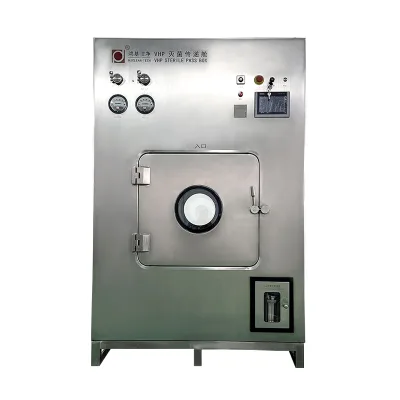


CE Certificate Vhp Sterile Pass Box Sterilization Chamber Vhps Passbox
$3000.00 - $45000.00
MOQ: 1 Set


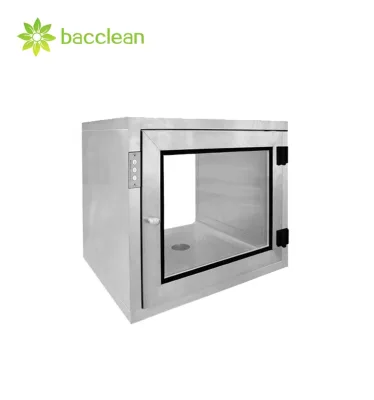
Comprehensive Sourcing Guide
Strategic Sourcing Guide for GMP VHP Pass Boxes
Navigating the procurement of a Vaporized Hydrogen Peroxide (VHP) pass box requires a disciplined approach that balances technical performance with regulatory compliance. For buyers operating in pharmaceutical, medical device, and food industries, the selection of this critical cleanroom component is not merely about purchasing a piece of equipment but ensuring the integrity of sterile barriers. The market offers a range of configurations, often originating from specialized manufacturing hubs in China, where specific technical attributes define the suitability of a unit for GMP environments. This guide synthesizes available product data to help procurement teams evaluate options without relying on unverified claims or external market speculation.
Technical Architecture and Operational Parameters
The core functionality of a VHP pass box relies on its ability to sterilize items passing through a barrier while maintaining the integrity of the cleanroom environment. Based on observed product specifications, the industry standard for the internal chamber dimensions often centers around a cubic footprint of 600600600mm, though customization is frequently available to meet specific facility requirements. The construction material is predominantly Stainless Steel, specifically grade SUS304, which provides the necessary corrosion resistance and ease of cleaning required in high-hygiene zones. The surface treatment typically involves electroplating to enhance durability and prevent particulate generation.
The sterilization mechanism utilizes Vaporized Hydrogen Peroxide, a method favored for its low residue levels. Critical performance metrics observed in current listings indicate that the sterilization cycle time is generally less than 120 minutes, a factor that influences throughput efficiency in busy production lines. The system is designed to achieve a VHP residue level of less than 1 ppm, ensuring that sterilized items are safe for immediate use or transfer. The vaporization temperature is typically maintained around 60°C, a parameter that must be precisely controlled to ensure effective sterilization without damaging sensitive materials.
Control systems vary between models, with some units featuring a SIEMENS touch screen for intuitive operation, while others utilize a generic touch control mode. The interlock mechanism is a vital safety feature; options range from mechanical and electronic interlocks to more advanced inflatable sealing and interlocking systems. These mechanisms prevent both doors from opening simultaneously, which is essential for maintaining pressure differentials and preventing cross-contamination. Noise levels are a secondary but important consideration, with observed ranges spanning from 40-60 dB to 60-70 dB, depending on the fan and pump configurations.
Regulatory Compliance and Certification Verification
In the context of Good Manufacturing Practice (GMP), certification is not a marketing flourish but a prerequisite for compliance. Buyers must rigorously verify that the equipment holds recognized certifications. The most common certifications observed in the market for these units include CE, ISO, and GMP. Some listings specifically mention "ISOCE," which likely refers to a combination of ISO and CE standards, while others explicitly list CE, ISO, and GMP together. It is imperative for the procurement team to request physical copies of these certificates and verify their validity with the issuing bodies, rather than accepting them as mere assertions on a product page.
The application scope of these units is broad, covering medical devices, pharmaceuticals, food industries, and inspection and quarantine departments. The equipment is often designed to achieve a cleanliness level of Class A, which is the highest standard for aseptic processing areas. This classification is critical for applications involving the handling of sterile products. Buyers should ensure that the specific model selected is validated for the intended application, as a unit certified for general cleanroom use may not meet the stringent requirements of a Class A aseptic zone without additional validation.
Furthermore, the origin of the product plays a role in compliance. Many units are manufactured in Jiangsu or Suzhou, China, regions known for their industrial manufacturing capabilities. While the location itself does not dictate quality, it is a factor in logistics and supply chain management. The "place of origin" should be clearly documented in the contract to ensure traceability and to align with any import regulations or country-of-origin labeling requirements specific to the buyer's region.
Cost Drivers and Economic Considerations
The pricing for VHP pass boxes in the current market exhibits a significant variance, with observed listed prices ranging from $250 to $45,000 USD. This wide spectrum is driven by several key factors, primarily the level of customization, the complexity of the control system, and the quality of the materials used. A basic unit with standard dimensions and a mechanical interlock will naturally fall at the lower end of the price range, whereas a fully customized unit with a SIEMENS touch screen, inflatable sealing system, and advanced sterilization logic will command a premium price.
The Minimum Order Quantity (MOQ) for these products is typically 1 unit, allowing for flexibility in procurement for single-site installations or pilot programs. However, buyers should be aware that while the MOQ is low, the cost per unit may not scale linearly for larger orders due to the custom nature of the manufacturing. Additional cost drivers include optional accessories such as sterilization lamps, floodlights, intercoms, timer switches, and drums. These accessories, while enhancing functionality, add to the total cost of ownership.
Packaging is another economic factor to consider. Most units are shipped in export wooden cases or standard packaging designed to protect the equipment during international transit. The cost of this specialized packaging is often included in the final price but should be explicitly confirmed to avoid unexpected freight charges or damage claims. Buyers should also factor in the long-term costs of maintenance, including the availability of spare parts and the cost of consumables like hydrogen peroxide, which are essential for the operation of the sterilization cycle.
Typical Applications and Operational Environments
The versatility of the VHP pass box makes it suitable for a diverse range of industries. In the pharmaceutical sector, these units are essential for transferring materials between different cleanroom zones without compromising sterility. The ability to remove dust and smoke, as noted in product features, makes them ideal for environments where particulate control is paramount. The "Easy Cleaning" and "Corrosion Resistance" features are particularly valuable in food industries, where hygiene standards are equally rigorous.
Specific applications include the Inspection and Quarantine Department, where samples must be sterilized before analysis. The unit's ability to achieve a cleanliness level of Class A makes it suitable for aseptic processing lines in medical device manufacturing. The "VHP Pass Box" is also utilized in laboratories where sensitive experiments require a sterile environment. The inclusion of features like a timer switch and sterilization lamp allows for precise control over the sterilization process, ensuring that items are adequately treated before being released into the cleanroom.
The operational environment must be compatible with the unit's power requirements, typically 220V 50/60 Hz. Buyers should verify that their facility's power infrastructure can support the unit's electrical load. Additionally, the noise level of the unit should be considered in relation to the working environment; a unit operating at 60-70 dB may be too noisy for a quiet laboratory setting, whereas a unit at 40-60 dB is more suitable for such environments.
Supplier Evaluation and Quality Assurance
Evaluating a supplier for VHP pass boxes requires a focus on technical capability and after-sales support. A critical attribute observed in the market is the provision of engineers available to service machinery overseas. This capability is essential for international buyers who need on-site installation, calibration, and maintenance support. The presence of a warranty, typically listed as 1 Year, is a standard benchmark, but buyers should scrutinize the terms of the warranty to understand what is covered and what constitutes a claimable defect.
Quality control should be a priority throughout the procurement process. Buyers must verify the material grade, ensuring that the stainless steel is indeed SUS304 and not a lower grade that could compromise corrosion resistance. The leakage rate is another critical quality metric, with observed values of 0.5%Vol/H under 100PA indicating a tight seal. However, buyers should request test reports or validation data to confirm that the specific unit they are purchasing meets this standard.
The customization capability of the supplier is also a key evaluation criterion. While many units are available in standard configurations, the ability to customize dimensions, control systems, and accessories is vital for integrating the pass box into existing cleanroom layouts. Buyers should assess the supplier's engineering team to ensure they can handle custom requests without compromising the structural integrity or performance of the unit.
Long-Term Procurement and Lifecycle Management
Procuring a VHP pass box is a long-term investment that requires careful consideration of the product's lifecycle. The condition of the unit is typically listed as "New," but buyers should verify the manufacturing date to ensure they are receiving a product that has not been sitting in inventory for an extended period. The "prod_packing" details, such as the export wooden case, should be inspected upon delivery to ensure the unit has not sustained transit damage.
Maintenance and serviceability are crucial for long-term operation. The availability of spare parts, such as filters, lamps, and control modules, should be confirmed before purchase. The "Optional Accessory" list, which may include items like a drum or intercom, suggests that the system is modular and can be upgraded or modified as needs change. Buyers should also consider the lead time for restocking consumables and the availability of technical support for troubleshooting.
Finally, the standard of the product, often listed as 600600600mm or customized, should be aligned with the buyer's long-term facility plans. As cleanroom standards evolve, the ability to adapt the pass box to new requirements will be essential. Buyers should engage with suppliers who offer ongoing support and are willing to collaborate on future upgrades or modifications. By focusing on these long-term factors, procurement teams can ensure that their investment in a VHP pass box remains a reliable asset for years to come.
Comparative Analysis of Key Specifications
To assist in the decision-making process, the following table summarizes the key technical specifications observed in the market. This comparison highlights the variability in features and helps buyers identify the specific requirements for their application.
| Feature Category | Standard Observation | Variations / Options |
|---|---|---|
| Material | SUS304 Stainless Steel | SUS (General), Electroplated Surface |
| Dimensions | 600600600mm | Customized (Available) |
| Sterilization Method | Vaporized Hydrogen Peroxide | Hydrogen Peroxide Sterilizer |
| Cycle Time | < 120 Minutes | Variable based on load |
| Residue Level | < 1 Ppm | Efficiency: 1ppm |
| Control Interface | Touch Screen (SIEMENS) | Touch Control Mode |
| Interlock System | Mechanical / Electronic | Inflatable Sealing System |
| Certifications | CE, ISO, GMP | ISOCE, CE ISO |
| Noise Level | 40-60 dB | 60-70 dB |
| Warranty | 1 Year | Variable (Verify with Supplier) |
| Origin | Jiangsu, China / Suzhou | China |
This table serves as a reference point for buyers to compare different offerings. It is important to note that while these values are observed in the current market, they are not universal guarantees. Buyers must verify each specification against the specific product datasheet and request validation data to ensure compliance with their internal quality standards. The variability in noise levels, for instance, may dictate the suitability of a unit for a specific room, while the choice of interlock system may depend on the criticality of the sterile barrier. By carefully evaluating these parameters, procurement teams can make informed decisions that align with their operational needs and regulatory obligations.
FAQs
How long does the sterilization cycle take for this unit?
The sterilization cycle time is less than 120 minutes. This duration ensures effective vaporized hydrogen peroxide treatment while maintaining high throughput for busy cleanroom environments.
What material is used for the internal chamber construction?
The internal chamber is constructed from SUS304 stainless steel. This material provides essential corrosion resistance and facilitates easy cleaning required for GMP compliance.
Which certifications are typically included with this equipment?
Typical certifications include CE, ISO, and GMP. Buyers should verify these documents to ensure the unit meets specific regulatory requirements for pharmaceutical or medical device applications.
Can the unit be customized for specific cleanroom dimensions?
Yes, customization is available for specific facility requirements. While standard dimensions are often 600 by 600 by 600 millimeters, suppliers can adjust the design to fit unique layouts.
What is the maximum noise level produced during operation?
Noise levels range between 40 to 70 decibels depending on the model configuration. Lower noise units are preferred for quiet laboratory settings, while higher output models suit industrial zones.
How is the interlock system designed to prevent cross-contamination?
The interlock system uses mechanical, electronic, or inflatable sealing mechanisms. These systems ensure both doors cannot open simultaneously to maintain pressure differentials and sterile barriers.
What is the typical leakage rate under negative pressure conditions?
The leakage rate is typically 0.5 percent volume per hour under 100 pascals. This tight seal is critical for maintaining the integrity of the cleanroom environment during sterilization cycles.
Does the supplier provide overseas engineering support for installation?
Engineers are available to service machinery overseas for installation and maintenance. This support is crucial for international buyers requiring on-site calibration and long-term operational assistance.