Source Golf Simulator for Amusement Parks, Malls, and Game Centers
Find 30 Golf Simulator units available for purchase with customizable sizes and OEM services. Buyers can compare specifications, delivery times, and pricing for indoor applications in amusement parks, shopping malls, and game centers.
Key considerations
Products List


Factory Price Indoor Golf Simulator Business Sports Zone Golf Simulator
$8999.00 - $10000.00
MOQ: 2 sets

Factory Golf Simulator Indoor Equipment Golf training Sports Simulator
$9000.00 - $9800.00
MOQ: 1 Pieces


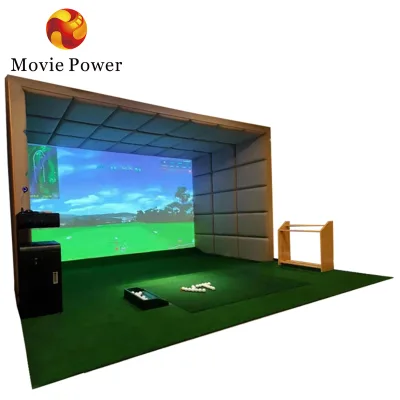


Virtual Golf Simulator Screen Projection Golf Simulator Indoor Golf Game Machine
$10000.00 - $12000.00
MOQ: 1 Sets

Amusement Park Products Golf Training Aids Golf Simulator Game Equipment
$10000.00 - $12000.00
MOQ: 1 Sets

Best Home Indoor Luxury Golf Simulator Professional Training Machine
$10000.00 - $12000.00
MOQ: 1 Sets


Luxury Golf Simulator Setup with Durable High Quality Enclosure Design
$12000.00 - $13000.00
MOQ: 1 Sets

High Performance Golf Simulator Enclosure for Serious Indoor Golf Enthusiasts
$12000.00 - $13000.00
MOQ: 1 Sets

Durable Indoor Golf Simulator Enclosure for High Performance Simulation
$12000.00 - $13000.00
MOQ: 1 Sets
Comprehensive Sourcing Guide
Strategic Sourcing Guide for Indoor Golf Simulators
The global demand for immersive sports technology has elevated the indoor Golf Simulator from a niche luxury item to a staple in commercial entertainment, training facilities, and hospitality sectors. For procurement professionals, navigating the market requires a disciplined approach that distinguishes between marketing claims and verifiable product attributes. This guide synthesizes available market data to provide a framework for sourcing high-quality golf simulation systems, focusing on technical specifications, compliance, cost structures, and supplier reliability. Buyers must recognize that while the core function remains consistent—simulating a golf swing—the execution varies significantly based on intended application, from amusement parks to private home installations.
Technical Specifications and System Architecture
The foundation of any Golf Simulator procurement lies in understanding the technical architecture, which dictates performance and installation requirements. Based on observed market data, the industry presents a dichotomy in material composition. Some listings explicitly identify the product material as "Inflatable," while others specify "Plastic" or rigid structural components. This distinction is critical for the buyer, as it determines the physical footprint, durability, and suitability for permanent versus temporary installations. For instance, a system described with a standard size of 250300420cm suggests a compact, perhaps modular unit, whereas a specification of L:6m W:5m H:3m indicates a substantial, room-scale enclosure.
Voltage requirements also vary across the supply base. Observed data points to operating voltages of 220V, with some units supporting a dual voltage range of 110V to 220V. This variability necessitates a thorough audit of the destination facility's electrical infrastructure before finalizing an order. Furthermore, the production technology for these units is predominantly "Injection Molding," a process that ensures high precision in component manufacturing but implies a reliance on specific tooling. The weight of these systems is another key metric; observed data cites a weight of 600kg for certain models, which has profound implications for floor loading capacity and logistics planning.
Buyers should verify the "Custom Size" capability against their specific spatial constraints. While many suppliers offer "Custom Demand" sizing, the physical reality of the simulation area must accommodate the necessary swing clearance and screen projection distance. The "Indoor" classification is universal in the current dataset, confirming that these systems are engineered for controlled environments where lighting and acoustics can be managed to ensure optimal sensor accuracy.
Compliance, Certification, and Safety Standards
In the B2B procurement of entertainment and sports equipment, compliance is not merely a formality but a prerequisite for liability management and operational safety. The observed market data highlights a consistent presence of international certifications, specifically CE, GS, and ISO. These marks indicate adherence to European safety standards (CE), German safety regulations (GS), and international quality management systems (ISO). Additionally, specific product certificates such as "CE RoHS" and "TUV" are noted, suggesting compliance with restrictions on hazardous substances and rigorous third-party testing.
However, buyers must exercise caution when interpreting certification claims. The data shows variations in how certifications are listed, with some entries combining certification status with other attributes in a single string (e.g., "<Certification:CE,ISOCustomized:Customized"). This formatting inconsistency underscores the need for direct verification of valid certification documents from the supplier. The "Allowable Passenger" metric is also mentioned in the context of certification, though the specific numerical limits are not clearly defined in the provided text. Procurement teams must request explicit safety load limits and passenger capacity data to ensure the equipment meets local safety codes for public venues like amusement parks or shopping malls.
The "Condition: New" attribute is standard for new procurement, but buyers should verify the warranty terms associated with these certifications. A "12 Months" warranty is a common observation in the current market, providing a baseline for after-sales support. It is essential to confirm whether the warranty covers the entire system, including the projection hardware, sensors, and structural frame, or if it is limited to specific components.
Cost Drivers and Pricing Dynamics
The pricing landscape for golf simulators is highly volatile, driven by the complexity of the simulation software, the quality of the projection hardware, and the structural integrity of the enclosure. The observed price range in the market spans from $550 to $49,000 USD. This wide disparity reflects the difference between entry-level, perhaps inflatable or simplified units, and high-end, fully enclosed, professional-grade simulators with advanced software suites.
Several factors influence where a specific unit falls within this range. The "Customization" level is a primary cost driver. Units labeled as "Customized" or offering "Customized Logo" services typically command a premium over standard off-the-shelf models. The "Service" aspect, including "OEM/ODM" capabilities and "24-Hour After Sales Service," also adds value and cost. Suppliers offering comprehensive after-sales support and the ability to brand the unit for a specific client are likely positioned at the higher end of the price spectrum.
The "Production Time" and "Delivery Time" are also indirect cost factors. While some listings indicate a rapid "7-10 Days" delivery, others suggest a longer "15-30 Days" production window. Extended lead times may necessitate higher inventory holding costs or impact project timelines, effectively increasing the total cost of ownership. Buyers should evaluate the total cost of acquisition, including shipping, installation, and potential downtime, rather than focusing solely on the unit price.
Typical Applications and Operational Environments
Golf simulators are versatile assets deployed across a diverse range of commercial and private environments. The observed data identifies "Amusement Park," "Shopping Malls," "Game Centers," and "Vr Theme Parks" as primary application sites. These locations prioritize high durability, ease of maintenance, and the ability to handle high traffic volumes. The "Golf Leisure" style and "Ultimate Challenge" features suggest that these units are designed to be engaging for a broad audience, including casual players and competitive enthusiasts.
Beyond commercial venues, the data indicates suitability for "Home," "Hotel," "School," and "Household" applications. In these settings, the focus shifts towards space efficiency, noise reduction, and user-friendly interfaces. The "Age: >12 Years" specification is a critical filter for buyers targeting family-oriented venues, ensuring the equipment is appropriate for the intended demographic. The "Effective Golf Training Tools" feature highlights the utility of these systems for serious athletes and coaching centers, where data accuracy and swing analysis are paramount.
The "Application: Different Place to Operate" attribute reinforces the modularity of these systems. Whether installed in a dedicated golf center or a multi-purpose entertainment zone, the simulator must integrate seamlessly with the existing environment. Buyers should assess the specific operational requirements of their target venue, such as power availability, floor space, and ventilation, to ensure the selected unit is a viable fit.
Supplier Evaluation and Procurement Logistics
Selecting the right supplier is as critical as selecting the right product. The observed data points to "Guangdong, China" as the primary origin for these units, a region known for its manufacturing capabilities in electronics and entertainment equipment. When evaluating suppliers, buyers should prioritize those who offer "OEM/ODM" services and demonstrate a clear capacity for "Customization." The ability to provide "Customized Logo" and "Custom Size" solutions indicates a flexible manufacturing process capable of meeting unique client needs.
Logistics and packaging are significant considerations for international procurement. The standard packaging observed includes "Air Bubble Film," "Stretch Films," and "Wood Frame" protection. This robust packaging is essential for preventing damage during transit, particularly for heavy units weighing up to 600kg. Buyers must verify that the packaging meets international shipping standards and includes clear handling instructions.
The "MOQ: 1 Set" observation is a favorable trend for buyers, suggesting that suppliers are willing to accommodate small orders. However, buyers should be aware that the "Observed MOQ range" can vary between 1 and 2 units, and this may fluctuate based on the level of customization requested. Lead times also vary, with "Production Time" ranging from 15 to 20 days and "Delivery Time" spanning 7 to 30 days. Procurement planning must account for these variances to avoid delays in project launch.
Quality Control and Long-Term Procurement Considerations
Ensuring long-term value requires a rigorous quality control (QC) strategy. Buyers should verify the "Condition: New" status and request pre-shipment inspection reports. The "12 Months" warranty is a standard offering, but the scope of coverage must be clearly defined. Does it include labor costs for on-site repairs? What is the process for replacing defective components? The "24-Hour After Sales Service" promise is a strong indicator of supplier commitment, but buyers should confirm the actual response times and support channels available in their region.
The "Productive Technology: Injection Molding" suggests a high degree of precision, but buyers should also inquire about the quality of the raw materials used. While "Plastic" and "Inflatable" are listed as materials, the specific grade and durability of these materials are not detailed. For units intended for high-traffic commercial use, the resistance to wear and tear is a critical factor.
Finally, buyers should consider the lifecycle of the software and hardware. The "Feature: Effective Golf Training Tools" implies a reliance on software updates and data processing capabilities. Procurement contracts should address the terms of software licensing, update frequency, and compatibility with future hardware upgrades. By focusing on these long-term considerations, buyers can secure a Golf Simulator system that remains a valuable asset for years, rather than a short-term expenditure.
Comparative Analysis of Product Attributes
To facilitate decision-making, the following table summarizes key attributes observed in the current market data. This comparison highlights the variability in specifications and helps buyers identify the product type that best aligns with their specific requirements.
| Attribute Category | Observation A (Compact/Entry) | Observation B (Commercial/Heavy) | Observation C (Custom/High-End) |
|---|---|---|---|
| Material | Inflatable | Plastic | Plastic / Custom |
| Dimensions | 250300420cm | L:6m W:5m H:3m | Custom Size |
| Weight | Not specified | 600kg | Not specified |
| Voltage | 220V | 110V 220V | 220V |
| Certification | CE, GS, ISO | CE, RoHS, TUV | CE, ISO |
| Lead Time | 7-10 Days | 15-30 Days | 15-20 Days |
| Warranty | 12 Months | 12 Months | 12 Months |
| Target Venue | Amusement Park, Mall | Shopping Mall, Hotel | Home, School, Commercial |
| Customization | Available | Customized Logo | Custom Demand |
This table illustrates that while the core product remains a Golf Simulator, the specific configuration varies widely. Buyers must align their procurement strategy with the specific operational needs of their venue, ensuring that the selected unit meets both technical and compliance requirements. By adhering to the evidence-based approach outlined in this guide, procurement professionals can navigate the complexities of the Golf Simulator market with confidence and precision.
FAQs
What certifications do golf simulators typically have?
Most units carry CE, GS, and ISO certifications for safety and quality. Some models also include CE RoHS and TUV marks. Buyers should verify valid documents directly from the supplier to ensure compliance with local regulations.
Can I customize the size of the simulator?
Yes, customization is available with options for custom demand sizing. While standard dimensions like 250x300x420cm exist, buyers can request specific lengths and widths to fit their venue. This service often requires a longer production time.
How long is the delivery time for these units?
Delivery times vary between 7 to 30 days depending on the order. Some suppliers offer rapid 7-10 day shipping, while others require 15-30 days for production. Buyers should confirm the specific lead time before placing an order.
What is the minimum order quantity for a simulator?
The minimum order quantity is typically 1 set, allowing for small purchases. Some listings show a range of 1 to 2 units. This low MOQ makes it accessible for individual businesses or home installations without bulk requirements.
Where are these golf simulators manufactured?
The primary manufacturing origin is Guangdong, China. This region is known for producing electronics and entertainment equipment. Buyers should verify the specific factory location to ensure quality control and logistics planning for international shipping.
What materials are used to build the simulator?
Materials vary, with some units made of plastic and others described as inflatable. The production technology often involves injection molding for precision. Buyers must check the specific material grade to ensure durability for their intended commercial or home use.
What is the price range for indoor golf simulators?
Prices range from 550 to 49,000 USD based on features and customization. Entry-level units are cheaper, while high-end enclosed systems cost significantly more. The final price depends on software, hardware quality, and custom branding services.