Source Grey Rubber Crutch Tips for Medical, Household, and Industrial
Find 30 listings for Grey Rubber Crutch Tips suitable for crutches, canes, and walking sticks. Buyers can compare specifications like hardness, size, and material certifications to select the right replacement parts for medical or industrial applications.
Key considerations
Products List
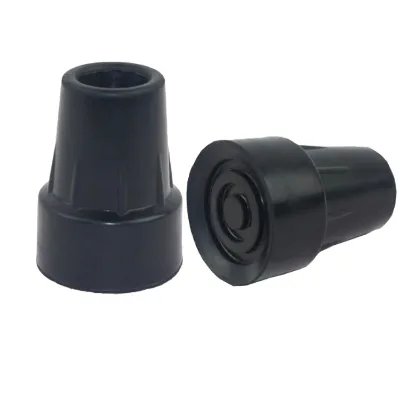
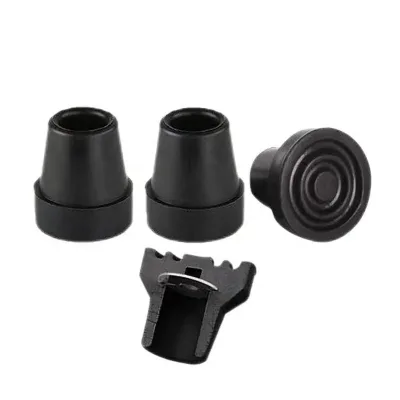
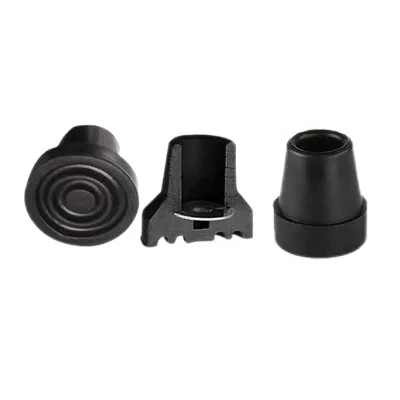
Cane Tip Walking Stick End Crutch Cane Tips Walking Stick End Tip 16mm
$0.10 - $0.60
MOQ: 1000 Minimum


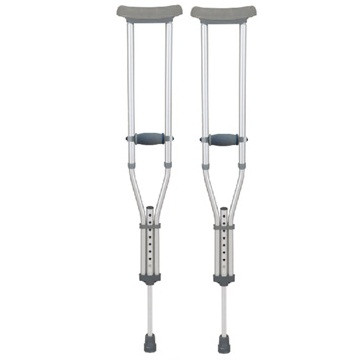
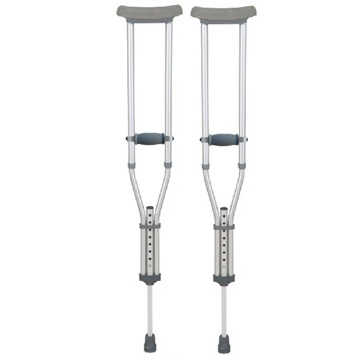


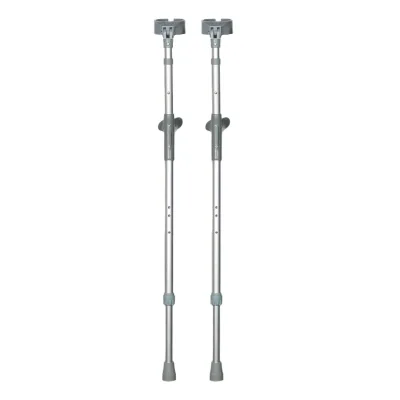
19mm Safety Non-Slip High Quality Rubber Tips for Walking Stick Cane Crutch
$0.25 - $1.00
MOQ: 1000 Pieces


Comprehensive Sourcing Guide
Strategic Sourcing Guide for Grey Rubber Crutch Tips
Understanding Product Specifications and Material Integrity
When sourcing Grey Rubber Crutch Tips, buyers must first distinguish between generic rubber components and specialized medical-grade accessories. The core keyword implies a specific application: replacement tips for mobility aids such as canes, crutches, and walking sticks. Based on available product data, the material composition is a primary differentiator. The supply chain frequently lists "natural rubber" and general "rubber" as the base material, with specific mentions of alternative compounds like silicone, NBR, PUR, FKM, HNBR, Cr, and SBR. For a grey crutch tip, the material selection dictates the balance between durability, shock absorption, and grip.
The physical dimensions are critical for compatibility. Observed listings indicate a wide range of sizes, including specific measurements like 16mm, 19mm, and "5/8 inch" tips. The "FULL SIZE" designation often appears in product descriptions, suggesting that standard sizing is available, but buyers must verify the exact diameter and length of their existing equipment. The hardness of the rubber is another vital technical parameter. Data indicates a hardness range of 30-90 Shore A, with some specific products described simply as "Soft." For crutch tips, a softer compound is generally preferred to provide shock absorption and prevent slipping on smooth surfaces, whereas harder compounds might be selected for abrasive outdoor environments.
Manufacturing processes also influence the final product quality. The primary processing service identified is "Moulding," which allows for the creation of precise geometries required to fit various crutch shafts. The drawing formats available for these components include IGS and STP, which are essential for buyers who need to verify fitment or request custom modifications. The general tolerance for these rubber parts is noted as +/-0.05mm, though this can vary. Buyers should confirm if the supplier can achieve tighter tolerances if their specific crutch model requires a precise fit to prevent wobbling or premature wear.
Compliance, Certification, and Regulatory Standards
For medical and mobility aids, compliance is not merely a formality but a safety imperative. The Grey Rubber Crutch Tips must meet rigorous standards to ensure they do not introduce toxins or fail under load. The supply data highlights several key certifications that buyers should look for to validate product safety. These include FDA, CE, LFGB, CIQ, and EEC certifications. The presence of FDA and LFGB suggests the material is safe for potential skin contact and meets food-grade safety standards, which is a strong proxy for biocompatibility in medical devices.
Furthermore, specific standards for plastic and rubber products are relevant. The data references UL and CE standards for plastic products, alongside CE, Reach, Cp65, PAHs, FDA, and Tsca for plastic toys. While crutch tips are not toys, the rigorous testing associated with these standards (such as limits on heavy metals and phthalates) often applies to medical rubber components as well. Buyers must verify that the specific grey tips they intend to purchase carry the CE mark, indicating conformity with health, safety, and environmental protection standards for products sold within the European Economic Area.
It is important to note that while some listings mention "Rubber Part-JYRT004" as a model number, this is a specific identifier rather than a universal standard. Buyers should not assume that all grey rubber tips from a supplier meet these certifications unless explicitly stated in the product documentation. The "Disposable: Non-Disposable" attribute confirms that these are intended for long-term use, which necessitates higher durability and chemical stability compared to single-use items. When evaluating a supplier, request the specific test reports that correspond to the FDA, CE, and Reach certifications to ensure the grey rubber compound has been tested for the specific application of weight-bearing mobility aids.
Cost Drivers and Economic Factors in Procurement
The economics of sourcing Grey Rubber Crutch Tips are influenced by several variables, including material costs, order volume, and customization requirements. The observed price range in the market spans from $0.01 to $10 per unit, a wide disparity that reflects differences in material quality, volume, and complexity. The Minimum Order Quantity (MOQ) is another significant cost driver. Data indicates an MOQ range of 1 to 1000 pieces, with a specific high-confidence fact noting an MOQ of 1000 pieces for certain listings.
For buyers requiring small quantities, the unit cost will likely be higher due to the setup costs associated with moulding. However, the data confirms that "Small Quantity Order: Okay" is a service offered by some suppliers, and "Free Samples" are available. This allows buyers to test the quality of the grey rubber before committing to a larger purchase. The "Selling Units" are listed as "Single item," which facilitates sampling, but bulk purchasing is typically required for cost-effective procurement.
Customization is a major factor in pricing. While "OEM/ODM: Acceptable" and "Customized: Customized" are listed attributes, customizing the color to a specific grey, altering the hardness, or changing the dimensions will incur additional tooling and setup costs. The "Affordable Cost" is cited as a reason to choose certain suppliers, but this should be balanced against the risk of lower-quality materials. The "Supply Capacity" of 1,000,000 units per month suggests that large-scale suppliers can offer competitive pricing for high-volume orders, leveraging economies of scale. Buyers should also consider the "Packing" costs; while "IN BULK" is an option, some suppliers offer "Inner Plastic Bag and Cardboard Cartons Outside," which adds to the unit cost but ensures better protection during transit.
Typical Applications and Performance Requirements
Grey Rubber Crutch Tips are primarily designed for the medical and household sectors, though the data suggests broader applications in electronic, vehicle, agricultural, and industrial contexts. In the context of crutches, the primary function is to provide a stable base of support. The performance attributes listed include "Shock Absorber," "Hole Seal," and "Dust Cover Seal." For crutch tips, the shock absorption capability is paramount. The rubber must compress under the user's weight to reduce impact on the joints, particularly for users with arthritis or recovering from injuries.
The working temperature range of -40 to 230 Celsius indicates a high degree of thermal stability. This ensures that the grey rubber tips will not become brittle in cold winter conditions or degrade in hot summer environments. The tensile strength of >=17MPa and elongation at break of >=300% are critical metrics for durability. These figures suggest that the rubber can withstand significant stretching and stress without tearing, which is essential for a component that undergoes repeated compression and shear forces during walking.
The "Style" of the product is listed as Western, Chinese, and Japanese, which may refer to the design aesthetics or the specific ergonomic shapes developed for different markets. However, the functional requirement remains consistent: the tip must provide traction. The "Usage" as a "replacement for cane tip" confirms that these are aftermarket accessories. Buyers should verify that the grey rubber tips are compatible with the specific crutch models they are servicing, as the internal diameter and locking mechanisms can vary. The "Hardness: Soft" attribute is particularly relevant for indoor use on smooth floors, while a harder compound might be preferred for outdoor gravel or rough terrain.
Supplier Evaluation and Operational Capabilities
Evaluating a supplier for Grey Rubber Crutch Tips requires a focus on their manufacturing capabilities, location, and logistical reliability. The "Place of Origin" is frequently listed as Zhejiang, China, with some references to Guangzhou. These regions are known for their robust rubber and plastic manufacturing ecosystems. The "Port of dispatch" is typically Shanghai, which is a major logistics hub, facilitating efficient export. Buyers should verify the supplier's actual production capacity against their stated "Supply Capacity" of 1,000,000 units per month to ensure they can meet demand during peak seasons.
The "Processing Service" of "Moulding" is the core competency required. Buyers should inquire about the supplier's mold inventory and their ability to create new molds if custom grey tips are needed. The availability of "Free Samples" and the acceptance of "Small Quantity Order" are strong indicators of a supplier's willingness to engage with new buyers. However, the "MOQ: 1000pcs" constraint for some products means that buyers must plan their inventory carefully to avoid stockouts or excessive holding costs.
The "Brand Name" is often listed as "OEM," indicating that the supplier primarily produces white-label goods. This is common in the rubber component industry, where the focus is on the product specifications rather than consumer branding. Buyers should ensure that the supplier has a robust quality control system in place, given the "Non-Disposable" nature of the product. A supplier that offers "Customized" solutions and accepts "OEM/ODM" requests is likely to have the technical expertise to handle specific buyer requirements. The "Why Us" attribute of "Affordable Cost" should be scrutinized to ensure it does not come at the expense of material quality or certification compliance.
Quality Control and Long-Term Procurement Strategy
Establishing a long-term procurement strategy for Grey Rubber Crutch Tips involves rigorous quality control measures and a clear understanding of the product lifecycle. The "General Tolerance" of +/-0.05mm is a baseline, but buyers should negotiate for tighter tolerances if their crutch models are sensitive to fitment issues. The "Single gross weight" of 0.500 kg and "Single package size" of 38.5x12x10 cm provide data for logistics planning, helping buyers calculate shipping costs and warehouse space requirements.
Quality control should extend beyond the initial sample approval. Buyers should implement a system for periodic testing of the tensile strength, elongation at break, and hardness of the grey rubber to ensure consistency over time. The "Standard" attributes like "Rubber" and "Custom dimensions available" suggest that the material properties can be tailored, but this requires clear communication and documentation. The "Packing" method, whether "IN BULK" or with "Inner Plastic Bag and Cardboard Cartons Outside," affects the risk of damage during transit and should be aligned with the buyer's internal handling capabilities.
Long-term success depends on building a relationship with a supplier who can adapt to changing needs. The "OEM/ODM: Acceptable" status indicates flexibility, but buyers must ensure that any changes in design or material do not compromise the certifications (FDA, CE, etc.) that were initially approved. The "Working Temperature" range and "Performance" metrics like shock absorption should be re-verified annually or after any significant supply chain changes. By focusing on these technical and operational details, buyers can secure a reliable supply of high-quality Grey Rubber Crutch Tips that meet the safety and performance needs of their customers.
Comparative Analysis of Sourcing Options
To assist in decision-making, the following table summarizes key attributes observed in the market for Grey Rubber Crutch Tips. This comparison highlights the trade-offs between different sourcing scenarios based on the provided data.
| Attribute | Standard Bulk Option | Customized/OEM Option | Small Quantity/Sample Option |
|---|---|---|---|
| MOQ | 1000 pcs (High) | 1000 pcs (Typical) | 1-100 pcs (Low) |
| Material | Natural Rubber / Rubber | Custom (Silicone, NBR, etc.) | Natural Rubber / Rubber |
| Certification | FDA, CE, LFGB, CIQ, EEC | Verify per batch | Verify per batch |
| Hardness | 30-90 Shore A | Customizable | 30-90 Shore A |
| Packing | In Bulk | Inner Bag + Carton | Single Item / Bulk |
| Lead Time | Dependent on Capacity | Longer (Mold Setup) | Short (Sample Ready) |
| Cost Driver | Volume Efficiency | Tooling & Setup | Unit Price Premium |
| Tolerance | +/-0.05mm | Customizable | +/-0.05mm |
This table illustrates that while standard bulk options offer the best unit economics, they require a significant upfront commitment. Customized options provide flexibility but may involve higher initial costs and longer lead times due to mold creation. Small quantity options are ideal for testing but come with a higher per-unit cost. Buyers must weigh these factors against their specific inventory needs and budget constraints to select the most appropriate sourcing strategy.
FAQs
What certifications do Grey Rubber Crutch Tips typically have?
These tips often carry FDA, CE, LFGB, CIQ, and EEC certifications to ensure safety. Buyers should verify specific test reports for these standards to confirm the rubber compound meets medical and mobility aid requirements.
Which materials are used to manufacture these rubber tips?
Manufacturers primarily use natural rubber, though silicone, NBR, PUR, and SBR are also available options. The specific material choice impacts durability and shock absorption capabilities for different user needs.
How large is the minimum order quantity for these items?
The minimum order quantity is typically 1000 pieces for standard listings. Some suppliers may accept smaller orders or provide free samples for quality testing before bulk commitment.
Can buyers request custom dimensions for these crutch tips?
Yes, suppliers accept OEM and ODM requests with custom dimensions available. Buyers can specify exact sizes like 16mm or 19mm to ensure compatibility with their specific crutch models.
What is the hardness range for these grey rubber components?
The hardness generally ranges from 30 to 90 Shore A, with some options described simply as soft. This range allows selection based on whether shock absorption or abrasion resistance is the priority.
Where are these rubber tips typically manufactured and shipped from?
Products originate from Zhejiang or Guangzhou, China, and are dispatched via the Shanghai port. This location provides access to established rubber manufacturing ecosystems and efficient export logistics.