Source Halal Kosher Marigold Flower Extract for Food, Medicine, Health Care
Compare 30 verified listings for Halal Kosher Marigold Flower Extract sourced from China. Buyers can review specifications like Zeaxanthin and Lutein content, extraction methods, and packaging options for food, medicine, and health care applications.
Key considerations
Products List




Comprehensive Sourcing Guide
Strategic Sourcing Guide for Halal Kosher Marigold Flower Extract
Understanding the Product Profile and Technical Specifications
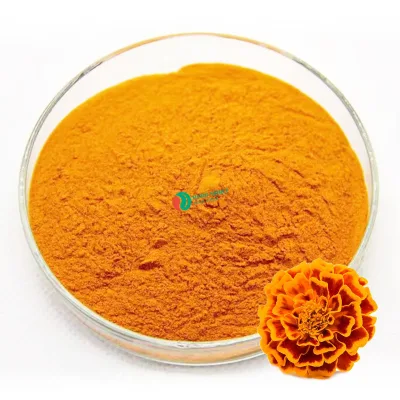
Marigold flower extract represents a significant category within the botanical ingredient market, primarily valued for its high concentration of carotenoids. The core raw material is derived from the flowers of Tagetes Erecta L., a plant species widely cultivated in regions such as Shaanxi and Shandong in China. The extraction process typically involves solvent extraction methods, though physical processes are also noted in specific product lines. The final output is generally observed as a fine powder, appearing in shades ranging from orange to yellow, with mesh sizes commonly specified between 80 and 120 mesh.
Buyers must distinguish between the primary active ingredients found in these extracts. The most prevalent compounds are lutein and zeaxanthin, which serve as the functional drivers for the product's value. Specifications for these active ingredients vary significantly across the market. Some product lines are standardized to contain 10% zeaxanthin, while others offer a broader range of lutein content from 5% up to 98%. Concentration ratios, often referred to as extract ratios, are frequently cited as 10:1 or 20:1, indicating the amount of raw material required to produce one unit of extract. The physical form is predominantly powder, though some suppliers may offer oil forms or specific application-ready formats like capsules and tablets.
The chemical analysis of these extracts relies on rigorous testing methodologies. High-Performance Liquid Chromatography (HPLC) is the standard test method for verifying active ingredient content, often utilized in conjunction with UV spectrophotometry. For buyers, understanding these technical baselines is essential before engaging with suppliers. The product is categorized under HS Code 2932999099, which aids in customs classification and duty calculation. When evaluating a specific lot, the buyer should verify the mesh size, the specific ratio of lutein to zeaxanthin, and the extraction method used, as these factors directly influence solubility, bioavailability, and application suitability.
Navigating Compliance and Certification Requirements
For buyers targeting the Halal and Kosher markets, the certification landscape is critical. While the provided data confirms the presence of major international certifications such as FDA, ISO, and HACCP, specific Halal and Kosher statuses are not explicitly detailed in the general product attributes. Therefore, a procurement strategy must prioritize direct verification of these religious compliance standards rather than assuming them based on general food-grade certifications.
The observed certifications in the market data include FDA, ISO, and HACCP, with some entries also listing RoHS compliance. These certifications indicate a baseline of quality management and safety but do not automatically confer religious dietary approval. To source Halal and Kosher compliant marigold extract, the buyer must request specific certificates from the supplier. The Halal certificate should be issued by a recognized Islamic authority, and the Kosher certificate must be provided by a reputable kosher certification agency. The absence of these specific labels in the general product description necessitates a proactive due diligence process.
Furthermore, the supply chain integrity is vital for maintaining these certifications. The raw material source, identified as plants from Shaanxi or Shandong, must be processed in facilities that adhere to the strict separation requirements of Halal and Kosher standards. This includes ensuring that no cross-contamination occurs with non-compliant substances during the solvent extraction or physical processing stages. The packaging materials, often described as plastic drums or aluminum-foiled bags, must also be verified to ensure they have not been in contact with non-compliant substances. Buyers should require a full chain of custody documentation that traces the product from the flower field to the final packaged drum, ensuring that every step of the process maintains the integrity of the Halal and Kosher claims.
Cost Drivers and Pricing Dynamics
The pricing of marigold flower extract is influenced by a complex interplay of factors, including the concentration of active ingredients, the extraction ratio, and the level of certification. The observed price range in the market spans from 1 to 450 USD, a wide variance that reflects differences in product quality and specification. High-concentration extracts, such as those with 98% lutein, will naturally command a premium price compared to standard 10% zeaxanthin powders. Similarly, extracts with higher ratios, such as 20:1, generally cost more than 10:1 equivalents due to the increased volume of raw material required for processing.
Minimum Order Quantities (MOQs) also play a significant role in the total cost of procurement. The observed MOQ range is between 1 and 1000 units, suggesting that buyers can source small quantities for testing or development, while larger industrial orders may require bulk commitments. The packaging format, typically 25kg fiber drums or custom requirements, impacts the logistics cost. Bulk purchasing in standard 25kg drums often reduces the per-unit cost compared to smaller, custom-packaged units.
Additionally, the cost is affected by the complexity of the certification process. Securing Halal and Kosher certification involves additional auditing and administrative fees, which are often passed on to the buyer. Buyers should anticipate that compliant products may carry a price premium over non-certified equivalents. It is also important to consider the storage requirements, which specify a dry and cool place away from strong light. Failure to meet these storage conditions can lead to degradation of the active ingredients, effectively increasing the cost of the product through waste or reduced efficacy.
Typical Applications and Formulation Considerations
Marigold flower extract is a versatile ingredient with applications spanning the health care, food, and medicine sectors. The product is specifically noted for its use in capsule and tablet formulations, making it a staple in the dietary supplement industry. Beyond solid dosage forms, the extract is also compatible with paste, suppository, lotion, and injection applications, offering flexibility for manufacturers developing diverse product lines. The active ingredients, lutein and zeaxanthin, are particularly valued for their role in eye health, which drives demand in the nutritional supplement market.
In the food industry, the extract serves as a natural colorant due to its vibrant orange to yellow appearance. This makes it an attractive alternative to synthetic dyes in beverages, confectionery, and dairy products. The powder form allows for easy incorporation into dry mixes, while oil forms may be preferred for liquid applications. The mesh size of 80-120 mesh ensures good dispersibility in various matrices, reducing the risk of clumping during mixing.
When formulating products, buyers must consider the stability of the extract. The storage method requires a dry and cool place, kept away from strong light, to preserve the integrity of the carotenoids. Exposure to light and heat can lead to oxidation and degradation of the active ingredients. Therefore, formulation processes should minimize exposure to these elements. The shelf life of the product is typically cited as 2 years, which buyers must factor into their inventory management and product development timelines. Ensuring that the final product maintains the required concentration of lutein and zeaxanthin throughout its shelf life is a critical quality control objective.
Supplier Evaluation and Quality Assurance Protocols
Evaluating a supplier for marigold flower extract requires a multi-faceted approach that goes beyond price comparison. The first step is verifying the supplier's ability to provide the necessary Halal and Kosher certifications. Buyers should request copies of current certificates and verify their validity with the issuing bodies. The supplier's production facility should be inspected, if possible, to ensure adherence to Good Manufacturing Practices (GMP) and the specific requirements of the requested certifications.
Quality assurance is paramount in the botanical extract industry. Buyers should demand a Certificate of Analysis (CoA) for every batch, which should include test results for active ingredient content, heavy metals, pesticide residues, and microbial limits. The test methods used, such as HPLC and UV, should be clearly stated on the CoA. The supplier should also provide data on the extraction process, including the type of solvents used and the steps taken to remove residual solvents.
The packaging and storage capabilities of the supplier are also critical indicators of quality. The standard packaging of 25kg drums or aluminum-foiled bags must be robust enough to protect the product from moisture and light during transit. The supplier should demonstrate a clear understanding of the storage requirements, ensuring that the product is kept in a dry and cool environment before shipment. Buyers should also inquire about the supplier's quality control procedures, including in-process testing and final product release protocols. A supplier with a robust quality management system will be better equipped to handle the specific demands of Halal and Kosher compliance.
Long-Term Procurement and Supply Chain Stability
Establishing a long-term relationship with a supplier of marigold flower extract requires a focus on supply chain stability and continuous quality improvement. The raw material source, primarily from Shaanxi and Shandong in China, is subject to agricultural variables such as weather conditions and harvest cycles. Buyers should work with suppliers who have diversified sourcing strategies to mitigate the risk of supply disruptions. The ability of the supplier to scale production to meet fluctuating demand is another key consideration.
Contractual agreements should clearly define the specifications, including the active ingredient content, mesh size, and certification requirements. It is advisable to include clauses that allow for periodic audits and re-certification of the Halal and Kosher status. The supplier should also be committed to maintaining the 2-year shelf life of the product, ensuring that inventory management practices prevent premature expiration.
As the market for Halal and Kosher products continues to grow, buyers should anticipate increased demand for certified marigold extract. Building a strategic partnership with a supplier who can provide consistent quality and reliable certification support will be essential for maintaining a competitive edge. Regular communication and collaboration on quality improvement initiatives will help both parties navigate the complexities of the global supply chain. By focusing on these long-term considerations, buyers can ensure a steady supply of high-quality, compliant marigold flower extract for their operations.
Comparative Analysis of Product Specifications
To assist buyers in making informed decisions, the following table summarizes the key technical and compliance attributes observed in the market for marigold flower extract. This comparison highlights the variability in specifications and the importance of verifying specific requirements.
| Attribute | Standard Observation | Variability Notes | Verification Requirement |
|---|---|---|---|
| Active Ingredients | Lutein, Zeaxanthin | Ranges from 10% Zeaxanthin to 98% Lutein | Request specific CoA for batch |
| Extraction Ratio | 10:1, 20:1 | Depends on concentration needs | Confirm ratio in technical data sheet |
| Form | Fine Powder | Some oil forms available | Verify physical state for application |
| Mesh Size | 80-120 Mesh | 80 Mesh is common | Check for particle size distribution |
| Certifications | FDA, ISO, HACCP | Halal/Kosher not guaranteed | Request specific religious certs |
| Packaging | 25kg Drum, Plastic Bags | Custom options available | Confirm packaging integrity |
| Origin | Shaanxi, Shandong, China | Specific province varies | Verify origin for traceability |
| Shelf Life | 2 Years | Standard duration | Check expiration date on batch |
This table serves as a reference for the typical attributes found in the market, but buyers must treat these as observations rather than guarantees. Each supplier may offer different variations, and the specific needs of the buyer's application should dictate the selection criteria. By rigorously verifying these attributes, buyers can ensure they source a product that meets their technical and compliance requirements.
FAQs
What certifications do marigold flower extract suppliers typically hold?
Suppliers typically hold FDA, ISO, and HACCP certifications for quality and safety. Some products also list RoHS compliance. Buyers must specifically request Halal and Kosher certificates as these are not automatically included in general food-grade certifications.
Which active ingredients are found in marigold flower extract?
The primary active ingredients are lutein and zeaxanthin derived from Tagetes Erecta L. flowers. Specifications vary, with lutein ranging from 5% to 98% and zeaxanthin often standardized at 10%. Concentration ratios like 10:1 or 20:1 indicate the raw material volume used.
How is marigold flower extract packaged for international shipping?
Standard packaging includes 25kg fiber drums or aluminum-foiled bags with plastic inner bags. Custom packaging is available upon customer request. The material must protect the powder from moisture and light to maintain stability during transit and storage.
Can marigold flower extract be used in liquid formulations?
Yes, the extract is available in powder and oil forms suitable for various applications. While powder is common for capsules and tablets, oil forms support liquid applications. The mesh size of 80 to 120 ensures good dispersibility in different matrices.
What is the shelf life of marigold flower extract?
The product has a typical lifetime of 2 years when stored correctly. Buyers must keep the extract in a dry and cool place away from strong light. Proper storage prevents oxidation and degradation of the active carotenoid ingredients.
Which extraction methods are used for marigold flower extract?
Extraction is primarily performed using solvent extraction methods or physical processes. The raw material consists of plants, specifically the flowers. The final appearance is an orange or yellow fine powder with a mesh size between 80 and 120.
How can buyers verify Halal and Kosher compliance?
Buyers must request specific Halal and Kosher certificates from recognized authorities as general certifications do not guarantee religious compliance. Verification should include checking the issuing body and ensuring no cross-contamination occurs during processing and packaging.