Source Halogen Taillights for Toyota, Repair, and Replacement
Compare 30 verified listings for Halogen Taillights suitable for Toyota vehicles, repair applications, and general replacement needs. Buyers can evaluate specifications like E-mark and DOT certifications, voltage, and material options from suppliers in Zhejiang, China.
Key considerations
Products List
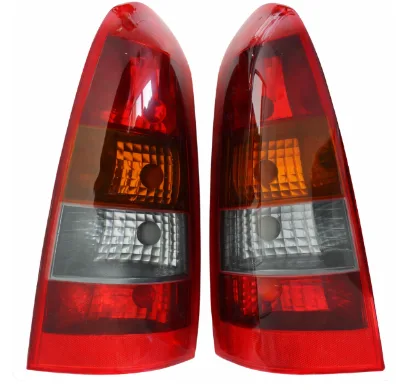


$5.00 - $50.00
MOQ: 100




Comprehensive Sourcing Guide
Strategic Sourcing Guide for Halogen Taillight Components
Procuring halogen taillight components requires a nuanced understanding of the intersection between legacy lighting technology and modern regulatory frameworks. While the automotive industry increasingly transitions toward LED and laser systems, halogen units remain a critical segment for replacement markets, fleet maintenance, and specific regional vehicle applications. This guide synthesizes available product data and industry standards to provide a structured approach for B2B buyers evaluating suppliers for these components. The focus remains on verifying technical attributes, ensuring regulatory compliance, and managing supply chain risks without relying on unverified claims or speculative market data.
Technical Specifications and Component Attributes
When sourcing Halogen Taillights, the primary technical differentiator lies in the material composition and the specific electrical characteristics of the bulb. Based on observed product attributes, the core material for the bulb envelope is frequently identified as quartz glass. This material choice is significant because quartz glass offers superior thermal resistance compared to standard soda-lime glass, allowing the bulb to withstand the high temperatures generated by halogen filaments. The presence of "Quartz Glass" and "Glass Material: Quartz Glass" in product listings indicates a focus on durability and heat dissipation, which are essential for the thermal cycling inherent in automotive lighting applications.
Electrical specifications must be rigorously verified against the vehicle's electrical system. Observed data points to a standard voltage of 12V, which aligns with the global standard for passenger vehicle electrical systems. However, buyers must be cautious regarding power consumption. While some listings indicate a wattage range of 55-100W, this range is broad and likely encompasses different bulb types (e.g., H7, H19, or specific taillight configurations). The specific model numbers observed, such as "LW-9006C," "H15," "880," and "H19," suggest a diverse inventory that may not be limited to traditional taillight bulbs but could include auxiliary lighting or headlight equivalents used in complex assemblies. The "9006" standard is explicitly mentioned, which typically refers to a specific halogen bulb base and filament configuration often used for low-beam headlights, though it may appear in multi-function assemblies.
The physical construction also includes resistance properties. Products are described as "Shock-Resistant" and "Waterproof," which are critical for the harsh environment of a vehicle's rear end. The "Waterproof" attribute implies a sealing mechanism that prevents moisture ingress, which can lead to premature filament failure or corrosion of the electrical contacts. Buyers should verify that the "Color Box" or "Carton" packaging described in the data includes sufficient protective materials to maintain these resistance properties during transit. The "Light Color" is noted as "Warm White," a characteristic of halogen filaments, which provides a distinct color temperature compared to the cooler white of LEDs. This distinction is vital for maintaining the aesthetic and regulatory consistency of the vehicle's lighting signature.
Regulatory Compliance and Certification Verification
Compliance is the most critical risk factor in automotive lighting procurement. The automotive market is heavily regulated, and a failure to meet local standards can result in customs seizures, liability issues, or vehicle rejection. The supplied data reveals a wide array of certifications, including "E-mark," "DOT," "CCC," "GOST," "SONCAP," "PVOC," "NRCS," "GCC," and "ARAI." These acronyms represent specific regional mandates: E-mark for Europe, DOT for the United States, CCC for China, GOST for Russia, and various others for Africa and the Middle East.
It is imperative for buyers to understand that the presence of a certification in a product listing does not guarantee that every unit in a shipment is certified. Certifications are often tied to specific production batches or models. For instance, a listing might display "E-mark, DOT, CCC" as a general capability of the supplier, but the specific SKU ordered must carry the relevant marking on the glass or housing. The "E-mark" is particularly significant for European markets, indicating compliance with ECE regulations. Similarly, "DOT" is a mandatory requirement for the North American market.
Buyers must request physical evidence of these certifications for the specific order. This includes checking for the actual certification marks on the product glass or housing, which are often small and difficult to see without magnification. The "Standard" field in the data mentions "19.319.517.1CM," which likely refers to packaging dimensions rather than a product standard, highlighting the need to distinguish between packaging specs and regulatory standards. The "prod_standard: 9006" and "prod_standard: HPC19W" refer to bulb types, not regulatory standards. Therefore, the buyer's verification process must explicitly separate the bulb type standard from the regional safety certification. If the target market is Africa or South America, as suggested by the "Main Sales Area" data, certifications like SONCAP (Nigeria) or NRCS (South Africa) become mandatory. Relying on a supplier's claim of "Available" customization or "Service: OEM" without verifying the specific certification for the destination country is a high-risk strategy.
Cost Drivers and Pricing Dynamics
The pricing landscape for Halogen Taillights is influenced by several variables, including material costs, certification complexity, and order volume. The observed price range of $0.05 to $65 USD indicates a vast disparity between basic replacement bulbs and complete assembly units or specialized OEM-grade components. The lower end of this range likely corresponds to simple bulb replacements, while the higher end may include complex assemblies with integrated reflectors, lenses, and waterproofing features.
Minimum Order Quantity (MOQ) is a significant cost driver. The data shows an MOQ range from 1 to 1000 units, with a specific attribute noting "MOQ: 100PCS" and another mentioning "Total MOQ: ≥$3000." This suggests that while some suppliers may accept small trial orders, larger volume discounts or access to specific certification-compliant batches may require substantial commitment. The "Total MOQ: ≥$3000" indicates a threshold for wholesale pricing or for accessing the full range of certifications. Buyers must calculate the total landed cost, including shipping and duties, which can be substantial for low-value items if the shipping cost exceeds the product value.
Material costs, specifically the quartz glass and the halogen gas fill, contribute to the base price. However, the cost of compliance often outweighs the material cost. Products with comprehensive certification lists (CCC, E-mark, DOT, etc.) typically command a premium because the testing and auditing processes are expensive. The "Customization: Available" attribute suggests that buyers can request specific packaging or branding, but this customization often incurs additional setup fees and may increase the MOQ. The "Selling Units: Single item" attribute implies that some listings are for individual units, which is common for retail or small fleet repairs, but B2B buyers should negotiate for bulk pricing to mitigate the per-unit cost.
Typical Applications and Vehicle Fitment
Understanding the application of Halogen Taillights is essential for matching the correct part to the vehicle. The data indicates "Car Fitment: Other" and "Car Make: Toyota," suggesting that while some products are designed for specific makes, many are universal or "Other" category parts. The "Applicable Models: All" claim requires careful scrutiny, as it is rarely accurate in the automotive aftermarket. A bulb that fits a Toyota may not fit a Ford or a Volkswagen due to differences in socket types, reflector geometry, and housing dimensions.
The "Function" attributes provide insight into the specific role of the component. Listings mention "Front Position Lamp," "Back Position Lamp," "Parking Light," "Dipped Headlight," and "High Beam." This indicates that the term "taillight" in a search context may encompass a broader range of rear-facing and auxiliary lighting functions. For a true taillight application, the "Back Position Lamp" and "Parking Light" functions are the most relevant. The "Purpose: for replace/repair" confirms that the primary market is the aftermarket replacement sector rather than original equipment manufacturing (OEM) for new vehicles.
The "Condition: New" attribute is standard for replacement parts, but buyers should verify the age of the stock. Halogen bulbs have a shelf life, and prolonged storage can affect the filament quality or the integrity of the quartz glass. The "Usage: Car" confirms the automotive application, but the "Main Sales Area: Africaeuropesouth Americasouthea" suggests that these products are distributed globally, often targeting regions with older vehicle fleets where halogen technology remains prevalent. Buyers must ensure that the "Model Number" or "prod_model" matches the specific vehicle's requirements, as the "autoparts" generic description is insufficient for precise procurement.
Supplier Evaluation and Quality Assurance
Evaluating a supplier for Halogen Taillights requires a focus on their ability to maintain consistency across large batches and their transparency regarding certifications. The "Service: OEM" attribute suggests that the supplier can produce custom-branded items, which is a positive indicator of manufacturing capability. However, buyers should not assume that OEM capability equates to high quality without verification. The "Resistance: Shock-Resistant" and "Resistance: Waterproof" attributes are claims that must be validated through third-party testing or on-site audits.
Quality control should begin with the inspection of the "Glass Material." Quartz glass must be free of bubbles, inclusions, or surface imperfections that could lead to thermal stress fractures. The "Packing: 1 PCS/Box" and "prod_packing: Color Box" indicate individual packaging, which is good for retail but may require additional bulk packaging for B2B shipments. The "prod_packing: Carton" suggests that bulk shipping options are available. Buyers should verify that the carton dimensions (19.319.517.1CM) are optimized for palletization to minimize shipping costs and damage risks.
Supplier reliability is also measured by their response to certification queries. A supplier that can provide a valid certificate of conformity for the specific batch, rather than a generic certificate, demonstrates a higher level of operational maturity. The "Location: Zhejiang, China" and "prod_origin: China" identify the manufacturing hub, which is a major center for automotive lighting. While this offers cost advantages, buyers must be aware of potential supply chain disruptions and ensure that the supplier has robust logistics capabilities to meet lead time requirements. The "Lead Time" is not explicitly provided in the data, so buyers must negotiate this explicitly, as it can vary significantly based on order size and certification requirements.
Long-Term Procurement and Performance Considerations
Long-term procurement of Halogen Taillights involves balancing the cost benefits of the technology against the inevitable shift toward LED systems. While halogen bulbs are currently cost-effective and widely available, their energy efficiency is lower than LED alternatives. The "Lumens: 2000±10%Lm" and "Watts: 55-100W" data points highlight the efficiency ratio. For buyers managing large fleets, the higher power consumption of halogen bulbs can lead to increased fuel consumption and electrical system strain over time.
However, for the replacement market, halogen remains the standard due to compatibility with existing vehicle wiring and housing. The "Customization: Available" attribute allows for branding and packaging adjustments, which can be valuable for private label strategies. Buyers should consider the lifecycle of the product; halogen bulbs have a finite lifespan and will require periodic replacement. This creates a recurring revenue opportunity for suppliers and a recurring cost for buyers.
To mitigate risks, buyers should establish a relationship with suppliers who offer consistent quality and reliable certification support. The "Total MOQ: ≥$3000" threshold suggests that building a strategic partnership with a supplier may require an initial investment. Once established, this partnership can ensure a steady supply of certified parts, reducing the risk of stockouts and regulatory non-compliance. The "Main Sales Area" data indicates a global reach, so buyers should ensure that the supplier has experience in their specific region's regulatory environment. Finally, buyers should monitor the market for emerging LED alternatives that may offer better long-term value, even if the initial cost is higher, as the total cost of ownership may favor the newer technology in the long run.
FAQs
What certifications are available for Halogen Taillights?
Products commonly hold E-mark, DOT, and CCC certifications. Additional regional approvals like GOST, SONCAP, and ARAI may be available depending on the specific batch and target market requirements.
Can I customize the packaging for these halogen bulbs?
Yes, customization is available for packaging and branding. Buyers should note that custom orders may require higher minimum order quantities and could involve additional setup fees.
What is the minimum order quantity for these parts?
The minimum order quantity typically starts at 100 pieces. Some suppliers may accept single items, but bulk orders often require a total value of at least 3000 dollars.
Which material is used for the glass in these bulbs?
The glass material is specified as quartz glass. This material provides superior thermal resistance compared to standard glass, ensuring durability under high operating temperatures.
Where are these halogen taillight components manufactured?
The products originate from Zhejiang, China. This region is a major hub for automotive lighting manufacturing, offering competitive pricing and established supply chains for export.
What is the standard voltage for these automotive bulbs?
The standard voltage is 12 volts, which aligns with typical passenger vehicle electrical systems. This ensures compatibility with most standard car lighting circuits.