Source Custom Hamburger Boxes for Food Packaging
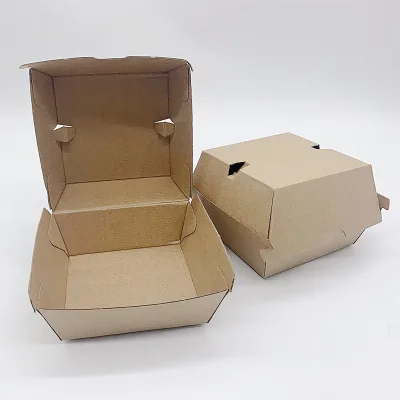
Find 30 verified suppliers offering customizable hamburger boxes made from recycled kraft or corrugated paper. Compare options for food-grade, biodegradable, and eco-friendly packaging solutions suitable for burgers and other food ingredients; compare the available evidence and request quotations based on your requirements.
Key considerations
Products List


Hamburger Box Container Customlized Burger Box Container Hamburger Boxes
$0.02 - $0.02
MOQ: 30000 Pieces


Hamburger Boxes Biodegradable Burger Paper Boxes for Fast Food Packaging
$0.03 - $0.05
MOQ: 10000 Pieces




Comprehensive Sourcing Guide
Hamburger Box Sourcing Guide
Procuring hamburger boxes requires a clear understanding of the specific material constraints and functional requirements inherent to food-grade packaging. The available market data indicates a strong focus on paper-based solutions, specifically utilizing kraft or corrugated paper with weights ranging from 150GSM to 350GSM. Buyers must recognize that these products are designed primarily for food packaging applications, including the containment of burger ingredients and general food service needs.
The customization landscape for these items is extensive, allowing for tailored dimensions, colors, and printing styles to match brand identity. While some listings suggest standard rigid box formats, others offer flexible options where thickness can be adjusted between 1.0 and 3.0 mm. This variability means that procurement teams must define their exact structural needs early, as the supply chain supports both pre-stocked items and fully custom orders with specific design requirements.
Product Scope and Observed Listing Signals
The observed product listings reveal a diverse range of configurations, from standard square shapes to specialized bucket types, all centered around the core function of food containment. Buyers will encounter listings that specify the product as a "Hamburger Box" or "Burger Box," often accompanied by keywords indicating their use for food ingredients and thermal applications. The material composition is consistently identified as paper, with a notable emphasis on recycled content and eco-friendly features to meet modern sustainability demands.
Listing signals also highlight significant variation in packaging and shipping methods, with options ranging from bulk packing to export cartons and OPP bags. The supply capability is robust, with some suppliers indicating an annual capacity of up to 5,000,000 pieces, suggesting that large-volume orders are feasible. However, the minimum order quantities observed span a wide range from 1,000 to 50,000 units, requiring buyers to align their order volume with supplier thresholds to ensure cost-effectiveness and production feasibility.
Technical Specifications to Verify
When evaluating technical specifications, the paper thickness and weight are critical parameters that directly influence the structural integrity of the box. The market data suggests a thickness range of 1.0 to 3.0 mm, which can be customized based on the specific food item being packaged. Buyers should verify that the selected paper weight, typically between 150GSM and 350GSM, provides sufficient rigidity to prevent collapse while maintaining the desired aesthetic and tactile quality for the end consumer.
Printing and customization capabilities are equally vital, with suppliers offering two-sided printing, single-sided options, and fully customized color schemes. The product models vary from standard designs to specific codes like EB-B6414 or JD-QH, each potentially carrying unique dimensional standards. It is essential to confirm whether the supplier can accommodate specific size requirements, as some listings indicate standard dimensions while others offer fully customized sizing to fit unique product profiles.
Compliance and Safety Documentation
Ensuring food safety compliance is a non-negotiable aspect of sourcing hamburger boxes, particularly given the direct contact with food items. The available data points to several certifications, including BV, FSC, TUV, FDA, and CE/EU standards, which serve as indicators of regulatory adherence. Buyers must request current certification documents to verify that the materials used, such as kraft or corrugated paper, meet the specific safety requirements for food contact in their target markets.
Beyond general certifications, the specific features of the packaging, such as being biodegradable or heated, require validation against local food safety regulations. Some listings mention a coating of PE or PLA, which impacts the box's ability to handle moisture and heat. Procurement teams should explicitly confirm that these coatings and the overall product design are approved for the intended use, whether it involves heating food or simply containing dry ingredients, to avoid regulatory penalties or consumer safety issues.
Cost Drivers and Commercial Terms
The commercial terms for hamburger boxes are heavily influenced by the level of customization and the volume of the order. While the observed price range in the data is listed as 0-1 USD, this likely represents a baseline or unit cost that fluctuates significantly based on paper weight, printing complexity, and order quantity. Buyers should anticipate that higher GSM paper, multi-color printing, and custom structural designs will drive costs upward, necessitating a detailed request for quotation that breaks down these variables.
Shipping and logistics also play a substantial role in the total cost of ownership, with options available for sea, air, or express delivery. The supply ability of 5,000,000 pieces per year suggests that suppliers can handle large orders, but lead times may vary depending on the complexity of the customization. It is crucial to negotiate clear terms regarding production lead times and shipping methods, as these factors will determine the final landed cost and the ability to meet inventory replenishment schedules.
Supplier Qualification and Quality Control
Supplier qualification should focus on verifying their capacity to maintain consistent quality across large production runs. With a stated supply ability of 5,000,000 pieces annually, suppliers must demonstrate robust quality control systems to ensure that every batch meets the specified standards for thickness, weight, and print quality. Buyers should inquire about their internal testing protocols and whether they conduct third-party inspections to validate the physical properties of the paper and the durability of the box structure.
Quality control extends to the verification of certifications and the consistency of the raw materials used. Since the products are often marketed as eco-friendly or biodegradable, suppliers must provide evidence that their recycled paper content and biodegradable coatings meet the claimed specifications. Engaging with suppliers who offer samples and have a history of successful exports, indicated by their use of export cartons and diverse shipping methods, can help mitigate the risk of receiving substandard or non-compliant goods.
Long-Term Procurement Checks
Establishing a long-term procurement strategy requires regular audits of supplier performance and product consistency. Buyers should implement a schedule for periodic quality checks to ensure that the paper thickness, printing quality, and structural integrity remain stable over time. This is particularly important for custom orders where minor deviations in the manufacturing process can lead to significant issues in the final product, affecting both brand reputation and operational efficiency.
Continuous monitoring of market trends and regulatory changes is also essential for maintaining a competitive edge. As sustainability becomes a more critical factor, buyers should stay informed about new certifications and material innovations that could enhance their product offerings. By maintaining open communication with suppliers and regularly reviewing their compliance documentation, procurement teams can ensure a resilient supply chain that adapts to evolving consumer demands and regulatory landscapes.
FAQs
Can I customize the printing on hamburger boxes?
Yes, customized printing is available for these rigid boxes. You can choose single or two-sided printing options to match your brand identity. The design can be customized to be exquisite, and colors are fully adjustable. This allows for tailored packaging solutions that meet specific marketing needs while maintaining structural integrity for food service.
What materials are used for these hamburger boxes?
These boxes are primarily made from kraft paper or corrugated paper. The material features are eco-friendly and recycled, ensuring sustainability. The paper weight ranges from 150GSM to 350GSM, providing durability. Some variants include a PE or PLA coating for moisture resistance, making them suitable for various food packaging applications without compromising environmental goals.
What certifications do these hamburger boxes have?
The products hold BV FSC, BV TUV, FDA, and CE/EU certifications. These credentials verify compliance with international safety and quality standards. The materials are tested by SGS and BV, ensuring they are safe for direct food contact. This certification suite supports global sourcing requirements and assures buyers of the product's reliability and regulatory adherence for food packaging use.
What are the standard sizes for these boxes?
Standard dimensions include 10.5*9.7*6.5cm and 11.6*11.4*8.8cm. Customized sizes are also available to fit specific product requirements. The boxes come in small, medium, and large options. This flexibility allows businesses to select the most appropriate fit for their burgers or food ingredients, ensuring secure packaging while minimizing material waste through precise sizing.
How are these boxes shipped and packed?
Shipment is available by sea, air, or express courier. The boxes are packed in cartons, bulk packing, or export cartons depending on the order. They are often folded to save space during transit. This efficient packing method reduces shipping costs and ensures the products arrive in good condition, ready for immediate use in food service or retail environments.
Are these hamburger boxes biodegradable?
Yes, the boxes are biodegradable and eco-friendly. Made from recycled paper materials, they support sustainable packaging initiatives. The use of kraft or corrugated paper ensures they break down naturally. This feature appeals to environmentally conscious consumers and helps businesses meet green sourcing goals, offering a responsible alternative to plastic packaging for food and beverage applications.