Source hand-made divine mercy resin figurine for Home, Business, and Holiday
Compare 30 listings for hand-made divine mercy resin figurine from suppliers in Fujian, China. Buyers can review specifications, MOQs, and production times for religious art and collectibles suitable for home decoration, business gifts, and holiday events.
Key considerations
Products List
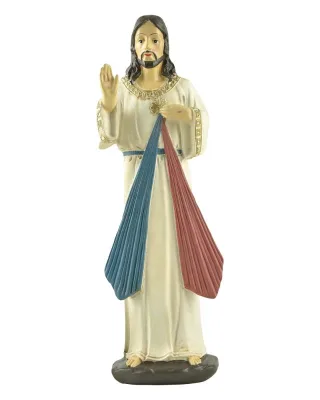
Stock Products Polyresin Traditional Jesus-Divine Mercy Statue for Decoration
$3.03 - $7.02
MOQ: 300 pieces


Hot Sale Resin Crafts Religious Resin Virgin Mary Figurine Home Decoration
$3.00 - $8.00
MOQ: 300 Pieces


Vintage Style Garden Ornament Resin Figurine Christian Religious Figure
$4.85 - $4.95
MOQ: 1000 Pieces


Lifelike Carving Resin Figurine Garden Decor Christian Religious Figure
$4.85 - $4.95
MOQ: 1000 Pieces
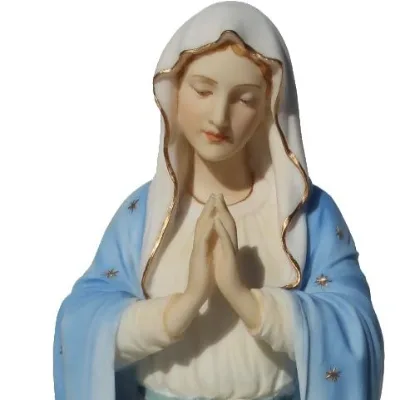
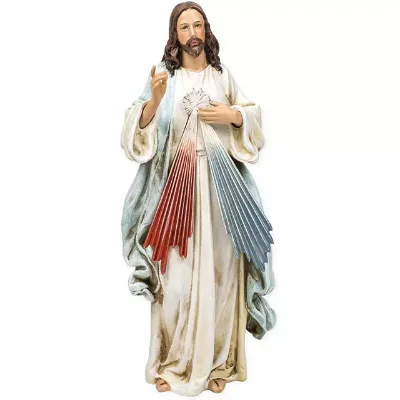

Resin Statue Holy Family Mary Joseph Jesus Figurine Religious Gift Decoraion
$1.98 - $2.68
MOQ: 480 Pieces


Comprehensive Sourcing Guide
Strategic Sourcing Guide for Hand-Made Divine Mercy Resin Figurines
Understanding Product Specifications and Material Composition
When sourcing a hand-made Divine Mercy resin figurine, the primary objective is to align technical specifications with the intended application, whether for religious devotion, home decoration, or corporate gifting. The core material identified in current market offerings is polyresin, a composite that offers a favorable balance between durability and the ability to capture intricate sculptural details. This material is distinct from standard plastics or ceramics, allowing for the "Hand Made" and "Hand-painted" attributes that define the aesthetic value of these items. The production process typically involves a multi-stage workflow: initial sculpting, molding, casting, and finally, manual painting and finishing.
The physical dimensions of these figurines vary significantly based on the specific model and customization requests. Observed data indicates a "One Size" standard for certain models, while others offer customizable dimensions ranging from small decorative pieces to larger display statues. For instance, specific single-package sizes have been recorded at 25x12x10 cm, with a single gross weight of approximately 0.500 kg. However, buyers must verify that the "Standard" for size is either fixed at a specific measurement, such as 10 cm height, or explicitly defined as "customizable" to match the buyer's spatial requirements. The shape is generally described as "Custom Products," allowing for variations in the depiction of the Divine Mercy imagery, which often includes specific religious iconography.
The surface treatment is a critical differentiator. High-quality units in this category are "Hand-painted" with "Natural" or "As reference" color profiles. This manual application ensures that the finish is not uniform in a way that suggests mass-produced injection molding but rather possesses the unique texture and depth expected of artisanal work. The "Technique" is consistently noted as hand-painted, which directly impacts the perceived value and the cost structure of the final product. Buyers should expect the color to match a provided reference image, as the "Color" attribute is often listed as variable rather than a fixed standard.
Compliance, Certification, and Safety Standards
In the B2B procurement of religious and decorative items, compliance with safety and environmental standards is paramount, particularly when the products are intended for export to markets with strict regulatory frameworks. The supply chain for resin figurines often involves materials that must meet specific eco-friendly criteria. While specific certification statuses cannot be universally guaranteed for every listed product, the market frequently references certifications such as SGS, CE, and Sct. These documents serve as evidence that the materials used, including the resin and paints, do not contain harmful substances like lead or phthalates in quantities exceeding regulatory limits.
Buyers must approach certification claims with a verification mindset. The presence of "Eco-Friendly" as a product attribute suggests that the manufacturer adheres to environmental standards, but this should be validated through third-party testing reports. For instance, while background knowledge might suggest standards like EN71 or ISO 9001, these should only be cited as benchmarks for verification rather than assumed facts. The "Certificate" attribute in supplier listings often includes "SGS, CE, Sct, etc.," indicating a range of potential validations. It is the buyer's responsibility to request current, valid certificates that correspond to the specific batch of goods being ordered.
Safety is further emphasized by the "Safety" attribute, which is explicitly listed as "Eco-Friendly" in many product descriptions. This implies that the finished product is safe for handling and display in residential or commercial environments. However, the absence of a specific certification number in a general listing does not confirm compliance. Procurement teams should require the supplier to provide the actual test reports from accredited laboratories. This is especially critical for products intended for children's areas or public spaces, where regulatory scrutiny is higher. The "Standard" for the product is often defined as "As picture shown or custom size," which means that safety compliance must be tied to the specific physical configuration of the ordered item, not just the general product line.
Cost Drivers and Pricing Dynamics
The pricing structure for hand-made Divine Mercy resin figurines is influenced by a complex interplay of factors, primarily driven by the labor intensity of the manufacturing process and the scale of the order. The observed price range in the market spans from $0.10 to $150.00 USD, a wide variance that reflects differences in size, complexity, and the level of hand-finishing required. A figurine priced at the lower end of this spectrum is likely a smaller, simpler model with minimal hand-painting, whereas a unit at the higher end represents a larger, highly detailed sculpture with extensive artisanal labor.
The Minimum Order Quantity (MOQ) is another significant cost driver. Data indicates that MOQs typically range from 50 to 1,000 pieces, with specific listings showing thresholds of 300 or 500 pieces. Ordering below these thresholds may result in a significantly higher unit cost or may not be feasible at all. The "MOQ" of 300 pieces or 500 pieces serves as a baseline for the supplier to cover the setup costs of molds and the initial labor allocation. For buyers seeking customization, the MOQ may increase, as custom molds and unique painting patterns require dedicated production runs.
Production time also impacts cost. The "Production Time" is listed as ranging from 30 to 50 days, with some specific instances noting 45-50 days or 30-35 days. Longer lead times often correlate with higher quality control measures and more meticulous hand-painting processes. Conversely, expedited orders may incur premium charges. The "Sample Time" is another variable, typically ranging from 10 to 15 days, which adds to the overall timeline before mass production begins. Buyers should factor these lead times into their inventory planning to avoid stockouts, as the "Hand-Made" nature of the product inherently limits the speed of production compared to automated manufacturing.
Typical Applications and Market Segmentation
The versatility of the hand-made Divine Mercy resin figurine allows it to serve multiple market segments, each with distinct requirements. The primary application is "Home Decoration," where the figurine acts as a centerpiece for religious altars or living spaces. The "Suitable For" attribute explicitly lists "Home," confirming its suitability for residential environments. In this context, the aesthetic appeal, specifically the "Hand-painted" finish and "Natural" style, is the primary value driver.
Beyond the home, these items are increasingly used as "Business Gifts" and "Holiday Gifts." The "Usage" attribute encompasses "Business Gift, Holiday Gifts, Art & Collection," indicating a broad commercial appeal. In the corporate sector, these figurines are often customized with logos or specific messages, leveraging the "Customization: Available" feature. The "Application" is further defined as "Art & Collectible," suggesting that high-end versions of these figurines are targeted at collectors and museums. The "Style" is often described as "nativity" or "Religious," which aligns with the spiritual significance of the Divine Mercy imagery.
The "Packing" method is crucial for these applications. The standard packaging involves "Polyfoam+Inner Box+Carton" or "PP Bag+Polyfoam+ Inner Box + Export Carton." This multi-layered protection ensures that the fragile resin and delicate paintwork survive the logistics chain. For business gifts, the packaging may need to be upgraded to include premium branding, which is a consideration for buyers in the corporate gifting sector. The "Shape" being "Custom Products" allows for tailoring the figurine to specific cultural or organizational needs, enhancing its relevance in diverse markets.
Supplier Evaluation and Production Capabilities
Selecting a reliable supplier for hand-made resin figurines requires a rigorous evaluation of their production capabilities and operational transparency. The "Place of Origin" is consistently identified as "Fujian, China," a region known for its manufacturing expertise in resin crafts. However, the specific location within the region is less important than the supplier's ability to meet the "Standard" of "As picture shown or custom size." Buyers should verify that the supplier has a dedicated facility for hand-painting, as this is the most labor-intensive part of the process.
The "Process" is listed as "Hand-Made," which implies a reliance on skilled artisans rather than fully automated machinery. This necessitates a supplier with a stable workforce and a track record of maintaining quality consistency. The "Feature" of being "Hand Made" is a key selling point, but it also introduces variability. Buyers should request samples to assess the consistency of the "Hand-painted" finish and the "Surface Treatment." The "Sample time" of 10-15 days provides an opportunity to evaluate the supplier's responsiveness and the quality of their prototype work.
Payment terms are another critical factor in supplier evaluation. The standard term observed is "T/T" (Telegraphic Transfer), which is common in international trade. Buyers should negotiate terms that protect their interests, such as a deposit upon order confirmation and the balance before shipment. The "Single package size" and "Single gross weight" data provided by the supplier are essential for calculating shipping costs and selecting the appropriate logistics partner. A supplier that provides accurate and detailed packaging data demonstrates professionalism and attention to detail, which are indicators of a reliable partner.
Quality Control and Long-Term Procurement Considerations
Maintaining high quality in hand-made resin figurines requires a robust quality control (QC) protocol. Given the "Hand-Made" nature of the product, defects such as paint smudges, uneven coloring, or structural imperfections can occur. The "Feature" of being "Hand Made" means that each unit is unique, but it also means that strict QC is necessary to ensure that the final product meets the "As reference" color and "Custom Products" shape requirements. Buyers should implement a pre-shipment inspection process, focusing on the "Surface Treatment" and the integrity of the "Polyfoam" and "Inner Box" packaging.
Long-term procurement considerations involve building a sustainable relationship with the supplier. The "Production Time" of 30-50 days requires careful planning to ensure a steady supply chain. Buyers should consider the "Customization" capabilities of the supplier, as the ability to adapt to changing market trends or specific client requests is a valuable asset. The "Standard" of "size can be customized" offers flexibility, but it also requires clear communication to avoid misunderstandings.
The "Certificate" of "SGS, CE, Sct, etc." should be reviewed periodically to ensure ongoing compliance. As regulations evolve, suppliers must adapt their materials and processes to meet new standards. Buyers should also consider the "Eco-Friendly" aspect of the product, as environmental consciousness is becoming a significant factor in purchasing decisions. The "Safety" attribute of being "Eco-Friendly" should be backed by up-to-date documentation.
In conclusion, sourcing hand-made Divine Mercy resin figurines involves a careful balance of technical specifications, compliance verification, cost management, and supplier evaluation. By adhering to the observed data and maintaining a rigorous approach to quality control, buyers can secure high-quality products that meet the diverse needs of the religious, decorative, and gifting markets. The "Hand-Made" attribute is the core value proposition, and protecting this quality through strategic procurement practices is essential for long-term success.
FAQs
What material is used for the hand-made divine mercy resin figurine?
The figurine is crafted from polyresin, which allows for intricate sculptural details and durability. This material supports the hand-painted finish and natural style required for religious and decorative applications.
How long does it take to produce a custom order?
Production time typically ranges from 30 to 50 days depending on the specific model and customization level. Buyers should account for a sample time of 10 to 15 days before mass production begins.
What is the minimum order quantity for this product?
The minimum order quantity varies between 300 and 500 pieces based on the specific listing. Customization requests may require adhering to the higher threshold of 500 pieces to cover setup costs.
Can the size of the figurine be customized?
Yes, the size can be customized to meet specific requirements or follow the standard as shown in the picture. Some models offer a standard size of 10 cm height while others allow for custom dimensions.
What certifications are available for these resin figurines?
Available certifications include SGS, CE, and Sct, which verify eco-friendly and safety standards. Buyers should request specific test reports to confirm compliance for their target export markets.
How are the figurines packaged for shipping?
Packaging typically involves a PP bag, polyfoam, inner box, and export carton to ensure safety. This multi-layered protection prevents damage to the fragile resin and delicate hand-painted surfaces during transit.
Where is the place of origin for these products?
The place of origin is Fujian, China, a region known for resin craft manufacturing. This location influences the lead times and shipping logistics for international buyers sourcing these items.